Does Homeowners Insurance Cover Asbestos? What UK Property Owners Must Know
Finding asbestos flagged in a survey report is one of those moments that stops homeowners cold. The immediate question — does homeowners insurance cover asbestos — rarely has a straightforward answer, and that uncertainty can be extremely costly. Whether the material is sitting in your roof, buried beneath old floor tiles, or concealed behind plasterboard, where asbestos is found in your property has a direct bearing on what your insurer will and won’t pay for.
This post breaks down exactly how asbestos location affects your insurance position, what UK regulations require, and the practical steps you should take to protect yourself financially and legally.
Why Insurers Care About Where Asbestos Is Found
Insurance underwriters don’t treat all asbestos the same. A clearly visible, intact asbestos cement roof sheet that’s undisturbed is a very different proposition from asbestos insulation board concealed inside a cavity wall or wrapped around pipework beneath a concrete floor.
The location determines the risk level, the likely cost of remediation, and whether the asbestos poses an immediate hazard to occupants. Insurers use all of this information when deciding whether to pay a claim, how much to pay, and what conditions or exclusions to attach to your policy going forward.
UK properties built before 2000 are particularly relevant here. Asbestos use in construction was commonplace until the late 1990s — blue and brown asbestos were banned earlier, but white asbestos (chrysotile) remained in use until 1999. That means millions of homes across the country may contain asbestos-containing materials (ACMs) in various locations, some obvious and some hidden entirely from view.
High-Risk Locations: Roofing, Insulation, and Flooring
Certain areas of a property are well-known to surveyors and insurers alike as high-risk locations for asbestos. When ACMs are identified in these areas, the implications for your insurance claim can be significant.
Roofing Materials
Asbestos cement was widely used in roof sheets, corrugated panels, and guttering. When these materials are disturbed — whether through storm damage, renovation work, or general deterioration — fibres can be released into the air.
Insurers will typically require specialist removal carried out by a licensed contractor before any repair or rebuilding work proceeds. If your roof is damaged in a storm and asbestos cement is involved, some policies will cover asbestos removal as part of the insurable event. However, this is far from universal — always check your policy wording carefully and never assume removal costs are automatically included.
Insulation Around Boilers, Pipes, and in Loft Spaces
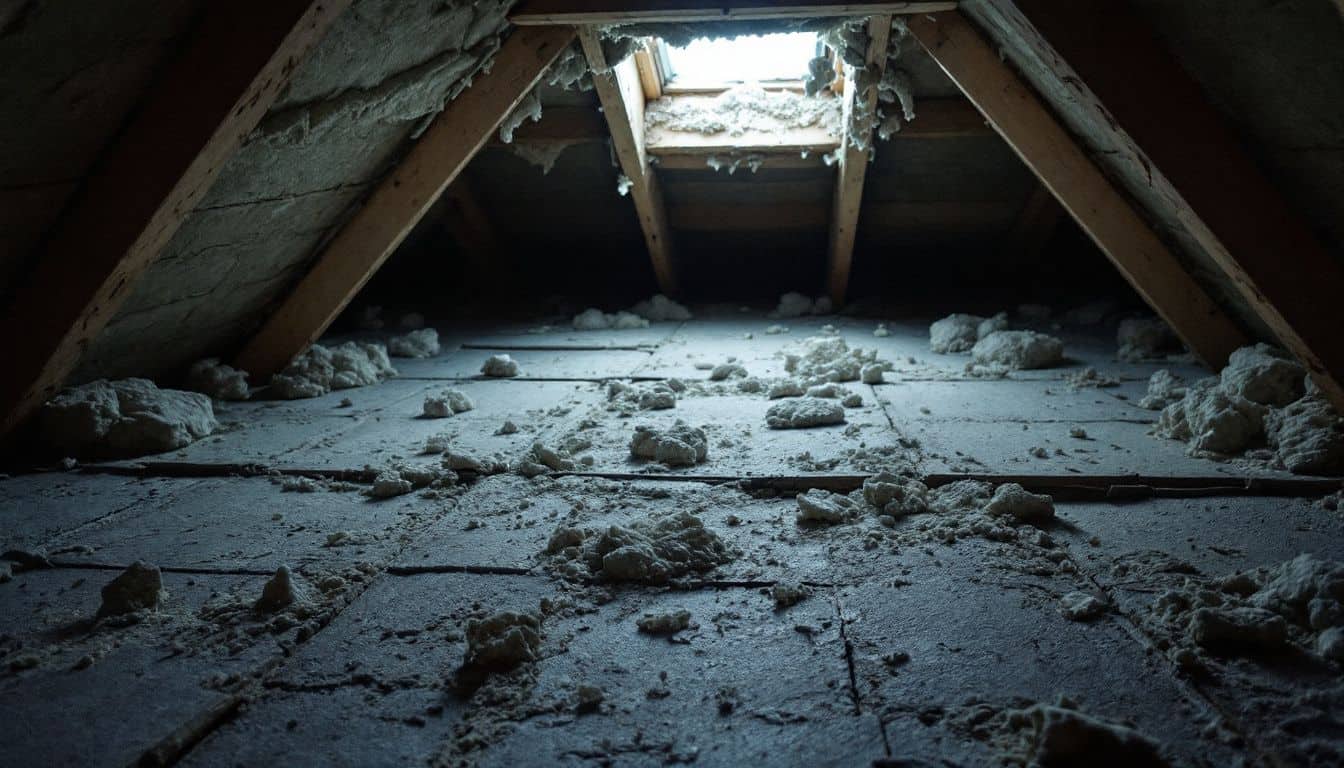
Asbestos was used extensively as an insulating material around boilers, pipes, and in loft spaces. Loose-fill asbestos insulation is particularly hazardous because it can become airborne very easily.
When insurers see this flagged in a survey report, it often triggers additional requirements before any claim is settled — including a full risk assessment and a formal management plan. This is not a box-ticking exercise; it’s a genuine underwriting requirement that can delay settlement significantly.
Floor Tiles and Adhesives
Vinyl floor tiles and the adhesives used to fix them frequently contained asbestos in older properties. These materials are often in reasonable condition when left undisturbed, but the moment a renovation project begins, the risk escalates sharply.
Insurers may exclude damage-related claims if asbestos flooring was disturbed without prior testing or professional removal. If you’re planning any refurbishment work, commissioning asbestos testing before work begins is not just good practice — it could be the difference between a valid claim and a rejected one.
Hidden Asbestos: Walls, Pipes, and Concealed Locations
Concealed asbestos presents a different set of challenges entirely. When ACMs are hidden inside walls, beneath floors, or wrapped around underground pipework, they’re often only discovered mid-project — at exactly the point when stopping work is most disruptive and expensive.
Asbestos in Walls and Partitions
Asbestos insulation board (AIB) was commonly used in partition walls, ceiling tiles, and fire doors. It’s one of the more hazardous forms of ACM because it can crumble and release fibres relatively easily. Painters, decorators, and general builders have unknowingly disturbed AIB for decades.
When concealed asbestos is discovered mid-project, work must stop immediately. A new risk assessment is required, licensed contractors must be engaged, and the timeline for your project — and your insurance claim — extends significantly. Many standard home insurance policies exclude asbestos found in concealed locations, particularly if no survey was commissioned before work began.
Underground Pipework
Asbestos cement pipes were used in drainage and water supply systems and are still present beneath many older UK properties. These are often only discovered during excavation work, and the cost of identifying, removing, and replacing asbestos pipework can be substantial.
This is an area where policy exclusions are particularly common. Sellers of older properties sometimes commission asbestos removal prior to sale specifically to avoid these complications arising for buyers — and their insurers — further down the line.
Does Homeowners Insurance Cover Asbestos Removal?
This is the core question, and the honest answer is: sometimes, but only under specific conditions.
When Coverage Is More Likely
Most home insurance policies are event-based. They’re designed to cover sudden, unexpected damage — a storm, a fire, a burst pipe. If asbestos removal is required as a direct consequence of one of these insurable events, some insurers will include it within the claim settlement.
For example, if a storm damages an asbestos cement roof and the material needs specialist removal before repairs can begin, a well-worded buildings insurance policy may cover those removal costs. The key is that the asbestos work must be directly linked to the covered event — not simply the result of the material being present in the property.
When Coverage Is Typically Excluded
Wear and tear is almost universally excluded from home insurance policies. If asbestos materials have simply deteriorated over time, or if they were always present in a property and never disclosed, most insurers will not cover removal costs. This is one of the most common reasons homeowners face unexpected and significant bills.
Policies also frequently exclude:
- Asbestos found in concealed locations that wasn’t identified prior to work commencing
- Removal costs arising from routine maintenance or planned renovation
- Damage caused by the homeowner disturbing ACMs without professional guidance
- Pre-existing asbestos conditions that weren’t disclosed when the policy was taken out
Higher excess payments may also apply where asbestos is involved, even when a claim is valid. Always read the small print before assuming you’re covered.
How Asbestos Location Affects Claim Valuation
Loss adjusters are the people who actually assess the value of your claim, and asbestos location is one of the key variables they work with. A property with asbestos in an accessible, clearly defined area is far easier to value than one where ACMs are spread across multiple concealed locations.
High-Risk Areas Increase Claim Values
When asbestos is found in roofing, insulation, or flooring, the cost of remediation is generally higher because specialist contractors must be involved, strict containment procedures are required, and waste must be disposed of at licensed facilities. Loss adjusters factor all of these costs into their assessments.
Testing costs are also included in loss validation. If sampling is required to confirm the presence or extent of ACMs before work can proceed, those costs form part of the overall claim figure. A professional asbestos testing report gives loss adjusters the documented evidence they need to process claims accurately and efficiently.
Concealed Asbestos Complicates Processing
Claims involving concealed asbestos take longer to process and are more likely to be disputed. When ACMs are discovered mid-project, the entire scope of work may need to be reassessed. Contractors must down tools, a new risk assessment must be carried out, and the insurer may require independent verification before agreeing to any additional costs.
This is why having a professional management survey completed before any significant work begins is so valuable — not just for safety, but for protecting your insurance position from the outset.
Legal and Regulatory Requirements That Affect Insurance Claims
UK law places clear obligations on property owners when it comes to asbestos. These obligations directly influence how insurance claims are assessed and settled.
The Control of Asbestos Regulations
The Control of Asbestos Regulations set out the legal framework for managing asbestos in the UK. They require that anyone responsible for a non-domestic building must manage any asbestos present, maintain an up-to-date asbestos register, and ensure that anyone who might disturb ACMs is made aware of their location and condition.
For homeowners, the regulations are most relevant when work is being carried out on the property. Disturbing asbestos without following the correct procedures isn’t just a health risk — it can invalidate your insurance claim and expose you to legal liability.
HSE Guidance and the Approved Code of Practice
The HSE’s guidance documents — including HSG264 on asbestos surveying and the Approved Code of Practice for managing and working with asbestos — set the standards that surveyors, contractors, and loss adjusters all work to.
When an insurer reviews a claim involving asbestos, they’ll expect all work to have been carried out in accordance with these standards. Using unlicensed contractors or failing to follow HSE guidance can result in claims being reduced or rejected entirely.
Licensed Contractors Are Non-Negotiable
For the most hazardous forms of asbestos — including AIB and loose-fill insulation — removal must be carried out by HSE-licensed contractors. Insurers will not accept claims for work carried out by unlicensed operatives, and any remediation that doesn’t meet regulatory standards will need to be redone at the homeowner’s expense.
How Asbestos Findings Affect Your Future Premiums and Policy Terms
Even after a claim is settled, finding asbestos in your property has lasting implications for your insurance arrangements.
Premium Increases
Properties with known asbestos — particularly in high-risk locations — are considered higher risk by underwriters. This is reflected in higher premiums at renewal. The increase varies depending on the type of asbestos, its location, whether it has been removed or encapsulated, and the overall condition of the property.
Having a current, professional asbestos management plan in place can help demonstrate to insurers that the risk is being actively managed, which may limit premium increases at renewal.
Policy Restrictions and Exclusions
Following an asbestos-related claim, insurers may attach specific exclusions to your policy. These might include exclusions for any further asbestos-related claims, higher excess payments for claims involving hazardous materials, or requirements to carry out further surveys or testing before certain types of work are covered.
Being transparent with your insurer about the asbestos situation in your property — and the steps you’ve taken to manage it — is always the better approach. Failing to disclose known asbestos can result in your policy being voided entirely, leaving you with no cover whatsoever.
Practical Steps to Protect Your Insurance Position
If you own an older property or are planning renovation work, there are concrete steps you can take right now to protect yourself.
- Commission a survey before any work begins. For properties built before 2000, an asbestos survey should be the first step before any renovation, refurbishment, or structural work. This gives you — and your insurer — a clear picture of what’s present and where.
- Keep all survey documentation. Your asbestos survey report, management plan, and any testing results are essential documents. Store them safely and make sure your insurer has copies of relevant findings.
- Use licensed contractors for any removal. Only engage HSE-licensed contractors for removal of high-risk ACMs. Keep records of all work carried out, including waste transfer notes from licensed disposal facilities.
- Disclose known asbestos to your insurer. If a survey has identified ACMs in your property, tell your insurer. Non-disclosure is far more damaging than the disclosure itself.
- Review your policy wording carefully. Look specifically for asbestos-related exclusions, excess levels, and any requirements for prior surveys before certain types of work are covered.
- Update your management plan regularly. If the condition of ACMs in your property changes, your management plan needs to reflect that. An out-of-date plan carries little weight with an insurer or a loss adjuster.
Where You Are in the UK Matters Too
The age and type of housing stock varies significantly across the UK, and so does the likelihood of encountering asbestos in different locations. Older industrial cities tend to have higher concentrations of pre-2000 properties, many of which were built with asbestos-containing materials as standard.
If you’re based in the capital and need professional advice, our team carries out asbestos survey London work across all property types, from Victorian terraces to post-war commercial conversions. In the north-west, we provide asbestos survey Manchester services covering residential and commercial properties throughout the region. And in the Midlands, our asbestos survey Birmingham teams are experienced in the full range of ACM types found in the area’s diverse building stock.
Wherever you are, the same principle applies: getting a professional survey completed before you need to make a claim is always cheaper than dealing with the fallout afterwards.
The Bottom Line on Homeowners Insurance and Asbestos
Does homeowners insurance cover asbestos? The answer depends entirely on your specific policy, the location and type of asbestos in your property, how it was discovered, and whether you’ve followed the correct procedures at every stage.
What is consistent across virtually every policy is this: insurers reward preparation and penalise ignorance. A property owner who has commissioned a professional survey, maintained an up-to-date management plan, and used licensed contractors for any remediation work is in a far stronger position than one who discovers asbestos mid-project with no documentation and no plan.
The cost of getting this right upfront is a fraction of what it costs to get it wrong. Asbestos surveys are not an optional extra for older properties — they’re a fundamental part of responsible property ownership and sound financial management.
Frequently Asked Questions
Does homeowners insurance automatically cover asbestos removal costs?
Not automatically, no. Most standard home insurance policies only cover asbestos removal when it is directly required as a result of an insurable event — such as storm or fire damage. Removal costs arising from routine maintenance, planned renovation, or simple deterioration over time are almost always excluded. Always check your specific policy wording before assuming you’re covered.
What happens if asbestos is discovered mid-renovation and I haven’t got a survey?
Work must stop immediately. You’ll need to commission a risk assessment from a qualified surveyor, engage licensed contractors, and notify your insurer. The absence of a prior survey significantly weakens your insurance position and may result in the claim being disputed or rejected. This is one of the strongest arguments for commissioning a survey before any work begins on a pre-2000 property.
Do I need to tell my insurer if asbestos has been found in my property?
Yes. Failing to disclose known asbestos to your insurer is a form of non-disclosure that can result in your entire policy being voided. It’s always better to declare what’s present and what steps you’ve taken to manage it. Insurers generally respond more favourably to property owners who can demonstrate a proactive, documented approach to asbestos management.
Will having asbestos in my property increase my insurance premiums?
It can, yes — particularly if ACMs are in high-risk locations or have not been professionally managed. However, having a current asbestos management plan in place and using licensed contractors for any remediation work can help demonstrate to underwriters that the risk is being controlled, which may limit the impact on your premiums at renewal.
Which types of asbestos are most likely to cause problems with an insurance claim?
Asbestos insulation board (AIB) and loose-fill asbestos insulation are the most problematic from an insurance perspective because they are classified as the highest-risk ACMs and require removal by HSE-licensed contractors. Asbestos cement products in good condition are generally lower risk, though they still need to be professionally managed and removed by competent contractors when disturbed.
Speak to Supernova Asbestos Surveys
With over 50,000 surveys completed nationwide, Supernova Asbestos Surveys has the experience and expertise to help you understand exactly what’s in your property — and what it means for your insurance position.
Whether you need a management survey ahead of renovation work, professional asbestos testing to satisfy an insurer’s requirements, or advice on the right course of action for your property, our team is ready to help.
Call us on 020 4586 0680 or visit asbestos-surveys.org.uk to book your survey today.