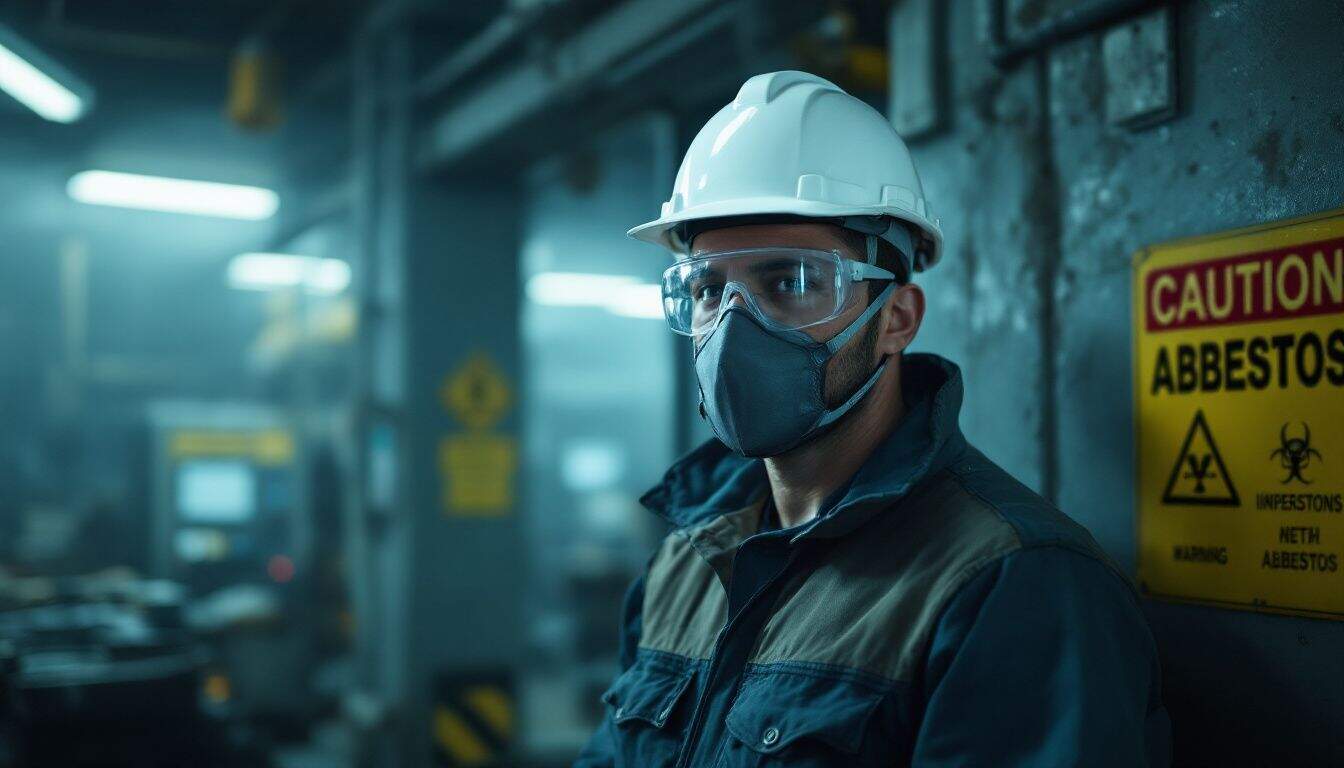
How Asbestos Inspections Shape Industrial Operations — and Why Neglecting Them Costs Far More Than You Think
Asbestos is still present in a significant proportion of UK industrial buildings constructed before 2000. If your site has never been properly assessed, you are operating with unknown risks embedded in your walls, above your head, and beneath your feet. Asbestos inspections are not a bureaucratic formality — they are the foundation of a safe, legally compliant, and financially sound industrial operation.
Whether you manage a manufacturing facility, a warehouse, a power plant, or any other industrial premises, understanding what asbestos inspections involve — and what happens when they are neglected — is essential knowledge for anyone responsible for a site.
Why Asbestos Inspections Are a Legal Requirement for Industrial Sites
The Control of Asbestos Regulations places a legal duty on those who manage non-domestic premises to identify asbestos-containing materials (ACMs), assess their condition, and put a management plan in place. For industrial operators, this is not optional — it is the law.
Only surveyors accredited by UKAS (United Kingdom Accreditation Service) are qualified to carry out formal asbestos surveys. This matters because the quality of an inspection directly determines the quality of the risk information you are working with.
Failure to comply can result in prosecution, substantial fines, and — most critically — workers developing life-limiting diseases that could have been prevented. The HSE takes enforcement in industrial settings seriously, and ignorance of the law is not a defence.
What the Duty to Manage Requires
- A suitable and sufficient survey of the premises to locate ACMs
- A written asbestos register recording the location, type, and condition of any ACMs found
- A risk assessment for each ACM identified
- An asbestos management plan detailing how each ACM will be managed, monitored, or removed
- Regular reviews of the plan to ensure it remains current
HSG264, the HSE’s guidance on asbestos surveys, sets out the standards surveyors must meet and distinguishes between different survey types depending on the purpose and scope of the work.
A management survey is required for the routine occupation and maintenance of a building. A refurbishment survey is required before any intrusive work takes place, and a demolition survey must be completed before any part of a structure is demolished. Industrial sites undergoing renovation or partial demolition must have the appropriate survey completed before work begins — no exceptions.
The Health Risks That Make Asbestos Inspections Non-Negotiable
Asbestos-related disease remains one of the leading causes of occupational death in the UK. Mesothelioma, asbestosis, and asbestos-related lung cancer are all caused by inhaling asbestos fibres — and none of these conditions develop immediately. Symptoms can take decades to appear, which means exposure happening today may not manifest as illness until much later.
This delayed onset is precisely what makes proactive asbestos inspections so critical. By the time illness appears, it is too late to undo the exposure.
Industrial workers face elevated risks. Maintenance engineers, electricians, plumbers, demolition crews, and HVAC technicians are all regularly exposed to the kinds of materials — pipe lagging, ceiling tiles, insulation boards, fire-resistant panels — that are most likely to contain asbestos in older industrial buildings.
High-Risk Trades in Industrial Environments
Certain roles carry a disproportionate risk of asbestos exposure on industrial sites:
- Maintenance engineers — frequently work in plant rooms, roof voids, and service ducts where asbestos insulation is common
- Electricians — may disturb asbestos insulation boards when accessing distribution boards or cable runs
- Plumbers — pipe lagging in older industrial buildings often contains amosite or chrysotile asbestos
- Demolition and refurbishment workers — at the highest risk when structures are being altered without a prior survey
- Firefighters — attending industrial fires in older buildings face significant secondary exposure risks
An up-to-date asbestos register, produced through thorough asbestos inspections, allows all contractors and in-house maintenance teams to check for ACMs before starting any task. This is how sites reduce accidental exposure in practice.
How Asbestos Inspections Affect Industrial Maintenance and Renovation Planning
Planned maintenance is the backbone of industrial operations. Unplanned downtime is expensive. What many site managers underestimate is how significantly an asbestos management plan shapes what maintenance work can be done, when, and by whom.
When ACMs are identified through asbestos inspections, maintenance schedules must account for them. Work that would disturb asbestos — even minor tasks like drilling into a wall or replacing a ceiling tile — must be planned with appropriate controls in place, or the asbestos must be removed first.
Integrating Asbestos Management into Maintenance Programmes
- Catalogue all ACMs — your asbestos register should be accessible to all contractors and maintenance staff before any work begins
- Assess risk by location and condition — ACMs in good condition and unlikely to be disturbed can often be managed in situ; damaged or friable materials require more urgent action
- Plan removal in phases — prioritise ACMs in areas scheduled for renovation or where condition is deteriorating
- Budget appropriately — factor asbestos removal costs into capital expenditure planning, not just reactive maintenance budgets
- Train your workforce — everyone working on site should know what asbestos looks like, where it is likely to be found, and what to do if they suspect they have disturbed it
- Review the register regularly — the condition of ACMs changes over time, and your register must reflect current reality
Sites that integrate asbestos management into their broader maintenance strategy avoid the costly scenario of discovering asbestos mid-project, halting work, and scrambling for emergency removal. That kind of reactive response is far more expensive — and far more disruptive — than proactive planning.
Emergency Procedures: What Happens When Asbestos Is Discovered Unexpectedly
Even on well-managed sites, unexpected asbestos discoveries happen. A contractor breaks through a wall, a floor tile is lifted, or pipe lagging is damaged. Having a clear emergency procedure in place before this happens is a legal and operational necessity.
Steps to Follow When Asbestos Is Found Unexpectedly
- Stop work immediately — all activity in the affected area must cease
- Isolate the area — restrict access using physical barriers and clear signage; do not allow anyone to re-enter until the area has been assessed
- Do not attempt to clean up — disturbing suspected asbestos further increases fibre release; leave the material undisturbed
- Notify your health and safety officer — document the discovery and circumstances in writing
- Contact a UKAS-accredited surveyor — samples must be taken and analysed before any decision is made about the material
- Arrange licensed removal if required — certain asbestos types and conditions require a licensed contractor under the Control of Asbestos Regulations
- Review your asbestos management plan — update your register and assess whether adjacent areas require further investigation
Having this procedure documented, communicated, and rehearsed with your team means that when the unexpected happens, the response is calm and controlled rather than chaotic and potentially dangerous.
The Financial Case for Regular Asbestos Inspections
Some industrial operators view asbestos inspections as a cost. The reality is that they are an investment — and the return is measurable in avoided expenditure, reduced liability, and lower insurance costs.
The Cost of Not Inspecting
The financial consequences of neglecting asbestos management can be severe:
- Enforcement action — HSE improvement notices and prohibition notices can halt operations entirely
- Prosecution and fines — courts have imposed substantial fines on businesses that failed to manage asbestos properly
- Civil claims — workers or contractors who develop asbestos-related disease as a result of exposure on your site may pursue compensation claims
- Emergency removal costs — reactive asbestos removal during a live project is significantly more expensive than planned removal
- Project delays — discovering asbestos mid-renovation can delay completion by weeks, with associated cost overruns
- Increased insurance premiums — insurers price risk based on the quality of your management systems; poor asbestos management raises your risk profile
How Regular Inspections Save Money
Businesses that invest in regular asbestos inspections benefit from:
- Early identification of deteriorating ACMs, allowing planned rather than emergency removal
- Accurate information for capital expenditure planning
- Reduced workers’ compensation and liability exposure
- Demonstrable compliance, which supports favourable insurance terms
- Smoother project delivery, with no unexpected asbestos-related stoppages
The cost of a professional asbestos survey is modest relative to any of the financial risks it mitigates. For industrial sites, where the scale of potential exposure and the complexity of building services are both significant, the argument for regular inspections is overwhelming.
Asbestos Inspections and Long-Term Risk Management
Asbestos management is not a one-off exercise. Industrial buildings change — new plant is installed, structures are modified, materials age and deteriorate. Your asbestos management plan must evolve with your site.
Insurers increasingly expect to see evidence of proactive asbestos management as part of broader health and safety governance. A well-maintained asbestos register and a current management plan demonstrate that your organisation takes its duty of care seriously — and that has a direct bearing on your risk profile and, in many cases, your premiums.
Beyond insurance, asbestos management forms part of your overall occupational health strategy. It connects directly to other safety obligations — including the requirement to carry out a fire risk assessment, which may itself identify asbestos-containing fire-resistant materials that require specialist attention. These disciplines overlap, and a joined-up approach to building safety delivers better outcomes than treating each obligation in isolation.
Asbestos and Property Value
For industrial operators who own their premises, asbestos management also has implications for asset value. A building with a clear, current asbestos register and a managed — or remediated — ACM profile is a more attractive asset than one with unknown or poorly documented asbestos risks.
Buyers and lenders conducting due diligence will scrutinise asbestos records. A well-managed asbestos position supports transaction values; an unmanaged one creates uncertainty and can depress offers or delay completions.
Choosing the Right Surveyor for Industrial Asbestos Inspections
Not all asbestos surveys are equal. Industrial sites present particular challenges — complex building services, multiple occupancies, restricted access areas, and materials that may not be immediately recognisable as ACMs. The surveyor you choose must have the experience and accreditation to handle this complexity.
Key Criteria When Selecting a Surveyor
- UKAS accreditation — this is a baseline requirement, not a differentiator; any surveyor without it should be disqualified immediately
- Industrial sector experience — ask specifically about their experience with sites similar to yours
- Clear reporting — the asbestos register and management plan they produce must be practical and usable, not just a compliance document that sits in a drawer
- Ongoing support — the best surveying firms offer reinspection services and will update your register as your site changes
- Nationwide coverage — for multi-site operators, consistency of surveying standards across all locations matters
Supernova Asbestos Surveys operates across the UK, with dedicated teams covering major industrial centres. Whether you need an asbestos survey in London, an asbestos survey in Manchester, or an asbestos survey in Birmingham, our UKAS-accredited surveyors bring the same rigorous standards to every site.
Frequently Asked Questions
What types of asbestos inspections are available for industrial sites?
There are three main types of asbestos survey used in industrial settings. A management survey is carried out on occupied buildings to identify ACMs that could be disturbed during normal use or maintenance. A refurbishment survey is required before any intrusive or structural work takes place. A demolition survey is required before any part of a building is demolished. The type of survey your site needs depends on what you are planning to do with the premises.
How often should industrial sites have asbestos inspections?
There is no single prescribed frequency, but the HSE expects asbestos management plans — and the registers underpinning them — to be reviewed regularly. Most industrial sites should have their asbestos register reviewed at least annually, and immediately following any structural changes, maintenance work that may have disturbed ACMs, or changes in building use. Sites with ACMs in deteriorating condition may require more frequent monitoring.
Who is legally responsible for asbestos management on an industrial site?
The duty to manage asbestos falls on the person or organisation in control of the premises — typically the owner, landlord, or facilities manager. If responsibility is shared between a landlord and a tenant, this should be clearly defined in the lease or a separate agreement. Ignorance of the duty is not a legal defence, and both parties can face enforcement action if asbestos management obligations are not met.
What should I do if a contractor discovers asbestos during works on my site?
Work must stop immediately in the affected area. The area should be isolated with physical barriers and clear signage, and no one should re-enter until a UKAS-accredited surveyor has assessed the material. Do not attempt to clean up or remove the suspected asbestos. Notify your health and safety officer, document the discovery, and arrange for samples to be taken and analysed. If licensed removal is required, only an HSE-licensed contractor can carry out that work.
Does asbestos management affect my industrial site’s insurance?
Yes, directly. Insurers assess risk based on the quality of your health and safety management systems, and asbestos management is a significant factor for older industrial buildings. Sites with a current asbestos register, an up-to-date management plan, and evidence of regular asbestos inspections are demonstrably lower risk. Poor or absent asbestos management can increase premiums, limit cover, or create grounds for insurers to dispute claims following an asbestos-related incident.
Get Expert Asbestos Inspections from Supernova
Supernova Asbestos Surveys has completed over 50,000 surveys across the UK, working with industrial operators, property managers, and facilities teams who need reliable, accurate asbestos inspections they can act on. Our UKAS-accredited surveyors understand the specific challenges of industrial sites — from complex building services to restricted access areas — and produce registers and management plans that are genuinely useful, not just compliant on paper.
To book an asbestos inspection or discuss your site’s requirements, call us on 020 4586 0680 or visit asbestos-surveys.org.uk. We cover the whole of the UK and can typically arrange surveys at short notice for urgent requirements.