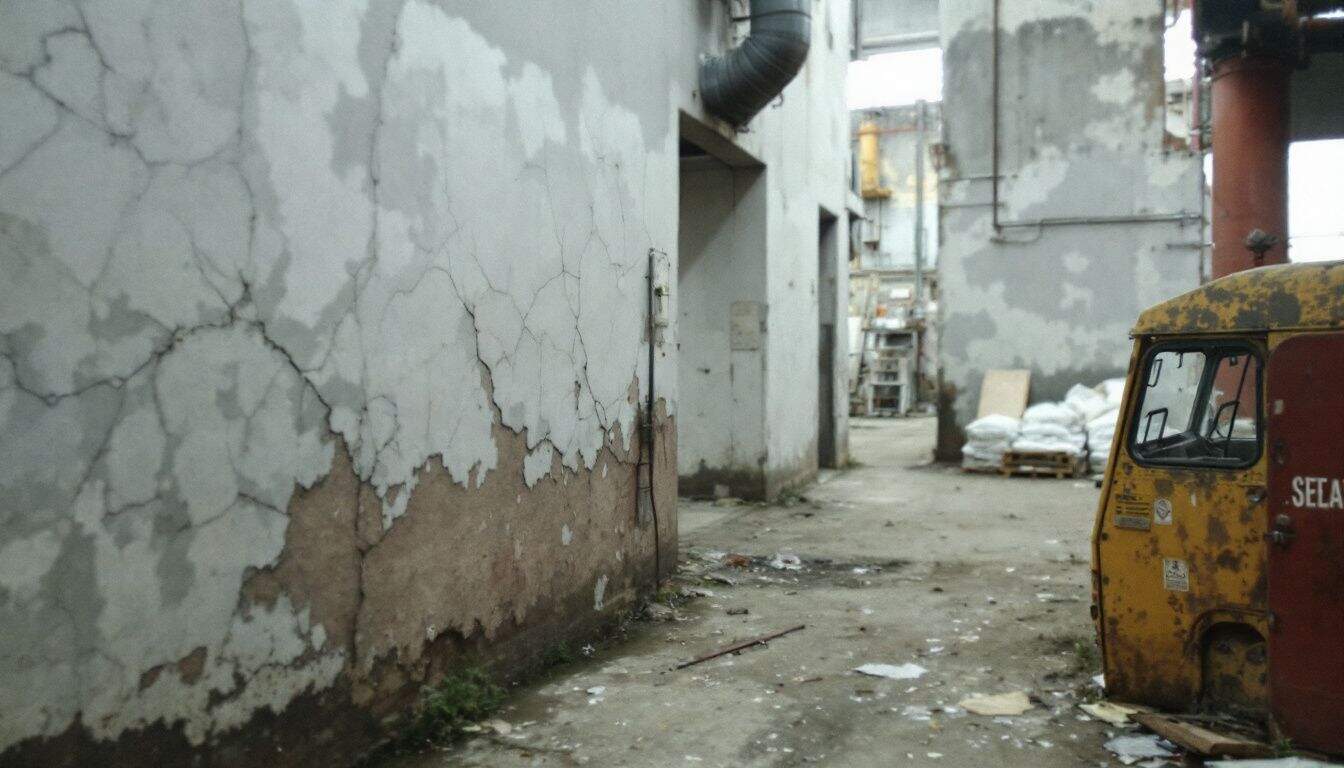
Why Industrial Buildings and Asbestos Are an Unavoidable Combination
Walk into almost any industrial building constructed before the year 2000 and you are almost certainly standing in the presence of asbestos. It was used in everything from roof sheeting and pipe lagging to floor tiles and fire doors — and much of it is still there, hidden in plain sight. An industrial building asbestos survey is not a bureaucratic box-tick. It is the foundation of safe, legally compliant building management.
Whether you manage a warehouse, factory, processing plant, or commercial workshop, understanding how asbestos surveys affect your maintenance obligations could save you from serious financial and legal consequences — and, more importantly, protect the health of everyone who works in or visits your building.
What the Law Requires for Industrial Buildings
The Control of Asbestos Regulations places a clear duty on those responsible for non-domestic premises to manage asbestos. This is known as the duty to manage, and it applies directly to industrial building owners, landlords, and those with maintenance responsibilities.
Meeting this duty means you must:
- Identify whether asbestos-containing materials (ACMs) are present in your building
- Assess the condition and risk level of any ACMs found
- Produce and maintain an asbestos register
- Create an asbestos management plan and act on it
- Provide information about ACMs to anyone who may disturb them during maintenance or repair work
Failure to comply is not just a regulatory issue. It can result in enforcement notices, significant fines, and in serious cases, prosecution. The HSE takes asbestos management in industrial premises extremely seriously, and rightly so.
Surveys must be carried out by surveyors with the appropriate competence and qualifications. UKAS-accredited organisations, such as Supernova Asbestos Surveys, provide the standard of service that satisfies regulatory requirements and holds up to scrutiny.
The Health Stakes: Why Getting This Right Matters
Asbestos-related diseases — including mesothelioma, lung cancer, and asbestosis — have long latency periods. Workers exposed to asbestos fibres decades ago are still dying from those exposures today. Industrial environments historically involved heavy use of asbestos, meaning the risk in these buildings is often higher than in commercial offices or residential properties.
When asbestos-containing materials are disturbed — during maintenance, renovation, or even routine repairs — microscopic fibres become airborne. Those fibres, once inhaled, cannot be expelled from the lungs. The consequences can be fatal.
A thorough industrial building asbestos survey identifies the location, type, and condition of all ACMs before any work takes place. That information is what allows maintenance teams, contractors, and building managers to plan work safely and avoid inadvertent exposure.
Types of Asbestos Survey and When Each One Applies
Not every situation calls for the same type of survey. Understanding the differences helps you commission the right survey at the right time.
Management Survey
A management survey is the standard survey required for any building in normal occupation and use. It identifies ACMs that could be disturbed during routine maintenance and day-to-day activities. The survey is designed to be minimally intrusive while still providing a thorough picture of asbestos risk across the building.
For industrial buildings, this survey forms the basis of your asbestos register and management plan. It should be carried out before you take on responsibility for a building, and updated regularly as conditions change.
Refurbishment and Demolition Survey
If you are planning any refurbishment work — even something as routine as replacing pipework or upgrading electrical systems — a refurbishment and demolition survey is required before work begins. This is a more intrusive survey that involves sampling and inspection of areas that will be disturbed.
In industrial buildings, where plant and equipment are frequently upgraded or replaced, this type of survey is needed more often than many building managers realise. Skipping it puts workers at serious risk and exposes you to significant legal liability.
Re-Inspection Survey
Once ACMs have been identified and a management plan is in place, those materials must be monitored over time. A re-inspection survey checks whether the condition of known ACMs has changed — whether they have deteriorated, been damaged, or been disturbed. The HSE’s guidance document HSG264 recommends that ACMs in poor or moderate condition be re-inspected more frequently than those in good condition.
Where Asbestos Hides in Industrial Buildings
Industrial buildings are among the most complex environments to survey for asbestos precisely because the material was used so widely and in so many different forms. Surveyors need to check:
- Roof sheeting and roof panels — asbestos cement was the material of choice for industrial roofing for decades
- Pipe lagging and boiler insulation — thermal insulation on pipework and heating systems frequently contains amosite or chrysotile
- Floor tiles and adhesives — vinyl floor tiles and the bitumen adhesive used to fix them often contain asbestos
- Ceiling tiles and partitions — particularly in office areas attached to factory or warehouse spaces
- Sprayed coatings — applied to structural steelwork for fire protection, these can be among the most hazardous ACMs present
- Gaskets and rope seals — in plant and machinery, particularly in older industrial equipment
- Fire doors and fire breaks — asbestos millboard was commonly used in fire-resistant construction
- Electrical switchgear and fuse boards — asbestos was used as an insulating material in older electrical installations
A competent surveyor will assess all of these areas systematically, taking bulk samples for laboratory analysis where necessary to confirm the presence and type of asbestos.
How an Industrial Building Asbestos Survey Shapes Your Maintenance Strategy
Many building managers treat an asbestos survey as a one-off requirement — something to commission once and then file away. That approach misses the point entirely. A well-executed industrial building asbestos survey is a living document that should actively inform how your building is maintained.
Planning Maintenance Work Safely
Every time a contractor or maintenance operative is sent to work in an area of your building, they need to know whether asbestos is present. Your asbestos register — built from your survey findings — is what makes that possible. Without it, you are exposing workers to unknown risk and yourself to liability.
Before any maintenance task, the person responsible for the building should check the register, brief the operative on any ACMs in the work area, and confirm that appropriate precautions are in place. This is not optional — it is a legal requirement under the Control of Asbestos Regulations.
Reducing the Cost of Remediation
Asbestos that is identified, assessed, and managed proactively is far cheaper to deal with than asbestos discovered mid-project. Emergency asbestos removal, decontamination of a work area, and the delays caused by an unplanned asbestos find can cost tens of thousands of pounds and bring an entire project to a halt.
Early identification through regular surveys allows you to plan and budget for asbestos removal or encapsulation at a time that suits your maintenance programme, rather than being forced into reactive action at the worst possible moment.
Supporting Renovations and Refurbishments
Industrial buildings are frequently adapted as business needs change — new production lines, warehouse conversions, office fit-outs. Every one of these projects carries the potential to disturb ACMs if the building has not been properly surveyed.
A current, accurate asbestos survey gives your contractors the information they need to plan work safely, obtain clearance certificates, and complete projects without unexpected shutdowns. It also protects you from claims arising from contractor exposure during works on your premises.
Keeping Your Asbestos Register Current
An asbestos register is only useful if it accurately reflects the current state of the building. In an industrial environment, where maintenance work, plant changes, and structural modifications happen regularly, keeping the register up to date requires active management.
Best practice involves:
- Scheduling annual re-inspections of known ACMs to check for deterioration or damage
- Updating the register whenever ACMs are removed, encapsulated, or newly discovered
- Briefing contractors on the register before any work begins and recording their acknowledgement
- Reviewing the management plan at least annually and after any significant changes to the building or its use
- Ensuring records are accessible to maintenance staff, contractors, and emergency services
Records of asbestos management activity should be retained for a minimum of 40 years. This is not just good practice — it provides essential protection in the event of future liability claims.
Air Quality Monitoring and Structural Integrity
In buildings where ACMs are present but being managed in situ — rather than removed — ongoing monitoring is essential. Air quality testing checks whether asbestos fibres are becoming airborne, which can happen as materials age and deteriorate.
For industrial buildings, where vibration from machinery, temperature fluctuations, and physical activity can accelerate the deterioration of ACMs, air monitoring should be part of your routine maintenance programme. HEPA filtration systems and well-maintained ventilation can help control fibre spread, but they are not a substitute for proper asbestos management.
Structural integrity checks — particularly of roof sheeting, which is a common ACM in industrial buildings — should be conducted regularly. Damaged asbestos cement roofing is one of the most frequently encountered problems in industrial premises and one of the most significant sources of fibre release if not addressed promptly.
Managing Asbestos Across Multiple Sites or Locations
Many industrial businesses operate from multiple sites across the UK. Managing asbestos compliance across a portfolio of buildings requires a consistent approach and reliable surveying partners who can work nationwide.
Supernova Asbestos Surveys operates across the country, including providing asbestos survey London services for businesses operating in the capital, asbestos survey Manchester services for the North West, and asbestos survey Birmingham services for the Midlands. Wherever your industrial premises are located, having a single, trusted surveying partner ensures consistency of approach and a standardised format for your asbestos registers.
Staff Training and Awareness
Your asbestos survey is only as effective as the people who act on its findings. Maintenance staff, facilities managers, and anyone else who works in or manages your industrial building should have a clear understanding of asbestos awareness — what it is, where it might be found, and what to do if they suspect they have encountered it.
Under the Control of Asbestos Regulations, employers must ensure that workers who are liable to disturb asbestos receive appropriate training. This includes awareness training for those who might encounter ACMs incidentally, as well as more detailed training for those who work with asbestos directly.
Asbestos awareness training should be refreshed regularly and documented. It is a straightforward and cost-effective way to reduce the risk of accidental exposure during routine maintenance activities.
Addressing Tenant and Contractor Obligations
If your industrial building is let to tenants, your asbestos management obligations do not transfer to them automatically. The duty to manage asbestos typically rests with whoever is responsible for the maintenance and repair of the building — which in most cases is the landlord or their managing agent.
You must provide tenants with access to your asbestos register and ensure they understand the location of any ACMs in the areas they occupy. Lease agreements should clearly set out responsibilities for asbestos management and notification requirements if tenants plan any alterations to the premises.
Contractors working on your behalf must also be given access to the asbestos register before starting work. Keeping records of those briefings protects you in the event of any future dispute or enforcement action.
What to Expect from a Professional Industrial Building Asbestos Survey
A professional survey from a UKAS-accredited provider follows the methodology set out in HSG264, the HSE’s guidance on asbestos surveying. You can expect:
- A pre-survey information gathering exercise to understand the building’s history and any known ACMs
- A systematic visual inspection of all accessible areas
- Bulk sampling of suspected ACMs for laboratory analysis
- A detailed written report including a full asbestos register, risk assessments for each ACM, and photographic evidence
- Recommendations for management, encapsulation, or removal based on the condition and risk level of ACMs found
The survey report is the document that underpins your entire asbestos management approach. It needs to be thorough, accurate, and produced by surveyors who understand the specific challenges of industrial environments.
Frequently Asked Questions
Do all industrial buildings need an asbestos survey?
Any industrial building constructed or refurbished before the year 2000 should be assumed to contain asbestos until proven otherwise. The duty to manage under the Control of Asbestos Regulations applies to all non-domestic premises, including factories, warehouses, and industrial units. If you do not have a current asbestos survey and register for your building, you are likely in breach of your legal obligations.
How often should an industrial building asbestos survey be updated?
There is no single fixed interval prescribed by regulation, but the HSE’s guidance in HSG264 recommends that ACMs in poor or deteriorating condition be re-inspected more frequently — potentially every six to twelve months. As a minimum, your asbestos register should be reviewed annually and updated whenever changes are made to the building or its ACMs. A full resurvey may be needed if significant alterations have taken place or if the original survey is out of date.
Who is responsible for asbestos management in a leased industrial building?
Responsibility depends on the terms of the lease and who has control over the maintenance and repair of the building. In most cases, the landlord retains responsibility for the structure and common areas, while tenants may have responsibility for the areas they occupy. The duty to manage asbestos cannot be contracted away — if there is any ambiguity, both parties should seek legal advice and ensure the lease clearly sets out asbestos management responsibilities.
What happens if asbestos is found during maintenance work?
Work must stop immediately in the affected area. The area should be cordoned off and the building manager notified. A licensed asbestos contractor should be called to assess and, if necessary, remove or make safe the ACMs before work resumes. If workers may have been exposed, the incident may need to be reported under RIDDOR. This is exactly why having a current asbestos register and briefing contractors before work begins is so important — it prevents these situations from arising in the first place.
Can I manage asbestos in place rather than having it removed?
Yes, in many cases managing ACMs in situ is the right approach — particularly where materials are in good condition and are not likely to be disturbed. The decision between management and removal depends on the condition of the material, the risk of disturbance, and the planned future use of the building. A competent asbestos surveyor will advise on the most appropriate course of action based on a thorough risk assessment. Where removal is required, it must be carried out by a licensed contractor.
Speak to Supernova Asbestos Surveys
Supernova Asbestos Surveys has completed over 50,000 surveys across the UK, working with industrial building owners, facilities managers, and property professionals to meet their asbestos management obligations. Our UKAS-accredited surveyors follow HSG264 methodology and provide clear, actionable reports that form the basis of a robust asbestos management plan.
If you need an industrial building asbestos survey — whether for a single site or a portfolio of properties — call us on 020 4586 0680 or visit asbestos-surveys.org.uk to request a quote. We cover the whole of the UK and can typically mobilise quickly to meet your project timescales.