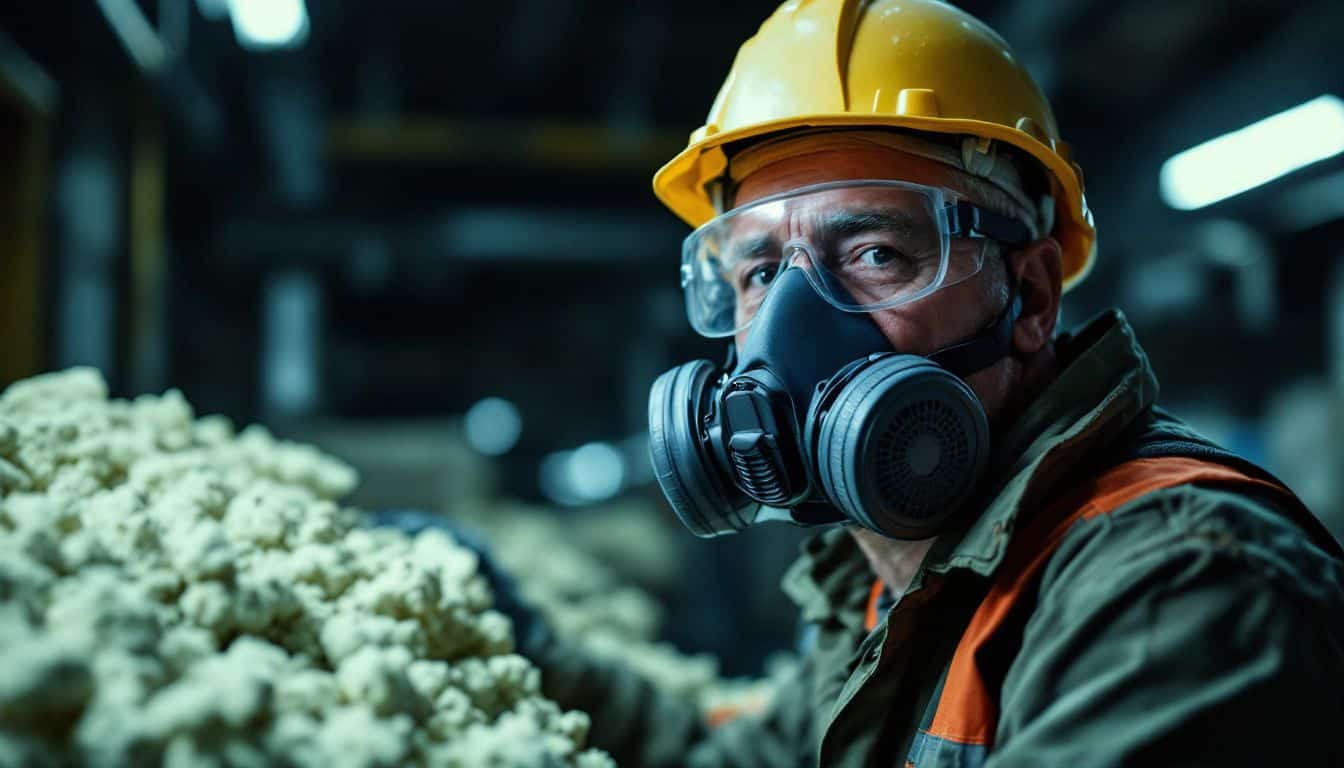
Prohibited Practices Under Asbestos Safety Standards: What UK Workers and Employers Must Know
Asbestos remains the single largest cause of work-related deaths in the UK. Understanding which of the following practices is prohibited under OSHA’s asbestos safety standards — and their UK equivalents — is not a regulatory box-ticking exercise. It is the difference between a workforce that goes home healthy and one that faces decades of devastating illness.
Whether you manage an industrial facility, oversee construction projects, or work with older building stock, knowing what is and is not permitted under asbestos safety law is essential. This post covers the prohibited practices, the regulations that govern them, and the practical steps you need to take to stay compliant and keep people safe.
Why Asbestos Safety Regulations Exist
Asbestos fibres are microscopic. Once disturbed, they become airborne and can be inhaled without any immediate warning signs. The diseases they cause — mesothelioma, asbestosis, and lung cancer — can take decades to develop, which is precisely why so many workers have been caught out.
By the time symptoms appear, the damage is already done. This delayed onset is what makes asbestos uniquely dangerous compared to most other workplace hazards.
In the UK, the Control of Asbestos Regulations sets the legal framework for how asbestos must be managed, surveyed, and removed. The Health and Safety Executive (HSE) enforces these rules and publishes detailed guidance through HSG264, which covers asbestos surveying specifically.
In the United States, OSHA (the Occupational Safety and Health Administration) performs a similar function, setting strict standards for asbestos handling in workplaces. Both regulatory frameworks share a common purpose: to eliminate or reduce the risk of asbestos fibre inhalation through clear, enforceable rules about what workers and employers are and are not allowed to do.
Which of the Following Practices Is Prohibited Under OSHA’s Asbestos Safety Standards — and UK Law
Whether you are operating under OSHA standards or the UK’s Control of Asbestos Regulations, the prohibited practices largely align. Here is a clear breakdown of what is not permitted when working with or around asbestos-containing materials (ACMs).
Working Without Appropriate Respiratory Protection
One of the most fundamental prohibitions is allowing workers to disturb asbestos-containing materials without adequate respiratory protective equipment (RPE). Under both OSHA and UK regulations, this is not optional — it is a legal requirement.
Respirators must be appropriate for the level of exposure. A basic dust mask is not sufficient. Workers must use properly fitted, approved respirators that filter asbestos fibres at the required efficiency level.
Failure to provide or wear correct RPE is one of the most commonly cited violations in asbestos enforcement actions. Employers who allow work to proceed without it face serious legal consequences.
Dry Sweeping or Dry Cleaning of Asbestos Debris
Dry sweeping asbestos debris is explicitly prohibited. When asbestos waste or dust is swept dry, fibres become airborne immediately, creating a serious inhalation hazard for everyone in the vicinity.
The correct method is wet cleaning, using damp rags or specialist industrial vacuum equipment fitted with HEPA filters. This prohibition applies to post-removal clean-up, routine maintenance in areas where ACMs are present, and any situation where asbestos debris may have accumulated.
It sounds straightforward, but dry sweeping remains one of the most common unsafe practices observed in industrial settings. It is a simple error with potentially catastrophic consequences.
Performing Licensable Work Without a Licence
In the UK, certain types of asbestos work — particularly involving high-risk materials such as sprayed coatings, lagging, and asbestos insulating board — must only be carried out by a licensed contractor. Attempting to carry out licensable asbestos removal without the appropriate HSE licence is a criminal offence.
OSHA similarly restricts certain high-exposure asbestos tasks to trained, qualified personnel. The principle is the same: the higher the risk, the more stringent the controls on who can perform the work.
Always verify that your contractor holds a current HSE licence before any work begins. This is a non-negotiable step, not an administrative formality.
Failing to Conduct a Survey Before Refurbishment or Demolition
Beginning any refurbishment or demolition work on a building constructed before 2000 without first commissioning a suitable asbestos survey is prohibited under UK law. HSG264 makes clear that a refurbishment and demolition survey must be completed before any intrusive work begins.
This is not a formality. The survey identifies where ACMs are located so that workers are not inadvertently disturbing asbestos without knowing it. Skipping this step puts everyone on site at risk and exposes the dutyholder to serious legal liability.
A demolition survey carried out by a qualified surveyor will locate and assess all ACMs before a single wall is touched, ensuring your project starts on safe, compliant ground.
Disposing of Asbestos Waste Through Standard Waste Channels
Asbestos waste is classified as hazardous waste and must be disposed of through licensed hazardous waste disposal routes. Placing asbestos-containing materials in standard skips or general waste bins is prohibited.
The waste must be double-bagged in clearly labelled, purpose-made asbestos waste sacks and transported to a licensed disposal facility. Improper asbestos waste disposal is not just a regulatory violation — it creates ongoing contamination risks for waste workers, members of the public, and the environment.
Eating, Drinking, or Smoking in Asbestos Work Areas
Consuming food or drink, or smoking, in any area where asbestos work is being carried out is strictly prohibited. Asbestos fibres can settle on food, drinks, and cigarettes, creating a direct ingestion or inhalation route that bypasses even respiratory protection.
Dedicated clean areas must be established away from the asbestos work zone. Workers must decontaminate before entering these areas, following proper decontamination procedures including removing protective clothing and washing hands and face thoroughly.
Removing Protective Clothing Without Decontamination
Protective clothing worn during asbestos work must not be removed casually or taken home for washing. Fibres trapped in clothing can be carried into clean areas, vehicles, and domestic environments — a phenomenon known as secondary or para-occupational exposure, which has historically caused illness in the family members of asbestos workers.
The correct procedure requires workers to use decontamination units, remove contaminated clothing in the correct sequence, and either dispose of it as asbestos waste or place it in sealed bags for specialist laundering. There are no shortcuts here.
Industrial Settings With the Highest Asbestos Risk
Certain industries and job roles carry a disproportionately high risk of asbestos exposure. Understanding where the greatest dangers lie helps employers prioritise their compliance efforts.
Construction and Demolition
Construction and demolition workers face some of the highest risks. Older buildings — particularly those constructed before the mid-1980s — frequently contain asbestos in insulation, floor tiles, ceiling tiles, pipe lagging, and roofing materials. When structures are broken down without proper controls, fibres are released into the air at potentially dangerous concentrations.
The HSE sets a workplace exposure limit (WEL) of 0.1 fibres per cubic centimetre of air, averaged over a four-hour period. Demolition activities can easily exceed this if proper controls are not in place.
Insulation Workers
Insulation workers have historically had among the highest rates of asbestos-related disease. Many older insulation products — pipe lagging, boiler insulation, thermal insulation boards — contained significant quantities of asbestos.
Workers disturbing or removing these materials without adequate controls face serious risk. Compliance with the Control of Asbestos Regulations is non-negotiable for this group, and regular occupational health monitoring is essential for anyone with a history of insulation work in older buildings.
Electricians and Pipefitters
Electricians working on older electrical systems and pipefitters handling older pipe insulation are regularly at risk of disturbing ACMs without realising it. Many older buildings used asbestos-cement materials around electrical conduits and asbestos-based lagging on pipework.
These workers must be trained to recognise potential ACMs and to stop work immediately if they suspect asbestos is present. Proceeding regardless is one of the prohibited practices that can have the most serious consequences.
The Role of Asbestos Surveys in Preventing Prohibited Practices
The single most effective way to prevent prohibited practices from occurring is to know exactly where asbestos is present before any work begins. A professionally conducted asbestos survey provides a detailed register of all known or suspected ACMs in a building, along with their condition and risk rating.
Without this information, workers are operating blind. They cannot follow safe systems of work for materials they do not know are there. Surveys are not just a legal requirement — they are the foundation on which all other asbestos safety measures are built.
For occupied buildings in day-to-day use, a management survey will identify and assess any ACMs that could be disturbed during normal activities, allowing dutyholders to manage risk proactively rather than reactively.
If you are based in the capital, a professional asbestos survey London service can provide the detailed assessment your building requires. For those in the north-west, an asbestos survey Manchester can be arranged quickly to meet your compliance needs. Businesses in the West Midlands can access an asbestos survey Birmingham to ensure their premises are fully assessed before any work commences.
Health Monitoring and Medical Surveillance
For workers regularly exposed to asbestos, health monitoring is a legal requirement, not an optional extra. The Control of Asbestos Regulations requires employers to ensure that workers engaged in licensable asbestos work are under medical surveillance by an employment medical adviser or appointed doctor.
Health checks should be conducted before work begins and at regular intervals thereafter. Even after exposure has ceased, monitoring should continue — asbestos-related diseases can take between 15 and 60 years to develop after initial exposure.
Early detection of conditions such as pleural plaques, asbestosis, or mesothelioma can significantly affect treatment options and outcomes. Employers who neglect this obligation are not only breaking the law but are failing in their fundamental duty of care to their workforce.
Employer Responsibilities Under UK Asbestos Law
Employers and dutyholders have clearly defined responsibilities under the Control of Asbestos Regulations. These go well beyond simply telling workers to wear a mask.
Key obligations include:
- Identifying and assessing all ACMs in the workplace through a suitable survey
- Producing and maintaining an asbestos register and management plan
- Ensuring all workers who may disturb ACMs receive adequate information, instruction, and training
- Providing appropriate PPE and RPE and ensuring it is used correctly
- Arranging for licensed contractors to carry out licensable asbestos work
- Ensuring asbestos waste is correctly labelled, contained, and disposed of through licensed routes
- Maintaining records of all asbestos work carried out on the premises
- Providing health surveillance for workers engaged in asbestos work
Failure to meet these obligations can result in enforcement notices, prosecution, unlimited fines, and in serious cases, custodial sentences. The HSE takes asbestos non-compliance seriously, and rightly so.
What Happens When Prohibited Practices Are Discovered
When the HSE identifies prohibited asbestos practices during an inspection or investigation, the consequences are swift and significant. Inspectors have the power to issue prohibition notices that stop work immediately, improvement notices requiring specific remedial actions within a set timeframe, and prosecutions that can result in substantial fines or imprisonment.
Beyond the legal penalties, there is the civil liability to consider. Workers who suffer asbestos-related illness as a result of employer negligence can bring personal injury claims that result in significant compensation awards. The reputational damage to a business found to have exposed workers to asbestos through prohibited practices can also be severe and long-lasting.
Proactive compliance is always less costly — financially and in human terms — than dealing with the aftermath of an enforcement action or an asbestos-related illness in your workforce.
Training: The Foundation of Compliance
Many prohibited practices occur not out of deliberate disregard for the law, but because workers and supervisors simply do not know what they are not allowed to do. Adequate asbestos awareness training is a legal requirement for anyone who may come into contact with ACMs in the course of their work.
This includes not just those carrying out asbestos work directly, but also tradespeople such as plumbers, electricians, joiners, and decorators who work in buildings where ACMs may be present. The HSE’s asbestos awareness training requirements are clear: workers must understand the risks, be able to identify potential ACMs, and know what to do if they suspect they have encountered one.
Training should be refreshed regularly and records maintained. A worker who received asbestos awareness training ten years ago and has since moved into a different role may need updated training before returning to environments where ACMs are present.
Frequently Asked Questions
Which of the following practices is prohibited under OSHA’s asbestos safety standards?
Several practices are explicitly prohibited under OSHA’s asbestos standards and their UK equivalents. These include working without appropriate respiratory protective equipment, dry sweeping asbestos debris, performing licensable asbestos work without the required licence or qualifications, failing to survey buildings before refurbishment or demolition, disposing of asbestos waste through standard waste channels, eating or drinking in asbestos work areas, and removing protective clothing without proper decontamination. Any of these practices can result in serious harm to workers and significant legal penalties for employers.
Do UK asbestos regulations differ significantly from OSHA standards?
The underlying principles are very similar — both frameworks aim to prevent asbestos fibre inhalation through strict controls on who can perform asbestos work, what protective measures must be in place, and how asbestos waste must be handled. The specific legal instruments differ: in the UK, the Control of Asbestos Regulations and HSG264 guidance govern asbestos management, while in the US, OSHA’s asbestos standards apply. UK law additionally requires a licensing regime for higher-risk asbestos work, administered by the HSE.
What type of asbestos survey do I need before starting building work?
The type of survey required depends on the nature of the work. For occupied buildings where routine maintenance may disturb ACMs, a management survey is the appropriate starting point. Before any refurbishment or demolition work, a refurbishment and demolition survey — sometimes called a demolition survey — is legally required. This more intrusive survey accesses all areas of the building, including those not normally accessible, to locate all ACMs before work begins. Commissioning the wrong type of survey, or skipping the survey entirely, is a prohibited practice under UK asbestos law.
Can an employer be prosecuted for asbestos violations even if no one was harmed?
Yes. Under UK health and safety law, prosecution does not require proof that harm actually occurred. If an employer is found to have failed to comply with the Control of Asbestos Regulations — for example, by failing to commission a survey, using an unlicensed contractor, or not providing adequate RPE — they can be prosecuted regardless of whether any workers developed an asbestos-related illness. The HSE takes a risk-based approach to enforcement, and serious breaches of asbestos regulations are treated as high-priority matters.
How often should an asbestos management plan be reviewed?
The Control of Asbestos Regulations requires that an asbestos management plan be reviewed and updated regularly, and whenever there is reason to believe it may no longer be valid. In practice, this means reviewing the plan at least annually and after any event that may have affected the condition of ACMs — such as building works, damage, or a change in the building’s use. The asbestos register itself should also be updated whenever new ACMs are identified or existing ones are removed or encapsulated.
Get Expert Asbestos Survey Support From Supernova
Staying on the right side of asbestos safety law starts with knowing what is in your building. Supernova Asbestos Surveys has completed over 50,000 surveys nationwide, working with property managers, contractors, and dutyholders across every sector to ensure their premises are assessed, registered, and managed in full compliance with the Control of Asbestos Regulations.
Whether you need a management survey for an occupied building, a demolition survey before a major project, or specialist advice on managing ACMs in a complex industrial environment, our qualified surveyors are ready to help.
Call us on 020 4586 0680 or visit asbestos-surveys.org.uk to book your survey or request a quote. Do not leave asbestos compliance to chance — speak to the experts who have been doing this longer than almost anyone else in the UK.