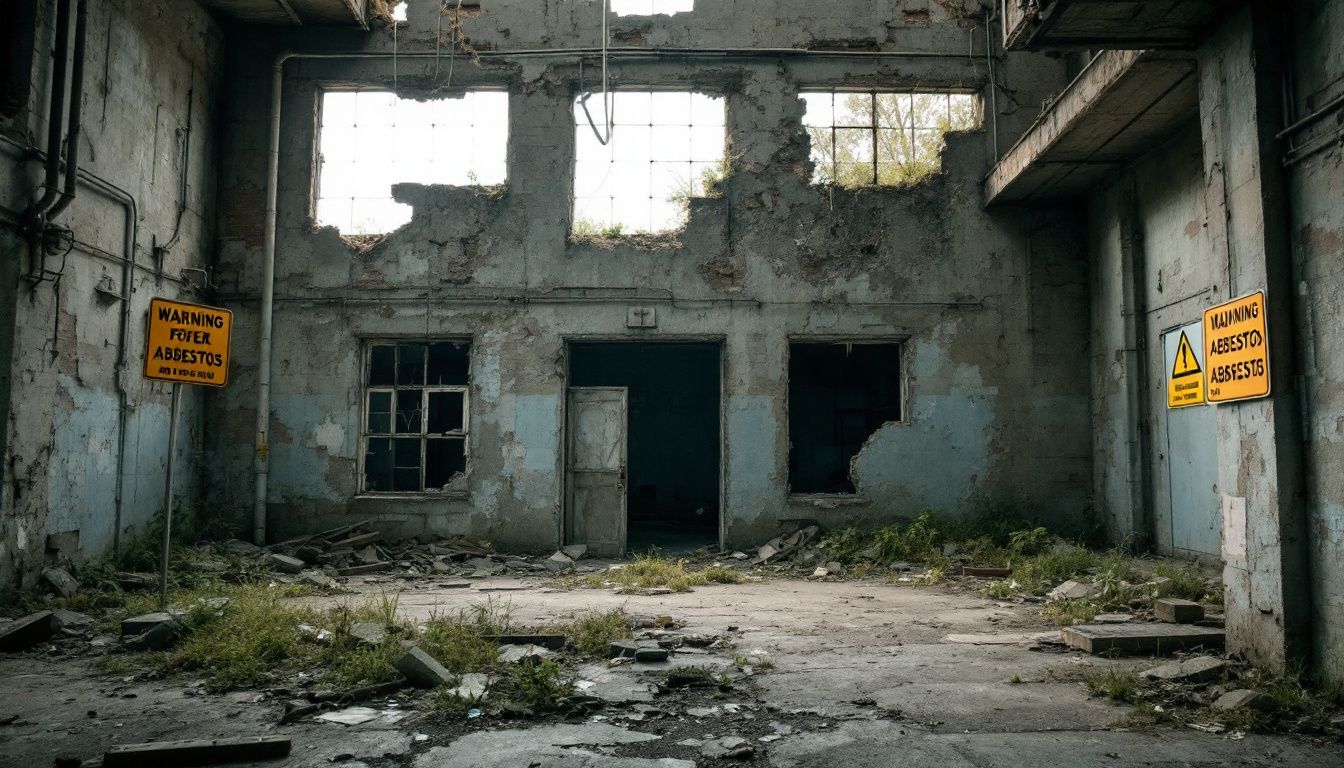
Navigating Asbestos Inspections in the UK for Enhanced Industrial Safety: A Legal Duty, Not a Formality
Asbestos remains the single largest cause of work-related deaths in the UK. It is still present in thousands of industrial buildings across the country, and navigating asbestos inspections in the UK for enhanced industrial safety is not a box-ticking exercise — it is a legal obligation with serious consequences when ignored.
If your site was built or refurbished before 2000, there is a real and immediate possibility that asbestos-containing materials (ACMs) are embedded in the very fabric of your building. This is a practical breakdown of everything employers, duty holders, and facilities managers need to know: the regulations that apply, what a proper inspection involves, how to manage ongoing risk, and what happens when things go wrong.
Understanding Asbestos-Containing Materials in Industrial Settings
Industrial buildings sit among the highest-risk environments for ACMs. Warehouses, factories, power stations, and older commercial premises frequently contain asbestos in locations that are easy to overlook — pipe lagging, ceiling tiles, insulating board, corrugated roof sheets, and floor tiles.
Undisturbed ACMs do not necessarily pose an immediate risk. The danger arises when materials are damaged, drilled, cut, or disturbed during maintenance and construction work, releasing microscopic fibres into the air. Once inhaled, those fibres can cause mesothelioma, asbestosis, and lung cancer — diseases that may not appear for decades after the original exposure.
The first step in managing that risk is knowing exactly where ACMs are located, what condition they are in, and who is likely to come into contact with them. That is precisely what a professional asbestos inspection delivers.
The UK Regulatory Framework Every Duty Holder Must Understand
Three pieces of legislation sit at the core of asbestos management in UK workplaces. Understanding how they interact is essential for any duty holder responsible for an industrial site.
Control of Asbestos Regulations
The Control of Asbestos Regulations is the primary legislation governing asbestos in UK workplaces. It places a legal duty on anyone who owns, occupies, or manages non-domestic premises to manage asbestos risk — identifying ACMs, assessing their condition, producing a written Asbestos Management Plan (AMP), and ensuring that plan is acted upon and reviewed regularly.
The regulations also govern who can carry out licensed asbestos work, set exposure limits, and require that workers who are liable to disturb ACMs receive appropriate training. This responsibility sits firmly with the duty holder and cannot be delegated away.
Health and Safety at Work etc. Act
The Health and Safety at Work etc. Act provides the broader framework within which asbestos regulations operate. It requires employers to ensure, so far as is reasonably practicable, the health, safety, and welfare of all employees — and extends that protection to contractors, visitors, and members of the public affected by work activities.
Under this Act, failure to manage asbestos risk is not simply a regulatory breach — it can constitute a criminal offence. The Health and Safety Executive (HSE) has the power to prosecute, issue improvement notices, and prohibit work activities entirely.
Construction Design and Management Regulations
The Construction Design and Management (CDM) Regulations are particularly relevant for industrial sites undergoing refurbishment, fit-out, or demolition. They place duties on clients, principal designers, and principal contractors to plan, manage, and coordinate health and safety throughout a project — including the identification and management of asbestos before and during construction work.
Pre-construction asbestos surveys are a standard requirement under CDM. If you are commissioning any building work on an older industrial site, that survey must be completed before work begins — not after.
Types of Asbestos Survey and When Each One Applies
Not all asbestos surveys are the same. The HSE’s guidance document HSG264 defines two main survey types, and choosing the right one matters enormously for both compliance and worker safety.
Management Survey
A management survey is the standard survey required to manage ACMs during the normal occupation and use of a building. It locates ACMs that could be damaged or disturbed during everyday activities, assesses their condition, and provides the information needed to compile or update an Asbestos Management Plan.
For most occupied industrial premises, this is the logical starting point. It establishes the baseline from which all subsequent asbestos management decisions are made.
Refurbishment and Demolition Survey
A demolition survey is required before any work that will disturb the building fabric — whether that is a full demolition, a partial strip-out, or targeted refurbishment. This survey is more intrusive than a management survey, involving destructive inspection techniques to locate all ACMs that may be disturbed by the planned work, including those in hidden or inaccessible areas.
Attempting refurbishment work without this survey in place is a serious regulatory breach and puts workers at direct risk of exposure. There is no grey area here.
Re-Inspection Survey
Once ACMs have been identified and recorded, they must be monitored over time. A re-inspection survey checks the condition of known ACMs at regular intervals — typically annually — to confirm whether they remain stable or have deteriorated to a point where remedial action is needed.
This is a legal requirement under the duty to manage, not an optional extra that can be deferred when budgets are tight.
Building a Robust Asbestos Management Plan
An Asbestos Management Plan is the document that ties everything together. Commissioning a survey is only the first step — the findings must be acted upon, communicated across the organisation, and reviewed on a regular basis.
A well-constructed AMP must include:
- A complete register of all identified ACMs, including their location, type, condition, and risk rating
- A clear risk assessment for each ACM, taking into account the likelihood of disturbance and the potential for fibre release
- Defined responsibilities — who is accountable for managing each ACM and for keeping the plan updated
- Safe working procedures for any activity that could disturb ACMs, including maintenance, cleaning, and emergency repairs
- A schedule for re-inspections and air monitoring where appropriate
- Emergency procedures in the event of accidental disturbance
- Records of training completed by relevant staff and contractors
- Disposal records confirming that any removed ACMs were handled by a licensed waste carrier
The AMP must be shared with anyone who is liable to work on or disturb ACMs — including contractors arriving on site for the first time. It should be reviewed whenever there is a change in the building’s use, condition, or occupancy, and at minimum once a year as a matter of course.
Conducting Effective Asbestos Inspections in Industrial Premises
Navigating asbestos inspections in the UK for enhanced industrial safety requires working with a qualified professional. A professional asbestos inspection in an industrial setting is a methodical, structured process that should only be carried out by a surveyor holding the appropriate qualifications — ideally BOHS P402 certification or an equivalent recognised standard.
During the inspection, the surveyor will:
- Review any existing asbestos records and building history
- Conduct a systematic visual inspection of all accessible areas
- Take samples of suspected ACMs for laboratory analysis
- Assess the condition of identified materials using a standardised scoring system
- Produce a written report with a full ACM register, photographs, and clear recommendations
If you are uncertain whether specific materials in your building contain asbestos, a testing kit can provide an initial indication — though this does not replace a full professional survey for regulatory compliance purposes.
High-risk areas to prioritise in industrial buildings include plant rooms, roof spaces, pipe runs, boiler rooms, and any areas that have undergone previous maintenance or ad hoc repairs. These are the locations where ACMs are most likely to have already been disturbed.
Training, Communication, and Contractor Management
The Control of Asbestos Regulations require that anyone who is liable to disturb asbestos during their work receives adequate training. This is not limited to specialist asbestos contractors — it applies to maintenance engineers, electricians, plumbers, painters, and any other trade that works on the building fabric.
Training must cover:
- The properties of asbestos and the health risks it presents
- How to identify materials that may contain asbestos
- The procedures to follow if suspected ACMs are encountered unexpectedly
- The correct use of personal protective equipment (PPE)
- Emergency procedures in the event of accidental disturbance
Refresher training should be provided regularly and updated whenever regulations or site-specific procedures change. Records of all training must be kept and made available to the HSE on request.
Contractor management is equally critical. Before any contractor begins work on your site, they must be formally briefed on the asbestos register and any relevant safe working procedures. Do not assume contractors have reviewed your AMP — make it a mandatory part of your site induction process and document that it has taken place.
Ongoing Monitoring and the Importance of Regular Re-Inspections
Identifying ACMs is only the beginning. Managing them safely over the long term requires consistent, documented monitoring. The condition of asbestos materials can change as a result of building works, weather damage, vibration, or simply the passage of time.
Annual re-inspections are the standard expectation under HSE guidance. During a re-inspection, the surveyor will compare current conditions against previous records, update risk ratings where necessary, and flag any materials that have deteriorated to the point where remedial action — encapsulation or removal — is required.
Air monitoring should also be considered during high-risk activities such as maintenance in areas known to contain ACMs. This provides objective, documented evidence that fibre levels remain below the control limit and gives duty holders assurance that their control measures are working as intended.
Consequences of Non-Compliance
The consequences of failing to manage asbestos properly are severe — for individuals, for businesses, and most importantly for the workers who are put at risk. The HSE investigates asbestos-related breaches and can issue improvement notices, prohibition notices, and prosecutions. Fines for serious breaches can reach six figures, and in cases involving gross negligence or deliberate disregard for safety, custodial sentences are possible for company directors and managers.
Beyond the legal penalties, businesses found to have failed in their asbestos duty face significant reputational damage, loss of contracts, and potential civil claims from workers who develop asbestos-related diseases.
Non-compliance during construction or refurbishment projects can also halt work entirely, with prohibition notices shutting down sites until compliance is demonstrated. The cost of that disruption almost always far exceeds the cost of getting the survey done correctly in the first place.
Navigating Asbestos Inspections in the UK Across Key Industrial Locations
Industrial premises across the UK face broadly similar regulatory requirements, but local factors — the age of the building stock, the nature of the industries historically present, and proximity to residential areas — can all influence the specific risks involved.
If you manage industrial premises in the capital, an asbestos survey London from a qualified local team ensures you meet your legal obligations while accounting for the particular characteristics of older London commercial and industrial stock — much of which dates back to the post-war boom when asbestos use was at its peak.
In the North West, where heavy industry and manufacturing have left a significant legacy of older premises, an asbestos survey Manchester provides the specialist knowledge needed to assess sites with complex histories and multiple phases of construction or refurbishment.
Similarly, industrial facilities across the Midlands often contain some of the most varied and extensive ACM profiles in the country. An asbestos survey Birmingham delivered by an experienced, accredited team gives duty holders the accurate, site-specific data they need to manage risk and maintain compliance.
Wherever your premises are located, the principle is the same: use a qualified, accredited surveyor with demonstrable experience in industrial environments. A survey that misses ACMs or underestimates their condition is not just inadequate — it is actively dangerous.
What to Look for in an Asbestos Survey Provider
Selecting the right survey provider is one of the most consequential decisions a duty holder will make. Not every company offering asbestos surveys has the qualifications, experience, or accreditation to carry out work to the standard required by HSG264 and the Control of Asbestos Regulations.
When evaluating a provider, look for the following:
- UKAS accreditation — the survey company should be accredited by the United Kingdom Accreditation Service for asbestos surveying and/or testing
- Surveyor qualifications — individual surveyors should hold BOHS P402 certification or equivalent
- Experience in industrial settings — not all surveyors are equally familiar with the complexity of industrial premises; ask for relevant case examples
- Clear, detailed reporting — the survey report should be fully compliant with HSG264 requirements, with photographs, risk ratings, and actionable recommendations
- Transparent pricing — be wary of unusually low quotes that may reflect a superficial inspection rather than a thorough one
- Responsive communication — a good survey provider will answer your questions clearly before, during, and after the inspection
It is also worth asking how the provider handles unexpected findings. In older industrial buildings, surveys sometimes uncover ACMs in locations not anticipated at the outset. A competent surveyor will have clear protocols for managing these situations and communicating findings to the duty holder promptly.
Practical Steps for Duty Holders: Getting Started
If you are responsible for an industrial premises and have not yet commissioned a professional asbestos inspection, the following steps will help you move from uncertainty to compliance:
- Establish whether a survey has previously been carried out. Check building records, previous occupancy files, and any handover documentation. If no survey exists or the existing one is out of date, a new inspection is required.
- Determine the appropriate survey type. For occupied premises with no imminent construction work, a management survey is the starting point. If refurbishment or demolition is planned, a demolition and refurbishment survey is required before work begins.
- Commission a UKAS-accredited surveyor. Do not rely on unaccredited providers for regulatory compliance purposes. The survey must meet the standards set out in HSG264.
- Act on the findings. A survey report sitting in a drawer is not compliance. The findings must be used to produce or update your Asbestos Management Plan, and that plan must be implemented and communicated across the organisation.
- Schedule your re-inspections. Once ACMs are identified and recorded, set a calendar reminder for annual re-inspections. Do not wait until conditions deteriorate before revisiting the register.
- Train your staff and brief your contractors. Ensure everyone who works on or in your building understands the asbestos risks present and knows the procedures to follow if they encounter suspected ACMs.
These steps are not complicated, but they do require commitment and follow-through. The duty to manage asbestos is ongoing — it does not end with a single survey.
Frequently Asked Questions
Do I need an asbestos inspection if my industrial building was built after 2000?
If your building was constructed entirely after 1999 and has not been refurbished using older materials, the likelihood of ACMs is significantly lower. However, if the building underwent any refurbishment using pre-2000 materials, or if you are uncertain about the construction history, a survey is still advisable. When in doubt, commission an inspection — the cost of a survey is minimal compared to the consequences of undetected ACMs.
How often should asbestos re-inspections be carried out in industrial premises?
HSE guidance sets annual re-inspections as the standard expectation for most premises where ACMs are present. In higher-risk environments — where ACMs are in poor condition, in areas of frequent activity, or in locations subject to vibration or environmental stress — more frequent monitoring may be appropriate. Your Asbestos Management Plan should specify the re-inspection schedule based on the risk ratings assigned during the original survey.
What is the difference between a management survey and a demolition survey?
A management survey is designed for occupied buildings in normal use. It identifies ACMs that could be disturbed during routine activities and informs the Asbestos Management Plan. A demolition and refurbishment survey is required before any work that will disturb the building fabric. It is more intrusive — involving destructive sampling techniques — and must locate all ACMs in the areas to be affected by the planned work, including those in concealed or inaccessible locations.
Can I carry out my own asbestos inspection?
For regulatory compliance purposes, asbestos surveys must be carried out by a competent, qualified surveyor — ideally one holding BOHS P402 certification and working for a UKAS-accredited organisation. A DIY inspection will not satisfy the requirements of the Control of Asbestos Regulations or HSG264, and acting on inaccurate findings could put workers at serious risk. A professional testing kit may help you identify whether a specific material warrants further investigation, but it is not a substitute for a full survey.
What happens if the HSE finds that I have not managed asbestos on my industrial site?
The HSE has wide enforcement powers in relation to asbestos non-compliance. Depending on the severity of the breach, they can issue improvement notices requiring you to bring your management up to standard within a set timeframe, prohibition notices halting work activities entirely, or prosecute duty holders and company directors. Fines for serious breaches can be substantial, and in cases of gross negligence, custodial sentences are possible. Civil claims from workers who develop asbestos-related diseases are also a significant long-term risk.
Work With Supernova Asbestos Surveys
Supernova Asbestos Surveys has completed over 50,000 surveys nationwide, working with industrial clients, facilities managers, and duty holders across the UK to deliver fully compliant, HSG264-aligned asbestos inspections. Our UKAS-accredited surveyors operate across England, Scotland, and Wales, with dedicated teams covering major industrial centres including London, Manchester, and Birmingham.
Whether you need a first-time management survey, a pre-demolition inspection, or a scheduled re-inspection to keep your Asbestos Management Plan current, we provide clear, actionable reports that give you everything you need to manage risk and meet your legal obligations.
Call us on 020 4586 0680 or visit asbestos-surveys.org.uk to arrange your survey or request a quote. Do not wait for an incident to prompt action — the time to act is now.