
The Hidden Danger Built Into Britain’s Buildings: Asbestos in Construction Materials
Millions of people live and work in buildings that contain asbestos in construction materials installed decades ago. It sits quietly inside walls, beneath floor tiles, above suspended ceilings — entirely harmless when left undisturbed, but potentially lethal when fibres are released into the air. Understanding where it hides, what it does to the body, and what the law requires of you isn’t optional. It’s essential.
What Is Asbestos and Why Was It Used in Construction?
Asbestos is a naturally occurring fibrous silicate mineral that was prized by builders and manufacturers for one simple reason: it works extraordinarily well. It resists fire, absorbs sound, insulates against heat and cold, and strengthens the materials it’s mixed into — all at a relatively low cost.
From the 1950s through to the mid-1980s, asbestos was incorporated into an enormous range of building products. Its use didn’t fully stop in the UK until 1999, when a complete ban on the import, supply, and use of all asbestos types came into force.
The three main types used in construction were:
- Chrysotile (white asbestos) — the most widely used, found in cement sheets, floor tiles, and textured coatings
- Amosite (brown asbestos) — commonly used in thermal insulation boards and ceiling tiles
- Crocidolite (blue asbestos) — used in spray coatings and pipe insulation; considered the most hazardous
Any building constructed or refurbished before the year 2000 may contain asbestos-containing materials (ACMs). That covers an enormous proportion of the UK’s housing stock, schools, hospitals, offices, and industrial premises.
Where Is Asbestos Found in Construction Materials?
Asbestos in construction materials doesn’t appear in just one or two places. It was used so extensively that a pre-2000 building could contain ACMs in dozens of locations simultaneously.
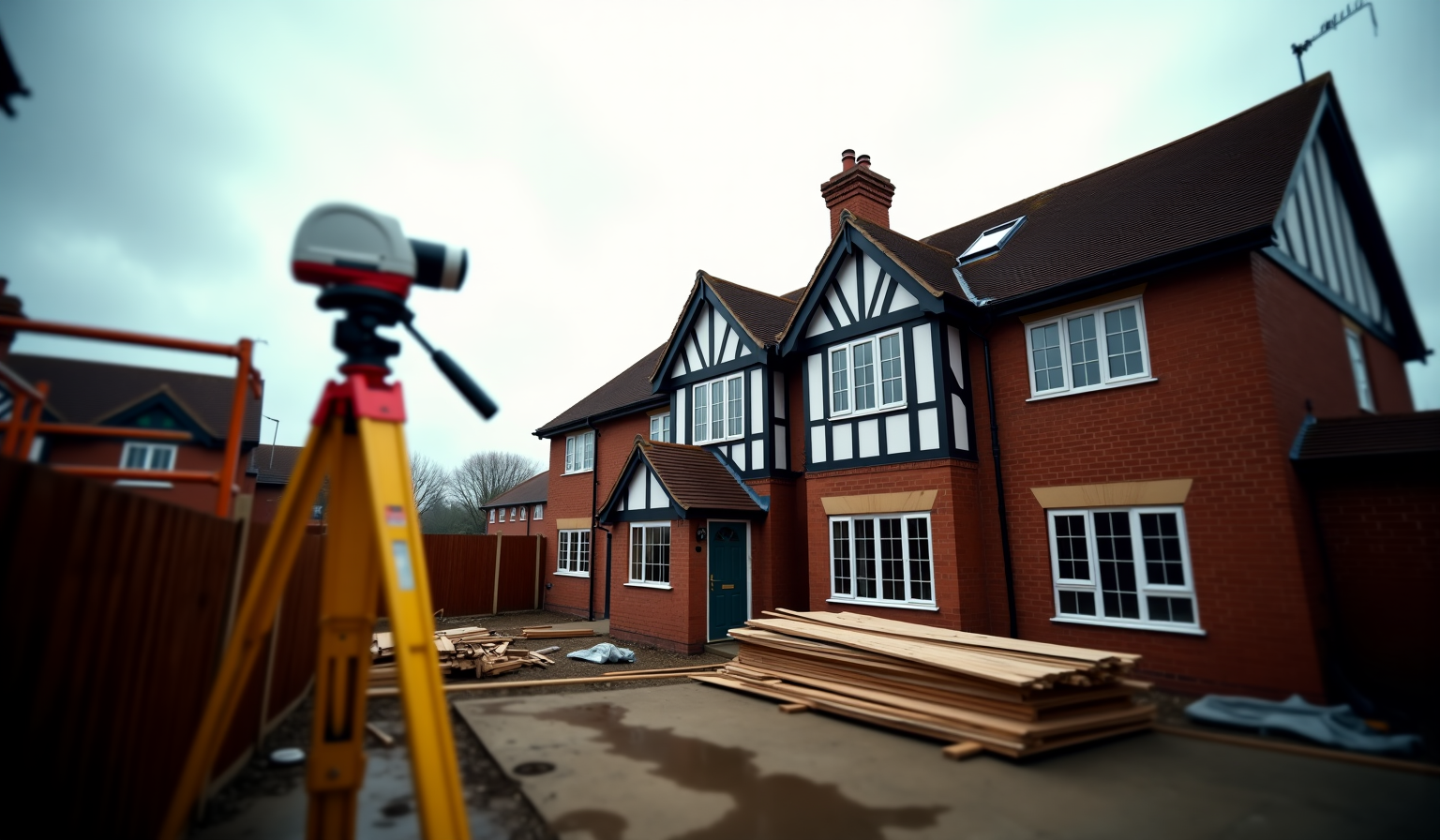
Common locations include:
- Sprayed coatings on structural steelwork and ceilings
- Lagging on boilers, pipes, and calorifiers
- Insulating board used in ceiling tiles, partition walls, and fire doors
- Textured decorative coatings such as Artex
- Vinyl floor tiles and the adhesive beneath them
- Cement products including roofing sheets, guttering, and soffits
- Rope seals and gaskets in heating systems
- Bitumen-based roof felt and damp-proof courses
- Reinforced plastics and composite panels
Many of these materials look entirely ordinary. You cannot identify asbestos by sight alone — that’s precisely why professional surveying is so important before any maintenance, refurbishment, or demolition work begins.
How Asbestos in Construction Materials Harms Human Health
The health risks from asbestos exposure are well established and serious. When ACMs are disturbed — drilled into, cut, sanded, or broken — microscopic fibres are released into the air. These fibres are invisible to the naked eye, can remain airborne for hours, and are easily inhaled deep into the lungs.
Once lodged in lung tissue, the fibres cannot be expelled by the body. Over time, they cause scarring, inflammation, and cellular damage. The diseases that result are severe, often fatal, and typically don’t appear until decades after the original exposure.
Asbestosis
Asbestosis is a chronic lung condition caused by prolonged inhalation of asbestos fibres. The fibres cause progressive scarring of lung tissue, leading to breathlessness, a persistent cough, and significantly reduced lung function. There is no cure — management focuses on slowing progression and easing symptoms.
Lung Cancer
Asbestos exposure is a well-recognised cause of lung cancer, particularly when combined with smoking. The latency period — the gap between exposure and diagnosis — is typically 15 to 35 years. By the time symptoms present, the disease is frequently at an advanced stage, making treatment far more difficult.
Mesothelioma
Mesothelioma is a cancer of the lining of the lungs (pleura), abdomen (peritoneum), or heart (pericardium). It is almost exclusively caused by asbestos exposure and is considered one of the most aggressive cancers known. Around 2,500 people are diagnosed with mesothelioma in the UK each year, and the median survival time following diagnosis is between 12 and 21 months.
The latency period for mesothelioma is particularly long — typically 20 to 50 years after exposure. This means workers who handled asbestos in construction materials during the 1960s and 1970s are still receiving diagnoses today.
Pleural Thickening and Pleural Plaques
Pleural thickening involves scarring and thickening of the membrane surrounding the lungs, causing breathlessness and chest discomfort. Pleural plaques are calcified patches on the pleura — while not cancerous themselves, they serve as a marker of significant past asbestos exposure and indicate elevated risk of other asbestos-related conditions.
Who Is Most at Risk from Asbestos in Construction Materials?
Exposure risk isn’t limited to those who worked directly with asbestos. Anyone who spends time in a building containing deteriorating or disturbed ACMs faces potential exposure.

The groups at highest risk include:
- Construction and maintenance workers — tradespeople such as electricians, plumbers, carpenters, and plasterers who regularly work in pre-2000 buildings without knowing what materials they’re disturbing
- Demolition workers — those involved in stripping out or demolishing older buildings where ACMs may be widespread
- Teachers and school staff — many UK schools were built during the peak era of asbestos use, and staff may be exposed if materials deteriorate or are disturbed during maintenance
- NHS and care workers — hospitals built before 2000 frequently contain ACMs, and ongoing maintenance and refurbishment work creates ongoing exposure risk
- Building occupants — anyone living or working in a building with damaged or deteriorating ACMs faces background exposure, even without any active disturbance
Secondary exposure is also a real concern. Family members of workers who brought asbestos fibres home on their clothing have developed asbestos-related diseases without ever setting foot on a construction site.
The Environmental Impact of Asbestos in Construction
The harm caused by asbestos in construction materials extends beyond human health. When ACMs are improperly handled, demolished, or disposed of, fibres contaminate the surrounding environment in ways that are difficult to reverse.
Air and Soil Contamination
During demolition or deterioration of asbestos-containing structures, fibres become airborne and can travel considerable distances from the original site. Once they settle, they contaminate soil and can persist for many years.
Improper disposal — fly-tipping asbestos waste or burying it without proper containment — compounds the problem significantly. Asbestos fibres can also infiltrate water sources, affecting aquatic ecosystems and potentially entering the food chain.
Impact on Biodiversity
Wildlife exposed to asbestos-contaminated environments faces respiratory damage and increased cancer risk. Asbestos in soil can suppress plant growth and reduce crop yields in affected areas. Marine environments are not immune either — fibres introduced into waterways can accumulate in fish and shellfish, disrupting ecosystems and potentially affecting human food sources.
Effective asbestos abatement and responsible disposal are not just legal obligations. They are genuine environmental responsibilities.
UK Regulations Governing Asbestos in Construction Materials
The UK has a robust regulatory framework designed to manage the risks posed by asbestos in construction materials. Understanding these obligations is essential for anyone who owns, manages, or works in a non-domestic building.
The Control of Asbestos Regulations
The Control of Asbestos Regulations place a legal duty on the owners and managers of non-domestic premises to manage asbestos safely. This includes identifying the presence and condition of ACMs, assessing the risk they pose, and producing and maintaining a written asbestos management plan.
The duty to manage applies to anyone with responsibility for maintenance and repair of non-domestic premises — whether that’s a building owner, facilities manager, or employer. Failure to comply is a criminal offence.
HSE Guidance and HSG264
The Health and Safety Executive publishes HSG264, the definitive guidance document on asbestos surveying in the UK. It sets out the standards for management surveys and refurbishment and demolition surveys, and provides detailed guidance on how surveys should be conducted and documented. Any surveying company operating in the UK should work in full compliance with HSG264.
Licensing for Asbestos Work
Not all asbestos work requires a licence, but the most hazardous activities — including work on sprayed coatings, lagging, and insulating board — must be carried out by a contractor licensed by the HSE. For lower-risk notifiable non-licensed work (NNLW), employers must still notify the relevant enforcing authority, designate a supervisor, and maintain health records for workers.
Monitoring and Compliance
Regulatory compliance doesn’t end with a survey. Duty holders must keep their asbestos management plan up to date, review it regularly, and ensure that anyone likely to disturb ACMs — contractors, maintenance staff, tradespeople — is made aware of the asbestos register before work begins. Regular monitoring of the condition of known ACMs is also required.
Strategies for Managing Asbestos in Construction Materials Safely
Managing asbestos effectively isn’t simply about reacting when something goes wrong. It requires a structured, proactive approach that starts well before any building work takes place.
Commission a Professional Asbestos Survey
The first step for any pre-2000 building is to commission a professional asbestos survey. A management survey identifies the location, extent, and condition of ACMs that could be disturbed during normal occupation and maintenance — it’s the foundation of any sound asbestos management strategy.
A demolition survey is required before any intrusive work begins and involves a more thorough, often destructive inspection of all areas to be affected. It must be completed before refurbishment or demolition work starts — not during or after.
Maintain an Up-to-Date Asbestos Register
Following a survey, every building should have a clear, accurate asbestos register documenting the location, type, condition, and risk rating of all identified ACMs. This register must be made available to anyone who might disturb those materials — including contractors, maintenance workers, and emergency services.
An outdated or incomplete register is not just a compliance failure — it’s a genuine safety risk to everyone working in or around the building.
Safe Removal When Required
In many cases, ACMs in good condition are best left in place and managed. However, when materials are damaged, deteriorating, or located in areas due for refurbishment, asbestos removal by a licensed contractor becomes necessary.
Removal involves strict containment procedures, specialist equipment, and careful disposal in accordance with hazardous waste regulations. Clearance air testing must confirm the area is safe before normal occupation resumes.
Use of Alternative Materials in New Construction
In new construction and during refurbishment, asbestos-containing materials have been replaced by safer alternatives. Fibre cement boards, mineral wool insulation, and intumescent coatings now perform many of the same functions that asbestos once did — without the associated health risks. Specifying these alternatives correctly from the outset removes the risk entirely for future generations of building users.
Training and Awareness for Building Workers
Every tradesperson who works in pre-2000 buildings should have asbestos awareness training. This doesn’t mean they can work with or remove ACMs — it means they can recognise potentially hazardous materials, stop work immediately if they suspect asbestos is present, and follow the correct reporting procedures.
Awareness training is a legal requirement for anyone whose work could foreseeably disturb asbestos. It is not optional, and it is not a one-off exercise — it should be refreshed regularly.
Supernova Asbestos Surveys: Nationwide Coverage
Supernova Asbestos Surveys has completed over 50,000 surveys across the UK, working with property managers, local authorities, housing associations, schools, hospitals, and commercial landlords. Our surveyors are fully qualified, work in compliance with HSG264, and provide clear, actionable reports that make compliance straightforward.
We cover the entire country. If you need an asbestos survey London, our teams respond quickly across all London boroughs. Our asbestos survey Manchester service handles commercial and residential properties across Greater Manchester and the surrounding region. And our asbestos survey Birmingham teams cover the full West Midlands area.
Whether you need a management survey, a refurbishment and demolition survey, or licensed removal, we have the expertise and the capacity to help. Call us on 020 4586 0680 or visit asbestos-surveys.org.uk to book your survey or speak to a member of our team.
Frequently Asked Questions
How do I know if my building contains asbestos in construction materials?
You cannot tell by looking. Asbestos fibres are microscopic, and many ACMs appear identical to non-asbestos materials. The only reliable way to determine whether asbestos is present is to commission a professional asbestos survey carried out by a qualified surveyor working in accordance with HSG264. If your building was constructed or significantly refurbished before 2000, you should assume ACMs may be present until a survey confirms otherwise.
Is asbestos in construction materials always dangerous?
Not immediately. Asbestos in good condition that is left undisturbed poses a very low risk. The danger arises when ACMs are damaged, deteriorating, or disturbed during maintenance or building work — at which point fibres can be released into the air and inhaled. The key is to identify all ACMs through a proper survey, assess their condition, and manage or remove them appropriately.
Who is legally responsible for managing asbestos in a building?
Under the Control of Asbestos Regulations, the duty to manage asbestos falls on whoever has responsibility for maintaining and repairing a non-domestic premises. This is typically the building owner, employer, or facilities manager. They are legally required to identify ACMs, assess the risk, produce a written management plan, and ensure it is kept up to date. Failure to comply is a criminal offence that can result in prosecution and significant fines.
What happens if asbestos is found during building work?
Work must stop immediately. The area should be vacated, ventilation systems turned off to prevent fibre spread, and the site secured. A qualified asbestos surveyor should be contacted to assess the situation before any work resumes. Continuing to work in an area where asbestos has been disturbed without taking these steps puts workers and building occupants at serious risk, and may constitute a criminal offence under health and safety legislation.
How long does an asbestos survey take?
It depends on the size and complexity of the building. A management survey for a small commercial premises might be completed in a few hours, while a large industrial site or multi-storey building could take a full day or more. A refurbishment and demolition survey is typically more time-consuming because it involves intrusive inspection of all areas to be affected by the planned works. Supernova Asbestos Surveys will give you a clear timeframe when you book.