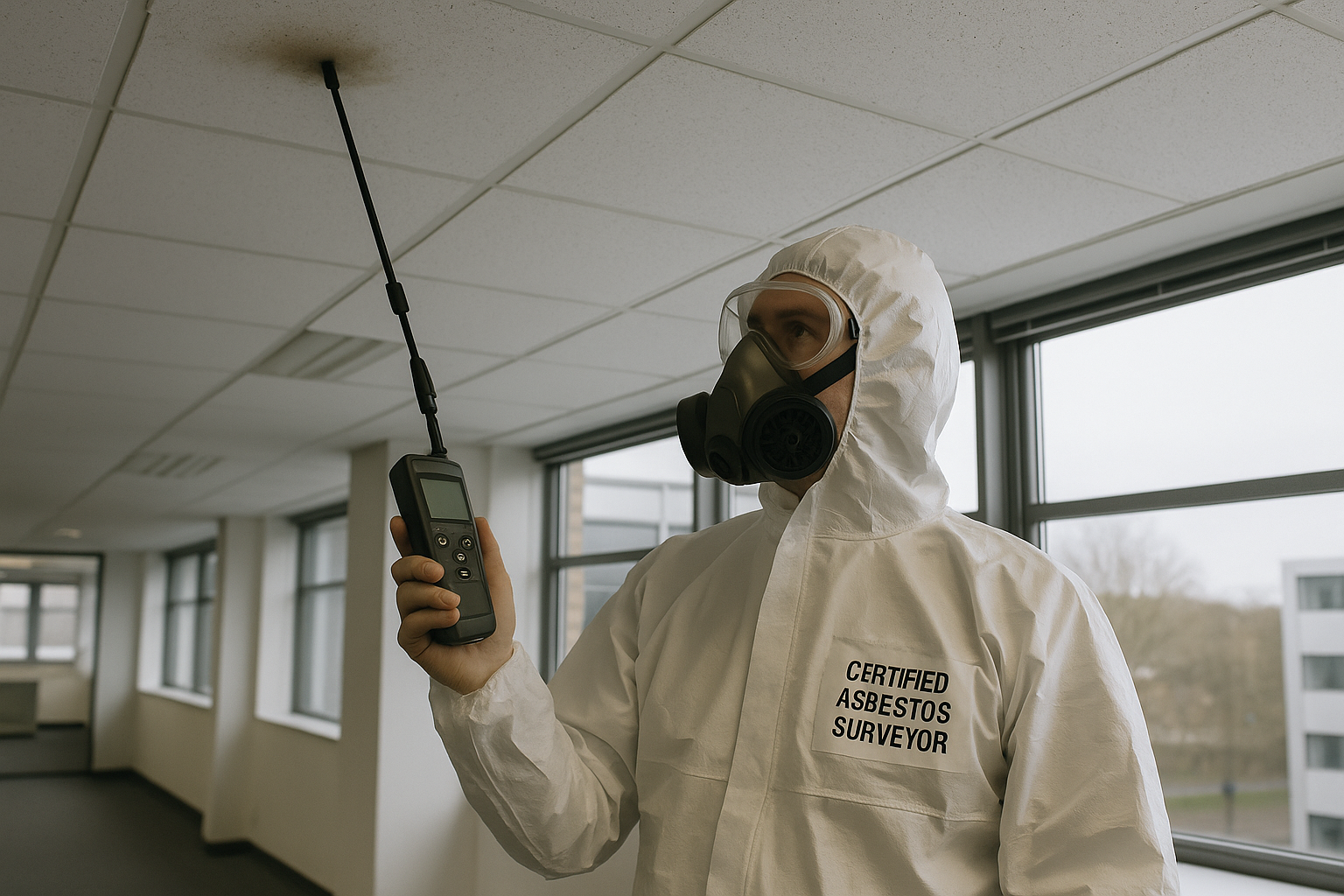
Chrysotile asbestos is still one of the materials most likely to catch property managers off guard. It can sit quietly in a garage roof, floor tile adhesive, textured coating or cement panel for years, then become a serious problem the moment refurbishment, maintenance or damage disturbs it.
That is where costly mistakes happen. A material that looks ordinary can still contain chrysotile asbestos, and once fibres are released, the focus shifts from routine building management to exposure control, legal compliance and safe decision-making.
What is chrysotile asbestos?
Chrysotile asbestos, often called white asbestos, is the only asbestos mineral in the serpentine group. Its fibres are curly and flexible, which made it useful in a huge range of construction products across the UK.
Because it was used so widely, chrysotile asbestos still appears in homes, schools, offices, factories, shops and public buildings. It is often found in materials that do not look dangerous, which is why visual assumptions are unreliable.
For anyone responsible for a building, a few facts matter straight away:
- chrysotile asbestos was historically used in many common building products
- it can still be present in occupied premises
- disturbing it can release respirable fibres
- all asbestos types are regulated and must be managed properly
Under the Control of Asbestos Regulations, dutyholders for non-domestic premises must identify asbestos-containing materials where reasonably practicable, assess the risk, keep records and prevent exposure. Survey work should follow HSG264, and practical decisions on site should align with current HSE guidance.
Where chrysotile asbestos is commonly found
The reason chrysotile asbestos is so often identified during surveys is simple: it was used almost everywhere. Its strength, flexibility, heat resistance and ability to bind with other materials made it commercially attractive for decades.
That historic use still affects routine maintenance and major projects today. A ceiling coating, lining board or floor finish may look harmless, but if it predates modern controls, it should not be disturbed without checking.
Common building materials that may contain chrysotile asbestos
- asbestos cement sheets and roof panels
- garage and outbuilding roofs
- soffits and wall panels
- textured coatings on walls and ceilings
- vinyl floor tiles and bitumen adhesives
- gaskets, rope seals and packings
- pipe wraps and some insulation products
- service riser panels and duct materials
- composite boards and older lining materials
- bitumen products and some waterproofing materials
In domestic settings, chrysotile asbestos often turns up in garages, boiler cupboards, floor finishes and decorative coatings. In commercial and industrial premises, it may be found in plant rooms, service ducts, ceiling voids, partition systems and external cladding.
If a building is due for major strip-out or structural work, arrange a suitable demolition survey before any fabric is disturbed. Leaving asbestos checks until contractors are already on site is one of the fastest ways to create delays, extra cost and unnecessary risk.
Can you identify chrysotile asbestos by sight?
No. You can identify suspect materials, but you cannot confirm chrysotile asbestos by appearance alone.

This catches people out because colour names such as white asbestos sound straightforward. In reality, product colour, paint layers, weathering and contamination make visual judgement unreliable.
What you can look for on site
While you cannot confirm chrysotile asbestos visually, you can spot materials that deserve caution. Pay particular attention to:
- older cement sheets, boards and panels
- textured coatings on ceilings and walls
- old floor tiles and black adhesive residues
- rope seals, gaskets and insulation around plant
- debris left after drilling, leaks or refurbishment
- lining materials in service cupboards and risers
If any of these are present, do not drill, cut, sand, scrape or remove them. Restrict access if needed and get the material assessed properly.
Why testing matters
Different asbestos types can appear in products that look almost identical. Some materials also contain mixed fibres. That is why professional inspection and laboratory confirmation matter far more than guesswork.
If you need a suspect material checked quickly, targeted asbestos testing is often the most practical next step. If a sample has already been carefully obtained, specialist sample analysis can confirm whether asbestos is present and support your next decision.
Chrysotile asbestos compared with other asbestos types
Asbestos is not a single substance. It is a group of fibrous silicate minerals, broadly divided into serpentine and amphibole forms.
Chrysotile asbestos belongs to the serpentine group. Tremolite asbestos and anthophyllite asbestos are amphiboles. The fibre shape and behaviour differ, but that does not make chrysotile asbestos safe to disturb.
Chrysotile asbestos
Chrysotile asbestos fibres are curly, layered and flexible. Those properties made them easier to spin and incorporate into manufactured products, which is one reason chrysotile asbestos became so widespread in the built environment.
Some chrysotile fibres are considered less biopersistent than amphibole fibres in biological conditions. That point is frequently misunderstood. Lower persistence does not mean low risk, and it does not remove the link between chrysotile asbestos and serious disease.
Tremolite asbestos
Tremolite asbestos is an amphibole with straighter, needle-like fibres. It was not used as widely in mainstream UK building products as chrysotile asbestos, but it can occur as a contaminant in other materials.
From a management point of view, the response is the same: identify it, assess the risk, prevent disturbance and control exposure.
Anthophyllite asbestos
Anthophyllite asbestos is another amphibole type. It is less common in buildings, but rarity does not reduce the hazard.
If anthophyllite asbestos is identified during a survey or test, it should be managed with the same seriousness as any other asbestos-containing material.
What the differences mean in practice
These distinctions matter to surveyors, analysts and consultants because they help interpret findings correctly. For a property manager, the practical message is simpler: no asbestos type should be treated casually, and no decision should rely on visual assumptions.
Chemical properties of chrysotile asbestos and why they mattered
The chemical properties of chrysotile asbestos help explain why it was used so heavily. Chrysotile is a magnesium silicate mineral with a sheet-like crystal structure that rolls into fine fibres.

Those fibres are flexible rather than rigid. That flexibility, combined with heat resistance and good tensile strength, made chrysotile asbestos useful in products that needed durability and reinforcement.
Key properties
- magnesium silicate composition
- serpentine crystal structure
- curled, pliable fibres
- resistance to heat
- good tensile strength
- resistance to some chemical attack
These qualities made chrysotile asbestos commercially useful in cement products, floor materials, seals, coatings and composite components. The same qualities are also why it remains embedded in many older buildings today.
What this means on site
You do not need to understand mineral chemistry in detail to make safe decisions. The practical points are:
- chrysotile asbestos was widely used because it performed well in products
- those products may still be present in occupied buildings
- fibres can become airborne when materials are damaged or worked on
- risk control should focus on condition, accessibility and likelihood of disturbance
If a material is intact and managed properly, the immediate risk may be low. If it is drilled, broken, sanded or stripped out, the risk changes quickly.
How the body clears asbestos fibres and why long-term risk remains
The body does have natural defence mechanisms. Mucus, cilia and immune cells such as macrophages help trap and remove inhaled particles from the airways.
That process is sometimes used to suggest chrysotile asbestos is less concerning than other forms. That is not a safe or sensible basis for managing exposure.
What happens after inhalation
When fibres are inhaled, some larger particles may be trapped in the upper respiratory tract and cleared. Finer fibres can travel deeper into the lungs, where clearance becomes more difficult.
Macrophages attempt to engulf and remove fibres. Some fibres may fragment or dissolve over time, particularly in comparison with more durable amphibole fibres. But not all fibres are cleared, and fibres that remain can contribute to inflammation and tissue damage.
Why clearance does not remove the health risk
There are three practical reasons this matters:
- The body does not remove every inhaled fibre. Some fibres can remain in lung tissue or move to surrounding linings.
- Even limited exposure can be significant. Disease risk depends on dose, duration, fibre characteristics and individual factors, not on wishful thinking about clearance.
- Latency is long. The consequences of exposure may not appear for many years, which is why poor decisions during maintenance can have lasting effects.
For building managers, the takeaway is simple. If suspect chrysotile asbestos has been damaged, the right response is to stop work, isolate the area and arrange professional assessment, not to debate whether the body might clear some fibres.
Health effects linked to chrysotile asbestos
Chrysotile asbestos is associated with serious asbestos-related disease. The main danger comes from inhaling airborne fibres released when asbestos-containing materials are cut, drilled, broken, abraded or otherwise disturbed.
The fact that chrysotile asbestos may behave differently from some amphibole fibres does not remove its disease-causing potential. Exposure prevention remains the only sensible approach.
Mesothelioma
Mesothelioma is a cancer affecting the lining of the lungs or abdomen. It is strongly associated with asbestos exposure, and chrysotile asbestos is recognised as a cause.
Lung cancer
Lung cancer risk increases with asbestos exposure, especially where exposure is repeated or substantial. Smoking can increase overall risk further, which makes strict exposure prevention even more important in workplaces.
Asbestosis and pleural disease
Asbestosis is a scarring disease of the lungs caused by inhaled asbestos fibres. Pleural thickening and other pleural conditions can also follow exposure.
These are serious outcomes. They should never be dismissed simply because a material contains chrysotile asbestos rather than another asbestos type.
What affects risk most
- how many fibres become airborne
- how often exposure occurs
- how long exposure lasts
- the type of work being carried out
- the condition of the material
- whether the product is friable or firmly bound
That is why a damaged insulation product may present a more immediate exposure concern than an intact cement sheet, even if both contain chrysotile asbestos. Material type and condition matter just as much as fibre type.
What to do if chrysotile asbestos is suspected
When chrysotile asbestos is suspected, speed matters, but panic does not help. The best response is controlled, practical and evidence-based.
Immediate actions
- Stop any work that could disturb the material.
- Keep people away from the area if there is visible damage or debris.
- Do not sweep, vacuum or clean it yourself unless the method is asbestos-safe and planned by competent specialists.
- Check whether an asbestos register or previous survey already exists.
- Arrange inspection, sampling or a suitable survey.
If you only need a suspect item confirmed, another route for rapid asbestos testing may be appropriate, particularly where maintenance decisions depend on a quick laboratory result.
When a survey is needed
The right survey depends on what is happening in the building:
- Management survey: suitable for ongoing occupation, routine maintenance and asbestos management planning.
- Refurbishment or demolition survey: needed before intrusive work, strip-out or demolition.
Choosing the wrong survey can leave gaps in your information. If planned works will disturb the fabric of the building, a management survey is not enough.
Good practice for dutyholders and managers
- keep the asbestos register up to date
- make sure contractors can access the relevant information before starting work
- label or otherwise manage known risks where appropriate
- monitor the condition of known asbestos-containing materials
- review arrangements after leaks, damage, tenant alterations or maintenance incidents
These are not paperwork exercises. They are practical controls that reduce the chance of accidental fibre release.
Managing chrysotile asbestos in occupied buildings
Not every asbestos-containing material has to be removed immediately. In many cases, chrysotile asbestos can be managed safely in situ if it is in good condition, sealed, unlikely to be disturbed and properly recorded.
The mistake is assuming that “leave it alone” means “forget about it”. Safe management requires a plan.
When in-situ management may be appropriate
- the material is in good condition
- it is not friable or easily damaged
- it is in a location with low disturbance potential
- the asbestos register is accurate and accessible
- routine inspections are in place
When stronger action may be needed
- the material is damaged or deteriorating
- maintenance staff regularly access the area
- refurbishment is planned
- occupants have reported impact damage, leaks or debris
- the asbestos status is uncertain
Practical management often includes encapsulation, restricted access, permit controls for contractors and periodic reinspection. The right measure depends on the material, its condition and how the space is used.
Practical advice for homes, offices and multi-site portfolios
Chrysotile asbestos is not only a problem in heavy industrial settings. It regularly appears in ordinary properties and day-to-day estate management.
For landlords and housing managers
- check communal areas and service spaces are covered by suitable asbestos information
- do not authorise works based on tenant descriptions alone
- treat old garage roofs, soffits and floor finishes with caution
For office and facilities managers
- make sure maintenance teams know where asbestos information is stored
- review contractor controls before minor works, not after damage occurs
- pay close attention to ceiling voids, risers, plant rooms and partitions
For portfolio managers
- standardise survey review procedures across sites
- prioritise older buildings where records are incomplete
- use consistent escalation steps for damaged suspect materials
If you manage property in the capital, arranging an asbestos survey London service can help keep maintenance and compliance decisions moving. The same applies regionally, whether you need an asbestos survey Manchester appointment or an asbestos survey Birmingham service for planned works or suspected materials.
Frequently Asked Questions
Is chrysotile asbestos less dangerous than blue or brown asbestos?
Chrysotile asbestos differs in fibre structure from amphibole types, but it is still hazardous and still linked to serious disease. From a building management point of view, the key issue is preventing fibre release and exposure, not trying to rank one asbestos type as acceptable.
Can chrysotile asbestos be left in place?
Yes, in some cases. If chrysotile asbestos is in good condition, unlikely to be disturbed and properly recorded within an asbestos management plan, it may be safer to manage it in situ rather than remove it immediately. That decision should be based on survey findings, condition and planned use of the area.
How do I know if a material contains chrysotile asbestos?
You cannot confirm chrysotile asbestos by sight alone. Suspect materials should be inspected by competent professionals and, where appropriate, sampled and analysed by a suitable laboratory.
What should I do if contractors uncover suspected chrysotile asbestos during work?
Stop work immediately, keep people away from the area and prevent further disturbance. Then check existing asbestos information and arrange urgent professional assessment, testing or a suitable survey before work resumes.
Does the body clear chrysotile asbestos fibres?
The body may clear some inhaled fibres through normal respiratory defences, but not all fibres are removed. Any remaining fibres can still contribute to long-term disease risk, which is why avoidable exposure must always be prevented.
Need expert help with chrysotile asbestos?
If chrysotile asbestos is suspected in your property, do not rely on guesswork or let works continue unchecked. Supernova Asbestos Surveys provides asbestos surveys, testing and practical advice for landlords, facilities teams, managing agents and commercial property professionals across the UK.
Call 020 4586 0680 or visit asbestos-surveys.org.uk to book a survey, arrange testing or speak to a specialist about the safest next step.