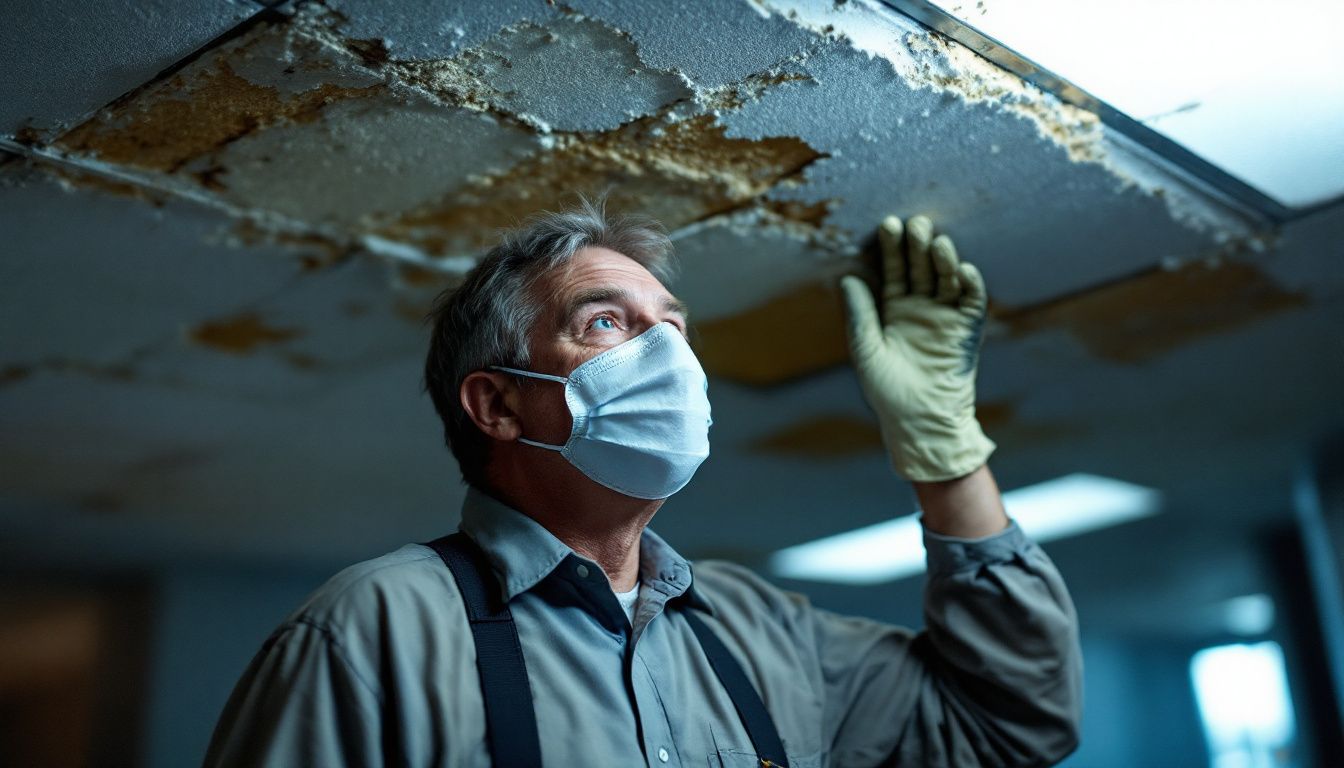
Brexit and Asbestos Exposure in the UK: What Has Actually Changed and What Remains at Risk
Asbestos remains present in millions of UK buildings, and the question of how Brexit has reshaped the regulatory landscape around Brexit asbestos exposure UK assessing risks is one that property managers, employers, and contractors cannot afford to ignore. The UK’s departure from the EU transferred full regulatory control to the Health and Safety Executive — and with that shift came both genuine opportunities and very real challenges.
This post cuts through the noise. Here is what has actually changed, what the ongoing risks look like, and what you need to do to stay on the right side of the law.
The Current State of Asbestos Regulation in the UK
The primary legislation governing asbestos management in the UK remains the Control of Asbestos Regulations, enforced by the Health and Safety Executive. These regulations set out clear duties for employers, building owners, and contractors — duties that did not disappear with Brexit, but whose enforcement landscape has shifted considerably.
The regulations require duty holders to identify the presence of asbestos-containing materials (ACMs), assess their condition, and manage them appropriately. Where work is likely to disturb ACMs, a licensed contractor must be engaged. Failure to comply can result in substantial fines and, in serious cases, custodial sentences.
Key Legal Responsibilities for Duty Holders
- Conduct a suitable and sufficient survey of premises to locate ACMs
- Maintain an up-to-date asbestos register accessible to anyone who may disturb the material
- Produce a written management plan and review it regularly
- Ensure workers who may encounter asbestos receive appropriate training
- Engage only licensed contractors for notifiable non-licensed work or licensed work categories
These obligations apply regardless of Brexit. What has changed is the body responsible for setting, updating, and enforcing those rules — and the resources available to do so.
How Brexit Changed Regulatory Oversight
Before the UK left the EU, asbestos regulations were shaped partly by European Commission directives, with the HSE implementing them into domestic law. Post-Brexit, the HSE now holds sole responsibility for developing and revising asbestos policy.
That independence could, in theory, allow for faster, more targeted updates to UK-specific conditions. In practice, however, the transition has brought significant pressure. The HSE has faced budget constraints and staffing challenges that affect its capacity to inspect workplaces and enforce compliance.
Local authorities, who share enforcement responsibilities in certain premises, have similarly been squeezed by reduced funding — making consistent oversight harder to maintain across the country.
The Enforcement Gap
Fewer inspectors on the ground means some sites go unchecked for longer. This creates an environment where non-compliant businesses can, intentionally or otherwise, operate below the required standard.
The consequences are not abstract — they translate directly into workers being exposed to asbestos fibres without adequate protection. Enforcement actions do still happen, and the HSE publishes details of prosecutions as a deterrent, but the deterrent effect is weakened when businesses calculate that the likelihood of inspection is low.
Assessing the Health Risks: What Asbestos Exposure Actually Means
Understanding Brexit asbestos exposure UK assessing risks properly requires a clear-eyed look at the health consequences of getting it wrong. Asbestos fibres, once inhaled, lodge in the lung tissue and cannot be expelled. The body’s attempts to deal with them cause scarring and inflammation over years and decades.
The diseases caused by asbestos exposure include:
- Mesothelioma — a cancer of the lining of the lungs or abdomen, almost exclusively caused by asbestos exposure and with a very poor prognosis
- Asbestosis — progressive scarring of the lung tissue causing breathlessness and reduced lung function
- Lung cancer — risk significantly increased by asbestos exposure, particularly in smokers
- Pleural thickening — thickening of the lung lining causing breathlessness and chest pain
The Latency Problem
One of the most insidious aspects of asbestos-related disease is the latency period. Symptoms typically do not appear for 15 to 60 years after exposure. This means workers exposed today may not develop illness until well into the 2040s or beyond — and by then, the opportunity for early intervention may have passed.
This long latency period is precisely why robust regulation and consistent enforcement matter so much. Cutting corners now produces consequences that will not become visible for a generation.
Who Is Most at Risk?
Tradespeople working in older buildings carry the highest occupational risk — electricians, plumbers, carpenters, and demolition workers routinely encounter ACMs during maintenance and refurbishment work. Building managers, facilities staff, and even office workers in poorly managed premises can also face exposure if ACMs are disturbed without proper controls.
The UK banned chrysotile (white asbestos) in 1999, and all other commercial forms were banned earlier. However, the ban on new use does not remove the material already present in buildings constructed before those dates. A significant proportion of UK commercial, industrial, and residential stock was built during the period when asbestos use was widespread — meaning the legacy risk will persist for decades.
Proposed Updates to Asbestos Exposure Limits
One of the most significant post-Brexit developments in UK asbestos policy is the HSE’s proposed revision to the workplace exposure limit (WEL) for asbestos fibres. The current control limit stands at 0.1 fibres per cubic centimetre of air, measured as a time-weighted average. The HSE has indicated a desire to reduce this to 0.01 fibres per cubic centimetre — a tenfold reduction.
This proposed change reflects growing scientific consensus that there is no truly safe level of asbestos exposure. Reducing the WEL would require businesses to implement more stringent controls during any work that disturbs ACMs, and would likely increase the cost of compliance for contractors and building owners.
What This Means for Businesses
If the revised WEL is adopted, businesses will need to review their existing asbestos management plans and risk assessments. Air monitoring requirements during notifiable work may become more demanding, and training programmes will need updating to reflect the new thresholds.
The practical implication is clear: now is not the time to be complacent about asbestos management. Whether or not the new limit is in force by the time you read this, the direction of travel is towards stricter controls, not looser ones.
Brexit, Trade, and the Risk of Regulatory Divergence
A less-discussed aspect of Brexit asbestos exposure UK assessing risks concerns trade and the potential for regulatory divergence between the UK and EU. While the UK currently maintains broadly equivalent asbestos standards to those in the EU, there is no longer a structural mechanism ensuring alignment.
For businesses operating across both jurisdictions, this creates compliance complexity. A contractor working on projects in both the UK and EU must understand two separate regulatory frameworks, which may diverge further over time.
There is also a theoretical risk — though not yet a practical one — that future UK governments could choose to weaken asbestos protections in the name of reducing regulatory burden. Health and safety campaigners have raised this concern since the Brexit referendum. So far, the HSE’s direction has been towards strengthening protections, not weakening them, but the structural safeguard of EU oversight no longer exists.
Asbestos Training Requirements Post-Brexit
Training requirements for workers who may encounter asbestos are set out in the Control of Asbestos Regulations and supported by HSE guidance, including HSG264. Post-Brexit, the HSE has taken on responsibility for reviewing and updating these requirements independently of EU frameworks.
The core categories of asbestos training remain:
- Asbestos awareness training — for anyone whose work could accidentally disturb ACMs, such as maintenance workers and tradespeople
- Non-licensed work training — for those carrying out non-licensed asbestos work
- Licensed work training — for workers employed by HSE-licensed asbestos contractors
The challenge post-Brexit is ensuring that training standards remain consistently high across the industry. With EU oversight removed, the onus falls on the HSE, industry bodies, and employers themselves to maintain rigour. Smaller businesses in particular may struggle to keep pace with updated guidance if the HSE’s communication and outreach capacity is stretched.
Practical Steps for Employers
- Review your asbestos training records and ensure all relevant staff are up to date
- Check that training providers are using current HSE-approved materials and guidance
- Include asbestos awareness in induction programmes for new staff in relevant roles
- Document all training and keep records accessible for HSE inspection
The Importance of Professional Asbestos Surveys
Whatever the regulatory context, the starting point for managing asbestos risk is always a professional survey. You cannot identify asbestos-containing materials by sight — laboratory analysis of samples taken by a qualified surveyor is the only reliable method of confirmation.
HSG264 sets out the two main survey types. A management survey is suitable for occupied premises under normal use, establishing a baseline register of ACMs and their condition. A demolition survey is required before any work that will significantly disturb the building fabric, ensuring no ACMs are missed before intrusive work begins.
Both must be carried out by a competent surveyor with appropriate qualifications and experience. Cutting costs by commissioning an inadequate survey is a false economy — the legal and human cost of missed ACMs far outweighs any short-term saving.
If you manage property in the capital, a professional asbestos survey London can identify the presence and condition of ACMs across your portfolio, giving you the information you need to fulfil your duty of care. For those managing assets in the north-west, an asbestos survey Manchester delivers the same rigorous assessment against current HSE standards. And for properties across the Midlands, an asbestos survey Birmingham ensures you have a legally compliant asbestos register in place.
Risk-Based Management: What Good Practice Looks Like
Managing asbestos risk effectively is not just about ticking regulatory boxes. It requires a genuine risk-based approach that considers the type of material, its condition, its location, and the likelihood of disturbance.
ACMs in good condition in areas that are unlikely to be disturbed — such as asbestos insulating board above a suspended ceiling in an undisturbed plant room — may be best managed in situ, with regular condition monitoring. Materials in poor condition, or in areas where maintenance work frequently takes place, may require remediation or removal.
Building an Effective Asbestos Management Plan
- Commission a management survey to establish a baseline asbestos register
- Prioritise materials based on condition and likelihood of disturbance
- Set a schedule for regular re-inspection of ACMs that are being managed in situ
- Establish a permit-to-work system for maintenance and refurbishment activities
- Communicate the asbestos register to all contractors before they begin work
- Review and update the plan following any disturbance, refurbishment, or change of use
A well-maintained asbestos management plan is not just a legal requirement — it is a practical tool that protects your workers, your contractors, and your organisation from avoidable harm.
Economic Pressures Must Not Override Safety
One of the recurring themes in post-Brexit asbestos risk is the tension between economic pressure and safety compliance. Construction and facilities management businesses are operating in a challenging economic environment, and there is always temptation to reduce spending on surveys, training, and management activities that do not feel immediately productive.
This is a dangerous calculation. The Control of Asbestos Regulations impose duties that are not optional — and the HSE has shown a clear willingness to prosecute duty holders who fail to meet them. Beyond the regulatory risk, the reputational and financial consequences of a serious asbestos incident — compensation claims, remediation costs, loss of contracts — are far greater than the cost of compliance.
Post-Brexit economic uncertainty may have increased the pressure on margins, but it has not reduced the legal obligations of duty holders. If anything, the removal of EU oversight makes it more important that individual businesses take their responsibilities seriously, rather than relying on a regulatory system to catch every failure.
Staying Ahead: What Proactive Compliance Looks Like
The businesses that manage asbestos risk most effectively are those that treat it as an ongoing operational concern rather than a one-off compliance exercise. That means reviewing surveys and management plans regularly, keeping pace with HSE guidance updates, and building asbestos awareness into the culture of the organisation.
Proactive compliance also means engaging qualified professionals rather than the cheapest option available. Asbestos surveying is a specialist discipline — the quality of the survey determines the quality of the risk assessment, and a poor survey is worse than no survey because it creates false confidence.
With the HSE potentially tightening the workplace exposure limit and the enforcement landscape continuing to evolve post-Brexit, the businesses that invest in robust asbestos management now will be best placed to meet whatever regulatory changes come next.
Frequently Asked Questions
Has Brexit changed the legal requirements for asbestos management in the UK?
The core legal framework — the Control of Asbestos Regulations — remains in place and continues to be enforced by the HSE. Brexit transferred sole regulatory responsibility to the HSE, removing the EU’s role in shaping asbestos policy. The fundamental duties on employers, building owners, and contractors have not changed, but the HSE now has independent authority to revise and update requirements without reference to EU directives.
What is the proposed change to the asbestos workplace exposure limit?
The HSE has proposed reducing the workplace exposure limit for asbestos fibres from 0.1 fibres per cubic centimetre to 0.01 fibres per cubic centimetre — a tenfold reduction. This reflects scientific evidence that no level of asbestos exposure is entirely safe. If adopted, businesses will need to review their management plans, air monitoring arrangements, and training programmes to ensure compliance with the new threshold.
Which workers face the highest risk of asbestos exposure?
Tradespeople working in older buildings carry the greatest occupational risk. Electricians, plumbers, carpenters, and demolition workers regularly encounter asbestos-containing materials during maintenance and refurbishment projects. Building managers and facilities staff can also face exposure if ACMs are disturbed without proper controls. Anyone working in a building constructed before 2000 should be aware of the potential for ACMs to be present.
What type of asbestos survey do I need?
The type of survey you need depends on the nature of the work being carried out. A management survey is appropriate for occupied premises under normal use and establishes a baseline register of ACMs. A demolition or refurbishment survey is required before any intrusive work that will significantly disturb the building fabric. HSG264, the HSE’s guidance document on asbestos surveys, sets out the requirements for both types in detail.
Could Brexit lead to weaker asbestos protections in the UK?
There is a theoretical risk that future governments could choose to weaken asbestos protections as part of broader deregulation, now that the structural constraint of EU alignment no longer exists. However, the HSE’s current direction is towards strengthening controls, not weakening them — the proposed reduction in the workplace exposure limit being a clear example. Health and safety campaigners continue to monitor this closely, and any proposed weakening of protections would face significant opposition from trade unions, medical bodies, and the HSE itself.
Get Expert Asbestos Survey Support from Supernova
Supernova Asbestos Surveys has completed over 50,000 surveys nationwide, helping property managers, employers, and contractors meet their legal obligations with confidence. Whether you need a management survey for an occupied building or a demolition survey ahead of refurbishment works, our qualified surveyors deliver accurate, HSE-compliant assessments you can rely on.
Call us today on 020 4586 0680 or visit asbestos-surveys.org.uk to request a quote or find out more about our services across the UK.