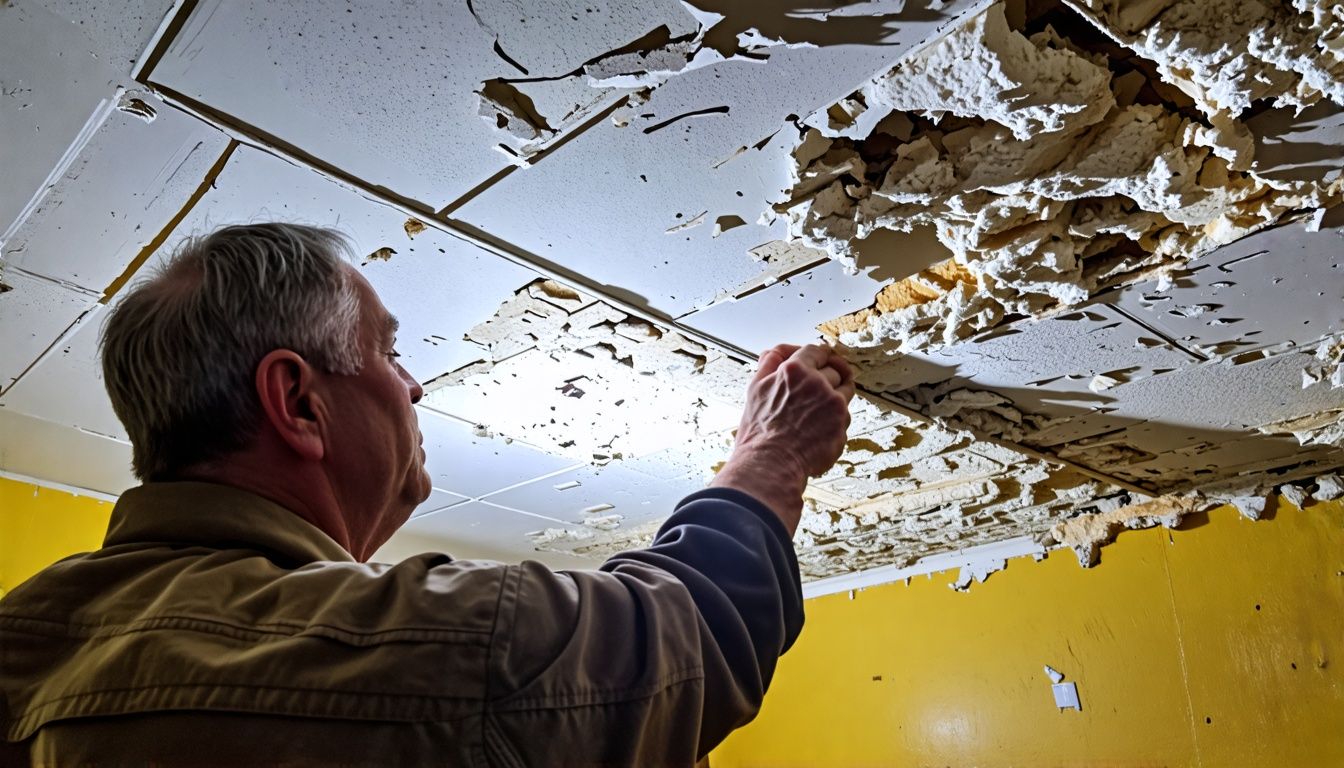
Is There a Safe Level of Asbestos Exposure? What the Science and UK Law Actually Say
The answer to whether there is a safe level of asbestos exposure is no — and that is not a scare tactic. It is the settled position of every major scientific and regulatory body, including the World Health Organisation and the UK’s Health and Safety Executive. No threshold has ever been established below which asbestos exposure can be considered entirely without risk.
Whether you are a property manager, employer, tradesperson, or homeowner planning renovation work, understanding this matters — because UK law places real duties on you, and those duties exist for very good reasons.
What Is Asbestos and Why Does It Still Matter?
Asbestos is a group of naturally occurring silicate minerals used extensively in UK construction from the 1950s through to the late 1990s. Its fire resistance, durability, and insulating properties made it enormously attractive to builders and manufacturers — which is why it ended up in millions of properties that are still standing today.
The UK banned all forms of asbestos in 1999. But that ban did not remove what was already in place. Schools, hospitals, offices, factories, and domestic properties built before 2000 can all contain asbestos-containing materials (ACMs), often in locations that are not immediately visible.
When ACMs are undisturbed and in good condition, they do not typically pose an immediate risk. The danger arises when materials are damaged, deteriorating, or disturbed — during maintenance, refurbishment, or demolition — releasing microscopic fibres into the air. Those fibres can be inhaled without anyone realising it is happening.
How Does Asbestos Cause Disease?
When asbestos fibres are inhaled, they travel deep into the lung tissue. The body cannot break them down or expel them effectively, and over time they cause chronic inflammation and scarring. This process can eventually trigger cellular changes that lead to cancer.
The diseases most closely associated with asbestos exposure include:
- Lung cancer — asbestos exposure significantly increases risk, particularly in people who also smoke
- Mesothelioma — a rare and aggressive cancer of the lining of the lungs, abdomen, or heart, almost exclusively caused by asbestos
- Asbestosis — severe scarring of lung tissue that progressively impairs breathing and quality of life
- Pleural thickening and pleural plaques — changes to the lining of the lungs that can affect lung function and cause breathlessness
One of the most important things to understand about these diseases is the latency period. Asbestos-related conditions typically take between 20 and 50 years to develop after initial exposure. Someone exposed during building work in the 1980s may only be receiving a diagnosis today.
This long lag time is a significant part of why asbestos remains the single largest cause of work-related deaths in the UK.
Is There a Safe Level of Asbestos Exposure? What the Evidence Shows
The scientific and medical consensus is clear: no safe threshold for asbestos exposure has ever been established. Every major health authority acknowledges that while higher and prolonged exposure carries greater risk, there is no level of exposure that can be deemed entirely without risk.
That does not mean walking past an undisturbed asbestos ceiling tile will definitely cause cancer. Risk is cumulative and dose-dependent — the more fibres inhaled, and the more frequently, the higher the danger. But the operative word is risk, not certainty. Even low, intermittent exposure has been linked to disease in some individuals, and there is no reliable way to predict who will be affected.
UK regulations set a workplace control limit — a maximum airborne concentration of asbestos that must not be exceeded. But the HSE is explicit that this control limit is not a safe level. It represents the threshold above which immediate action is legally required, not a point below which there is zero risk.
The goal should always be to reduce exposure to as low as reasonably practicable — ideally to zero — not simply to stay beneath a legal ceiling and consider the matter resolved.
Which Types of Asbestos Are Most Dangerous?
There are six recognised forms of asbestos, but three were most commonly used in UK construction:
- Chrysotile (white asbestos) — the most widely used type. Its curly fibres are somewhat more easily expelled from the lungs than other varieties, though it remains a classified carcinogen and is still hazardous.
- Amosite (brown asbestos) — frequently used in insulation boards and ceiling tiles. More hazardous than chrysotile.
- Crocidolite (blue asbestos) — considered the most dangerous form. Its needle-like fibres lodge deeply in lung tissue and are strongly associated with mesothelioma.
All three are classified as Group 1 carcinogens — meaning the evidence that they cause cancer in humans is conclusive. The distinction between types matters in terms of relative risk, but it does not change the fundamental principle: all asbestos is hazardous, and none of it should be treated casually.
Who Is Most at Risk?
Occupational Exposure
The highest historical risk falls on workers in industries that handled asbestos directly — shipbuilding, insulation, construction, plumbing, and manufacturing. Many mesothelioma diagnoses being made today are the legacy of occupational exposures that occurred decades ago.
Today, the highest-risk occupational groups are those who work in and around older buildings without knowing what materials they contain. These include:
- Construction and demolition workers
- Electricians, plumbers, and heating engineers
- Joiners and carpenters
- Painters and decorators
- Roofing contractors
- Facilities managers and maintenance teams
These workers represent what is sometimes called the second wave of asbestos victims — tradespeople who disturb ACMs unknowingly during routine maintenance and renovation because no one surveyed the building beforehand.
Secondary Exposure
Secondary or para-occupational exposure occurs when asbestos fibres are carried home on work clothing, tools, or hair, exposing family members who were never present at a work site. This route of exposure has resulted in mesothelioma diagnoses in people with no direct occupational history whatsoever.
Environmental Exposure
People living near former asbestos-related industrial sites or naturally occurring asbestos deposits can face environmental exposure. Levels are generally lower than occupational exposure, but the same principle applies — when it comes to whether there is a safe level of asbestos exposure, the answer remains no, regardless of the source.
Asbestos and Smoking: A Compounded Risk
If you have been exposed to asbestos and you smoke, your risk of developing lung cancer is significantly higher than either risk factor alone would suggest. The two do not simply add together — they interact synergistically, meaning the combined risk is far greater than the sum of the individual risks.
People with a history of asbestos exposure who smoke are strongly encouraged to speak to their GP and explore cessation support. Stopping smoking will not reverse past asbestos exposure, but it will substantially reduce overall lung cancer risk going forward.
UK Legal Duties Around Asbestos Management
The Control of Asbestos Regulations place a legal duty to manage asbestos on the owners and managers of non-domestic premises. That duty requires:
- Identifying whether asbestos is present in the building
- Assessing the condition and risk of any ACMs found
- Producing and maintaining a written asbestos management plan
- Sharing information about asbestos locations with anyone who may disturb it
- Monitoring the condition of ACMs at regular intervals
Compliance is not optional. Failure to manage asbestos adequately is a criminal offence — and more fundamentally, it puts lives at risk.
For domestic properties, the formal duty to manage does not apply to private homeowners. However, anyone commissioning renovation or demolition work on a pre-2000 property has a clear responsibility to establish whether asbestos is present before work begins, to protect both contractors and occupants.
The HSE’s guidance document HSG264 sets out the technical standards for asbestos surveying and should inform any survey commissioned for a UK property.
The Role of Asbestos Surveys in Protecting People
An asbestos survey is the essential first step in understanding whether a building contains ACMs and what risk they pose. There are several survey types used in the UK, each suited to a different situation.
Management Survey
A management survey is the standard survey for buildings in normal occupational use. It identifies any ACMs that could be disturbed during day-to-day activities and maintenance, assesses their condition and risk, and provides the information needed to fulfil the duty to manage under the Control of Asbestos Regulations.
Refurbishment Survey
Required before any refurbishment work begins, a refurbishment survey is a fully intrusive inspection designed to locate all ACMs that could be disturbed during planned works. This survey must be completed before contractors start — not once work is already underway.
Demolition Survey
Where an entire structure is being demolished, a demolition survey must be carried out before any demolition activity begins. It is the most thorough form of survey and is a legal requirement before demolition work commences.
Re-inspection Survey
For buildings where asbestos is already known and being managed in situ, a re-inspection survey checks whether the condition of ACMs has changed and whether the existing management plan remains appropriate. These should be carried out at regular intervals as part of any robust asbestos management programme.
What Happens If Asbestos Is Found?
Finding asbestos in a building does not automatically mean it needs to be removed. In many cases, ACMs in good condition and low-risk locations are best left in place and managed through a documented plan. Disturbing them unnecessarily during removal can create more risk than leaving them alone.
Removal is the right course of action when:
- Materials are damaged, deteriorating, or friable (easily crumbled)
- Refurbishment or demolition work will disturb the materials
- The location makes ongoing management impractical
- The risk assessment indicates removal is the safest long-term option
All licensed asbestos removal work must be carried out following strict procedures set out in the Control of Asbestos Regulations. Waste containing asbestos must be double-bagged, clearly labelled, and disposed of at a licensed facility — it cannot go in general waste.
If You Think You Have Been Exposed to Asbestos
A single, low-level exposure is unlikely to cause disease. But if you have reason to believe you have been repeatedly or significantly exposed to asbestos — through work, a domestic environment, or proximity to an industrial site — there are practical steps you should take:
- Speak to your GP and be specific about your exposure history, including the industry you worked in and for how long
- Ask about referral to a respiratory specialist or occupational health clinic
- If you smoke, stopping is the single most impactful step you can take to reduce your overall lung cancer risk
- If you are an employer, ensure health surveillance is in place for workers who may have been exposed
- Keep records of any diagnosed asbestos-related condition — this matters for any future compensation claim
Workers diagnosed with an asbestos-related disease may be entitled to compensation through civil claims against former employers, and in some cases through government schemes including the Diffuse Mesothelioma Payment Scheme. A specialist solicitor can advise on the options available.
Asbestos Surveys Across the UK
Supernova Asbestos Surveys operates nationwide, with specialist teams covering every region. If you are based in the capital, our asbestos survey London service covers all London boroughs and surrounding areas. For clients in the North West, our asbestos survey Manchester team provides the full range of survey types across Greater Manchester and beyond. In the Midlands, our asbestos survey Birmingham service covers Birmingham and the wider West Midlands region.
Wherever your property is located, Supernova’s surveyors are UKAS-accredited and work to the standards set out in HSG264. Every survey is supported by a detailed written report that gives you a clear, actionable picture of what is present and what needs to happen next.
Get in Touch With Supernova Asbestos Surveys
With over 50,000 surveys completed across the UK, Supernova Asbestos Surveys has the experience and accreditation to help you manage asbestos safely and in full compliance with UK law. Whether you need a management survey for an occupied building, a refurbishment or demolition survey before works begin, or specialist removal of identified materials, our team is ready to help.
Call us on 020 4586 0680 or visit asbestos-surveys.org.uk to request a quote or speak to a surveyor about your specific situation. Do not wait until work has already started — the time to act is before anyone sets foot in that building with a drill or a crowbar.
Frequently Asked Questions
Is there a safe level of asbestos exposure?
No. The HSE and all major health authorities are clear that no safe threshold for asbestos exposure has been established. While risk increases with the amount and duration of exposure, even low or intermittent exposure carries some level of risk. The legal workplace control limit is not a safe level — it is simply the point above which immediate action is legally required.
Can a one-off exposure to asbestos cause cancer?
A single, brief, low-level exposure is unlikely to cause disease, but it cannot be said to carry zero risk. Asbestos-related diseases are generally associated with repeated or prolonged exposure. However, because there is no established safe threshold, any exposure should be taken seriously and steps should be taken to prevent it happening again.
How long after asbestos exposure do symptoms appear?
Asbestos-related diseases typically have a latency period of 20 to 50 years. This means someone exposed to asbestos in the 1970s or 1980s may only be developing symptoms now. If you have a history of asbestos exposure, speak to your GP and be specific about when and how the exposure occurred.
Do I need an asbestos survey before starting renovation work?
If your property was built before 2000, yes. A refurbishment survey is legally required before any intrusive work begins in a non-domestic premises. For domestic properties, there is no formal legal requirement on the homeowner, but you have a duty of care to any contractors working on the property — and they have a right to know what they may be disturbing. Commissioning a survey before work starts is always the right course of action.
What should I do if asbestos is found in my building?
Finding asbestos does not automatically mean it needs to be removed. If materials are in good condition and unlikely to be disturbed, they can often be managed safely in place through a documented asbestos management plan. Removal is required when materials are damaged, deteriorating, or will be disturbed by planned works. In either case, the next step is to work with a licensed, accredited asbestos specialist to determine the appropriate course of action.