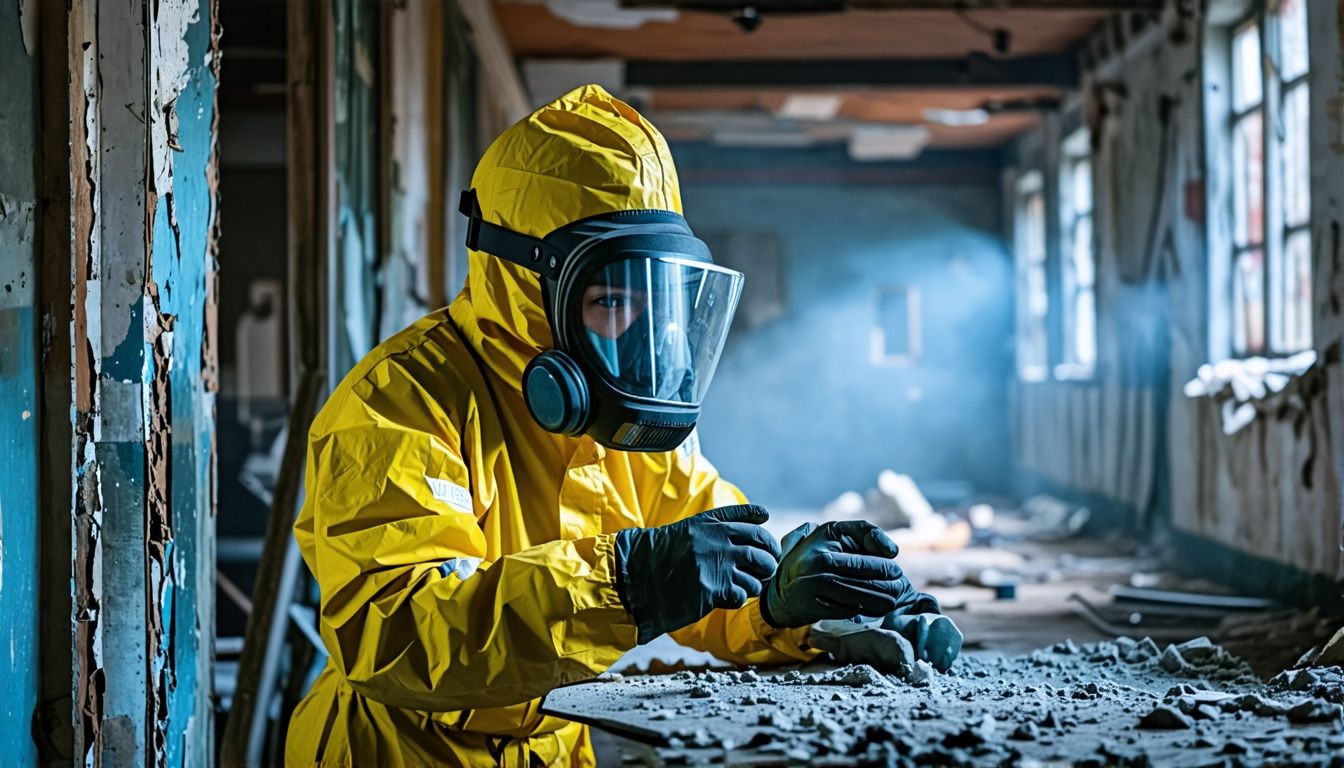
What Happens During an Asbestos Survey — And Why Every Step Matters
Asbestos kills more people in the UK every year than any other single work-related cause. The diseases it triggers — mesothelioma, asbestosis, asbestos-related lung cancer — develop silently over decades. Understanding what happens during an asbestos survey is not just useful knowledge; for many property owners and managers, it is a legal necessity.
By the time symptoms appear, the damage is already done. If you own, manage, or carry out work on a building constructed before 2000, the survey process is not optional. The Control of Asbestos Regulations places a clear legal duty on those responsible for non-domestic premises to identify and manage asbestos-containing materials (ACMs).
Here is exactly what that process involves — from the moment a surveyor arrives to the point where results are in your hands.
Why You Cannot Skip the Survey Stage
Asbestos-containing materials were used extensively in UK construction right up until 1999. Insulation boards, ceiling tiles, floor tiles, pipe lagging, textured coatings such as Artex, roofing felt, and certain adhesives can all contain asbestos fibres.
None of these materials look dangerous. You cannot identify asbestos by sight alone, and disturbing an ACM without knowing it is there is one of the most common routes to accidental exposure. A survey eliminates that uncertainty entirely.
Under HSE guidance document HSG264, surveys must be carried out by competent, trained surveyors. This is not a job for a general contractor or a DIY approach — the stakes are simply too high.
What Happens During an Asbestos Survey: The Different Survey Types
The first thing to understand is that not all asbestos surveys are the same. The type you need depends on the current use of the building and what work is planned. Getting this right from the outset saves time, money, and risk.
Management Survey
A management survey is the standard survey for occupied buildings during normal day-to-day use. It is designed to locate ACMs that could be disturbed during routine maintenance, cleaning, or minor works — without causing significant disruption to the building fabric.
The surveyor accesses all reasonably accessible areas and records the location, extent, and condition of any suspect materials. The results feed directly into the building’s asbestos management plan, which the dutyholder is legally required to maintain and keep up to date.
Refurbishment Survey
Before any refurbishment work begins, a more intrusive survey is required. A refurbishment survey goes beyond surface-level inspection — surveyors may lift floorboards, open ceiling voids, and access areas that a management survey would not disturb.
This level of investigation is necessary because refurbishment work inevitably disturbs the building fabric. Any ACMs in those areas must be identified before a single tool is picked up, or you are exposing workers to an entirely preventable risk.
Demolition Survey
A demolition survey is the most thorough of all. It covers the entire structure — every room, void, and material — to locate all ACMs before demolition begins.
Demolition is one of the highest-risk scenarios for asbestos fibre release. This survey ensures nothing is missed before the building comes down, protecting workers, neighbouring properties, and the wider public.
Re-Inspection Survey
If asbestos is already known to exist in a building and is being managed in place, it must be monitored over time. A re-inspection survey assesses whether the condition of known ACMs has changed since the last inspection.
Materials that were low-risk when first identified can deteriorate and become a serious hazard if left unchecked. Re-inspections are not a one-off requirement — they must be carried out periodically as part of an ongoing asbestos management programme.
Step by Step: What the Surveyor Actually Does on the Day
Once the right survey type has been established and booked, here is what the process looks like from start to finish.
Initial Briefing and Access Arrangements
Before the surveyor begins, they will confirm the scope of the survey with the building owner or manager. This includes agreeing which areas are to be inspected, any access restrictions, and whether the building will be occupied during the survey.
For a management survey, normal building occupation can usually continue. For a refurbishment or demolition survey, certain areas may need to be vacated or cleared in advance — the surveyor will advise you on this before they arrive.
Visual Inspection of the Building
The surveyor works systematically through the building, room by room and area by area. They are looking for materials that could contain asbestos based on their appearance, location, age, and the building’s construction history.
Common areas of focus include:
- Service ducts and ceiling voids
- Plant rooms and boiler rooms
- Stairwells and fire doors
- Areas where insulation or fire protection materials are present
- Textured wall and ceiling coatings
- Floor tiles and their adhesives
- Pipe lagging and duct insulation
Nothing is assumed to be safe simply because it looks intact. An experienced surveyor approaches every suspect material with the same level of scrutiny.
Bulk Sampling of Suspect Materials
Where a material is suspected to contain asbestos, the surveyor takes a small bulk sample. This is done carefully, using appropriate personal protective equipment, and the sample point is sealed immediately afterwards to prevent any fibre release.
Each sample is labelled, logged, and sent to a UKAS-accredited laboratory for analysis. The lab uses polarised light microscopy (PLM) or scanning electron microscopy (SEM) to confirm whether asbestos fibres are present and to identify the fibre type — whether that is chrysotile, amosite, crocidolite, or another variety. Each type carries different risk profiles, and knowing which is present matters for what happens next.
Condition Assessment
Identifying an ACM is only part of the picture. The surveyor also assesses its condition — whether it is intact and well-sealed, damaged and friable, or somewhere in between.
This assessment directly influences the risk rating assigned to the material. A material in good condition and unlikely to be disturbed poses a much lower immediate risk than one that is deteriorating in a busy corridor. The condition assessment determines what action, if any, needs to be taken — and how urgently.
Laboratory Results and the Survey Report
Once samples have been analysed, the surveyor compiles a full written report. This document is the cornerstone of your legal compliance and your ongoing duty of care. It includes:
- Floor plans or drawings showing the location of all identified or suspected ACMs
- Photographs of each material and sample location
- Laboratory analysis results confirming presence and fibre type
- A condition and risk assessment for each ACM
- Recommendations for management, remediation, or removal
This report becomes the foundation of the building’s asbestos register, which must be kept up to date and made available to anyone likely to disturb ACMs — including contractors, maintenance teams, and emergency services.
Asbestos Testing: When You Need Results on a Specific Material
Sometimes a full survey is not immediately practical, but you need to know whether a specific material contains asbestos before work proceeds. Professional asbestos testing provides laboratory-confirmed results on individual samples, giving you the certainty you need to make informed decisions.
For landlords, homeowners, and small businesses who need a fast, accessible route to testing, Supernova Asbestos Surveys offers an asbestos testing kit available to order directly from our website. You follow the provided instructions to take the sample safely, post it to our accredited laboratory, and receive a clear, confirmed result.
This is a practical option for a single suspect material — but it is not a substitute for a full survey where one is legally required. If you are unsure which route is right for your situation, call us on 020 4586 0680 and we will advise you honestly.
What Happens If Asbestos Is Found
Finding asbestos in a survey result does not automatically mean the material needs to come out. The appropriate response depends on the type of material, its condition, its location, and the risk it poses.
Management in Place
In many cases, ACMs that are in good condition and are unlikely to be disturbed can be safely managed in situ. This means recording them in the asbestos register, monitoring their condition through periodic re-inspections, and ensuring anyone working in the area is made aware of their presence.
This is a legitimate and legally compliant approach — provided the management plan is properly maintained and acted upon. Ignoring the register or failing to update it is where legal liability begins to accumulate.
Remediation or Encapsulation
Where a material is showing signs of damage but does not yet require full removal, encapsulation — sealing the material with a specialist coating — can reduce the risk of fibre release. This is typically a shorter-term measure and must be followed up with regular monitoring to ensure the encapsulant remains effective.
Licensed Asbestos Removal
Where removal is necessary, the rules under the Control of Asbestos Regulations are clear. Work involving asbestos insulation, asbestos insulating board (AIB), and asbestos coatings must only be carried out by contractors holding a licence issued by the HSE.
Lower-risk work — such as removing certain asbestos cement products — may be carried out without a licence, but still requires a risk assessment, appropriate PPE, and trained operatives. There is also a category of notifiable non-licensed work (NNLW), which requires notification to the relevant enforcing authority even without a full licence.
Supernova Asbestos Surveys can arrange asbestos removal through our network of accredited contractors, ensuring the right people carry out the right work to the correct standard.
The Four-Stage Clearance Process After Removal
Once licensed asbestos removal is complete, the area cannot simply be handed back and reopened. A mandatory four-stage clearance procedure must be passed before reoccupation is permitted. This is typically conducted by an independent UKAS-accredited analyst:
- Stage 1: Visual inspection to confirm all ACMs and waste have been removed from the work area
- Stage 2: Thorough visual inspection of every surface inside the enclosure
- Stage 3: Air testing — samples must show fibre concentrations below the clearance indicator level
- Stage 4: Final visual inspection after the enclosure has been dismantled
Only when all four stages are passed is a clearance certificate issued and the area declared safe for reoccupation. This is not a formality — it is the final assurance that the work has been done properly and that no residual risk remains.
Your Legal Duties as a Dutyholder
If you are responsible for a non-domestic premises — as a building owner, managing agent, or employer — the Control of Asbestos Regulations sets out specific duties you must fulfil:
- Take reasonable steps to identify ACMs in the premises
- Assess the condition and risk of any ACMs found
- Produce and maintain a written asbestos management plan
- Ensure ACMs in poor condition are managed or removed appropriately
- Pass asbestos information to anyone likely to disturb ACMs during their work
- Arrange periodic re-inspections of known ACMs
Failing to meet these duties can result in prosecution and significant fines. More importantly, it puts lives at risk. The latency period for asbestos-related diseases can be anywhere from 15 to 60 years — meaning exposure today may not manifest as illness until decades from now.
Getting a Survey Arranged in London and Across the UK
Supernova Asbestos Surveys operates nationwide, with a track record of over 50,000 surveys completed. If you are based in the capital and need an asbestos survey in London, our local team can be with you quickly and will work around your schedule to minimise disruption.
We cover the full range of survey types — management, refurbishment, demolition, and re-inspection — as well as asbestos testing and removal coordination. If you need a fast, reliable result on a single material, our testing kit is available to order online and delivers laboratory-confirmed results without delay.
Whatever stage you are at — first survey, re-inspection, or removal — we will make sure the right work is done by the right people. Call us on 020 4586 0680 or visit asbestos-surveys.org.uk to get started.
Frequently Asked Questions
What happens during an asbestos survey in a typical commercial building?
A trained surveyor carries out a systematic visual inspection of the building, identifying materials that could contain asbestos based on their appearance, location, and age. Where suspect materials are found, small bulk samples are taken, sealed, and sent to a UKAS-accredited laboratory for analysis. The surveyor then compiles a full written report including a risk assessment, photographs, floor plan annotations, and recommendations — which forms the basis of your asbestos register.
How long does an asbestos survey take?
The duration depends on the size and complexity of the building and the type of survey being carried out. A management survey of a small commercial premises might take two to three hours, while a full demolition survey of a large industrial site could take several days. Your surveyor will give you a realistic timeframe before the work begins.
Do I need to vacate the building during an asbestos survey?
For a standard management survey, normal occupation can usually continue. For a refurbishment or demolition survey, which involves more intrusive access to the building fabric, certain areas may need to be cleared beforehand. Your surveyor will confirm the requirements during the booking process so you can plan accordingly.
What happens if asbestos is found during the survey?
Finding asbestos does not automatically mean it needs to be removed. If the material is in good condition and unlikely to be disturbed, it can often be managed safely in place through regular monitoring and a written management plan. Where materials are damaged or at high risk of disturbance, remediation, encapsulation, or licensed removal may be recommended. The survey report will set out the options clearly.
Is an asbestos survey a legal requirement?
For non-domestic premises, the Control of Asbestos Regulations places a legal duty on dutyholders to identify and manage asbestos-containing materials. Carrying out a survey is the standard way to fulfil that duty. For domestic properties, there is no automatic legal requirement for a survey, but one is strongly advisable before any refurbishment or renovation work that could disturb the building fabric.