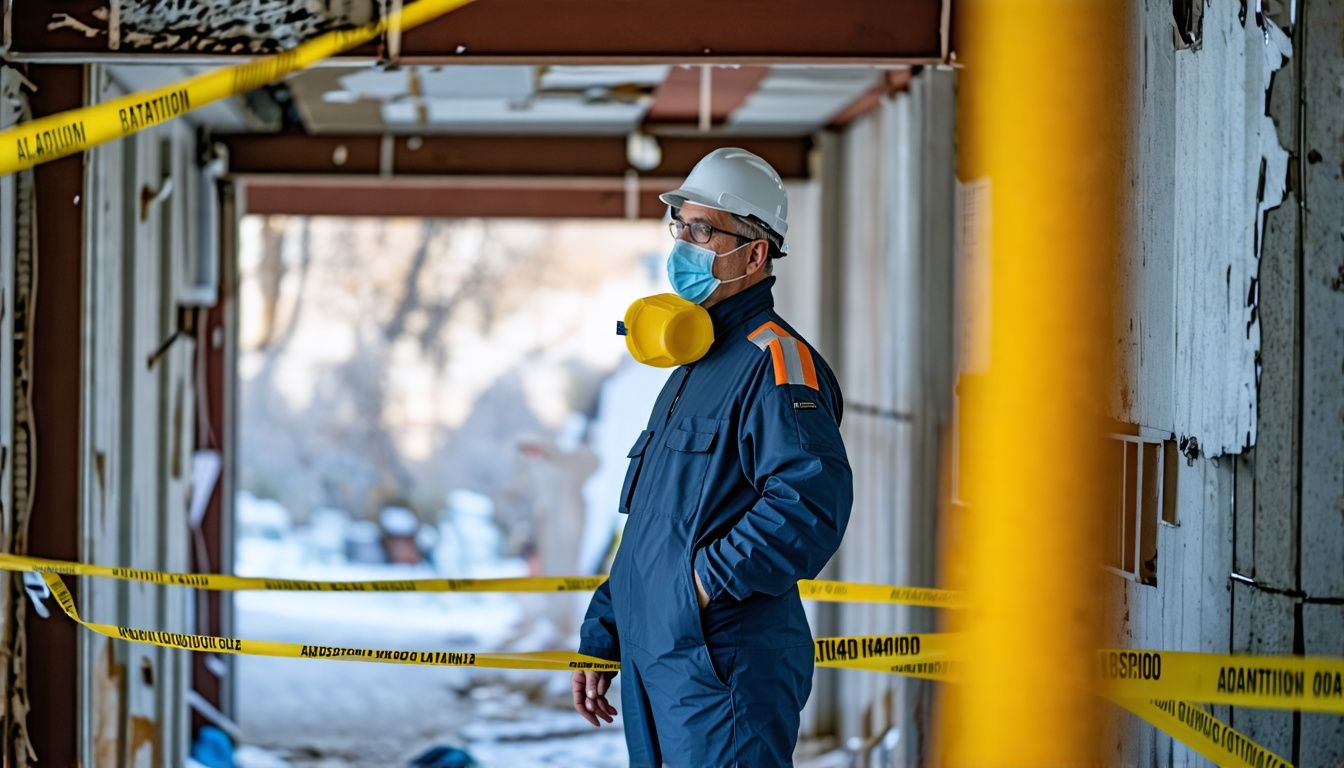
The Law on Asbestos in the UK: What Dutyholders Are Legally Required to Do
Asbestos remains the single greatest cause of work-related deaths in the UK. People are still dying today from exposures that happened decades ago, and buildings across the country still contain it. If you are responsible for a property or a workforce, understanding the law on asbestos is not optional — it is a legal obligation with serious consequences if ignored.
This post covers the full picture: the regulations that apply, the health risks that make them necessary, what dutyholders must do in practice, and what happens when things go wrong.
The Legal Framework: What UK Law Says About Asbestos
The Control of Asbestos Regulations
The Control of Asbestos Regulations form the cornerstone of asbestos law in the UK. They apply to non-domestic premises and set out clear duties for employers, building owners, and anyone responsible for maintaining or managing a property.
The regulations cover three core areas: identifying asbestos-containing materials (ACMs), managing those materials safely, and ensuring that anyone who might disturb them knows what they are dealing with. There is no grey area — if you are in charge of a non-domestic building, you have a legal duty to manage asbestos.
The Duty to Manage
The duty to manage asbestos sits with the “dutyholder” — typically the building owner, facilities manager, or employer responsible for the premises. This is not a one-off task. It is an ongoing legal obligation.
Under this duty, you are required to:
- Identify whether ACMs are present, through a professional management survey
- Assess the condition and risk level of any ACMs found
- Produce and maintain a written asbestos management plan
- Keep an up-to-date asbestos risk register
- Inform anyone who may work on or disturb the building fabric — contractors, maintenance staff, and others
- Review your management plan at least annually, or whenever conditions change
If your building was constructed or refurbished before 2000, there is a realistic chance ACMs are present — in insulation, floor tiles, ceiling panels, pipe lagging, or roof materials. The duty to manage applies even if you believe your building is asbestos-free. You need documented evidence, not an assumption.
Licensed Work and Notifiable Non-Licensed Work
Not all asbestos work is treated equally under the law on asbestos. The regulations distinguish clearly between different risk levels.
Some work with ACMs can only be carried out by a contractor holding a licence from the Health and Safety Executive (HSE). This typically applies to higher-risk materials such as sprayed asbestos coatings, pipe lagging, and asbestos insulating board (AIB). Attempting this work without a licence is a criminal offence.
Other work falls into the category of “notifiable non-licensed work” (NNLW). It does not require a licence, but it must be notified to the relevant enforcing authority, and workers must receive appropriate medical surveillance and training.
Lower-risk tasks — such as superficial work on well-sealed, low-fibre materials — may be carried out without a licence or notification, but safe working practices and appropriate controls still apply. If you are unsure which category applies, commission a demolition survey or refurbishment survey before any intrusive work begins.
Asbestos and Lung Cancer: The Health Reality
How Asbestos Fibres Cause Lung Cancer
When ACMs are disturbed, microscopic fibres become airborne. These fibres are invisible to the naked eye and, once inhaled, lodge deep in lung tissue. The body cannot break them down or expel them.
Over time, repeated irritation caused by embedded fibres can trigger cancerous changes in lung cells. The link between asbestos exposure and lung cancer is well established — all types of asbestos carry risk, though amphibole fibres such as crocidolite and amosite are considered more hazardous than chrysotile. For people who smoke, the risk multiplies significantly — smoking and asbestos exposure together create a combined risk far greater than either factor alone.
The Latency Problem
One of the most dangerous aspects of asbestos-related disease is how long it takes to appear. The latency period — the gap between exposure and diagnosis — typically ranges from 15 to 50 years.
This means someone exposed to asbestos dust in the 1980s may only be receiving a cancer diagnosis now. The long delay also makes it extremely difficult to identify the source of exposure, complicating both treatment and any legal or compensation claims.
Other Asbestos-Related Diseases
Lung cancer is not the only serious condition linked to asbestos. Exposure is also associated with:
- Mesothelioma — a cancer of the lining of the lungs, abdomen, or heart. It is almost exclusively caused by asbestos exposure and is always fatal. The UK has one of the highest rates of mesothelioma in the world, a direct consequence of the country’s heavy industrial and construction use of asbestos throughout the twentieth century.
- Asbestosis — progressive scarring of the lung tissue caused by asbestos fibres. It causes increasing breathlessness, reduced lung function, and significantly shortens life expectancy.
- Pleural thickening — thickening of the membrane surrounding the lungs, which restricts breathing and can become severely debilitating.
- Pleural plaques — areas of fibrous thickening on the pleura. While not usually dangerous in themselves, they are a marker of significant past exposure and indicate elevated risk of more serious disease.
There is no safe level of asbestos exposure. The greater the exposure — in terms of both concentration and duration — the higher the risk. Even relatively brief exposures in heavily contaminated environments can cause disease.
Responsibilities in Practice: Employers and Property Owners
What Employers Must Do
If you employ people who work in or on buildings that may contain asbestos, you have specific legal obligations under the law on asbestos. These include:
- Commissioning an asbestos survey before construction, refurbishment, or significant maintenance work
- Ensuring workers are trained appropriately for the level of risk they face — from basic asbestos awareness through to full licensed operative training
- Providing adequate personal protective equipment (PPE), including respiratory protective equipment (RPE), at no cost to the worker
- Establishing and enforcing safe working methods that prevent fibre release
- Notifying the HSE in advance of notifiable work involving ACMs
- Monitoring and recording any incidents of accidental exposure
- Reporting certain asbestos-related incidents under RIDDOR (the Reporting of Injuries, Diseases and Dangerous Occurrences Regulations)
What Property Owners and Managers Must Do
For anyone with responsibility for a non-domestic building, the duty to manage is non-negotiable. In practical terms, this means:
- Arranging a professional management survey to locate and assess any ACMs
- Maintaining a current asbestos risk register that records the location, type, condition, and risk rating of all identified materials
- Developing a written asbestos management plan and reviewing it at least every 12 months
- Ensuring the risk register is accessible to anyone working in or on the building
- Commissioning a refurbishment or demolition survey before any intrusive work takes place
- Using only licensed contractors for licensable asbestos removal work
- Disposing of all asbestos waste through approved channels, at licensed disposal sites only
HSE guidance — in particular HSG264, which covers asbestos surveying — provides detailed technical standards that surveys and surveyors must meet. Any survey you commission should be carried out by a UKAS-accredited organisation and produce a report that aligns with HSG264 requirements.
Types of Asbestos Survey: Knowing Which One You Need
There are three main survey types under the law on asbestos, each suited to different circumstances. Choosing the wrong one — or skipping a survey altogether — leaves you legally exposed.
Management Survey
This is the standard survey required for the ongoing management of a building in normal use. It identifies ACMs that could be disturbed during routine maintenance or general occupancy, assesses their condition, and informs the asbestos risk register.
If you do not have one on record for your building, this is where you start. A professional management survey gives you the documented evidence you need to meet your legal duty and manage risk effectively.
Refurbishment and Demolition Survey
Required before any refurbishment, significant maintenance, or demolition work begins. It is more intrusive than a management survey because it needs to locate all ACMs in areas that will be affected by the planned work — including inside walls, above ceilings, and within structural elements.
This survey must be completed before work commences, not during it. Commissioning a refurbishment survey at the planning stage protects both your workforce and your legal position.
Re-inspection Survey
An existing asbestos management plan must be regularly reviewed, and the condition of known ACMs must be monitored. A re-inspection survey — typically carried out annually — ensures that materials have not deteriorated and that your risk register remains accurate and up to date.
Skipping re-inspections is a common compliance failure. If your last inspection was more than 12 months ago, it is time to book another one.
Asbestos Testing: When You Need a Sample Analysed
If you have found a material you suspect contains asbestos — during renovation work, a property purchase, or routine maintenance — you may need it tested before deciding how to proceed. Professional asbestos testing provides laboratory-confirmed results that tell you definitively whether a material contains asbestos and, if so, which type.
Supernova offers an asbestos testing kit that can be ordered directly from our website. You collect a sample, send it to our accredited laboratory, and receive a confirmed result. It is a straightforward, cost-effective way to get certainty about a suspect material before committing to more extensive survey work or remediation.
That said, sample collection itself carries risk if the material is friable or in poor condition. If you are not confident in safely taking a sample, a professional survey is the safer route. Our accredited surveyors can collect samples as part of a full inspection, ensuring the process is carried out safely and in line with HSE requirements.
Asbestos Removal: When Materials Must Go
Not all ACMs need to be removed. In good condition and left undisturbed, many materials are better managed in place than removed — removal itself carries risk if not carried out correctly. The law on asbestos does not require removal as a default response; it requires appropriate management.
Removal becomes necessary when:
- The material is in poor condition and poses an active risk of fibre release
- Work is planned that will disturb the material
- A building is being demolished
- The management plan identifies removal as the most appropriate long-term solution
Licensed asbestos removal work must only be carried out by HSE-licensed contractors. Supernova’s removal teams hold the relevant licences and work to strict containment and disposal standards, ensuring that removed materials are handled safely and disposed of at licensed waste facilities. Attempting licensed removal work without the appropriate credentials is a criminal offence.
Enforcement: What Happens if You Don’t Comply
The HSE’s Role
The Health and Safety Executive is responsible for enforcing asbestos regulations in most workplaces. Local authorities enforce them in some premises, including shops and offices. Both bodies have significant powers.
HSE inspectors can enter premises unannounced, review documentation, interview staff, and take samples. If they find evidence of non-compliance, they can issue improvement notices requiring remedial action within a set timeframe, or prohibition notices that stop work immediately.
Prosecution and Penalties
Where non-compliance is serious or persistent, the HSE can prosecute. Convictions under the law on asbestos can result in unlimited fines and, in the most serious cases, custodial sentences for individuals found to have wilfully disregarded legal duties.
Beyond criminal penalties, dutyholders who fail to comply face significant civil liability. If a worker or building occupant develops an asbestos-related disease and can demonstrate that inadequate management contributed to their exposure, the dutyholder may face substantial compensation claims. The financial and reputational consequences of non-compliance far outweigh the cost of proper management.
Common Compliance Failures
The most frequently encountered failures include:
- No asbestos management survey on record for a pre-2000 building
- An outdated or incomplete asbestos risk register
- Failure to share asbestos information with contractors before work begins
- Re-inspections that have lapsed beyond the 12-month interval
- Unlicensed contractors carrying out licensable removal work
- Asbestos waste disposed of through non-approved channels
Each of these failures is both a legal risk and a genuine health risk. Compliance is not bureaucratic box-ticking — it is the mechanism that prevents people from being harmed.
Domestic Properties: Where the Law on Asbestos Applies Differently
The duty to manage asbestos under the Control of Asbestos Regulations applies specifically to non-domestic premises. Private homeowners are not subject to the same statutory duty. However, this does not mean asbestos in domestic properties is without risk or without legal consequence.
If you are a landlord, the picture changes. Where a property is let for residential purposes, landlords have health and safety obligations towards their tenants, and asbestos in a deteriorating condition in a rented property can constitute a hazard that landlords are required to address.
For homeowners planning renovation or extension work, commissioning a survey before work begins is strongly advisable. Disturbing ACMs during a DIY project without knowing what you are dealing with puts you and anyone else in the property at risk. Our asbestos testing service and testing kit are practical options for homeowners who want to check a suspect material before proceeding with work.
If you are in London and need a survey arranged quickly, our asbestos survey London service covers the full capital and surrounding areas, with rapid turnaround times and UKAS-accredited surveyors.
Frequently Asked Questions
Who does the law on asbestos apply to?
The Control of Asbestos Regulations apply primarily to non-domestic premises. The duty to manage asbestos falls on the “dutyholder” — typically the building owner, employer, or facilities manager responsible for the property. Employers who send workers into buildings that may contain asbestos also have specific legal obligations, regardless of whether they own the building.
Do I need an asbestos survey if my building was built after 2000?
Asbestos was effectively banned from new construction in the UK in 1999. Buildings constructed entirely after this point are very unlikely to contain ACMs. However, if your building underwent refurbishment using older materials, or if you are uncertain about its construction history, a survey is still advisable to confirm the position. For pre-2000 buildings, a management survey is a legal requirement.
What is the difference between a management survey and a refurbishment survey?
A management survey is carried out on a building in normal use and identifies ACMs that could be disturbed during routine maintenance or occupancy. A refurbishment survey is required before any significant renovation or demolition work and is more intrusive — it locates all ACMs in areas that will be affected by the planned work. The two serve different purposes and are not interchangeable.
Can I remove asbestos myself?
For certain lower-risk, non-licensable materials, limited work may be carried out without an HSE licence, provided safe working practices are followed. However, higher-risk materials — including asbestos insulating board, pipe lagging, and sprayed coatings — must only be removed by HSE-licensed contractors. Attempting licensed removal work without the appropriate credentials is a criminal offence. If you are in any doubt, always seek professional advice before disturbing any suspect material.
What happens if I fail to comply with asbestos regulations?
Non-compliance can result in HSE improvement or prohibition notices, prosecution, unlimited fines, and in serious cases, custodial sentences for individuals. Beyond criminal penalties, dutyholders may face civil compensation claims from anyone who develops an asbestos-related disease as a result of inadequate management. The consequences of non-compliance — financial, legal, and human — are severe.
Get Expert Help from Supernova Asbestos Surveys
Supernova Asbestos Surveys has completed over 50,000 surveys across the UK. Our UKAS-accredited surveyors deliver management surveys, refurbishment and demolition surveys, re-inspection surveys, sampling, testing, and licensed removal — everything you need to meet your legal obligations and protect the people in your buildings.
Whether you need a full survey, a laboratory test on a suspect material, or licensed removal work carried out to the highest standards, our team is ready to help. Call us on 020 4586 0680 or visit asbestos-surveys.org.uk to get started.