
Breathlessness that creeps up on you, a cough that will not settle, and then a diagnosis tied to work you did years ago can feel brutally unfair. If you are looking into asbestosis compensation, the key is to act methodically: confirm the diagnosis, gather your work history, and understand which routes to financial support may apply.
Asbestosis is a serious industrial disease caused by inhaling asbestos fibres, usually over a prolonged period at work. Asbestosis compensation may be available through a civil claim against an employer or insurer, through state-backed support, or through a combination of both depending on your circumstances.
What asbestosis compensation can include
Asbestosis compensation is financial redress for the harm caused by avoidable asbestos exposure. It is not limited to a single payment for the diagnosis itself.
A successful claim or award may take account of the effect the illness has had on your health, income, independence, and family life. The exact amount depends on medical evidence, exposure history, and the route used to pursue the case.
- Pain, suffering, and loss of amenity
- Past and future loss of earnings
- Care provided by relatives or paid carers
- Travel costs for treatment and appointments
- Medical expenses and equipment
- Home adaptations where breathing problems affect daily living
- Support for dependants in some circumstances
In practice, the strongest asbestosis compensation claims are built on clear records. Keep letters from your GP, consultant reports, scan results, fit notes, and evidence of how symptoms affect everyday tasks.
How asbestosis develops after asbestos exposure
Asbestosis happens when asbestos fibres are inhaled and become lodged in the lungs. Over time, the lung tissue can scar, reducing lung function and making breathing harder.
Most people pursuing asbestosis compensation were exposed at work in environments where dust control was poor or absent. Common industries include construction, shipbuilding, insulation, demolition, manufacturing, rail engineering, maintenance, and heavy industry.
Common workplace exposure scenarios
Exposure was not always limited to people directly handling asbestos. Many workers inhaled fibres simply by working nearby, cleaning up dust, or carrying contaminated clothing home.
- Cutting or drilling asbestos-containing materials
- Removing lagging or insulation boards
- Working near damaged pipe insulation
- Disturbing textured coatings during maintenance
- Cleaning dust in plant rooms, boiler rooms, or workshops
- Working in enclosed spaces with poor ventilation
- Using inadequate or unsuitable respiratory protection
- Receiving no asbestos warning, training, or supervision
The delay between exposure and illness can be very long. That is why asbestosis compensation cases often depend on detailed employment histories, witness evidence, and old records that show where and how exposure happened.
Symptoms and why asbestosis is treated seriously
Asbestosis can cause progressive and permanent breathing problems. In more advanced cases, it affects mobility, sleep, work, and the ability to manage normal daily activities without help.
That is why asbestosis compensation claims often need to consider not just the diagnosis, but the wider impact on quality of life and future care needs.
- Shortness of breath, especially on exertion
- A persistent cough
- Chest tightness or discomfort
- Fatigue
- Wheezing
- Clubbing of the fingertips in some cases
If symptoms are becoming more limiting, ask your consultant or respiratory team to record that clearly in your notes. That medical detail can be useful when assessing asbestosis compensation and related benefits.
How asbestosis is diagnosed
There is no single stand-alone test that proves asbestosis in isolation. Diagnosis usually comes from a combination of symptoms, imaging, lung function testing, and a credible occupational history of asbestos exposure.
Your doctor or consultant may arrange several investigations before confirming the condition.
- Chest X-rays
- CT scans for more detailed imaging
- Lung function tests
- Blood oxygen checks
- Specialist respiratory assessment
Doctors will usually ask where you worked, what materials you handled, whether visible dust was present, and what protection was provided. If you may pursue asbestosis compensation, keep copies of every medical letter and test result from the start.
Practical steps after diagnosis
Early organisation makes a real difference. Companies can close, records can disappear, and memories can fade.
- Request copies of diagnosis letters and scan reports
- Write down your full work history, including agency or subcontract roles
- List site names, employers, contractors, and approximate dates
- Note names of former colleagues who remember the conditions
- Keep receipts for travel, prescriptions, care, and equipment
- Record how symptoms affect work and daily life week by week
These steps can strengthen an asbestosis compensation case and also help with benefit applications.
Government support and state-backed routes
Many people assume compensation only means suing an employer. In reality, some forms of state support may also be available if your condition is linked to work.
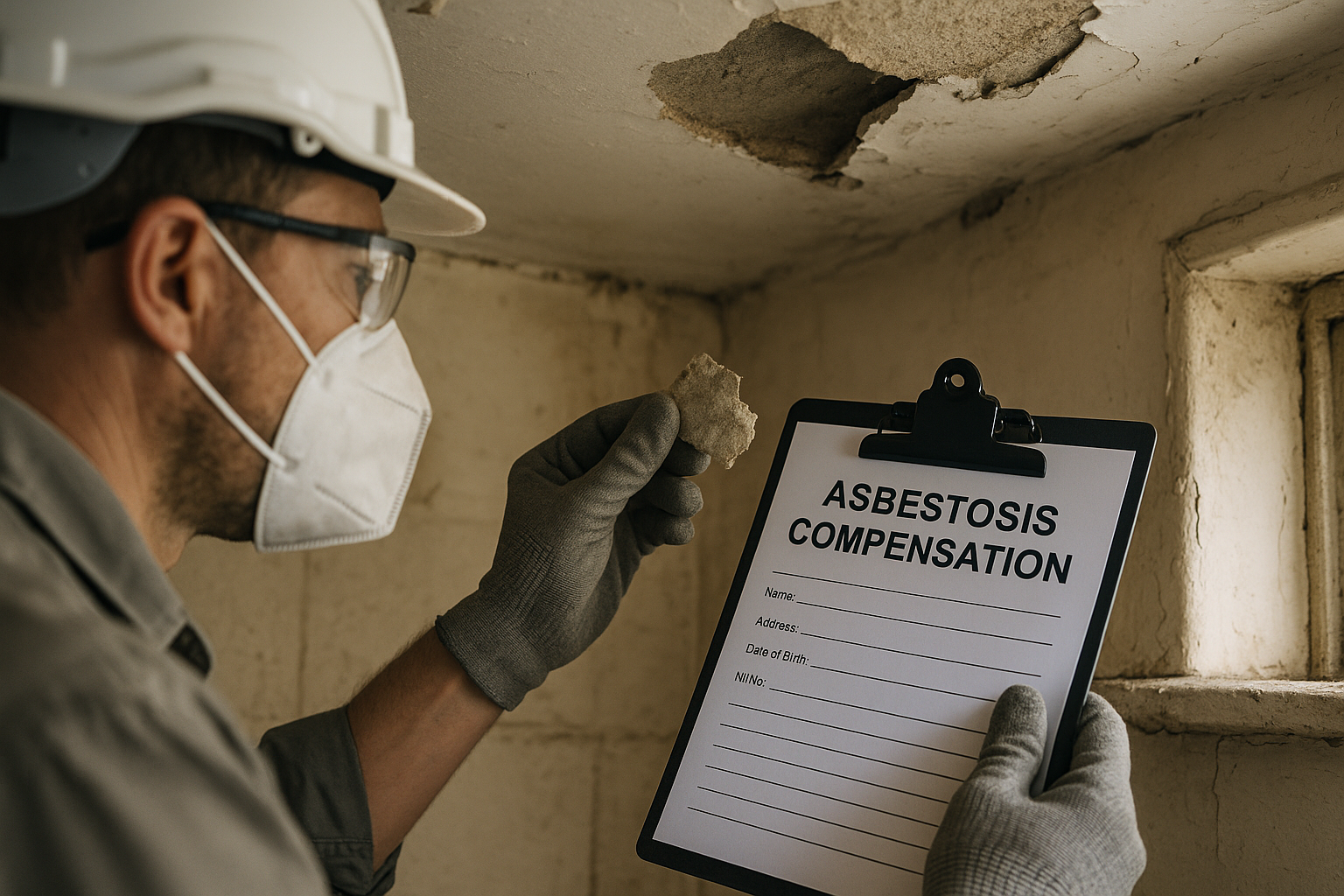
Depending on eligibility, people with asbestosis may be able to claim:
- Industrial Injuries Disablement Benefit for a prescribed industrial disease caused by work
- Lump sum payments under relevant dust-related disease schemes where the criteria are met
These routes are separate from a civil claim. They have their own rules, evidence requirements, and decision-making process.
If you are exploring asbestosis compensation, do not assume you must choose only one route. In some cases, a civil claim and state-backed support can run alongside each other, although the interaction between payments should be checked carefully.
What to gather before making enquiries
- Written confirmation of diagnosis from your GP or consultant
- Your National Insurance and employment details
- A list of employers, agencies, and job sites
- Any existing benefit paperwork
- Records showing how your condition limits daily activities
Getting these documents together early can save time and reduce stress later.
How civil claims for asbestosis compensation work
A civil claim is usually made against the employer that exposed you to asbestos, or against that employer’s liability insurer. The argument is generally that proper precautions were not taken to protect workers from a known hazard.
To succeed, asbestosis compensation claims usually need evidence linking the illness to workplace exposure and showing that reasonable steps to control the risk were missing or inadequate.
Evidence commonly used in civil claims
- Medical records confirming asbestosis
- Employment records, wage slips, or tax documents
- Witness statements from former colleagues
- Details of dusty conditions and the work carried out
- Evidence of missing, poor, or unsuitable protective equipment
- Expert medical opinion linking the disease to asbestos exposure
Time limits can apply. In many cases, they are linked to the date you knew, or could reasonably have known, that your illness was connected to asbestos exposure rather than the date you were exposed.
That makes early advice sensible. If you delay, it may become harder to trace insurers, locate witnesses, or recover records needed for asbestosis compensation.
Can medical negligence also be relevant?
Sometimes, yes. Most asbestosis compensation cases focus on the original workplace exposure, but there can be separate issues if there was an avoidable delay in diagnosis or treatment and that delay made the outcome worse.
That would usually fall under medical negligence rather than the original industrial disease claim. The two issues are legally distinct, although they can exist at the same time.
If you suspect a delayed diagnosis has affected your health, keep all appointment letters, referral dates, and test results in order. A specialist adviser can then assess whether there is a separate claim to consider.
Managing life with asbestosis while a claim is ongoing
Asbestosis compensation matters, but so does day-to-day health management. The condition cannot simply be reversed, so practical steps to protect lung function and reduce complications are essential.
Doctors commonly advise people with asbestosis to:
- Stop smoking if they smoke
- Keep up with flu and pneumococcal vaccination where clinically advised
- Attend follow-up appointments with the respiratory team
- Stay active within medical guidance
- Seek prompt help if breathing worsens or infection is suspected
These steps do not reduce your right to seek asbestosis compensation. They are sensible measures to support your health while legal, financial, and practical issues are being dealt with.
Why asbestos management still matters for property owners and duty holders
Anyone researching asbestosis compensation is often looking backwards at exposure that happened years ago. Property managers, landlords, employers, and duty holders also need to look forwards and stop the same thing happening again.
Asbestos remains present in many UK buildings. Under the Control of Asbestos Regulations, those responsible for non-domestic premises must manage asbestos risk properly. Survey work should follow HSG264 and current HSE guidance.
The biggest risk arises when asbestos-containing materials are disturbed during maintenance, refurbishment, or demolition. Assumptions are not enough. Before intrusive work starts, the building needs the right level of asbestos information.
Practical prevention steps for property managers
- Check whether the building is old enough to contain asbestos
- Review the asbestos register and management plan
- Make sure contractors see relevant asbestos information before they start
- Stop work immediately if suspect materials are damaged or uncovered
- Commission the correct survey before any intrusive works
If planned works will disturb the fabric of the building, arrange a refurbishment survey before the project begins. This is one of the clearest ways to prevent fresh exposure and avoid the kind of failures that later lead to asbestosis compensation claims.
For organisations managing sites across the capital, Supernova can help with an asbestos survey London service tailored to commercial and industrial premises. If your portfolio includes the North West, you can also arrange an asbestos survey Manchester appointment. For Midlands properties, Supernova provides an asbestos survey Birmingham service for duty holders who need clear, compliant reporting.
Action points if you are considering asbestosis compensation
When a diagnosis is new, it is easy to feel overwhelmed. A simple checklist can help you move forward without missing key evidence.
- Get written confirmation of the diagnosis and keep all medical correspondence
- Prepare a full employment history, including short-term and agency work
- Write down where asbestos dust was present and what tasks created it
- Identify former colleagues who may support your account
- Keep records of financial losses and care needs
- Check whether you may qualify for state-backed support as well as a civil claim
- Seek specialist legal advice promptly rather than relying on assumptions
For property professionals reading this, the action point is equally clear: do not allow refurbishment or intrusive maintenance to start without suitable asbestos information. Good asbestos management today helps prevent future illness and future asbestosis compensation claims.
Why specialist asbestos surveying supports legal compliance
Not every reader will be making a claim personally. Many will be employers, managing agents, housing providers, or facilities teams trying to avoid exposing workers and occupants in the first place.
That means asbestos surveys need to be accurate, clearly reported, and appropriate for the work planned. A management survey is not a substitute for a refurbishment survey where intrusive works are involved. Acting on the wrong survey type can create serious risk.
Supernova Asbestos Surveys works with organisations across the UK to identify asbestos-containing materials, support compliance, and reduce the chance of dangerous disturbance. If you are responsible for a building, treat asbestos information as a live safety document, not paperwork to file away.
Frequently Asked Questions
Can I claim asbestosis compensation if I was exposed decades ago?
Yes. Asbestosis often develops many years after exposure. Time limits are usually considered from the point when you knew, or could reasonably have known, that the illness was linked to asbestos rather than from the date the exposure happened.
What evidence is useful for asbestosis compensation?
Helpful evidence includes diagnosis letters, scan reports, lung function tests, employment records, wage slips, witness statements, and any notes showing dusty conditions or poor protection at work. A written timeline of jobs and sites is also very useful.
Can I receive government support as well as making a civil claim?
Often, yes. Some people may qualify for Industrial Injuries Disablement Benefit or a relevant lump sum scheme while also pursuing a civil claim. The detail depends on eligibility and how different payments interact.
Does smoking prevent an asbestosis compensation claim?
No. Smoking can worsen respiratory symptoms and increase other health risks, but it does not automatically remove your right to claim if workplace asbestos exposure caused asbestosis.
How can property owners reduce the risk of future asbestos disease claims?
By following the Control of Asbestos Regulations, commissioning surveys in line with HSG264 and HSE guidance, keeping asbestos records up to date, and making sure no refurbishment or intrusive work begins without the right asbestos information.
If you need expert help identifying asbestos before maintenance, refurbishment, or demolition, speak to Supernova Asbestos Surveys. We provide surveying services nationwide, with practical advice for duty holders who need clear answers fast. Call 020 4586 0680 or visit asbestos-surveys.org.uk to arrange support.