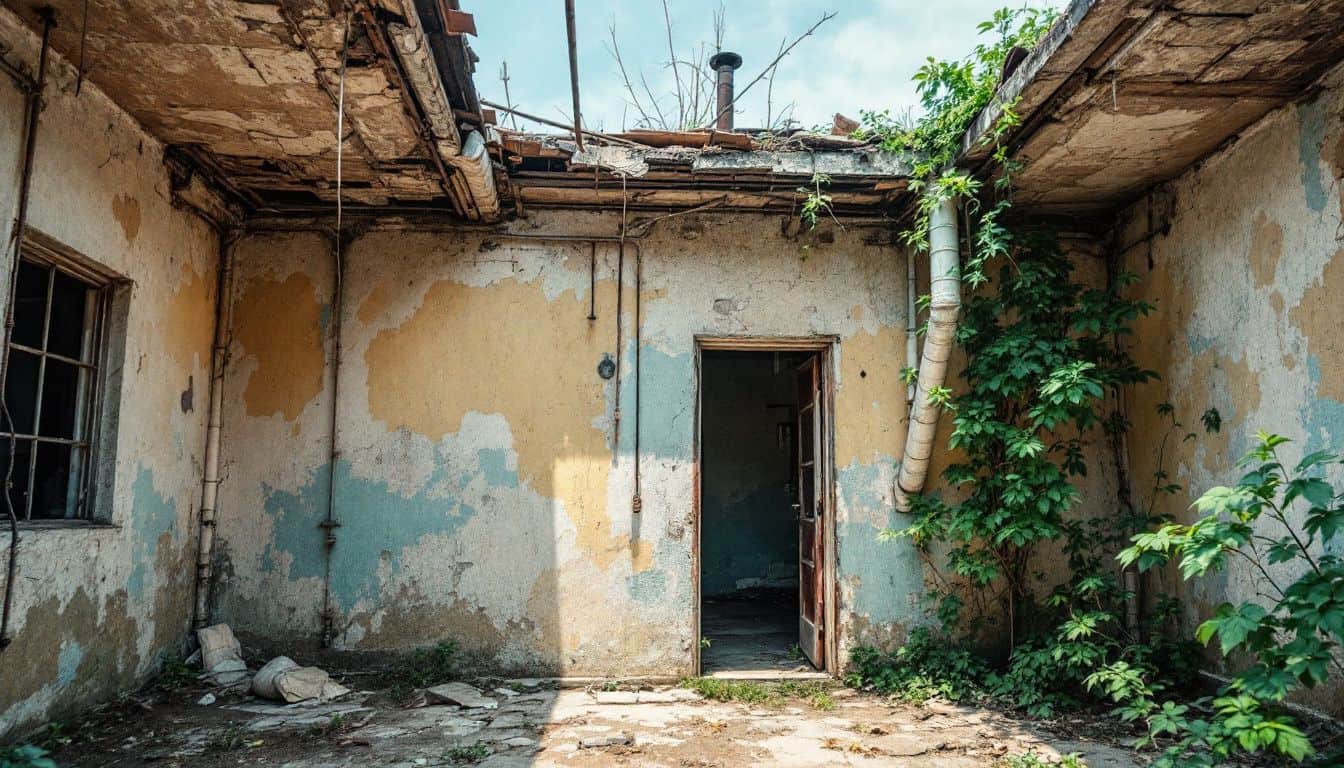
Older Buildings and Asbestos: What Every Property Owner and Manager Needs to Know
If your building was constructed before the year 2000, there is a very real chance it contains asbestos. When it comes to the special considerations for older buildings in property maintenance, asbestos sits at the top of the list — not because it is always dangerous, but because disturbing it without proper precautions can be. Understanding where asbestos hides, what the law requires, and how to manage it safely is not optional. It is a legal and moral duty.
This is not a theoretical concern. Asbestos-related diseases, including mesothelioma and asbestosis, continue to claim thousands of lives in the UK every year. The majority of those cases trace back to exposure during building work — often in older properties where asbestos was never identified before maintenance began.
Why Older Buildings Require Special Asbestos Considerations
Asbestos was widely used in UK construction from the 1950s through to the late 1990s. It was cheap, durable, fire-resistant, and an excellent insulator — which made it enormously popular with builders and developers. A ban on all forms of asbestos was not introduced until 1999, meaning any building constructed or refurbished before that date could contain asbestos-containing materials (ACMs).
The older the building, the higher the likelihood of ACMs being present — and the more varied their location. Pre-1980s buildings in particular may contain brown asbestos (amosite) and blue asbestos (crocidolite), which are considered the most hazardous types. White asbestos (chrysotile) was used even more widely and remained in use the longest.
Older properties also present a practical challenge: ACMs may have degraded over decades, making them more friable and more likely to release fibres when disturbed. Routine maintenance tasks — drilling, cutting, sanding, or even hammering — can release those fibres into the air if asbestos is present and not properly managed.
Where Asbestos Hides in Older Properties
One of the most important special considerations for older buildings is understanding just how many places asbestos can be found. It is rarely obvious. Many ACMs look identical to their non-asbestos equivalents, and the only way to confirm their presence is through sampling and laboratory analysis.
Common locations include:
- Pipe and boiler insulation — lagging around heating pipes and boilers was one of the most common uses of asbestos insulation
- Roof tiles and corrugated sheeting — asbestos cement was extensively used for roofing, particularly on industrial and agricultural buildings
- Floor tiles and adhesives — vinyl floor tiles and the bitumen adhesive beneath them frequently contain asbestos, especially in buildings from before the 1980s
- Artex and textured coatings — decorative ceiling finishes applied up to the 1990s often contained chrysotile fibres
- Ceiling tiles and panels — suspended ceiling systems installed in offices and commercial spaces commonly used asbestos-reinforced tiles
- Fireproof doors and partition panels — fire-resistant construction materials frequently incorporated asbestos for its heat-resistant properties
- Electrical installations — fuse boxes, switchboards, and electrical panel linings may contain asbestos insulation
- HVAC ductwork — heating and ventilation systems in older buildings may have asbestos-lined ducts or asbestos rope seals
- Soffits, fascias, and rainwater goods — asbestos cement was used extensively in external building components
- Asbestos cement pipes — used in both above-ground and underground drainage systems for their durability
This is not an exhaustive list. In practice, a professional asbestos survey will often uncover ACMs in locations that even experienced property managers had not anticipated.
The Legal Framework: What the Law Requires
The Control of Asbestos Regulations place a clear legal duty on those responsible for non-domestic buildings to manage asbestos. This is commonly referred to as the “duty to manage” and it applies to anyone who owns, occupies, or has responsibility for the maintenance of a building — including landlords, facilities managers, and managing agents.
What the Duty to Manage Requires
The duty to manage is not simply about having a survey done and filing it away. It is an ongoing responsibility that includes:
- Identifying ACMs — through a formal asbestos management survey carried out by a competent surveyor
- Assessing the condition and risk — not all ACMs are equally dangerous; a risk assessment determines the likelihood of fibre release
- Producing an asbestos register — a written record of all ACMs found, their location, condition, and risk rating
- Creating an asbestos management plan — a documented plan explaining how each ACM will be managed, monitored, or removed
- Sharing information — anyone likely to disturb ACMs (contractors, maintenance workers) must be informed of their location before work begins
- Reviewing and updating — the register and plan must be kept up to date, particularly after any work that may have affected ACMs
The HSE’s guidance document HSG264 provides detailed technical guidance on how asbestos surveys should be planned and conducted. It is the standard against which professional surveyors operate.
Penalties for Non-Compliance
Failing to comply with the duty to manage is a criminal offence. The HSE has the power to issue improvement notices, prohibition notices, and prosecute duty holders. Fines can be substantial, and in serious cases, individuals can face custodial sentences. Beyond the legal consequences, the human cost of non-compliance — asbestos-related illness in workers or occupants — is irreversible.
Types of Asbestos Surveys and When You Need Them
Not all asbestos surveys are the same, and choosing the right type for your situation is one of the key special considerations for older buildings in property maintenance.
Management Survey
A management survey is the standard survey required under the duty to manage. It is designed to locate ACMs that could be disturbed during normal occupation and routine maintenance. The surveyor will inspect accessible areas, take samples where necessary, and produce a full asbestos register.
This is the survey most property owners will need as a baseline. If you do not have one and your building was built before 2000, commissioning one should be your immediate priority.
Refurbishment and Demolition Survey
If you are planning any significant building work — even a relatively modest refurbishment — you will need a refurbishment and demolition survey before work begins. This is a more intrusive survey that aims to locate all ACMs in the areas that will be affected by the work, including those that would not normally be accessible.
This survey is mandatory before any refurbishment or demolition work. Starting work without one is both illegal and extremely dangerous. If you are arranging an asbestos survey in London ahead of planned refurbishment, ensure the surveyor understands the full scope of the works so they can survey the appropriate areas.
Re-inspection Survey
Where ACMs are being managed in situ (left in place and monitored rather than removed), regular re-inspection surveys are required to check that their condition has not deteriorated. The frequency of re-inspection depends on the condition and risk rating of the materials — typically annually, but sometimes more frequently for higher-risk ACMs.
Conducting a Risk Assessment Before Maintenance Work
Before any maintenance or repair work begins on an older building, a risk assessment is essential. This is not the same as the asbestos survey — it is a work-specific assessment that considers the task being carried out, the materials that might be disturbed, and the controls needed to protect workers and occupants.
A thorough risk assessment for asbestos in older buildings should:
- Reference the existing asbestos register to identify any ACMs in the work area
- Assess the condition of those ACMs and the likelihood of fibre release during the planned work
- Determine whether the work can proceed safely with controls in place, or whether asbestos removal is required first
- Specify the personal protective equipment (PPE) required
- Define the containment measures and air monitoring requirements
- Establish emergency procedures in the event of an accidental release
- Ensure that all workers involved have received appropriate asbestos awareness training
If the asbestos register does not cover the area being worked on, or if it is out of date, additional sampling or surveying will be needed before work can safely begin.
Safe Work Practices and Precautions for Handling Asbestos
Where ACMs are present and work must proceed, strict precautions are non-negotiable. The specific requirements depend on the type of asbestos, its condition, and the nature of the work — but some principles apply universally.
Personal Protective Equipment
Workers who may be exposed to asbestos fibres must be provided with appropriate PPE. This includes:
- Respiratory protective equipment (RPE) with P3-rated filters — standard dust masks offer no protection against asbestos fibres
- Disposable coveralls (Type 5, Category 3) to prevent fibre contamination of clothing
- Gloves and boot covers to prevent hand and footwear contamination
- Eye protection where there is a risk of airborne particles
RPE must be properly fit-tested for each individual worker. An ill-fitting mask provides significantly reduced protection and may give a false sense of security.
Containment and Controlled Work Areas
Any work that disturbs ACMs must be carried out within a properly established controlled zone. This typically involves:
- Sealing the work area with heavy-duty polythene sheeting
- Establishing an airlock or decontamination unit for workers entering and leaving
- Using negative air pressure systems with HEPA filtration to prevent fibres escaping the work area
- Wetting asbestos materials before and during removal to suppress dust
- Prohibiting unauthorised access with clear signage
Air Monitoring
Air monitoring during and after asbestos work provides objective evidence that fibre levels remain within safe limits. It should be carried out by a competent analyst, and the results must be documented. A clearance air test — sometimes called a four-stage clearance — is required after any licensed asbestos removal work before the area can be reoccupied.
Asbestos Removal: When Is It Necessary?
Not all ACMs need to be removed. In many cases, ACMs that are in good condition and are unlikely to be disturbed are best left in place and managed. Removal itself carries risk — disturbing asbestos to remove it can release more fibres than simply leaving it alone.
However, removal becomes necessary when:
- ACMs are in poor condition and deteriorating
- Planned refurbishment or demolition work will disturb them
- The materials are in a location where they cannot be adequately protected from damage
- Ongoing management is no longer practicable
When removal is required, it must be carried out by a licensed contractor for most types of asbestos work. The asbestos removal process involves careful preparation of the work area, controlled removal of the materials, double-bagging and labelling of all asbestos waste, and transport to a licensed waste disposal facility. Only contractors holding a licence issued by the HSE are permitted to carry out notifiable asbestos removal work.
Choosing a Licensed Asbestos Removal Contractor
When selecting a contractor for asbestos removal, do not simply accept the lowest quote. Verify the following before appointing anyone:
- They hold a current HSE asbestos licence (you can check this on the HSE website)
- They have demonstrable experience with the type of building and ACMs involved
- They can provide a detailed method statement and risk assessment for the work
- They carry appropriate insurance
- Their workers have received the required asbestos training and medical surveillance
- They will provide post-removal air clearance certificates
Emergency Procedures: What to Do If Asbestos Is Accidentally Disturbed
Despite best efforts, there are occasions when asbestos is disturbed unexpectedly during maintenance — perhaps because an ACM was not identified in the survey, or because work deviated from the planned scope. Knowing how to respond is critical.
If asbestos is accidentally disturbed:
- Stop work immediately and evacuate the area
- Seal off the area to prevent others from entering
- Do not attempt to clean up the material yourself
- Contact a licensed asbestos contractor to assess the situation and carry out safe remediation
- Report the incident in accordance with RIDDOR (Reporting of Injuries, Diseases and Dangerous Occurrences Regulations) if required
- Arrange for air monitoring to assess whether fibres have spread beyond the immediate area
- Ensure that anyone who may have been exposed is advised to seek medical advice and that the incident is documented
Having a documented emergency procedure in place before work begins — and ensuring all workers are familiar with it — can make a significant difference to the outcome of an accidental release.
Regional Considerations: Older Building Stock Across the UK
Older buildings are found throughout the UK, but certain regions have particularly high concentrations of pre-2000 stock. Industrial cities and historic urban centres tend to have the greatest density of buildings that require careful asbestos management.
If you manage properties in any of these areas, local expertise matters. Surveyors familiar with the typical construction methods and materials used in a particular region can identify ACMs more efficiently and accurately. Whether you need an asbestos survey in Manchester for a Victorian mill conversion or an asbestos survey in Birmingham for a post-war commercial property, working with experienced local surveyors ensures the job is done properly.
Maintaining Your Asbestos Register and Management Plan
One of the most commonly neglected aspects of asbestos management in older buildings is keeping the register and management plan up to date. A survey carried out ten years ago may no longer accurately reflect the current state of ACMs in the building, particularly if maintenance or refurbishment work has taken place in the interim.
Good practice includes:
- Reviewing the asbestos register annually as a minimum
- Updating it immediately after any work that affects ACMs
- Ensuring the register is readily accessible to anyone who might need it — including contractors arriving to carry out maintenance
- Briefing all contractors on the asbestos register before they begin any work on the property
- Commissioning re-inspection surveys on a schedule appropriate to the risk rating of the ACMs present
The asbestos register is a live document, not a one-time exercise. Treating it as such is one of the most practical steps a property manager can take to reduce risk.
Frequently Asked Questions
Do all older buildings contain asbestos?
Not every older building contains asbestos, but any building constructed or refurbished before 2000 has the potential to. The likelihood increases significantly for buildings built between the 1950s and 1980s, when asbestos use in construction was at its peak. The only way to know for certain is to commission a professional asbestos management survey.
Can I carry out maintenance on an older building without an asbestos survey?
Technically, some very low-risk maintenance tasks may be possible without a survey, but this is a significant gamble. If your building was constructed before 2000 and you do not have an up-to-date asbestos register, you cannot safely authorise maintenance work that might disturb building materials. The responsible — and legally compliant — approach is to commission a management survey before any significant work begins.
What is the difference between managing asbestos in place and having it removed?
Managing asbestos in place means leaving ACMs that are in good condition undisturbed, monitoring them regularly, and ensuring that anyone working near them is informed of their location. Removal means physically extracting the ACMs from the building using a licensed contractor. Removal carries its own risks during the process, so it is not always the preferred option — but it becomes necessary when materials are deteriorating or when planned work will disturb them.
Who is responsible for asbestos management in a commercial building?
Under the Control of Asbestos Regulations, the duty to manage falls on the “duty holder” — typically the building owner, the employer if they control the premises, or the person or organisation with responsibility for maintenance under a tenancy or management agreement. In some buildings, this responsibility may be shared between a landlord and a tenant. The key point is that someone must take clear ownership of this duty — it cannot simply be left unaddressed.
How often should an asbestos survey be updated?
A management survey does not have a fixed expiry date, but it should be reviewed regularly — at least annually — and updated whenever work has been carried out that may have affected ACMs, or whenever there is reason to believe the condition of ACMs may have changed. If you are planning refurbishment or demolition work, a new refurbishment and demolition survey will be required regardless of when the management survey was last updated.
Get Professional Asbestos Support from Supernova
Managing asbestos in older buildings is not something to approach informally. The risks are real, the legal requirements are clear, and the consequences of getting it wrong — for people’s health and for your legal standing — are severe.
Supernova Asbestos Surveys has completed over 50,000 surveys across the UK, working with property owners, facilities managers, local authorities, and contractors to identify, assess, and manage asbestos safely and in full compliance with the Control of Asbestos Regulations and HSE guidance.
Whether you need a management survey, a refurbishment survey, re-inspection services, or advice on your asbestos management plan, our team of qualified surveyors is ready to help. We operate nationwide, with specialist knowledge of regional building stock and construction methods.
Call us today on 020 4586 0680 or visit asbestos-surveys.org.uk to find out how we can help you manage asbestos safely and confidently in your property.