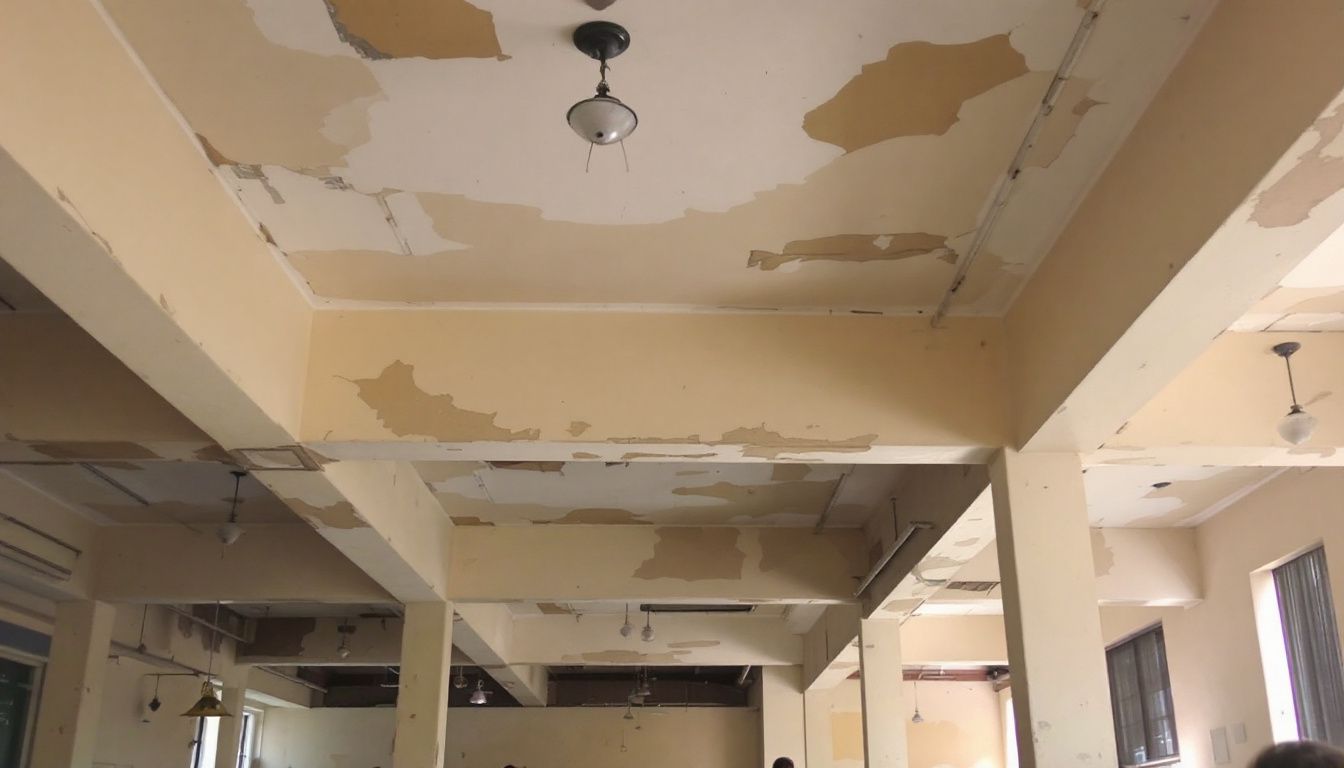
Asbestos Risk Management in Eston: What Every Property Owner and Manager Needs to Know
If your building in Eston was constructed before 2000, there is a realistic chance it contains asbestos-containing materials (ACMs). Asbestos risk management in Eston is not a bureaucratic formality — it is a legal duty and, in the most direct sense, a matter of life and death. Mismanaged asbestos remains one of the leading causes of occupational death in the UK, and the responsibility to act sits squarely with the dutyholder.
This post breaks down exactly what effective asbestos risk management looks like, what the law requires, and how property owners and managers in Eston can stay compliant and keep people safe.
Why Asbestos Remains a Serious Concern in Eston
Eston, like much of Teesside, has a rich industrial and residential heritage. Many of its commercial premises, schools, public buildings, and older housing stock were built during the decades when asbestos was used extensively as a building material. It was valued for its fire resistance, durability, and insulating properties — and it was everywhere.
Asbestos was used in floor tiles, ceiling tiles, pipe lagging, roof sheets, boiler insulation, textured coatings, and partition boards. In undisturbed condition, ACMs are not immediately dangerous. The risk arises when fibres are released into the air — through deterioration, accidental damage, or poorly planned maintenance and refurbishment work.
The importation, supply, and use of all forms of asbestos has been banned in the UK, but the material remains in situ in a vast number of buildings across the country. Anyone responsible for managing a non-domestic premises in Eston needs to take this seriously — and act accordingly.
The Legal Framework Governing Asbestos Risk Management in Eston
The primary legislation governing asbestos in non-domestic buildings is the Control of Asbestos Regulations. These regulations place a legal duty to manage asbestos on anyone who owns, occupies, or has responsibility for the maintenance and repair of non-domestic premises. This person is referred to as the dutyholder.
The duty to manage includes several clear obligations:
- Identify whether ACMs are present in the premises
- Assess the condition and risk posed by any ACMs found
- Produce and maintain an up-to-date asbestos register
- Create and implement an asbestos management plan
- Provide information about the location and condition of ACMs to anyone who may disturb them
- Review and monitor the plan on an ongoing basis
The HSE’s guidance document HSG264 sets out the standards for asbestos surveying and provides the framework that all competent surveyors must follow. Failure to comply with the Control of Asbestos Regulations can result in enforcement action, substantial fines, and in the most serious cases, criminal prosecution.
The Asbestos Management Survey: Your Starting Point
For most premises in Eston, the first practical step in asbestos risk management is commissioning an asbestos management survey. This is a non-intrusive survey designed to locate, as far as reasonably practicable, ACMs in the normally occupied areas of the building.
During a management survey, a qualified surveyor will:
- Conduct a thorough visual inspection of all accessible areas
- Take samples from materials suspected to contain asbestos
- Send samples to a UKAS-accredited laboratory for analysis
- Produce a written report including an asbestos register, risk assessment, and management plan
The resulting report gives dutyholders a clear, legally compliant record of what is in their building, where it is, and what condition it is in. This is the foundation of any effective asbestos risk management programme.
A management survey is suitable for buildings that are in normal use and not undergoing significant structural work. It should be updated whenever there are changes to the building’s structure or condition, or when the existing survey is no longer current.
What an Asbestos Register Must Contain
The asbestos register is a live document — not a one-off exercise. It records the type, location, extent, and condition of all ACMs identified in the building. It must be accessible to anyone who might carry out work on the premises, including contractors, maintenance staff, and emergency services.
A well-maintained register will include:
- The location of each ACM, described clearly and supported by floor plans or photographs
- The type of asbestos material (for example, asbestos insulating board, textured coating, pipe lagging)
- The condition of each ACM, rated according to a recognised scoring system
- The risk assessment associated with each material
- Details of any remedial actions taken or recommended
- Records of periodic re-inspections and any changes noted
Keeping this register up to date is not optional. If a contractor disturbs an ACM that was not recorded, or if an employee is exposed to asbestos fibres because the register was inaccurate, the dutyholder may face serious legal consequences.
Building an Effective Asbestos Management Plan
An asbestos register tells you what is in the building. The management plan tells you what you are going to do about it. These are two distinct but closely related documents.
The management plan should set out:
- Who is responsible for managing asbestos on the premises
- What actions will be taken for each ACM — monitor, repair, encapsulate, or remove
- How and when re-inspections will be carried out
- How information will be communicated to staff and contractors
- What training has been provided to relevant personnel
- Emergency procedures in the event of accidental disturbance
Not every ACM needs to be removed. In many cases, the safest approach is to leave materials in good condition undisturbed and monitor them regularly. Unnecessary removal work can actually increase the risk of fibre release if not managed correctly.
The management plan should reflect a proportionate, risk-based approach — and it should be reviewed and updated on a regular basis, not filed away and forgotten.
Prioritising Remedial Actions
Where ACMs are in poor condition or are at risk of disturbance, the management plan should prioritise action. Materials that are friable (easily crumbled), heavily deteriorated, or located in high-traffic areas require more urgent attention than intact, well-sealed materials in inaccessible locations.
Your surveyor’s risk assessment will assign a priority score to each ACM. This helps dutyholders in Eston plan and budget for remedial works in a logical, defensible way — rather than reacting to problems as they arise.
Ongoing Monitoring and Re-inspection
Asbestos risk management in Eston is not a one-time task. Once a management plan is in place, the dutyholder must ensure that ACMs are inspected on a regular basis — typically annually, though higher-risk materials may require more frequent checks.
Re-inspections should be carried out by a competent person and should assess whether:
- The condition of any ACM has changed since the last inspection
- Any new ACMs have been identified or suspected
- Planned maintenance or refurbishment work may affect any ACMs
- The management plan remains fit for purpose
Any changes must be documented and the register updated accordingly. If building work is planned that may disturb ACMs — even minor maintenance — the relevant contractor must be informed before work begins. This is a legal requirement, not a courtesy.
Air Monitoring
In some circumstances, particularly where ACMs are in poor condition or where work has been carried out near asbestos, air monitoring may be appropriate. This involves sampling the air in affected areas to check for the presence of asbestos fibres.
While not always required as part of routine management, air monitoring provides an additional layer of assurance and may be recommended by your surveyor following a re-inspection or after any incident involving potential disturbance.
Refurbishment and Demolition: When a Different Survey Is Required
If you are planning refurbishment or demolition work on a building in Eston, a management survey is not sufficient. Before any work that may disturb the fabric of the building begins, you are legally required to commission a demolition survey — formally known as a refurbishment and demolition survey.
This is a more intrusive and destructive survey than a management survey. It involves accessing all areas that will be affected by the planned works, including voids, cavities, and structural elements. The aim is to locate all ACMs before work starts, so they can be safely removed by a licensed contractor prior to the main works commencing.
Starting refurbishment or demolition work without this survey in place is a serious breach of the Control of Asbestos Regulations. It puts workers at risk of significant asbestos exposure and exposes the dutyholder to enforcement action from the HSE.
Training and Communication: The Human Side of Asbestos Management
Effective asbestos risk management in Eston depends not just on paperwork, but on people. Everyone who works in or manages a building containing ACMs should have an appropriate level of awareness about the risks and their responsibilities.
This does not mean every member of staff needs specialist asbestos training. However, building managers, maintenance teams, and anyone likely to carry out work that could disturb ACMs should receive training proportionate to their role.
Key elements of asbestos awareness training include:
- Understanding where asbestos is commonly found in buildings
- Recognising materials that may contain asbestos
- Knowing how to access and interpret the asbestos register
- Understanding what to do if asbestos is accidentally disturbed
- Knowing when to stop work and seek specialist advice
Contractors working on the premises must be provided with relevant information from the asbestos register before they begin any work. This is a legal requirement under the Control of Asbestos Regulations — not an optional step that can be skipped when time is short.
Common Mistakes That Put Dutyholders at Risk
Even well-intentioned property managers can fall into avoidable traps when it comes to asbestos risk management. Being aware of these pitfalls is half the battle.
Treating the Survey as a One-Off Exercise
A survey carried out years ago may no longer reflect the current condition of the building. ACMs deteriorate over time, buildings change, and new materials may be uncovered during maintenance work. The register must be a living document, reviewed and updated regularly.
Failing to Share Information with Contractors
One of the most frequent compliance failures is not providing contractors with access to the asbestos register before work begins. Every contractor who may disturb the fabric of the building must be informed of any ACMs in the relevant areas. No exceptions.
Assuming Removal Is Always the Answer
Removing asbestos is not automatically the safest course of action. Poorly managed removal can release far more fibres than leaving intact materials undisturbed. Always follow the risk-based approach recommended in your management plan and seek specialist advice before commissioning removal works.
Neglecting Domestic-to-Commercial Conversions
If a property has been converted from domestic to commercial use, the duty to manage applies. A building’s original residential use does not exempt the current dutyholder from their obligations under the Control of Asbestos Regulations.
Asbestos Risk Management Across the UK: Supernova’s National Reach
Supernova Asbestos Surveys operates nationwide, providing consistent, high-quality asbestos surveying services to clients across England, Scotland, and Wales. Whether you need an asbestos survey London, an asbestos survey Manchester, or an asbestos survey Birmingham, our BOHS P402-qualified surveyors deliver fully compliant reports in line with HSG264 guidance.
Our Eston clients benefit from the same rigorous standards applied across all our locations — detailed reports, UKAS-accredited laboratory analysis, and clear, actionable recommendations that make compliance straightforward rather than overwhelming.
Frequently Asked Questions
Do I legally need an asbestos survey for my building in Eston?
If you own, occupy, or are responsible for maintaining a non-domestic premises built before 2000, you have a legal duty to manage asbestos under the Control of Asbestos Regulations. Commissioning an asbestos management survey is the standard first step in meeting that duty. Domestic properties are generally exempt, though common areas in blocks of flats are not.
How often does an asbestos management plan need to be reviewed?
There is no single fixed interval prescribed in law, but HSE guidance recommends that re-inspections of ACMs take place at least annually. The management plan itself should be reviewed whenever there are changes to the building, following any incident involving potential disturbance, or when the existing plan no longer reflects the current situation on site.
What is the difference between a management survey and a refurbishment and demolition survey?
A management survey is a non-intrusive inspection suitable for buildings in normal use. It locates ACMs in accessible areas and forms the basis of your asbestos register and management plan. A refurbishment and demolition survey is required before any work that will disturb the fabric of the building. It is more intrusive and covers all areas affected by the planned works, including voids and structural elements.
Can I manage asbestos in my building without removing it?
Yes — and in many cases, leaving ACMs undisturbed is the recommended approach. If materials are in good condition and are not at risk of being damaged, monitoring them in place is often safer than removal. Removal should only be carried out by a licensed contractor when materials are deteriorating, at risk of disturbance, or where planned works make removal necessary.
What happens if I do not comply with asbestos regulations in Eston?
Non-compliance with the Control of Asbestos Regulations can result in enforcement notices, improvement notices, and substantial financial penalties. In the most serious cases — particularly where workers or occupants have been exposed to asbestos fibres — criminal prosecution is possible. The HSE takes asbestos management failures seriously, and ignorance of the regulations is not a defence.
Speak to Supernova Asbestos Surveys Today
If you manage a property in Eston and are unsure whether your asbestos obligations are being met, do not wait for a problem to arise. Supernova Asbestos Surveys has completed over 50,000 surveys nationwide and has the expertise to guide you through every stage of asbestos risk management — from initial survey through to ongoing monitoring and compliance support.
Call us on 020 4586 0680 or visit asbestos-surveys.org.uk to book a survey or speak to one of our qualified surveyors. We are here to make asbestos compliance straightforward, defensible, and — most importantly — safe.