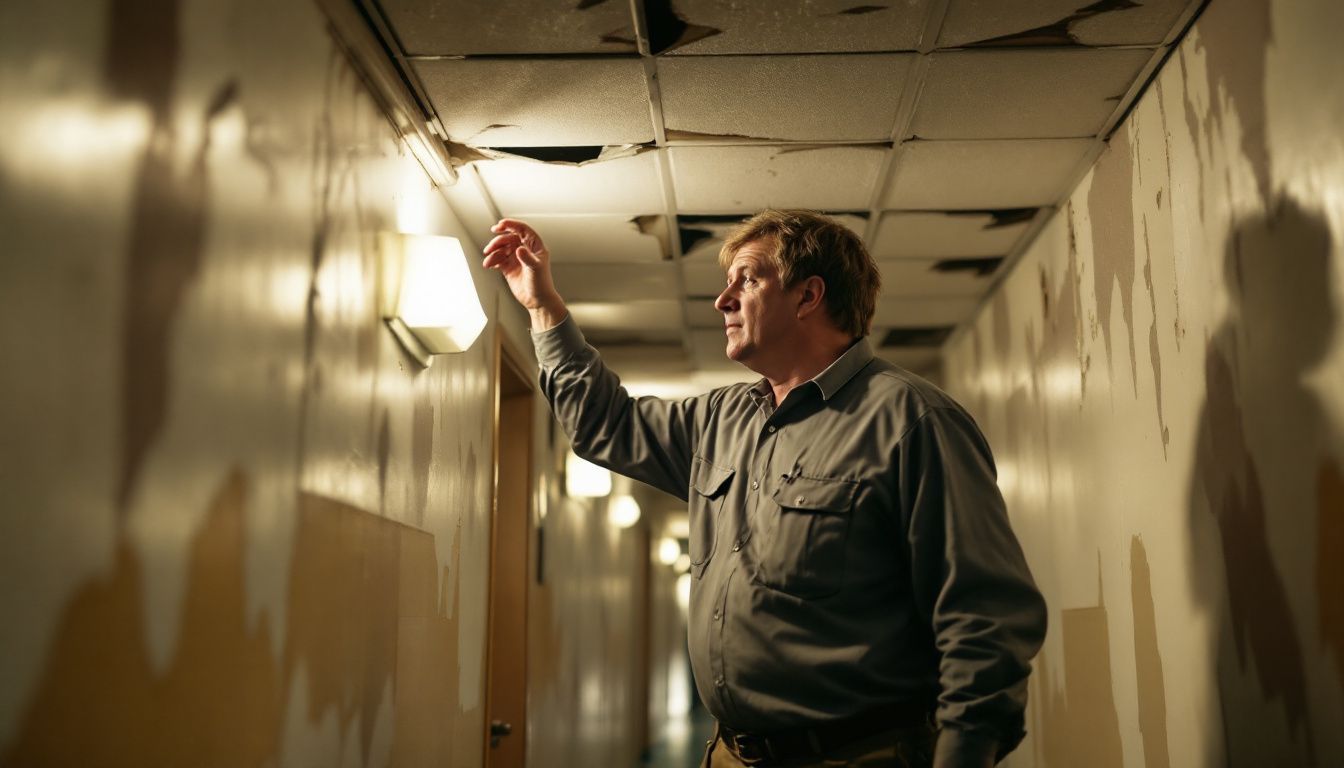
What Is an Asbestos Management Action Plan — and Why Does Every Dutyholder Need One?
If your building was constructed before 2000, there is a reasonable chance it contains asbestos-containing materials (ACMs). That is not a cause for panic — but it is an urgent reason to act. An asbestos management action plan is the structured, legally-grounded document that tells you exactly what is in your building, where it sits, what condition it is in, and what steps you must take to protect everyone inside.
Without one, you are not simply cutting corners on paperwork. You are leaving occupants, contractors, and maintenance staff exposed to one of the UK’s most serious occupational health hazards — and you are almost certainly breaching the Control of Asbestos Regulations.
This post walks through every element of a robust asbestos management action plan: from the initial survey through to staff training, incident response, and ongoing review. Whether you manage a school, office block, housing block, or public building, the same principles apply.
Who Is Legally Required to Have an Asbestos Management Action Plan?
The duty to manage asbestos rests with the “dutyholder” — typically the building owner, employer, or the person responsible for maintaining a non-domestic premises. Under the Control of Asbestos Regulations, dutyholders must take reasonable steps to find out whether ACMs are present, assess their condition, and produce a written plan for managing them.
This obligation applies to all non-domestic buildings. It also extends to the common areas of residential blocks — stairwells, plant rooms, roof spaces, and communal corridors all fall within the same legal duty.
If you are unsure whether your obligations apply to a specific property, the HSE’s guidance document HSG264 sets out the legal framework clearly. The short answer is: if you manage a building built before 2000, you almost certainly have a legal duty to act.
Step One: Commission a Professional Asbestos Survey
You cannot write a credible asbestos management action plan without first knowing what you are dealing with. That means commissioning a professional asbestos survey carried out by a UKAS-accredited surveyor.
Management Survey vs. Demolition Survey
For most occupied buildings, a management survey is the appropriate starting point. It identifies ACMs in accessible areas that could be disturbed during normal occupation or routine maintenance, without requiring intrusive or destructive investigation.
If you are planning significant building work, renovation, or demolition, a demolition survey is required instead. This type of survey is fully intrusive and must be completed before any work begins — not during it. Both types must be carried out by a competent, accredited surveyor, and both feed directly into your asbestos register and management action plan.
What the Survey Should Cover
A thorough survey will inspect all accessible areas of the building, take samples from suspect materials, and document findings with photographs and precise location references. The surveyor’s report should include:
- The location of all identified or presumed ACMs
- The type of asbestos present, where laboratory analysis confirms it
- The condition and extent of each material
- A risk priority score based on condition and likelihood of disturbance
- Recommendations for management, monitoring, or removal
If you manage properties across multiple locations, it is worth working with a surveying firm that operates nationally. Supernova carries out asbestos survey London projects across the capital, as well as surveys in major regional cities across England.
Step Two: Create and Maintain an Asbestos Register
The asbestos register is the living document at the heart of your asbestos management action plan. It records every ACM identified in the building — its location, type, condition, and risk rating — and must be kept up to date throughout the life of the building.
What Your Register Must Include
A compliant asbestos register should contain:
- The precise location of each ACM, referenced to floor plans or building drawings
- The material type and form — for example, sprayed coating, insulation board, or floor tiles
- The assessed condition: intact, damaged, or deteriorating
- The risk priority rating assigned during the survey
- Details of any remedial action taken
- Dates of all inspections and re-inspections
The register must be made available to anyone who needs it — maintenance contractors, emergency services, and new members of staff. Keeping it locked in a filing cabinet defeats the purpose entirely. Many organisations now hold registers digitally, with access controls that allow relevant parties to view location data before starting any work on the building.
How Often Should You Update the Register?
The register should be reviewed as a minimum every 12 months. It must also be updated following any work that affects ACMs — even where that work was carried out safely and the materials remain in place.
If a contractor drills near a known ACM, that event needs to be logged. Any change in the condition of a material — deterioration, accidental damage, or disturbance — must trigger an immediate review, not simply a note to be picked up at the next scheduled update.
Step Three: Assess Risks and Prioritise Control Measures
Not all asbestos poses the same level of risk. A well-encapsulated section of asbestos insulation board in a locked plant room presents a very different hazard from damaged sprayed asbestos coating in a busy corridor. Your asbestos management action plan must reflect these differences clearly.
How Risk Is Assessed
Risk assessment for ACMs typically considers three factors:
- The condition of the material — is it intact, slightly damaged, or heavily deteriorated?
- The likelihood of disturbance — how frequently is the area accessed, and could routine maintenance disturb the material?
- The potential for fibre release — some materials, such as sprayed asbestos, release fibres far more readily than others, such as vinyl floor tiles containing chrysotile.
The combination of these factors produces a risk priority score. High-priority materials require immediate action — whether that means encapsulation, repair, or removal. Lower-priority materials can often be managed in place with regular monitoring.
Control Measures to Consider
Depending on the risk level assigned to each ACM, control measures might include:
- Leaving intact, low-risk materials in place and monitoring them regularly
- Encapsulating damaged materials to prevent fibre release
- Restricting access to areas containing high-risk ACMs
- Installing clear warning labels and signage at ACM locations
- Requiring permits to work before any activity near known ACMs
- Arranging licensed removal for high-risk or deteriorating materials
Air monitoring can be used to verify that control measures are working — particularly in areas where ACMs are in poor condition or where regular maintenance activity takes place nearby.
Step Four: Define Responsibilities Clearly
An asbestos management action plan only works if everyone knows their role. Vague responsibilities create gaps, and gaps create dangerous situations.
The Dutyholder’s Responsibilities
The dutyholder carries overall legal responsibility. This includes ensuring the survey is commissioned, the register is maintained, the management plan is written and implemented, and that all relevant parties have access to the information they need.
The dutyholder must also ensure that any contractor working on the building is informed of the location and condition of ACMs before work begins. This is a legal requirement under the Control of Asbestos Regulations — not a professional courtesy.
Day-to-Day Management
In larger organisations, day-to-day asbestos management is often delegated to a facilities manager or health and safety officer. That person should be clearly named in the plan, along with their specific responsibilities — conducting periodic inspections, updating the register, briefing contractors, and escalating concerns where necessary.
Every member of staff who works in or around the building should understand the basics: where ACMs are located, what they look like, and what to do if they suspect a material has been disturbed. That knowledge comes from training.
Step Five: Train Staff and Communicate with Occupants
An asbestos management action plan that exists only on paper is not a plan — it is a document. Making it real means ensuring the people in your building understand it and can act on it.
Asbestos Awareness Training
Any worker who could disturb ACMs during their normal duties — maintenance staff, cleaners, decorators, electricians — must receive asbestos awareness training. This is a legal requirement under the Control of Asbestos Regulations.
Awareness training covers:
- What asbestos is and where it is commonly found
- The health risks associated with asbestos exposure
- How to recognise materials that might contain asbestos
- What to do — and what not to do — if they encounter a suspect material
- How to access the asbestos register
Training records must be kept, and refresher training should be provided regularly. New starters who will work in affected areas need training before they begin, not after.
Communicating with Occupants and Contractors
Occupants do not need the same level of detail as maintenance staff, but they should be aware that ACMs are present, where they are located in general terms, and who to contact if they notice damage or deterioration.
Contractors represent a particular area of risk. Before any building work begins, the dutyholder must provide contractors with relevant information from the asbestos register. A permit-to-work system is strongly recommended for any activity near known ACM locations.
For property managers overseeing buildings across major cities, Supernova’s regional teams can support both survey work and contractor briefing processes. Our asbestos survey Manchester service, for example, includes post-survey support to help clients communicate findings clearly to their teams. We offer the same level of service through our asbestos survey Birmingham team for property managers across the West Midlands.
Step Six: Establish an Incident Response Procedure
Even with the best management plan in place, incidents can happen. A contractor drills into an unidentified ACM. A ceiling tile is damaged during maintenance. A re-inspection reveals a material in worse condition than previously recorded. Your plan must set out exactly what happens next.
Immediate Actions Following a Suspected Disturbance
When a suspected asbestos disturbance occurs, the immediate priorities are:
- Stop the work immediately
- Evacuate the area and restrict access
- Do not attempt to clean up — disturbed asbestos fibres require specialist decontamination
- Contact a licensed asbestos contractor
- Notify the dutyholder and relevant health and safety personnel
Air monitoring should be carried out by a competent person before the area is re-occupied. All incidents must be documented in detail — what happened, when, who was involved, what action was taken, and the outcome of any air testing.
Reporting Obligations
Certain asbestos incidents may trigger reporting obligations under RIDDOR (Reporting of Injuries, Diseases and Dangerous Occurrences Regulations). If a worker is exposed to asbestos as a result of an incident, this must be reported to the HSE. Your incident response procedure should include clear guidance on when and how to make that report.
Step Seven: Schedule Regular Reviews of Your Plan
An asbestos management action plan is not a one-off exercise. Buildings change over time — materials deteriorate, refurbishments alter the fabric of the structure, and previously inaccessible areas become accessible. Your plan must keep pace with those changes.
Schedule a formal review of the entire plan at least once a year. That review should assess whether:
- The asbestos register is current and accurate
- All ACMs have been re-inspected and their condition recorded
- Control measures are still appropriate and effective
- Staff training records are up to date
- Any incidents since the last review have been properly documented and acted upon
- Planned building work in the coming year could affect any ACMs
The review should be documented and signed off by the dutyholder. If the building undergoes significant changes — a change of use, major refurbishment, or a new tenancy arrangement — an unscheduled review should be triggered immediately rather than waiting for the annual cycle.
Common Mistakes That Undermine an Asbestos Management Action Plan
Even dutyholders who take their obligations seriously can fall into avoidable traps. These are the most common failures that HSE inspectors identify during enforcement visits:
- An outdated survey — relying on a survey carried out many years ago without re-inspection means your register may not reflect the current condition of ACMs in the building.
- A register that is inaccessible — if contractors cannot access asbestos information before starting work, the register is not fulfilling its purpose.
- No contractor management process — failing to brief contractors before work begins is one of the most frequently cited breaches of the Control of Asbestos Regulations.
- Untrained staff — awareness training that has lapsed, or that has never been provided to maintenance staff, creates serious exposure risks.
- A plan that was written once and never revisited — a static document cannot manage a dynamic building. Regular review is not optional.
Addressing these issues proactively — before an incident or an enforcement visit — is always the better approach.
How Supernova Asbestos Surveys Can Help
Supernova Asbestos Surveys has completed over 50,000 surveys across the UK, working with property managers, local authorities, housing associations, schools, and commercial landlords. Our UKAS-accredited surveyors produce clear, actionable reports that give you everything you need to build and maintain a compliant asbestos management action plan.
We cover the full range of survey types, from routine management surveys through to fully intrusive pre-demolition investigations. We operate nationally, with dedicated regional teams across England.
If you are ready to get your asbestos management action plan in order — or if you simply need a survey to understand what you are dealing with — call us on 020 4586 0680 or visit asbestos-surveys.org.uk to request a quote.
Frequently Asked Questions
What is an asbestos management action plan?
An asbestos management action plan is a written document that records the location and condition of asbestos-containing materials in a building, assesses the risks they present, and sets out the steps a dutyholder will take to manage those risks. It is a legal requirement for dutyholders under the Control of Asbestos Regulations and must be kept up to date throughout the life of the building.
Who is responsible for producing an asbestos management action plan?
The dutyholder is responsible. This is typically the building owner, employer, or the person with responsibility for maintaining a non-domestic premises. In practice, the work of producing and maintaining the plan is often delegated to a facilities manager or health and safety officer, but legal accountability remains with the dutyholder.
How often does an asbestos management action plan need to be reviewed?
The plan should be formally reviewed at least once every 12 months. It must also be updated following any incident that affects ACMs, any building work that could disturb asbestos, or any significant change in the condition of a material identified in the register. A change in the use of the building or a major refurbishment should trigger an immediate unscheduled review.
Do I need an asbestos survey before I can write a management action plan?
Yes. A professional asbestos survey carried out by a UKAS-accredited surveyor is the essential first step. Without a survey, you have no reliable information about what ACMs are present, where they are located, or what condition they are in — and you cannot produce a credible or compliant management action plan without that information.
What happens if I do not have an asbestos management action plan?
Failing to produce and implement an asbestos management action plan is a breach of the Control of Asbestos Regulations. The HSE has powers to issue improvement notices, prohibition notices, and prosecute dutyholders who fail to meet their legal obligations. Beyond the legal consequences, the absence of a plan puts occupants, maintenance staff, and contractors at genuine risk of asbestos exposure — with potentially serious long-term health consequences.