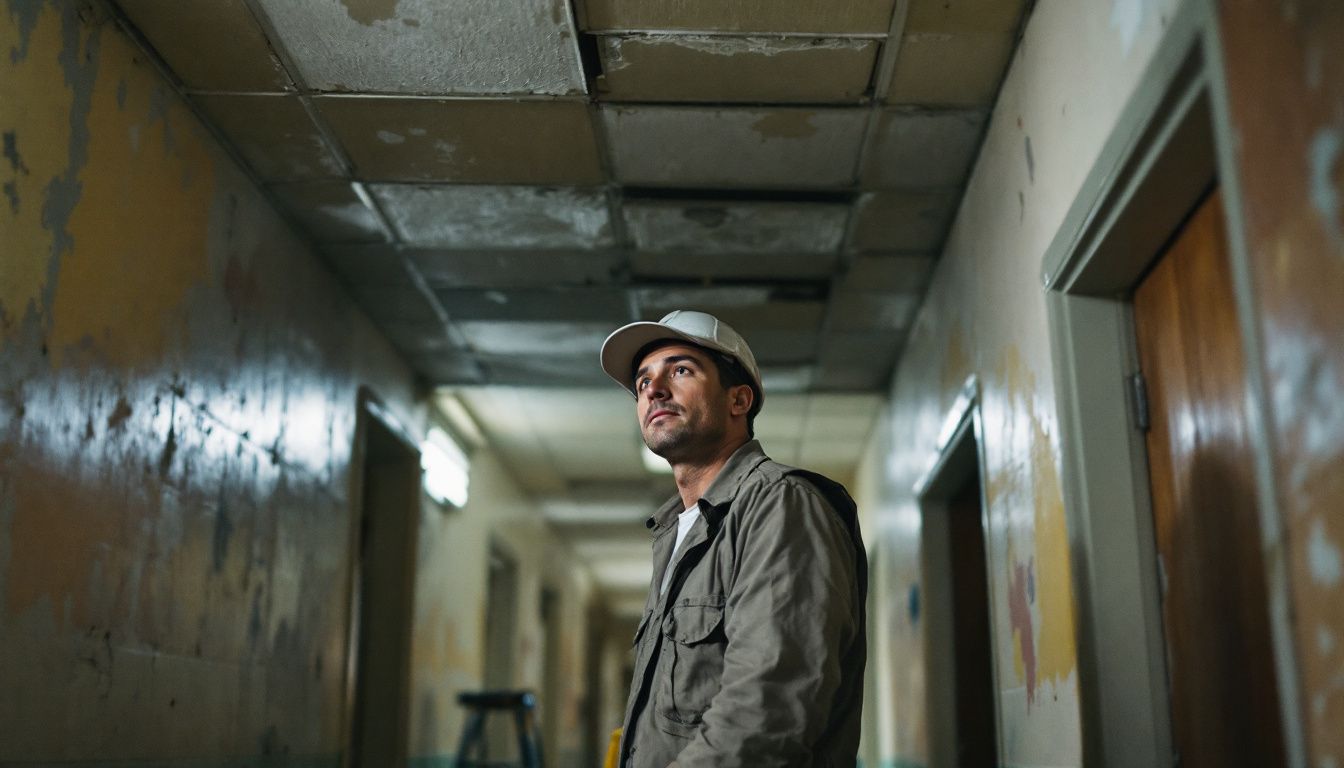
Asbestos Garage Removal in Cardiff: What You Need to Know Before You Start
Thousands of garages across Cardiff were built using asbestos-containing materials — and many still stand today. If you’re planning to demolish, renovate, or simply clear out an older garage, asbestos garage removal in Cardiff isn’t something you can approach casually. Get it wrong and you’re risking serious harm to yourself, your family, and anyone nearby.
This post covers everything Cardiff property owners need to understand: where asbestos hides in garages, how to identify it, what the law says, and how to get it removed safely and legally.
Why Cardiff Garages Are at Risk
Cardiff’s housing stock includes a significant number of properties built between the 1950s and 1980s — the peak era for asbestos use in construction. Garages from this period routinely used asbestos cement sheeting for roofing, wall panels, and soffits because it was cheap, durable, and fire-resistant. At the time, nobody fully understood the danger.
Now we know that disturbing asbestos-containing materials releases microscopic fibres that, when inhaled, can cause mesothelioma, asbestosis, and lung cancer — conditions that may not appear for decades after exposure. These are not minor health risks. They are life-altering and, in many cases, fatal.
If your garage was built before the year 2000, there is a realistic chance it contains asbestos somewhere. That’s not scaremongering — it’s the reason the HSE advises caution with any pre-2000 structure before carrying out work. The safest assumption is that suspect materials contain asbestos until proven otherwise.
Where Asbestos Hides in a Typical Cardiff Garage
Asbestos wasn’t used in just one place. In a Cardiff garage, it could appear in several locations simultaneously, which is why a thorough inspection matters before any work begins. Knowing where to look — and understanding that visual identification alone is never enough — is the starting point for any responsible approach.
Roof Sheets and Panels
Corrugated asbestos cement roofing is one of the most common finds in older garages. It looks similar to modern fibre cement sheeting, which makes visual identification unreliable. If your garage roof has a corrugated or flat cement appearance and was installed before 2000, treat it as suspect until tested.
Wall Cladding and Soffit Boards
Flat asbestos cement sheets were widely used to clad garage walls and line soffits. They’re often painted over, which can make them harder to spot but doesn’t make them any less hazardous if disturbed. Paint provides no meaningful barrier once the material is broken or drilled.
Floor Tiles
Vinyl floor tiles from the 1960s and 1970s often contained chrysotile (white asbestos). The adhesive used to fix them could also contain asbestos. If your garage has old vinyl tiles, don’t attempt to lift them without professional guidance — even the act of prying them up can release fibres.
Guttering and Downpipes
Asbestos cement was used for guttering and drainage components on many older structures. These are easy to overlook but can be friable and fragile, especially if they’ve been weathering for decades. Age and UV exposure make them increasingly brittle and prone to releasing fibres when handled.
Textured Coatings and Insulation Boards
Some older garages have internal insulation boards or textured coatings that contain asbestos. These are particularly hazardous because they can be in a friable (crumbly) state, releasing fibres more readily than intact cement sheets. Any material that crumbles easily should be treated with extreme caution.
Can You Identify Asbestos Yourself?
No — and this is a point worth being direct about. You cannot reliably identify asbestos by looking at it. The only way to confirm whether a material contains asbestos is through laboratory analysis of a sample taken by a qualified professional.
Some homeowners attempt to take samples themselves, but this carries real risk. Disturbing a material to take a sample can release the very fibres you’re trying to avoid. A qualified surveyor can take samples safely using the correct personal protective equipment and containment methods — without putting themselves or others at risk.
If you suspect your Cardiff garage contains asbestos, the right first step is to arrange a professional asbestos survey. A surveyor will inspect the structure, identify suspect materials, take samples where appropriate, and provide you with a clear report detailing what’s present and what condition it’s in. That report then informs every decision that follows.
Understanding the Legal Requirements for Asbestos Garage Removal in Cardiff
The Control of Asbestos Regulations set out the legal framework for managing and removing asbestos in the UK. These regulations apply as a duty of care obligation to non-domestic premises, but they also inform best practice for domestic properties — and any contractor you hire must comply with them regardless of the setting.
Licensed vs Non-Licensed Removal
Not all asbestos removal requires a licensed contractor, but some types do. The distinction matters for garages specifically, and getting it wrong carries both legal and health consequences.
- Licensed work is required for higher-risk materials such as sprayed asbestos coatings, lagging, and insulation boards in poor condition. It is also required for any work that is not short duration or sporadic.
- Non-licensed work may be carried out on lower-risk materials such as asbestos cement in good condition, provided strict controls are in place.
- Notifiable non-licensed work (NNLW) sits between the two — it doesn’t require a licence but must be notified to the HSE, and workers must have health surveillance.
In practice, most homeowners should not attempt to categorise this themselves. A reputable contractor carrying out asbestos removal will assess the material type, condition, and scope of work and advise you on the correct approach. Attempting to remove asbestos cement roofing yourself without understanding these categories could expose you to significant legal and health risk.
Waste Disposal Requirements
Asbestos waste is classified as hazardous waste under UK legislation. It cannot be placed in a skip, taken to a standard recycling centre, or disposed of in general waste. It must be double-bagged in clearly labelled, UN-approved packaging and transported to a licensed hazardous waste facility.
Your removal contractor should handle all of this as part of the job. If a contractor offers to remove asbestos without mentioning waste disposal arrangements, treat that as a warning sign — it may indicate they’re cutting corners in ways that create liability for you as the property owner.
The Asbestos Garage Removal Process: What to Expect
If you’ve had a survey carried out and asbestos has been confirmed in your Cardiff garage, here’s what a professional removal process typically involves. Understanding the steps helps you hold your contractor to account and know whether the job is being done properly.
Step 1: Survey and Risk Assessment
Before any removal begins, the contractor will review the survey report and carry out their own risk assessment. This determines the removal method, the level of enclosure required, and the PPE needed for the job.
Step 2: Setting Up Controls
The work area is secured. For higher-risk removals, this may involve erecting an enclosure with negative pressure air filtration to prevent fibre release. For lower-risk asbestos cement work, physical barriers and wetting techniques are typically used to suppress dust.
Step 3: Removal
Materials are removed carefully to minimise breakage and fibre release. Asbestos cement sheets, for example, should be kept wet during removal to suppress dust. They should never be broken, drilled, or sanded — actions that dramatically increase fibre release.
Step 4: Decontamination and Clearance
Once materials are removed, the area is decontaminated. For licensed work, an independent four-stage clearance procedure is required, including a visual inspection and air testing by an independent analyst before the area is declared safe for re-occupation.
Step 5: Waste Removal
All asbestos waste is sealed, labelled, and transported to a licensed facility. You should receive a waste transfer note as proof of legal disposal — keep this document, as you may need it if you sell the property or face future queries about the work.
How Much Does Asbestos Garage Removal Cost in Cardiff?
Cost varies depending on the size of the garage, the type of asbestos present, its condition, and the complexity of the removal. As a general guide:
- A single-car garage with an asbestos cement roof typically costs between £500 and £1,500 to survey and remove, though this varies significantly by contractor and scope.
- Larger garages or those with multiple asbestos-containing materials will cost more, sometimes considerably so.
- If licensed removal is required — for example, due to friable insulation board — costs will be higher due to the additional controls and independent clearance testing required by law.
Always obtain at least two or three quotes from reputable, licensed contractors. Be wary of unusually low quotes — asbestos garage removal done cheaply often means corners are being cut, which creates liability for you as the property owner and risk for anyone near the work.
Choosing the Right Contractor for Asbestos Garage Removal in Cardiff
Not every contractor advertising asbestos removal in Cardiff is properly qualified. The market includes operators who lack the necessary licences, insurance, or competence. Here’s what to check before hiring anyone.
- HSE licence: For licensed work, verify the contractor holds a current HSE asbestos removal licence. The HSE maintains a public register of licensed contractors that anyone can check.
- Insurance: Ensure they carry adequate public liability and professional indemnity insurance. Ask for documentation, not just verbal assurance.
- References and track record: Ask for examples of similar jobs and check reviews from previous clients. A reputable contractor will have no hesitation providing these.
- Written method statement: A professional contractor will provide a written method statement and risk assessment before starting work — not after.
- Waste disposal documentation: Confirm they will provide a hazardous waste transfer note on completion. This is a legal requirement, not an optional extra.
Supernova Asbestos Surveys works with trusted, licensed removal contractors and can help coordinate the full process from survey through to clearance, ensuring nothing falls through the gaps.
What Happens If You Ignore Asbestos in Your Garage?
Some property owners decide to leave asbestos in place and simply avoid disturbing it. In some cases, this is actually the right decision — asbestos in good condition that isn’t likely to be disturbed can be managed in situ rather than removed. HSE guidance supports this approach where the material is stable and unlikely to be touched.
However, ignoring it without assessment is a different matter entirely. If you sell a property, you have a legal and ethical obligation to disclose known hazards. If a buyer or their surveyor discovers undisclosed asbestos, it can derail a sale or expose you to claims.
If you plan any building work — even minor repairs — and asbestos is disturbed without proper controls, you could face enforcement action from the HSE, significant remediation costs, and potential health consequences for anyone present. The cost of a survey is modest compared to the cost of getting this wrong.
Asbestos Management vs Removal: Which Is Right for Your Cardiff Garage?
Removal isn’t always the only option. HSE guidance, including HSG264 and associated documentation, makes clear that asbestos in good condition that is unlikely to be disturbed can be managed rather than removed. This is a legitimate and sometimes preferable approach.
Asbestos management in situ involves:
- Recording the location and condition of asbestos-containing materials
- Monitoring condition regularly and updating records
- Ensuring anyone who might disturb the material is informed of its presence
- Planning for eventual removal when the building is refurbished or demolished
For a garage you intend to keep in its current use without significant alteration, management in situ may be appropriate. For a garage you’re planning to demolish, extend, or significantly refurbish, removal before work begins is the correct approach. A professional survey gives you the information you need to make this decision with confidence rather than guesswork.
Asbestos Surveys Across the UK
Supernova Asbestos Surveys operates nationwide, applying the same rigorous standards wherever you’re based. Whether you need an asbestos survey London property owners can rely on, or you need support further north with an asbestos survey Manchester residents and businesses trust, our teams are on the ground across the country.
We also provide a thorough asbestos survey Birmingham service for property owners across the Midlands. No matter where you are, the same commitment to accuracy, compliance, and clear communication applies to every job we take on.
Frequently Asked Questions
How do I know if my Cardiff garage has asbestos?
The only reliable way is through professional testing. If your garage was built before 2000 — particularly if it has a corrugated or flat cement roof, wall cladding, or old vinyl floor tiles — there is a realistic possibility of asbestos being present. A qualified asbestos surveyor can inspect the structure, take samples, and confirm whether asbestos-containing materials are present and in what condition. Visual inspection alone is never sufficient.
Is it legal to remove asbestos from a garage yourself in the UK?
In limited circumstances, a homeowner may carry out minor work on their own domestic property involving lower-risk asbestos cement materials, provided strict controls are followed. However, this does not apply to higher-risk materials, which legally require a licensed contractor. Given the health risks and the difficulty of categorising materials without expertise, professional removal is strongly recommended in all cases. Getting it wrong is not a minor administrative issue — it carries real health consequences.
How long does asbestos garage removal take in Cardiff?
A straightforward asbestos cement roof removal from a single-car garage can often be completed in a day. More complex jobs involving multiple materials, friable asbestos, or licensed removal with independent clearance testing will take longer — sometimes two to three days or more. Your contractor should give you a clear timeline before work begins, and you should be cautious of anyone who rushes the job without completing proper decontamination and clearance procedures.
Do I need planning permission to remove an asbestos garage in Cardiff?
Removing asbestos itself does not typically require planning permission. However, if you are demolishing the garage structure entirely, or replacing it with a new building, permitted development rules and local planning requirements may apply. It’s worth checking with Cardiff Council before proceeding, particularly if the property is in a conservation area or the proposed replacement structure is substantial.
What should I do if I accidentally disturb asbestos in my garage?
Stop work immediately and leave the area. Do not attempt to clean up dust or debris. Keep others away from the affected area and avoid touching your face or clothing until you’ve moved away. Ventilate the space if possible without spreading dust further, and contact a licensed asbestos contractor as soon as possible to assess the situation and carry out professional decontamination. If you have concerns about exposure, seek medical advice and inform your GP of the potential contact with asbestos fibres.
Get Expert Help With Asbestos Garage Removal in Cardiff
Supernova Asbestos Surveys has completed over 50,000 surveys nationwide, and our team understands exactly what Cardiff property owners face when dealing with older garages and asbestos-containing materials. From initial survey through to coordinating licensed removal and clearance, we make the process straightforward and fully compliant.
Don’t take risks with asbestos. Call us today on 020 4586 0680 or visit asbestos-surveys.org.uk to book your survey or get advice on the right next step for your property.