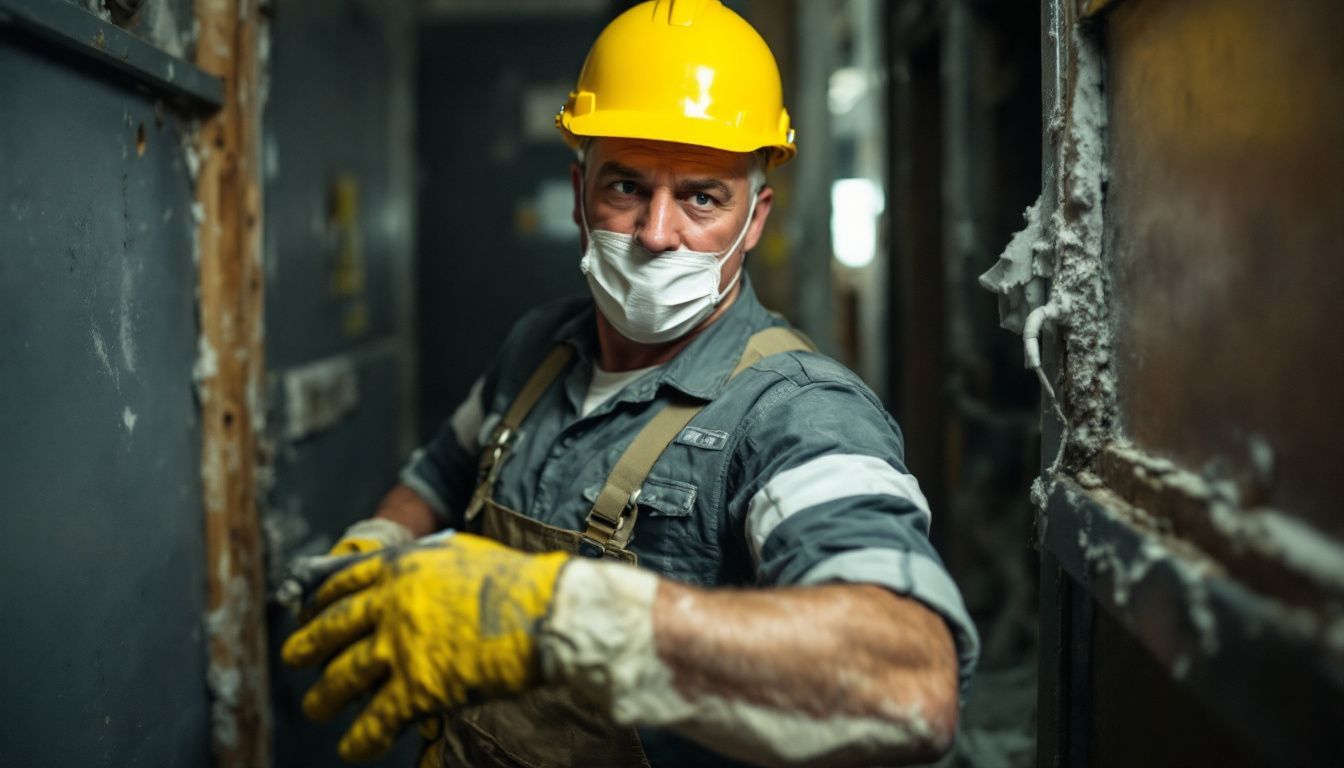
Training for Asbestos Removal: How the UK Keeps Workers Safe
Every year, workers across the UK are exposed to asbestos fibres simply because they didn’t know what they were dealing with. Mesothelioma, asbestosis, lung cancer — these diseases are entirely preventable, and proper training for asbestos removal and handling is the single most effective tool in stopping them.
This post breaks down exactly how asbestos training works in the UK, what it covers, who needs it, and how to make sure the training your workers receive is genuinely fit for purpose.
The Three Levels of Asbestos Training in the UK
The Control of Asbestos Regulations sets out clear requirements for training, and in practice this breaks down into three distinct categories. Getting workers into the right category matters — too little training for the work being carried out is precisely where serious harm occurs.
Category A — Asbestos Awareness
This is the foundational level, designed for anyone who might accidentally disturb asbestos-containing materials (ACMs) during their normal work. Think electricians, plumbers, joiners, painters, and general maintenance staff working in buildings constructed before 2000.
Awareness training does not qualify workers to carry out any asbestos work. Its purpose is to ensure they can recognise potential ACMs, understand the risks, and know when to stop and call in a specialist.
Core topics covered include:
- What asbestos is, where it was used, and why it’s dangerous
- The properties of asbestos fibres and how they cause disease
- How to recognise common ACMs in domestic and commercial buildings
- What to do if asbestos is discovered or accidentally disturbed
- Legal duties under the Control of Asbestos Regulations
- Emergency procedures for accidental fibre release
This training can be completed online and is widely available through accredited providers. It satisfies Regulation 10 of the Control of Asbestos Regulations, which places a duty on employers to provide adequate information, instruction, and training to workers who may encounter ACMs.
Category B — Non-Licensed Asbestos Work
Some asbestos tasks can be carried out without a licence, but they still require specific training that goes beyond awareness level. Category B covers work where ACMs are handled but the risk of significant fibre release is lower — for example, minor repairs to textured coatings or the removal of small quantities of asbestos cement.
Workers undertaking non-licensed work must be trained in:
- Risk assessment specific to non-licensed tasks
- Safe working methods and appropriate control measures
- Correct selection, use, and maintenance of PPE and RPE
- Proper waste handling and disposal
- Decontamination procedures
Employers must maintain records of this work, including plans of work, air monitoring results where relevant, and personal health records. Non-licensed training does not qualify workers for licensed asbestos removal — the two are entirely distinct, and crossing that line without the right credentials is a criminal offence.
Category C — Licensed Asbestos Work
Licensed work covers the highest-risk activities — the removal of sprayed coatings, lagging, insulating board, and any work likely to result in significant fibre release. Only contractors holding a licence issued by the Health and Safety Executive (HSE) can carry out this work.
Training for asbestos removal at this level is comprehensive and rigorous. It covers everything in Categories A and B, plus:
- Detailed risk assessment and written plans of work
- Air monitoring techniques and understanding of control limits
- HSE notification requirements before work commences
- Medical surveillance and health monitoring obligations
- Advanced decontamination and enclosure techniques
- Incident and emergency management
Licensing is not just about training — it requires demonstrated competence, robust management systems, and regular HSE inspection. But training is the foundation that everything else is built on. If you need specialist asbestos removal carried out by a licensed contractor, ensure you verify their credentials before any work begins.
What Good Training for Asbestos Removal Actually Covers
Regardless of category, quality asbestos training should be practical, relevant, and tailored to the roles and environments workers actually deal with. Here’s what that looks like in practice.
Identifying Asbestos-Containing Materials
Workers need to be able to recognise where ACMs are likely to be found — in ceiling tiles, pipe lagging, floor tiles, roofing sheets, textured coatings, and dozens of other locations. Training should include examples relevant to the type of buildings workers are likely to enter, whether that’s Victorian terraces, 1970s office blocks, or industrial facilities.
Understanding Health Risks
It’s not enough to tell workers asbestos is dangerous. Effective training explains why — how inhaled fibres lodge permanently in lung tissue, why symptoms can take decades to appear, and what diseases result. Workers who genuinely understand the mechanism of harm take precautions far more seriously.
Risk Assessment
Training should equip workers — and especially supervisors — to conduct meaningful risk assessments. This means assessing the type, condition, and location of ACMs, the likely disturbance from planned work, who might be exposed, and what controls are needed.
Safe Work Practices and Control Measures
This is the practical heart of asbestos training. Workers learn the approved methods for the work they’re authorised to carry out, including:
- Wet methods to suppress fibre release
- Shadow vacuuming using H-class (HEPA) equipment
- Enclosure and negative pressure unit use (for licensed work)
- Correct bagging, labelling, and disposal of asbestos waste
PPE and RPE — Selection, Fitting, and Use
Knowing PPE exists isn’t enough. Training must cover how to select the right grade of respiratory protective equipment for the risk level, how to carry out a pre-use check, and — critically — face-fit testing. An RPE mask that doesn’t fit properly offers little to no protection.
Employers must keep records of face-fit test results alongside other training documentation. This is not optional, and HSE inspectors will look for it.
Decontamination
Decontamination procedures are frequently underestimated. Fibres carried out of a work area on clothing or equipment cause secondary exposure — to family members, colleagues, and others who were never near the work site.
Training covers:
- The correct sequence for removing contaminated PPE
- Use of designated decontamination units and facilities
- Cleaning and disposing of tools and equipment
- Personal hygiene requirements after asbestos work
Emergency Procedures
Accidental disturbance happens. Workers must know exactly what to do — isolate the area, prevent others from entering, inform the responsible person, and follow the site’s emergency plan. Panic responses that spread contaminated dust further are a foreseeable consequence of inadequate training.
How Often Does Asbestos Training Need to Be Refreshed?
There is no blanket legal requirement for annual asbestos awareness refresher training, but that doesn’t mean it can be completed once and forgotten. HSE guidance makes clear that refresher training should be provided when work methods change, when workers move into different roles or environments, or where incident reviews highlight gaps in knowledge.
For most organisations, annual or biennial refresher training is a sensible baseline — and it’s the kind of decision that should be documented as part of a training needs analysis.
Good refresher training isn’t simply a repeat of the original course. It should:
- Review any changes to regulations, guidance, or internal procedures
- Include lessons learned from incidents — both internal and industry-wide
- Re-test competency in practical skills, including RPE use and decontamination
- Be tailored to the specific tasks workers are actually carrying out
For licensed contractors, health surveillance is an ongoing requirement — medical examinations at regular intervals, with records maintained for the duration of a worker’s employment and beyond.
Legal Requirements and Record Keeping
The Control of Asbestos Regulations places clear duties on employers. These include providing appropriate training, maintaining records, and ensuring that anyone likely to encounter ACMs in the course of their work has received adequate instruction before they do so.
Records that must be kept include:
- Individual training records for all workers who have received asbestos training
- Face-fit test results for RPE users
- Plans of work for non-licensed and licensed activities
- Air monitoring results where applicable
- Notifications to the HSE for licensed work
- Medical surveillance records for licensed workers
HSE inspectors will ask to see these records. Failure to produce them — or to have them at all — carries significant enforcement risk, including improvement notices, prohibition notices, and prosecution.
Keeping records isn’t just a compliance exercise. If a worker later develops an asbestos-related disease, the historical record of what training they received, when, and what work they carried out becomes critical evidence in any subsequent legal proceedings.
Choosing a Competent Asbestos Trainer
The quality of asbestos training varies considerably. Choosing the right provider isn’t just about ticking a box — it’s about ensuring workers genuinely come away knowing how to protect themselves and others.
Look for UKATA or IATP Accreditation
The UK Asbestos Training Association (UKATA) and the Independent Asbestos Training Providers (IATP) are the two main accreditation bodies for asbestos training in the UK. Courses delivered by accredited providers have been assessed against industry standards and are updated to reflect current regulations and HSE guidance.
Accreditation is not a guarantee of quality, but its absence is a red flag worth taking seriously.
Practical Experience Matters
The best asbestos trainers have worked in the industry. Theoretical knowledge delivered by someone who has never been on a licensed asbestos removal site doesn’t translate well into the practical realities of the job. Ask about trainers’ backgrounds and whether the training includes hands-on elements.
Check Course Content Against Your Needs
Generic training is often too broad to be genuinely useful. A trainer who can tailor content to your industry, your building types, and your workers’ specific roles will deliver far better outcomes. A facilities manager in an NHS trust has different training needs from a demolition contractor — and the content should reflect that.
References and Track Record
Ask for references from organisations in a similar sector to yours. A provider that regularly trains workers in your type of environment will understand the practical challenges your team faces and can speak directly to those scenarios during training.
Role-Specific Asbestos Training
Different roles carry different responsibilities, and training for asbestos removal and management should reflect this clearly.
Maintenance and Trade Workers
These workers are often at highest risk of accidental exposure because they work in buildings without necessarily knowing what’s in the fabric of the structure. Category A awareness training is a minimum requirement; those carrying out any physical work on building elements need Category B as a minimum.
Supervisors and Site Managers
Supervisors need to understand not just their own responsibilities but how to manage their team’s compliance. Training should cover risk assessment, oversight of safe working practices, and the supervisor’s role in maintaining records and managing incidents.
Safety Representatives
Employee-elected safety representatives have specific rights and responsibilities under health and safety law. Their asbestos training should cover air monitoring interpretation, control limits, and how to raise concerns — both internally and with the HSE where necessary.
Duty Holders and Property Managers
Anyone with responsibility for managing asbestos in non-domestic premises has a legal duty under Regulation 4 of the Control of Asbestos Regulations. Training for duty holders focuses on understanding the asbestos management plan, commissioning appropriate surveys, managing ACMs in place, and ensuring contractors working on site are properly informed.
If you manage properties in a major city, professional survey support is available across the country. Whether you need an asbestos survey in London, an asbestos survey in Manchester, or an asbestos survey in Birmingham, working with a qualified surveyor ensures your duty holder obligations are met before any training or remediation work begins.
The Link Between Asbestos Surveys and Effective Training
Training for asbestos removal doesn’t happen in isolation. Before workers set foot in a building where ACMs may be present, a management or refurbishment survey should have been carried out to identify what’s there, where it is, and what condition it’s in.
Without that baseline information, even the best-trained workers are operating blind. A proper asbestos register gives supervisors and contractors the information they need to plan work safely, select the right controls, and ensure training is targeted at the actual hazards present.
HSG264 — the HSE’s guidance on asbestos surveys — sets out the standards surveyors must meet and the information surveys must provide. Duty holders should ensure any survey they commission is carried out by a UKAS-accredited organisation and produces a register that is kept up to date as conditions change.
Training and surveying are two sides of the same coin. One tells workers what to do; the other tells them what they’re dealing with. Both are legally required. Neither is optional.
Common Failures in Asbestos Training — and How to Avoid Them
Despite the clear legal framework, asbestos training failures remain a consistent feature of HSE enforcement action. Understanding where organisations go wrong is the fastest way to make sure yours doesn’t follow the same path.
Training the Wrong Category of Worker
Sending a worker on awareness training and then expecting them to carry out non-licensed removal work is a serious compliance failure. Audit your workforce against the tasks they actually perform and match training levels accordingly.
Using Non-Accredited Providers
Online courses from unaccredited providers are widely available and often cheap. They may satisfy a tick-box requirement on paper, but they won’t withstand scrutiny from an HSE inspector — and they won’t equip workers to stay safe. Accreditation through UKATA or IATP is the minimum standard to apply.
Failing to Refresh Training
Workers who completed asbestos awareness training several years ago and have received no refresher since are, in practical terms, undertrained. Regulations, guidance, and best practice evolve. Training must keep pace.
No Face-Fit Testing Records
Face-fit testing is a legal requirement for anyone using tight-fitting RPE. The absence of records is one of the most commonly cited failures during HSE inspections and enforcement visits. If your workers wear RPE, the records must exist and must be current.
Generic Rather Than Role-Specific Training
A one-size-fits-all approach to asbestos training is a missed opportunity at best and a compliance failure at worst. Tailor training to the roles, environments, and ACM types your workers are likely to encounter.
Frequently Asked Questions
Who legally needs training for asbestos removal in the UK?
Under the Control of Asbestos Regulations, any worker who is liable to disturb asbestos-containing materials during the course of their work must receive adequate training. This includes maintenance workers, tradespeople, and contractors working in buildings constructed before 2000. The level of training required depends on the nature of the work being carried out — awareness, non-licensed, or licensed.
What is the difference between non-licensed and licensed asbestos work?
Non-licensed work involves lower-risk tasks where fibre release is limited — such as minor repairs to asbestos cement or textured coatings. Licensed work covers high-risk activities including the removal of sprayed coatings, lagging, and insulating board. Only HSE-licensed contractors can carry out licensed work, and the training requirements are significantly more demanding.
How often does asbestos training need to be refreshed?
There is no single mandatory refresh interval in the regulations, but HSE guidance is clear that training should be refreshed when roles change, when working methods change, or when incident reviews identify knowledge gaps. For most organisations, annual or biennial refresher training is a practical and defensible baseline. For licensed workers, health surveillance is an ongoing legal requirement.
What accreditation should I look for in an asbestos training provider?
The two main accreditation bodies in the UK are UKATA (UK Asbestos Training Association) and IATP (Independent Asbestos Training Providers). Courses from accredited providers are assessed against industry standards and kept current with HSE guidance. Using an accredited provider is the clearest way to demonstrate that training meets the standard required under the Control of Asbestos Regulations.
Can asbestos awareness training be completed online?
Yes — Category A asbestos awareness training can be completed online through accredited providers and is widely accepted as meeting the requirements of Regulation 10 of the Control of Asbestos Regulations. However, Category B and Category C training require practical, hands-on elements that cannot be delivered through an online-only course. Always verify that the format of the training is appropriate for the category of work your workers carry out.
At Supernova Asbestos Surveys, we’ve completed over 50,000 surveys nationwide and work alongside duty holders, contractors, and facilities managers to ensure asbestos is identified, managed, and handled safely. Whether you need a management survey before a training programme begins, or specialist advice on your obligations under the Control of Asbestos Regulations, our team is ready to help.
Call us on 020 4586 0680 or visit asbestos-surveys.org.uk to discuss your requirements.