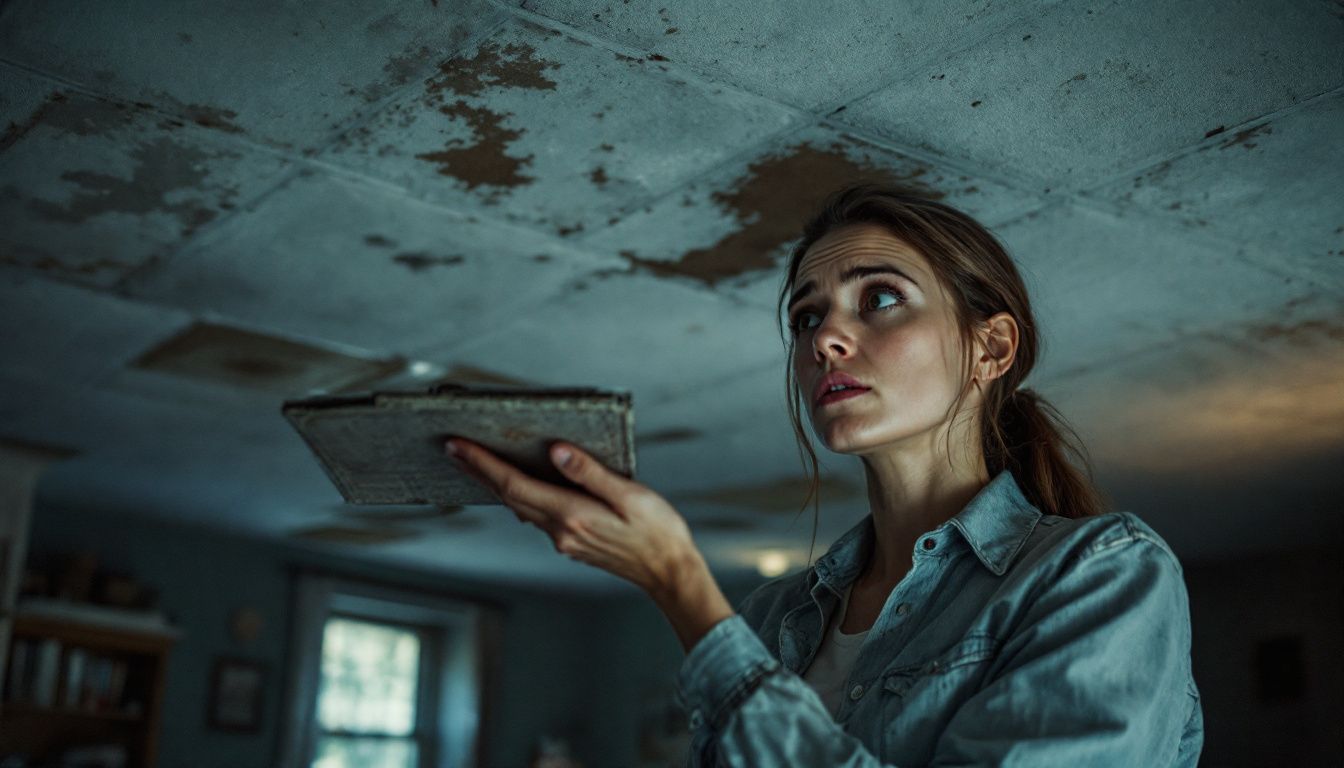
Is the Danger of Asbestos Overblown — or Are We Still Not Taking It Seriously Enough?
The word asbestos tends to trigger one of two reactions: blind panic or a dismissive shrug. Some people insist the danger of asbestos is overblown — a relic of scaremongering from decades past. Others live in genuine fear every time they spot a textured ceiling or a length of old pipe lagging.
The truth sits somewhere more nuanced, and understanding it properly could protect your health, your legal standing, and the people who occupy your building.
Asbestos is not an abstract historical problem. It is present in an estimated 1.5 million UK homes and around 300,000 business premises right now. The fibres it releases when disturbed are invisible to the naked eye, odourless, and capable of causing fatal disease decades after exposure. That is not scaremongering — it is the established scientific and medical consensus.
A Brief History of Asbestos Use in the UK
Asbestos was not used reluctantly or sparingly in the UK. It was embraced enthusiastically across construction, manufacturing, and engineering for most of the twentieth century. Its natural resistance to heat, fire, and chemical damage made it an almost perfect industrial material — at least until the health consequences became impossible to ignore.
Six million tonnes of asbestos entered the UK before meaningful controls were introduced. It was woven into the fabric of the built environment: roof sheeting, pipe insulation, floor tiles, ceiling tiles, boiler lagging, textured coatings such as Artex, and even car brake pads.
Schools built from the 1950s through to the 1970s are particularly likely to contain asbestos-containing materials (ACMs), as are hospitals, offices, and residential properties from the same era. If your building was constructed or refurbished before the year 2000, there is a realistic chance it contains asbestos somewhere.
The Six Types of Asbestos
There are six types of asbestos mineral, broadly split into two groups. Chrysotile (white asbestos) belongs to the serpentine group. Crocidolite (blue), amosite (brown), tremolite, actinolite, and anthophyllite are all amphibole fibres.
Blue and brown asbestos were subject to a voluntary ban from 1968 and a full ban in 1985. White asbestos continued to be imported and used until 1999. All six types are classified as human carcinogens — without exception.
Why Some People Think the Asbestos Risk Is Overblown
It is worth taking the sceptical position seriously, because dismissing it entirely leads to poor decision-making. The argument usually runs like this: asbestos in good condition and left undisturbed poses minimal risk. Fibres only become dangerous when released into the air. Therefore, the alarm around asbestos causes unnecessary disruption and expense for little measurable benefit.
There is a kernel of truth here. Asbestos in a sealed, intact, and undisturbed state does not release fibres. A floor tile in good condition, firmly bonded and unbroken, is not an immediate hazard.
The Control of Asbestos Regulations — the primary legal framework governing asbestos management in Great Britain — reflects this reality. The duty to manage asbestos does not automatically require removal. It requires identification, risk assessment, and a management plan that may well conclude the material is best left in place and monitored.
HSG264, the HSE’s definitive survey guidance, is built on the same principle: manage what you have, disturb it only when necessary, and remove it only when the risk justifies it or when building work makes disturbance unavoidable.
So is the danger of asbestos overblown? Not when you look at the death toll.
The Real Health Impact: What the Numbers Actually Tell Us
Around 5,000 people die from asbestos-related diseases in the UK every year. That figure has remained stubbornly high for decades and is not expected to fall significantly in the near term. The diseases caused by asbestos exposure have a latency period of between 10 and 70 years — with an average of 30 to 40 years between first exposure and diagnosis.
The diseases linked to asbestos exposure include:
- Mesothelioma — a cancer of the lining of the lungs, chest wall, or abdomen. It is almost exclusively caused by asbestos exposure and is invariably fatal. Around 2,500 people die from mesothelioma in the UK each year.
- Lung cancer — asbestos exposure significantly increases the risk, particularly in combination with smoking.
- Laryngeal and ovarian cancers — both have established links to asbestos exposure.
- Asbestosis — chronic scarring of the lung tissue caused by prolonged inhalation of asbestos fibres, leading to progressive breathlessness.
- Pleural thickening — thickening of the membrane surrounding the lungs, which can restrict breathing and cause significant discomfort.
These are not minor conditions. Mesothelioma carries a median survival of around 12 months from diagnosis. There is no cure. The latency period means that people diagnosed today were typically exposed in the 1980s or 1990s — often without their knowledge.
The occupational picture is also shifting. It is not only former construction workers, plumbers, and electricians who are affected. Research from Mesothelioma UK has identified healthcare workers and education professionals as groups facing growing risk, with deaths recorded annually in each sector. Teachers and nurses who worked in asbestos-laden buildings for years are now presenting with mesothelioma. That is not a theoretical risk — it is a documented pattern.
Where Asbestos Is Still Found Today
The ban on asbestos imports did not make existing asbestos disappear. Any building constructed or refurbished before the year 2000 may contain ACMs, and many do. The materials to look out for include:
- Pipe and boiler lagging
- Sprayed coatings on structural steelwork or ceilings
- Insulating board used in ceiling tiles, partition walls, and fire doors
- Textured decorative coatings such as Artex
- Asbestos cement in roofing sheets, guttering, and rainwater pipes
- Floor tiles and the adhesive beneath them
- Rope seals and gaskets in older heating systems
If you are unsure whether a material in your property contains asbestos, an affordable testing kit allows you to collect samples safely for laboratory analysis. For a legally compliant and thorough assessment, a professional survey is the only reliable option.
The Legal Framework: What You Are Actually Required to Do
If you are responsible for a non-domestic property — as an owner, landlord, or facilities manager — you have a legal duty under the Control of Asbestos Regulations to manage asbestos. That duty begins with knowing what you have and where it is.
The core obligations are:
- Identify whether ACMs are present, and if so, where they are and what condition they are in.
- Assess the risk posed by those materials.
- Produce and implement a written asbestos management plan.
- Keep the plan under review and update the asbestos register when conditions change.
- Ensure that anyone who might work on or disturb ACMs is made aware of their location and condition.
HSG264 provides the technical framework for how surveys should be conducted to meet these obligations. Surveys must be carried out by competent, qualified surveyors — not by a well-meaning maintenance manager with a clipboard.
Which Survey Do You Need?
A management survey is the standard starting point for any occupied non-domestic building. It involves a thorough inspection of all accessible areas to locate, describe, and risk-assess any ACMs present.
If you are planning renovation or building work, the legal requirement shifts. A refurbishment survey is more intrusive and covers all areas that will be disturbed. Commencing notifiable refurbishment work without this survey in place is a criminal offence — not a technicality you can overlook.
Where a building is being fully demolished, a demolition survey is required before any structural work begins. This ensures all ACMs are identified and safely removed before demolition proceeds.
Once ACMs have been identified and are being managed, they need to be revisited at regular intervals. A re-inspection survey — typically carried out annually — checks that the condition of known ACMs has not deteriorated. This is how you catch a deteriorating material before it becomes a fibre-release hazard, not a bureaucratic box-ticking exercise.
When Removal Becomes Necessary
Where ACMs are in poor condition, or where planned building work makes disturbance unavoidable, asbestos removal by a licensed contractor is required. Not all removal work requires a licence, but higher-risk materials — sprayed coatings, pipe lagging, and insulating board — always do. Attempting to remove these materials without the appropriate licence is illegal and extremely dangerous.
The Case Against Complacency
The argument that asbestos risk is overblown tends to conflate two very different scenarios: undisturbed ACMs in good condition, and ACMs that are deteriorating, damaged, or about to be disturbed by building work. The first scenario is manageable. The second is genuinely dangerous.
The problem is that most property owners and managers do not know which scenario they are in, because they have never had a survey done. They assume the material is fine because nobody has complained. They assume the previous owner dealt with it. They assume their building is too new to contain asbestos.
These assumptions are frequently wrong.
A tradesperson drilling into a wall without knowing what is behind it, a maintenance worker cutting through an insulating board ceiling tile, a DIY enthusiast sanding down a textured coating — these are the situations that cause exposure. The fibres released are invisible. The worker breathes them in and feels nothing. The disease, if it develops, will not announce itself for decades.
Ignorance is not a management strategy. It is a liability — legal, financial, and moral.
Asbestos in Schools, Hospitals, and Public Buildings
The presence of asbestos in public buildings is one of the most politically charged aspects of this issue. Campaigners have long called for a centralised asbestos register and a programme of removal from schools and hospitals. Successive governments have resisted large-scale removal programmes, citing the risk that disturbance during removal could be more dangerous than leaving materials in place.
That position is not without logic, but it demands robust management to be defensible. A school with an up-to-date asbestos register, a clear management plan, and regular re-inspections is in a very different position to one that has no idea what it contains. The former is managing a known risk. The latter is gambling with the health of staff and pupils.
The same principle applies to any building. Knowing what you have and actively managing it is the only responsible approach.
Fire Risk and Asbestos: An Overlooked Connection
Many older buildings that contain asbestos also have fire safety deficiencies — outdated fire doors, inadequate compartmentation, or missing fire stopping. A fire risk assessment is a legal requirement for all non-domestic premises and should be conducted alongside asbestos management, not treated as a separate concern.
Remediation work carried out to address fire safety deficiencies can disturb asbestos-containing materials — particularly in fire doors, ceiling voids, and partition walls. Ensuring that both risks are assessed and managed in a coordinated way prevents a situation where solving one problem inadvertently creates another.
Nationwide Coverage: Asbestos Surveys Wherever You Are
Asbestos does not respect geography, and neither do the legal obligations that come with it. Whether you manage a portfolio of properties in the capital or a single commercial unit in the Midlands, the duty to manage applies equally.
Supernova Asbestos Surveys operates nationwide. If you are based in the capital, our team providing asbestos survey London services can be with you quickly, with same-week appointments available across all London boroughs.
For clients in the North West, our asbestos survey Manchester service covers Greater Manchester and the surrounding regions. In the Midlands, our asbestos survey Birmingham team serves the city and the wider West Midlands area.
With over 50,000 surveys completed across the UK, Supernova has the experience and geographic reach to support property owners and managers at every scale.
Making a Proportionate Decision
The question of whether the danger of asbestos is overblown ultimately comes down to context. Intact, well-managed ACMs in a building with a current asbestos register and a functioning management plan represent a controlled risk. Unidentified, deteriorating, or about-to-be-disturbed ACMs in a building with no survey on record represent a serious and immediate danger.
The regulatory framework is built on proportionality. You are not required to rip out every scrap of asbestos-containing material in your building. You are required to know what is there, assess the risk it poses, manage it appropriately, and keep that management under review.
That is not an unreasonable ask. It is the minimum standard that the health of your occupants, your workforce, and your contractors deserves.
If you have not yet had a survey carried out, or if your existing asbestos register is out of date, the most practical step you can take right now is to arrange a professional assessment. The cost of a survey is modest compared to the legal, financial, and human cost of getting it wrong.
To arrange a survey or discuss your requirements, call Supernova Asbestos Surveys on 020 4586 0680 or visit asbestos-surveys.org.uk. Our team is available nationwide, with fast turnaround times and fully qualified surveyors accredited to meet HSG264 standards.
Frequently Asked Questions
Is the danger of asbestos really overblown, or is it still a serious risk?
The risk is real and well-documented. Around 5,000 people die from asbestos-related diseases in the UK every year. The perception that asbestos is overblown often stems from confusing undisturbed, well-managed materials with damaged or disturbed ones. Intact asbestos in good condition is manageable — but unidentified or deteriorating asbestos is a genuine hazard that continues to kill.
Does asbestos in good condition need to be removed?
Not necessarily. The Control of Asbestos Regulations do not require automatic removal. If ACMs are in good condition, undisturbed, and unlikely to be disturbed, the legally compliant approach is often to manage them in place — with a written management plan and regular re-inspections. Removal is required when materials are deteriorating, or when building or refurbishment work will disturb them.
How do I know if my building contains asbestos?
The only reliable way to know is through a professional asbestos survey carried out by a qualified surveyor in line with HSG264. Any building constructed or refurbished before the year 2000 should be treated as potentially containing ACMs until a survey confirms otherwise. A basic testing kit can provide initial sampling data, but it does not substitute for a full management survey.
What happens if I carry out building work without checking for asbestos first?
If the work disturbs asbestos-containing materials, you risk exposing yourself and others to dangerous fibres. You also risk criminal prosecution under the Control of Asbestos Regulations. Notifiable non-licensed work and licensed work both carry strict legal requirements around prior identification of ACMs. Ignorance of the presence of asbestos is not a legal defence.
How often does an asbestos management plan need to be reviewed?
Your asbestos management plan should be reviewed whenever there is a material change in the condition of ACMs or in the use of the building. In practice, a re-inspection survey is typically carried out annually for most commercial premises. This ensures that any deterioration in the condition of known ACMs is identified and addressed before fibres are released into the air.