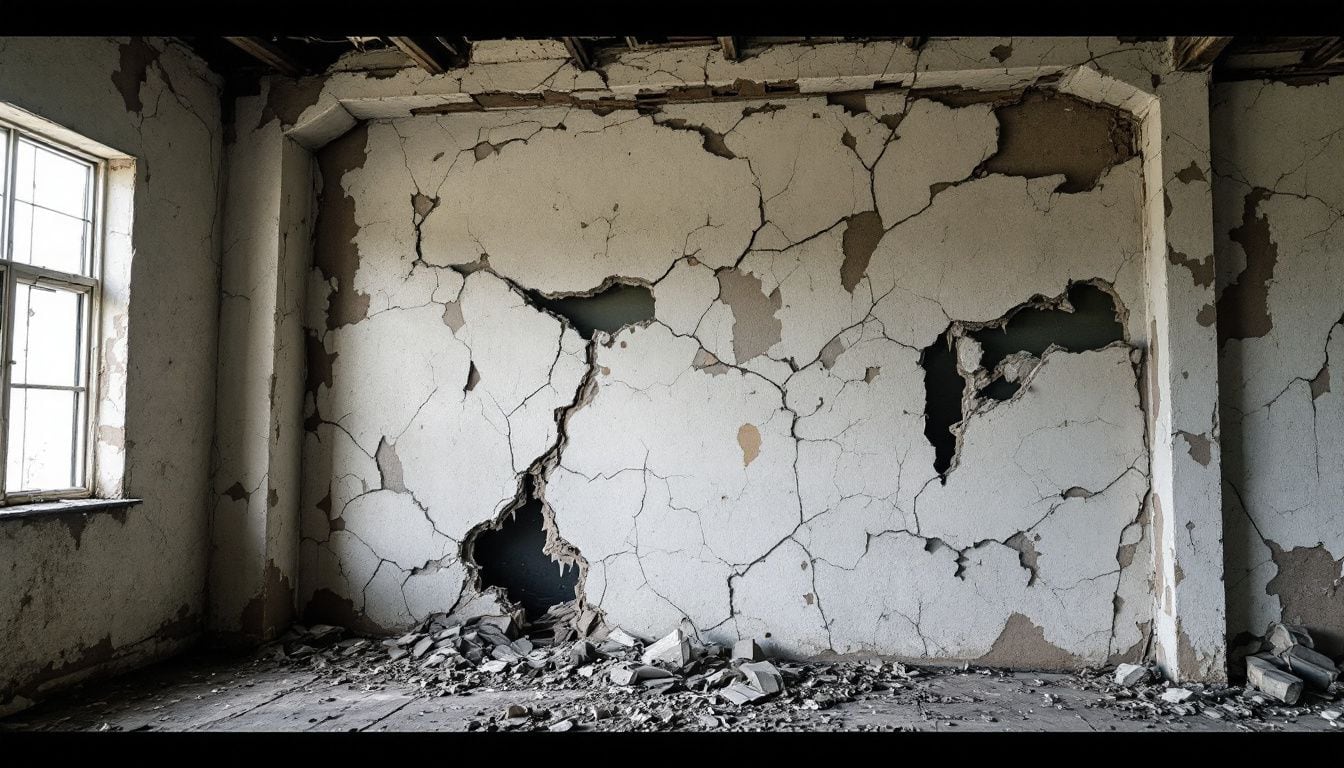
The Threat of Exposure: Why Asbestos Remains One of the UK’s Most Serious Public Health Dangers
A nurse once told me she couldn’t stop thinking about the walls of the hospital where she worked. Old walls, old building — and somewhere inside them, potentially, fibres that nobody could see. The threat of exposure to asbestos isn’t abstract for people like her. It’s a daily, invisible reality for anyone who lives or works in a building constructed before the year 2000.
Asbestos was once celebrated as a wonder material. Fireproof, durable, cheap to produce — it found its way into virtually every corner of British construction. Now it sits in schools, hospitals, offices, and homes across the country, and the consequences of disturbing it can be fatal.
This post covers the history of asbestos in the UK, the health conditions it causes, the regulations that govern it today, and what property owners and managers must do to protect the people in their care.
A Brief History of Asbestos Use in the UK
The UK’s relationship with asbestos stretches back well over a century. Demand surged during the Second World War, when shipbuilding and armament manufacturing relied heavily on the material for insulation and fireproofing. It was considered essential to the war effort.
After the war, asbestos became a staple of the construction boom. It was used in ceiling tiles, floor tiles, pipe lagging, roofing sheets, textured coatings, and spray insulation. Six million tonnes of asbestos entered the UK market before its eventual ban.
The health risks were not unknown — they were simply ignored for too long. Blue asbestos (crocidolite) and brown asbestos (amosite) were banned in 1985. White asbestos (chrysotile), long considered less dangerous, wasn’t fully prohibited until 1999. By that point, the damage had already been done on a vast scale.
Asbestos in the Water Supply
One of the less-discussed legacies of widespread asbestos use concerns the UK’s water infrastructure. In 1988, approximately 23,000 miles of asbestos cement piping was supplying water to around 12 million people. In some regions, asbestos cement pipes still account for roughly 27% of water mains.
The UK Drinking Water Inspectorate does not currently mandate monitoring for asbestos in drinking water, which remains a concern for campaigners and public health advocates alike. Replacing these water mains across the UK and Ireland is estimated to cost between £5 billion and £8 billion — a figure that explains why progress has been slow.
The Threat of Exposure: What Asbestos Does to the Human Body
The threat of exposure to asbestos fibres is not immediate — and that’s precisely what makes it so dangerous. When asbestos-containing materials are disturbed, microscopic fibres are released into the air. These fibres are invisible to the naked eye and can remain airborne for hours.
Once inhaled, the fibres lodge deep in the lung tissue. The body cannot break them down or expel them effectively. Over time, they cause cellular damage that can lead to a range of serious and often fatal conditions.
Mesothelioma
Mesothelioma is a cancer of the lining of the lungs (and sometimes the abdomen) that is almost exclusively caused by asbestos exposure. It is always fatal. What makes it particularly devastating is its latency period — symptoms typically don’t appear until 30 to 40 years after exposure occurred.
Around 2,500 people in the UK die from mesothelioma every year. Many of them were exposed decades ago and had no idea the damage was being done.
Other Asbestos-Related Diseases
Mesothelioma is not the only condition caused by asbestos. Exposure is also linked to:
- Lung cancer — particularly in those who also smoked
- Asbestosis — a chronic scarring of the lung tissue that causes progressive breathlessness
- Pleural thickening — thickening of the membrane surrounding the lungs, restricting breathing
- Laryngeal cancer
- Ovarian cancer
In total, the HSE estimates that more than 5,000 people die each year in the UK from asbestos-related diseases. These are not historical deaths — they are happening now, and they will continue for decades to come because of exposures that occurred in the past.
The Changing Face of Who Is at Risk
Asbestos-related disease was once associated almost exclusively with heavy industry — shipyard workers, builders, plumbers, electricians. That picture has changed significantly.
Today, a growing proportion of mesothelioma cases involve people who were never employed in industrial settings. Teachers, nurses, office workers, and others who spent time in older public buildings are now among those diagnosed. The threat of exposure is no longer confined to construction sites — it exists wherever asbestos-containing materials are present and at risk of being disturbed.
Where Asbestos Is Found in UK Buildings
Any building constructed or refurbished before 2000 may contain asbestos. Estimates suggest that between 210,000 and 410,000 UK business premises currently contain asbestos-containing materials (ACMs). The true figure for residential properties is likely far higher.
Common locations include:
- Ceiling tiles and textured coatings (such as Artex)
- Floor tiles and the adhesive beneath them
- Pipe and boiler lagging
- Roof panels and guttering (asbestos cement)
- Partition walls and ceiling panels
- Electrical panels and fuse boxes
- Spray-applied insulation on structural steelwork
The critical point is that asbestos in good condition and left undisturbed poses a low risk. The danger arises when materials are damaged, deteriorating, or disturbed during maintenance, renovation, or demolition work.
The Legal Framework: What UK Regulations Require
The management of asbestos in the UK is governed by the Control of Asbestos Regulations, which place clear legal duties on those responsible for non-domestic premises. The HSE’s guidance document HSG264 sets out the standards for conducting asbestos surveys and managing ACMs effectively.
The Duty to Manage
Under the Control of Asbestos Regulations, anyone who has responsibility for the maintenance or repair of non-domestic premises has a legal duty to manage asbestos. This is known as the duty to manage.
In practice, this means:
- Finding out whether asbestos is present in the premises
- Assessing the condition of any ACMs identified
- Creating and maintaining an asbestos register
- Producing a written management plan
- Ensuring that the plan is implemented and reviewed regularly
- Providing information to anyone who might disturb ACMs
Failure to comply is not simply an administrative oversight — it can result in substantial fines and, far more seriously, in preventable harm to building occupants and workers.
The Case for a Centralised Asbestos Register
One of the ongoing debates in UK asbestos policy concerns transparency. Campaigners and health professionals have long argued for a centralised national asbestos register — a publicly accessible database showing which buildings contain ACMs.
Currently, asbestos registers are held by individual dutyholders and are not always accessible to workers or members of the public who enter those buildings. Advocates argue that a centralised register would reduce accidental disturbance, improve accountability, and save lives. This debate remains unresolved, but the pressure for reform continues to grow.
Types of Asbestos Survey: Understanding Your Options
Not all asbestos surveys are the same. The type of survey you need depends on how the building is being used and what work is planned.
Management Survey
A management survey is the standard survey required to manage asbestos in a building during normal occupation. It identifies the location, extent, and condition of ACMs that could be damaged or disturbed during everyday activities. This is the survey that fulfils the duty to manage for most non-domestic premises.
Refurbishment Survey
Before any renovation or construction work begins, a refurbishment survey is legally required. This is a more intrusive survey that involves accessing areas that will be disturbed during the works. It ensures that contractors are not unknowingly putting themselves and others at risk.
Re-Inspection Survey
Once ACMs have been identified and a management plan is in place, those materials must be monitored over time. A re-inspection survey assesses whether the condition of known ACMs has changed, ensuring that the management plan remains appropriate and up to date.
Fire Risk Assessments
Asbestos management doesn’t exist in isolation from other safety duties. A fire risk assessment is another legal requirement for most non-domestic premises, and the two processes should be considered together as part of a joined-up approach to building safety.
What to Do If You Suspect Asbestos
If you suspect that a material in your building might contain asbestos, the most important thing is not to disturb it. Do not drill into it, sand it, scrape it, or attempt to remove it yourself.
The right course of action is to have it assessed by a qualified professional. If you want a preliminary indication before booking a full survey, a testing kit allows you to collect a sample safely and send it to an accredited laboratory for analysis.
For anything beyond a simple sample test — particularly in commercial or public buildings — you should commission a properly scoped survey from a BOHS P402-qualified surveyor.
How Supernova Conducts an Asbestos Survey
At Supernova Asbestos Surveys, every survey follows a structured, HSG264-compliant process.
- Booking: Contact us by phone or online. We confirm availability and send a booking confirmation — often with same-week availability.
- Site Visit: A BOHS P402-qualified surveyor attends at the agreed time and carries out a thorough visual inspection of the property.
- Sampling: Representative samples are collected from suspect materials using correct containment procedures to prevent fibre release.
- Lab Analysis: Samples are analysed under polarised light microscopy (PLM) at our UKAS-accredited laboratory.
- Report Delivery: You receive a detailed asbestos register and risk-rated management plan in digital format within 3–5 working days.
The report is fully compliant with HSG264 and satisfies all legal requirements under the Control of Asbestos Regulations.
Survey Costs and Pricing
Supernova offers transparent, fixed-price surveys with no hidden fees. Pricing is competitive without compromising on quality or compliance.
- Management Survey: From £195 for a standard residential or small commercial property
- Refurbishment & Demolition Survey: From £295, covering all areas to be disturbed prior to works
- Bulk Sample Testing Kit: From £30 per sample, posted to you for collection
- Re-Inspection Survey: From £150, plus £20 per ACM re-inspected
- Fire Risk Assessment: From £195 for a standard commercial premises
All prices are subject to property size and location. Request a free quote tailored to your specific requirements — there’s no obligation.
Supernova Covers the Whole of the UK
Wherever your property is located, Supernova Asbestos Surveys can help. We operate across England, Scotland, and Wales with same-week availability in most areas.
If you need an asbestos survey in London, we have surveyors covering all London boroughs and surrounding areas. For those in the North West, our asbestos survey in Manchester service covers the city and the wider region. And for properties in the Midlands, our asbestos survey in Birmingham team is ready to assist.
Why Choose Supernova Asbestos Surveys?
With over 50,000 surveys completed and more than 900 five-star reviews, Supernova is one of the UK’s most trusted asbestos consultancies. Here’s what sets us apart:
- BOHS P402/P403/P404 Qualified Surveyors — the gold standard in asbestos surveying
- UKAS-Accredited Laboratory — legally defensible results you can rely on
- Same-Week Availability — we understand that surveys are often time-critical
- UK-Wide Coverage — from Cornwall to the Scottish Highlands
- Transparent Pricing — fixed-price quotes with no surprises
- 900+ Five-Star Reviews — our reputation speaks for itself
Don’t leave asbestos management to chance. Call us on 020 4586 0680 or visit asbestos-surveys.org.uk to book your survey or request a free quote today.
Frequently Asked Questions
What is the threat of exposure to asbestos in modern UK buildings?
Any building constructed or refurbished before 2000 may contain asbestos-containing materials. The threat of exposure arises when those materials are disturbed — during renovation work, maintenance, or as a result of deterioration. Even buildings that appear modern may have older structural elements or fittings that contain asbestos. The safest approach is to commission a professional survey before undertaking any work.
How long does it take for asbestos-related illness to develop?
Asbestos-related diseases, including mesothelioma, typically have a latency period of 30 to 40 years. This means that someone exposed to asbestos fibres in the 1980s may only now be developing symptoms. This long delay between exposure and diagnosis is one of the reasons why asbestos continues to cause thousands of deaths each year in the UK.
Am I legally required to have an asbestos survey?
If you own or manage a non-domestic premises, you have a legal duty to manage asbestos under the Control of Asbestos Regulations. This includes identifying whether ACMs are present, assessing their condition, and maintaining an asbestos register. A management survey is the standard way to fulfil this duty. Before any refurbishment or demolition work, a refurbishment survey is also legally required.
Can asbestos be left in place rather than removed?
Yes — in many cases, leaving asbestos in place and managing it is the safest option. If ACMs are in good condition and are not at risk of being disturbed, removal can actually increase the risk of fibre release. A qualified surveyor will assess the condition and location of any ACMs and advise on the most appropriate management strategy, whether that is monitoring, encapsulation, or removal.
What should I do if I accidentally disturb asbestos?
Stop work immediately. Ensure that everyone leaves the area without disturbing anything further. Do not attempt to clean up any debris yourself. Seal off the area if possible and contact a licensed asbestos contractor for advice. Depending on the extent of the disturbance, air monitoring may be required before the area can be reoccupied.