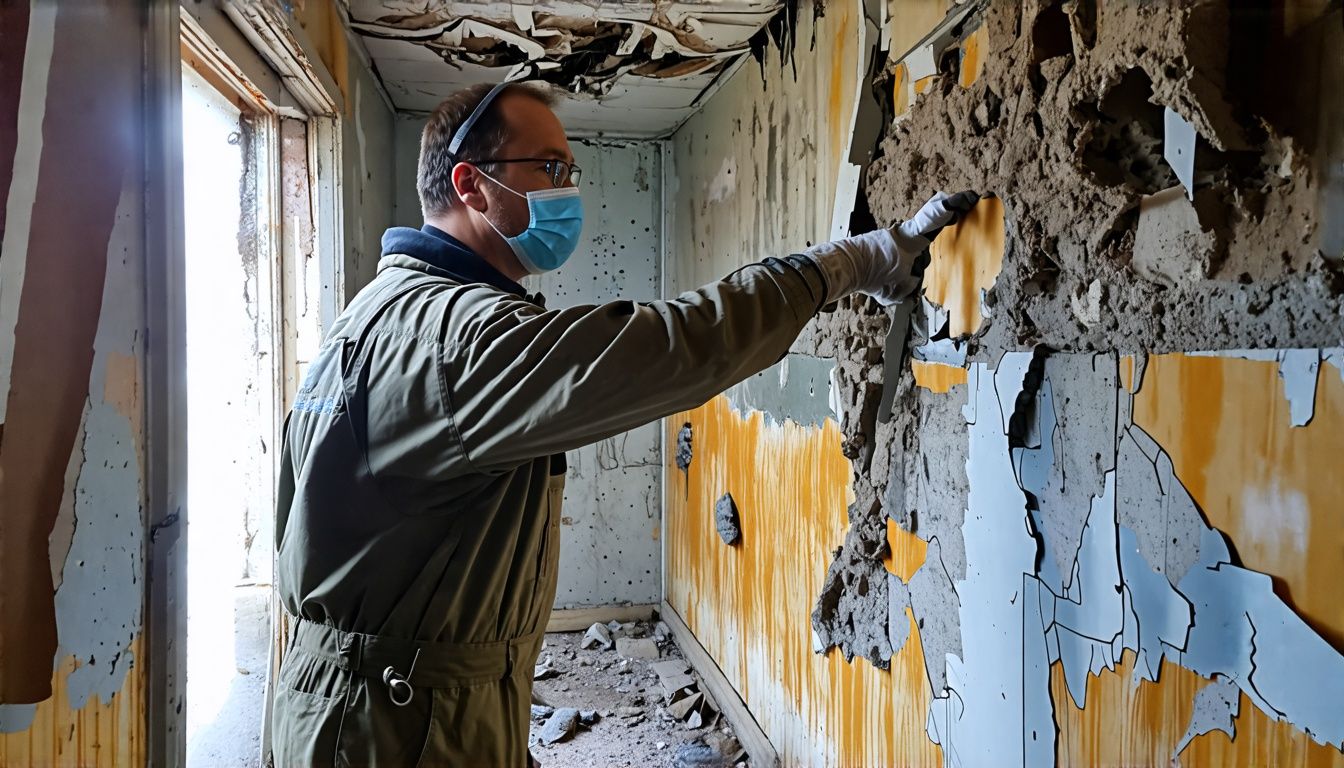
Minimising the Impact of Asbestos on Human Health: What Every Duty Holder Must Do
Asbestos remains one of the most serious occupational health hazards in the UK. It is still present in thousands of buildings constructed before 2000, and the diseases it causes — mesothelioma, asbestosis, and asbestos-related lung cancer — are entirely preventable when the right measures are in place.
If you own, manage, or work in an older building, understanding how to minimise asbestos risk is not optional. It is a legal and moral obligation. This post sets out the practical steps that duty holders, employers, and workers need to take — from identifying asbestos-containing materials (ACMs) through to safe removal, waste disposal, and long-term health monitoring.
And yes, even seemingly unrelated decisions — such as choosing lockable skips in Blackheath for asbestos waste — matter more than many people realise.
Identifying Asbestos-Containing Materials in Your Building
You cannot manage what you have not identified. The first step in minimising asbestos risk is knowing where ACMs are located, what condition they are in, and whether they are likely to be disturbed during normal occupation or maintenance work.
Visual Indicators: What to Look For
Visual inspection alone is never conclusive, but it gives you a starting point. The following materials are commonly associated with asbestos use in UK buildings:
- Textured coatings: Artex and similar stippled finishes on ceilings and walls frequently contained asbestos fibres, particularly in properties built or refurbished before the 1990s.
- Pipe lagging and thermal insulation: Insulation around boilers, pipes, and storage heaters in older buildings is a common ACM — and often one of the more hazardous types.
- Asbestos cement products: Corrugated roof sheets, water tanks, guttering, and flues made from asbestos cement were widely used in domestic and commercial construction throughout the mid-twentieth century.
- Floor tiles and vinyl sheet flooring: Particularly those laid between the 1950s and 1980s. The adhesive used to fix them may also contain asbestos.
- Sprayed coatings: Applied to structural beams and columns as fireproofing — among the most hazardous ACM types due to their friable nature.
- Fire protection materials: Older fire doors, blankets, and rope seals may contain asbestos-based components.
- Electrical equipment: Older switchboards and consumer units sometimes incorporated asbestos-based insulating materials.
Any material installed before 2000 could contain asbestos. The older the building, the higher the likelihood. If you are not certain, do not disturb the material to investigate further — that is exactly how fibres get released into the air.
When You Need Professional Confirmation
The only definitive way to confirm whether a material contains asbestos is through laboratory analysis of a sample taken by a trained professional. Our accredited sample analysis service provides a rapid, reliable answer when visual identification is not sufficient.
For buildings where a full picture is needed, a management survey is the appropriate starting point. It identifies ACMs throughout the areas of a building used during normal occupation and forms the basis for your asbestos register and management plan.
Your Legal Responsibilities Under the Control of Asbestos Regulations
Understanding your legal duties is non-negotiable. The Control of Asbestos Regulations set out the legal framework for managing asbestos across the UK, and ignorance is not a defence.
The regulations apply primarily to non-domestic premises, but also cover the common areas of residential buildings — stairwells, plant rooms, communal hallways, and similar shared spaces.
Key duties include:
- Identifying the location and condition of all ACMs in the building
- Assessing the risk posed by those materials
- Producing and maintaining an asbestos management plan
- Ensuring anyone who may work on or near ACMs is informed of their location and condition
- Arranging regular re-inspections to monitor the condition of materials in situ
Who Is the Duty Holder?
The duty holder is typically the building owner, landlord, or employer — whoever has responsibility for maintenance and repair of the premises. If you manage or own a non-domestic building, this duty sits with you personally.
The Health and Safety Executive (HSE) actively enforces these regulations. Prosecutions for breaches can result in significant fines and, in serious cases, custodial sentences. Compliance is not bureaucratic box-ticking — it is a fundamental duty of care.
Employer Responsibilities for Workers
If your employees may encounter asbestos — whether as maintenance staff, electricians, plumbers, or construction workers — you have additional obligations:
- Provide appropriate asbestos awareness training (Category A) or licensed work training (Category B or C) depending on the work involved
- Carry out suitable and sufficient risk assessments before any work that might disturb ACMs
- Supply appropriate personal protective equipment (PPE)
- Implement health surveillance for workers regularly exposed to asbestos
- Keep accurate records of all asbestos-related activities
Protective Measures During Asbestos Work
When asbestos needs to be managed, repaired, or removed, the way the work is carried out makes all the difference. Cutting corners during asbestos work is how people end up with life-threatening diseases decades later.
Personal Protective Equipment
No one should work with or near ACMs without the right protection. The specific PPE required depends on the risk level and type of work, but typically includes:
- Respiratory protective equipment (RPE): A minimum of a half-face FFP3 respirator for lower-risk work; a full-face powered air-purifying respirator (PAPR) or airline respirator for licensed work
- Disposable coveralls (Type 5): Worn over work clothing and disposed of as asbestos waste after use — never taken home
- Nitrile or neoprene gloves: To prevent skin contact with loose fibres
- Safety goggles: Particularly important where materials are being cut or drilled
- Disposable boot covers or rubber boots: To prevent fibres being tracked out of the work area
RPE must be fit-tested to the individual — an ill-fitting mask provides little or no protection. This is a legal requirement under HSE guidance, not merely a recommendation.
Safe Handling and Removal Practices
The goal during any asbestos work is to keep fibre release to an absolute minimum. Practical controls include:
- Wetting materials: Applying water or a wetting agent to ACMs before disturbing them significantly reduces the number of fibres released into the air
- Containment: Sealing off the work area with polythene sheeting and maintaining negative air pressure using a negative pressure unit (NPU) to prevent fibres migrating to other areas
- Using the right tools: Hand tools are preferred over power tools wherever possible — power tools generate far more airborne dust
- HEPA vacuuming: Standard vacuum cleaners cannot capture asbestos fibres. Only H-class (HEPA-filtered) industrial vacuums are suitable for use in asbestos work areas
- Three-stage decontamination: Workers must pass through a decontamination unit — dirty area, shower, clean area — before leaving the work zone
Who Can Carry Out Asbestos Removal?
Not all asbestos work is the same. The regulations distinguish between three categories:
- Licensed work: High-risk removals — such as sprayed coatings, lagging, or friable ACMs — must only be carried out by a contractor licensed by the HSE. Our asbestos removal service works alongside licensed contractors to ensure full compliance from survey through to clearance.
- Notifiable non-licensed work (NNLW): Certain lower-risk tasks must be notified to the HSE and require health surveillance, but do not need a licensed contractor.
- Non-licensed work: Lower-risk tasks, such as minor work on asbestos cement, can be carried out without a licence — but still require proper training and controls.
If you are unsure which category applies to your situation, call us on 020 4586 0680 before any work begins.
Asbestos Waste Disposal and Lockable Skips in Blackheath
Asbestos waste is classified as hazardous waste under UK law, and incorrect disposal is both illegal and dangerous. This is a point that often catches property owners and contractors off guard — particularly in areas like Blackheath, where older Victorian and Edwardian properties are commonplace and refurbishment projects regularly uncover ACMs.
The subject of lockable skips in Blackheath may seem niche, but it speaks directly to a real compliance issue. When asbestos waste is being removed and temporarily stored on site, the container used must be appropriate for the material. Open skips are not acceptable for asbestos waste.
The correct process involves:
- Double-bagging waste in heavy-duty polythene bags (minimum 0.15mm thick), clearly labelled with asbestos hazard warnings
- Keeping materials damp during bagging to suppress fibre release
- Using clearly labelled, sealed, lockable skips or rigid containers for larger volumes — only specialist waste carriers should be handling this material
- Transporting waste only to licensed hazardous waste disposal sites
- Completing consignment notes for all asbestos waste movements, which must be retained as required by waste regulations
- Maintaining disposal records for the period required under current waste regulations
Not all skip hire services are equipped or licensed to handle asbestos waste. If your project involves significant quantities of ACMs, ensure your waste contractor is properly licensed and that all documentation is in order before the skip leaves site.
Sealed, lockable skips are the appropriate choice for containing asbestos waste securely during transport — raise this explicitly with any waste contractor before work begins, and do not accept an open skip as a substitute. For properties in the Blackheath and wider south-east London area, where refurbishment activity is high and older building stock is prevalent, getting this detail right from the outset protects both public health and your legal position.
If you are managing an asbestos survey in London, ensure your appointed surveyor can advise on compliant waste disposal routes as part of the wider project management process.
Air Monitoring and Clearance Certificates
Once licensed asbestos removal work is complete, the area must be independently verified as safe before re-occupation. This cannot be certified by the removal contractor themselves — it must be carried out by an independent, UKAS-accredited body.
The four-stage clearance procedure involves:
- A thorough visual inspection of the cleared area
- Background air monitoring before the enclosure is dismantled
- A further visual inspection after the enclosure is removed
- Final air monitoring to confirm fibre levels are below the clearance indicator
The result is a clearance certificate confirming the area is safe for reuse. Without this, the area should not be reoccupied under any circumstances.
A Practical Asbestos Management Framework for Duty Holders
If you are responsible for a commercial building, school, hospital, or any other non-domestic premises, here is what robust asbestos management looks like in practice.
Step 1: Commission a Management Survey
A management survey identifies ACMs in areas of the building used during normal occupation. It is the starting point for all asbestos management and is required before an asbestos register can be produced. Without a survey, you are managing blind.
Supernova carries out asbestos surveys across London and nationwide, with results typically delivered within 24 hours of the survey being completed. We also cover major cities including asbestos surveys in Manchester and asbestos surveys in Birmingham.
Step 2: Produce an Asbestos Register
The register records the location, type, condition, and risk rating of every ACM found. It must be kept up to date and made available to anyone planning to carry out work on the building — contractors, maintenance staff, and emergency services all need access to this information.
Step 3: Develop a Management Plan
The plan sets out how each ACM will be managed — whether that means leaving it in place and monitoring it, encapsulating it, or arranging for removal. The plan must be reviewed regularly and updated whenever the condition of an ACM changes or new materials are discovered.
Step 4: Inform and Train Relevant Personnel
Everyone who works in or on the building — including contractors and maintenance staff — must be made aware of the asbestos register and the location of any ACMs they might encounter. Asbestos awareness training is a legal requirement for anyone liable to disturb ACMs in the course of their work.
Step 5: Monitor, Review, and Re-inspect
ACMs do not stay static. Materials that are in good condition today can deteriorate over time, particularly if the building is subject to vibration, water ingress, or physical damage. Regular re-inspections — typically annually — are required to ensure the register and management plan remain accurate.
Health Surveillance and Long-Term Monitoring
For workers who are regularly exposed to asbestos, health surveillance is a legal requirement. This involves periodic medical examinations carried out by an employment medical adviser or appointed doctor, and records must be retained for a minimum of 40 years.
Health surveillance does not prevent disease — but it enables early detection and provides an important record should a worker develop an asbestos-related condition in later life. Employers who fail to implement health surveillance for at-risk workers are in breach of the Control of Asbestos Regulations.
Workers themselves should also be aware of the latency period associated with asbestos-related diseases. Symptoms can take 20 to 50 years to manifest following exposure, which is why accurate record-keeping throughout a working life is so critical.
Frequently Asked Questions
What are the most common asbestos-containing materials found in UK buildings?
The most frequently encountered ACMs in UK buildings include textured coatings such as Artex, pipe lagging, asbestos cement roofing and guttering, floor tiles, and sprayed fireproofing on structural steelwork. Any material installed before 2000 should be treated as potentially containing asbestos until confirmed otherwise by laboratory analysis.
Why are lockable skips important for asbestos waste disposal in Blackheath?
Asbestos waste is classified as hazardous waste under UK law. Open skips are not suitable for storing or transporting asbestos materials. Lockable skips in Blackheath — and anywhere else — are required to contain bagged asbestos waste securely, preventing fibre release and unauthorised access. Only licensed waste carriers should transport asbestos waste, and full consignment documentation must be completed for every movement.
Who is responsible for managing asbestos in a commercial building?
The duty holder — typically the building owner, landlord, or employer with responsibility for maintenance — is legally required to manage asbestos under the Control of Asbestos Regulations. This includes commissioning a management survey, producing an asbestos register, developing a management plan, and ensuring all relevant personnel are informed of ACM locations.
Can I remove asbestos myself, or does it need a licensed contractor?
It depends on the type and condition of the material. High-risk work — such as removing sprayed coatings, lagging, or friable ACMs — must be carried out by an HSE-licensed contractor. Some lower-risk tasks can be undertaken without a licence but still require training and proper controls. If you are unsure which category applies, contact Supernova on 020 4586 0680 before any work starts.
How long does it take to get asbestos survey results?
Supernova typically delivers asbestos survey reports within 24 hours of the survey being completed. Sample analysis results from our accredited laboratory are also turned around rapidly, making it straightforward to get the information you need without unnecessary delays to your project.
Supernova Asbestos Surveys has completed over 50,000 surveys across the UK. Whether you need a management survey for a commercial property, urgent sample analysis, or advice on compliant waste disposal for a refurbishment project in Blackheath or beyond, our team is ready to help.
Call us on 020 4586 0680 or visit asbestos-surveys.org.uk to book your survey or request a quote today.