Old insulation can sit quietly for years, then become a serious problem the moment someone opens a ceiling void, strips out a boiler cupboard or drills into a service riser. When asbestos insulation is present, the risk is not simply that it exists in the building, but that it can release dangerous fibres if it is damaged, disturbed or allowed to deteriorate.
For landlords, property managers, homeowners and dutyholders, that creates a practical challenge. You need to know where asbestos insulation is commonly found, why it is considered high risk, what it can look like, and what to do next without turning suspicion into exposure.
Why asbestos insulation is treated as high risk
Asbestos insulation was used widely in older UK buildings because it offered strong thermal performance, fire resistance and sound reduction. It was installed around hot services, plant, structural elements and areas where heat retention or fire protection mattered.
The problem is that many insulation products are friable. That means they can release fibres far more easily than lower-risk asbestos-containing materials such as some cement products.
Common forms of asbestos insulation include:
- Pipe lagging
- Loose-fill insulation
- Sprayed coatings
- Sectional thermal insulation
- Boiler insulation
- Block insulation
- Older blanket or wrapped insulation products
Not every form behaves in the same way. Some are soft and dusty, while others are hidden beneath paint, cloth, foil, plaster-like coverings or metal jackets. What they have in common is that disturbance can release airborne fibres that are not visible to the naked eye.
Under the Control of Asbestos Regulations, the duty to manage asbestos in non-domestic premises means asbestos risks must be identified and managed properly. Surveying and assessment should follow HSG264, while wider decisions on control measures and safe handling should align with HSE guidance.
Health risks linked to asbestos insulation
The main danger from asbestos insulation is inhalation of airborne fibres. If fibres are released and breathed in, they can lodge deep in the lungs.
Diseases associated with asbestos exposure include:
- Mesothelioma
- Asbestos-related lung cancer
- Asbestosis
- Pleural thickening and other pleural disease
These conditions usually develop after a long latency period. That is one reason asbestos insulation still needs careful control, even if the building material was installed decades ago.
Why insulation products need extra caution
Compared with many other asbestos-containing materials, insulation products often present a greater risk because they can contain a high proportion of asbestos and may be easy to crumble or break. Age, leaks, vibration, impact damage and previous poor-quality repairs can all make matters worse.
In practical terms, fairly ordinary jobs can create exposure if asbestos insulation is hidden in the work area. Examples include:
- Replacing valves or pipework
- Rewiring in lofts or risers
- Removing ceilings
- Opening service ducts
- Boiler replacement
- Refurbishment strip-out
That is why guessing is never a safe approach. If insulation in an older building is suspect, stop work and get it assessed properly.
Where asbestos insulation is commonly found
Asbestos insulation was used where heat retention, fire protection or acoustic performance was needed. In many properties it is not obvious during a quick walk-through, because it may be concealed behind later finishes or hidden in service areas.
Common locations include:
- Plant rooms
- Basements
- Boiler houses
- Service risers
- Lofts and roof voids
- Ceiling voids
- Older industrial areas
- Service cupboards
- Behind boxing or casings
- Behind suspended ceilings
You may also find asbestos insulation around:
- Pipework, valves and elbows
- Boilers and calorifiers
- Storage heaters
- Structural steel and beams
- Soffits and ceilings with sprayed coatings
- Industrial furnaces, kilns and process plant
- Fire surrounds and heat-affected enclosures
It can turn up in offices, schools, hospitals, warehouses, public buildings and residential blocks. If you manage a portfolio, do not assume later decoration or minor refurbishment removed the risk. Hidden asbestos insulation is often only discovered when intrusive work begins.
Surveying before maintenance, refurbishment or demolition
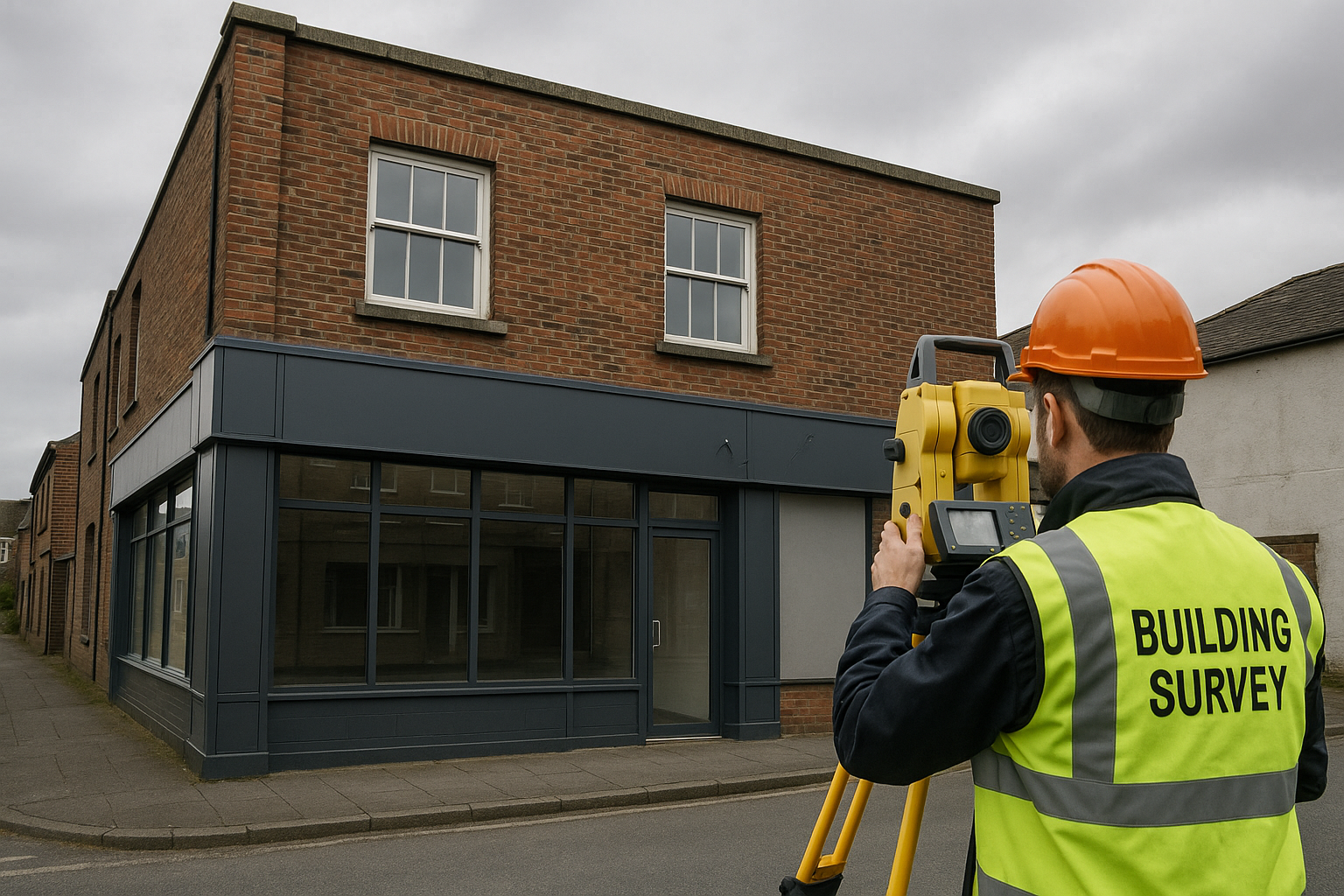
Before routine occupation and normal maintenance, a suitable management survey helps identify asbestos-containing materials that could be disturbed during everyday use or foreseeable maintenance.
If major strip-out, structural alteration or demolition is planned, a demolition survey is needed before work starts. This is intrusive by design because hidden asbestos insulation is often located behind finishes, within voids or inside plant areas.
What asbestos insulation looks like
This is where many people get caught out. Asbestos insulation does not have one standard appearance, and visual inspection alone cannot confirm whether a material contains asbestos.
Some forms look fluffy. Some look chalky or cement-like. Some appear plaster-like, rough or fibrous. Others sit completely hidden beneath paint, canvas, foil, plaster, metal cladding or later repair materials.
What colour is asbestos insulation?
Colour is one of the least reliable indicators. People often expect asbestos products to appear clearly white, brown or blue, but finished insulation products on site rarely present that neatly.
Asbestos insulation may appear:
- White
- Off-white
- Grey
- Silver-grey
- Buff
- Beige
- Dirty brown
Pipe lagging may be painted over. Sprayed coatings may look rough and grey. Loose-fill material may look pale and fluffy. Thermal blocks may appear chalky or solid. None of that proves the presence or absence of asbestos.
The sensible rule is simple: if insulation in an older property looks fibrous, crumbly, dusty, heat-related or unusual, treat it as suspect until professional sampling says otherwise.
Warning signs you should not ignore
- Cracked or damaged pipe lagging
- Fluffy loft insulation of unknown type
- Rough spray-applied coating above ceilings
- Dust or debris beneath damaged insulation
- Boiler insulation breaking away at the edges
- Insulation exposed during strip-out works
Do not sweep, vacuum, brush, cut, drill or bag suspect asbestos insulation yourself. Standard domestic vacuums are not suitable, and disturbance can rapidly increase the risk of fibre release.
Types of asbestos insulation found in older buildings
Different forms of asbestos insulation carry different levels of risk, but all require proper assessment. The key factors are friability, condition, accessibility and the likelihood of disturbance.
Sprayed asbestos insulation
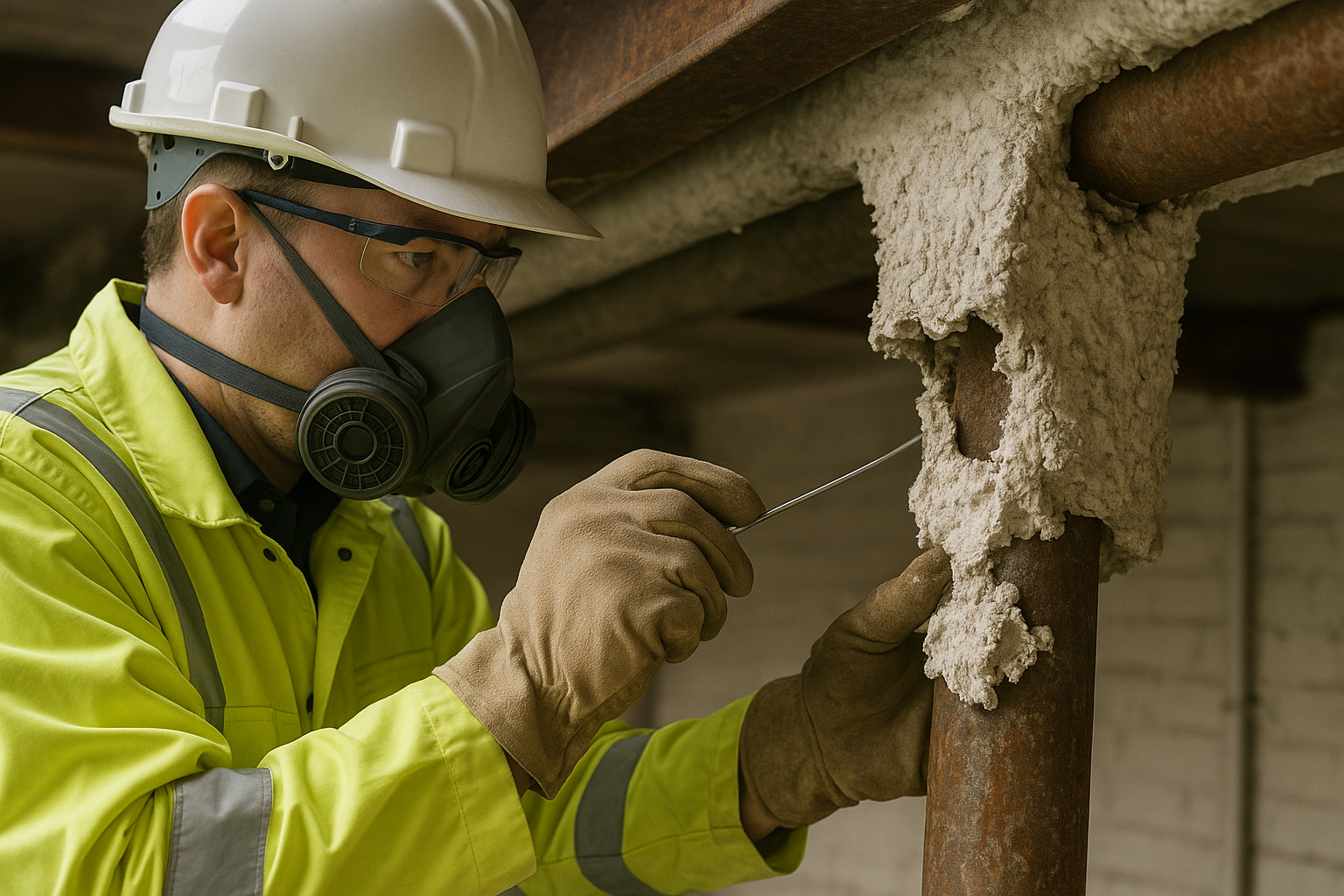
Sprayed coatings were used for fire protection and thermal insulation on ceilings, walls, beams, columns and structural steel. They usually have a rough, uneven texture and can be highly friable.
This is one of the more concerning forms of asbestos insulation because fibres may be released very easily if the surface is knocked, drilled, scraped or damaged. It may also be hidden above suspended ceilings or in plant spaces where contractors do not expect to find it.
If you suspect sprayed asbestos insulation:
- Stop work immediately
- Keep people out of the area
- Do not touch or scrape the surface
- Arrange professional assessment and sampling
Loose-fill asbestos insulation
Loose-fill asbestos insulation is among the highest-risk forms because the fibres are unbound. It may look fluffy, soft or granular and is often found in lofts, roof voids and cavities.
Even minor disturbance can spread fibres. Walking through a loft, moving stored items or running cables can contaminate a much wider area.
Block insulation
Block insulation was used around boilers, vessels, ovens and industrial equipment where rigid thermal protection was needed. It may look more solid than lagging, but that does not make it safe.
If older block insulation is cut, broken or removed, fibres can still be released. Any dismantling of plant or opening up of service areas should be preceded by proper asbestos assessment.
Pipe lagging and sectional insulation
Pipe lagging is one of the most commonly encountered high-risk forms of asbestos insulation in older buildings. It was used heavily on heating systems, valves, bends and associated plant.
Lagging may sit beneath plaster-like coatings, paint, bandages, canvas wraps or later encapsulation. Once cracked or damaged, it can release fibres very easily.
Blanket or wrapped insulation
Some older thermal products were supplied in blanket or wrap form around ducts, boilers and heated services. These may be hidden beneath outer jackets or repair coverings.
If a wrap is torn or degraded, do not pull it back to inspect underneath. That kind of disturbance can turn a manageable situation into an exposure incident.
Insulation materials that may be mistaken for asbestos insulation
Not every older insulation product contains asbestos. Some materials are often confused with asbestos insulation, which can lead to either unnecessary alarm or unsafe assumptions.
The key point is this: “probably not asbestos” is not the same as “definitely safe”. If the age, location or installation history is unclear, assessment is still needed.
Cellulose insulation
Cellulose insulation is usually made from recycled paper treated with fire retardants. It is often used as loose-fill loft insulation and commonly appears grey because of the paper content.
Modern cellulose insulation does not contain asbestos. Even so, loose grey material in an older loft should not be assumed to be cellulose without proper assessment.
Fibreglass insulation
Fibreglass insulation is usually pink, yellow or light brown with a wool-like appearance. It is common in rolls or batts and widely used in lofts and cavity walls.
Fibreglass is not asbestos, but it can still irritate the skin and respiratory system. Suitable handling precautions are still sensible.
Mineral wool and rock wool
Mineral wool and rock wool are common alternatives used for thermal and acoustic insulation. They are often supplied in slabs, batts or rolls and may appear yellow, greenish-brown or grey-brown.
These products do not usually contain asbestos. The difficulty is that they can exist alongside older asbestos insulation in mixed or altered building areas.
Foam board insulation
Rigid foam boards used in modern refurbishments are not asbestos insulation. They are usually recognisable by their clean-cut board form and foil or plastic facings.
Even so, newer boards can be installed over older building fabric. Asbestos insulation may still be present behind them.
Practical identification tips
- Do not rely on colour alone
- Do not assume a product is safe because it looks newer than the building
- Check whether hidden layers may remain behind later work
- Use professional sampling where there is doubt
If laboratory confirmation is needed, arrange asbestos testing rather than making assumptions from appearance.
Who is most at risk from asbestos insulation exposure?
Occupational exposure remains one of the main concerns with asbestos insulation. The people most at risk are often those carrying out practical work in older buildings, especially where hidden materials are disturbed during routine tasks.
Higher-risk occupations include:
- Plumbers and heating engineers
- Electricians
- Boiler engineers
- Builders and general trades
- Demolition operatives
- Refurbishment contractors
- Maintenance teams
- Caretakers and site managers
- Joiners working in service areas
- Industrial workers around older plant
- Roofers and loft conversion teams
Many exposure incidents happen because insulation was hidden, misidentified or disturbed before anyone checked the asbestos information for the building.
Settings where exposure often occurs
- Plant room maintenance
- Boiler replacement
- Rewiring
- HVAC upgrades
- Loft boarding and insulation upgrades
- Ceiling removal
- Strip-out works
- Demolition preparation
Property managers should make sure contractors are not sent into suspect areas blind. Under the duty to manage, asbestos information needs to be available, current and relevant to the work being planned.
What to do if you suspect asbestos insulation
If you think you have found asbestos insulation, the safest response is controlled and practical. Panic helps no one, but neither does carrying on with the work.
- Stop work immediately. Do not continue drilling, cutting, lifting or stripping nearby materials.
- Keep others away. Restrict access to the area to prevent further disturbance.
- Do not touch the material. Avoid breaking, moving, brushing or sampling it yourself.
- Do not clean it up with a domestic vacuum. That can spread fibres rather than contain them.
- Check existing asbestos records. Review the asbestos register, previous survey information and building plans if available.
- Arrange professional inspection and sampling. If the material is unknown, have it assessed by a competent asbestos surveyor or analyst.
Where confirmation is needed, professional asbestos testing provides laboratory analysis so decisions can be based on evidence rather than guesswork.
Can you live in a building with asbestos insulation?
Possibly, but only if the asbestos insulation is in good condition, has been properly identified, and is being managed so that it is not disturbed. The presence of asbestos insulation does not automatically mean a building is unsafe to occupy.
The real issue is condition and control. Damaged, exposed or deteriorating asbestos insulation needs urgent professional attention because of the higher likelihood of fibre release.
If you are a homeowner, landlord or block manager, practical next steps include:
- Checking whether a survey already exists
- Reviewing whether the suspect area is accessible or likely to be disturbed
- Making sure maintenance staff and contractors know about the risk
- Seeking advice before any repair, refurbishment or access work
Surveying and asbestos management in practice
Managing asbestos insulation is not only about identifying it once. It is about keeping accurate records, reviewing condition, controlling access and making sure planned works are matched to the right level of survey.
HSG264 sets out the survey approach expected in the UK. In simple terms, the survey type should reflect what is happening in the building.
When a management survey is suitable
A management survey is used to locate, as far as reasonably practicable, asbestos-containing materials that could be disturbed during normal occupation or foreseeable maintenance. It helps dutyholders maintain an asbestos register and plan control measures.
This is often appropriate for occupied buildings where routine use continues and there is no major intrusive work planned.
When a refurbishment or demolition approach is needed
If walls, ceilings, floors, risers, plant or structural elements are going to be opened up, a more intrusive survey is required. Hidden asbestos insulation is frequently found only when intrusive access is undertaken.
That is why pre-works planning matters. Sending contractors in first and asking questions later is exactly how accidental disturbance happens.
Location-specific support
If works are planned in the capital, arranging an asbestos survey London service before contractors arrive helps reduce delays and avoid unsafe assumptions.
For projects in the North West, an asbestos survey Manchester can help identify suspect insulation before maintenance or refurbishment starts.
For Midlands properties, booking an asbestos survey Birmingham is a sensible step before intrusive works begin.
Practical advice for property managers, landlords and homeowners
When asbestos insulation is a possibility, good management is mostly about preparation. The aim is to avoid accidental disturbance and make sure decisions are based on proper information.
- Keep asbestos records accessible and up to date
- Brief contractors before they start work
- Do not approve intrusive jobs without checking survey requirements
- Reinspect known asbestos-containing materials where needed
- Act quickly if damage, leaks or impact affect insulated areas
- Do not rely on verbal assurances that a material is “probably fine”
If suspect insulation is found unexpectedly, treat it as a work-stopping issue until assessed. That single decision can prevent exposure, contamination and expensive disruption.
Need expert help with asbestos insulation in a home, commercial property or public building? Supernova Asbestos Surveys provides asbestos surveys, sampling and practical advice nationwide. Call 020 4586 0680 or visit asbestos-surveys.org.uk to arrange the right survey for your property.
Frequently Asked Questions
Is asbestos insulation more dangerous than asbestos cement?
It often is, because asbestos insulation is usually more friable. That means fibres can be released more easily if the material is damaged or disturbed, whereas asbestos cement is generally more tightly bound.
Can I identify asbestos insulation by sight alone?
No. Visual appearance can raise suspicion, but it cannot confirm whether insulation contains asbestos. Professional sampling and laboratory analysis are needed for reliable identification.
What should I do if I find damaged pipe lagging?
Stop work, keep people away and do not touch or clean the material. Check any existing asbestos records and arrange professional assessment as soon as possible.
Is it safe to stay in a building with asbestos insulation?
It can be, if the material is in good condition, properly identified and effectively managed so it is not disturbed. Damaged or deteriorating asbestos insulation needs urgent professional attention.
Do I need a survey before refurbishment works?
Yes, if the work is intrusive. A management survey is not enough for major refurbishment or demolition where hidden asbestos insulation may be disturbed.