
One accidental drill hole in the wrong ceiling tile can turn a routine job into a serious compliance issue. Short term asbestos exposure is often dismissed as a brief scare, but the real risk depends on the material disturbed, the amount of fibre released, and how quickly the area is controlled.
If you manage property, oversee maintenance, or commission refurbishment works, you need clear, practical answers. A brief incident does not automatically lead to illness, but it should never be brushed aside.
What short term asbestos exposure actually means
Short term asbestos exposure usually means a one-off incident or a limited period of contact with airborne asbestos fibres. That could happen during maintenance, accidental damage, cleaning, refurbishment, or unplanned works in a building that contains asbestos-containing materials.
The phrase only describes duration. It does not mean harmless.
Common examples of short term asbestos exposure include:
- Drilling into asbestos insulating board
- Breaking pipe lagging during repairs
- Sanding or scraping textured coatings without checking first
- Lifting old floor tiles and disturbing adhesive beneath
- Being in a room where asbestos-containing material has been damaged
- Cleaning debris after a ceiling collapse in an older property
- Opening up risers, ducts, or service voids during reactive maintenance
The risk depends on fibre release, not simply how long the event lasted. A very brief disturbance of a high-risk material can create more danger than longer contact with a lower-risk bonded product.
Short term asbestos exposure vs long-term exposure
The main difference is cumulative dose. Long-term exposure usually involves repeated inhalation of fibres over months or years, often in construction, plant rooms, industrial settings, shipyards, maintenance roles, or refurbishment work where asbestos was regularly disturbed.
Short term asbestos exposure usually involves a lower overall dose. That generally means the risk is lower, but lower does not mean zero.
Why cumulative dose matters
Asbestos-related disease is strongly linked to the number of fibres inhaled over time. Repeated exposure increases the chance of fibres remaining in the lungs and pleura, where they may contribute to disease many years later.
A single incident adds less to lifetime exposure than years of uncontrolled work. Even so, a one-off high-dust event involving friable asbestos can still be significant and deserves proper follow-up.
There is no guaranteed safe exposure level
Under the Control of Asbestos Regulations, exposure must be prevented where reasonably practicable and, where prevention is not possible, reduced to as low as reasonably practicable. HSE guidance and HSG264 are clear that asbestos must be identified and managed properly before work starts.
Control limits are not a promise of safety. They are legal thresholds used for control and monitoring, not a line below which all risk disappears.
How dangerous is short term asbestos exposure?
The honest answer is that it depends on the circumstances. Short term asbestos exposure can be low risk in one situation and much more serious in another.
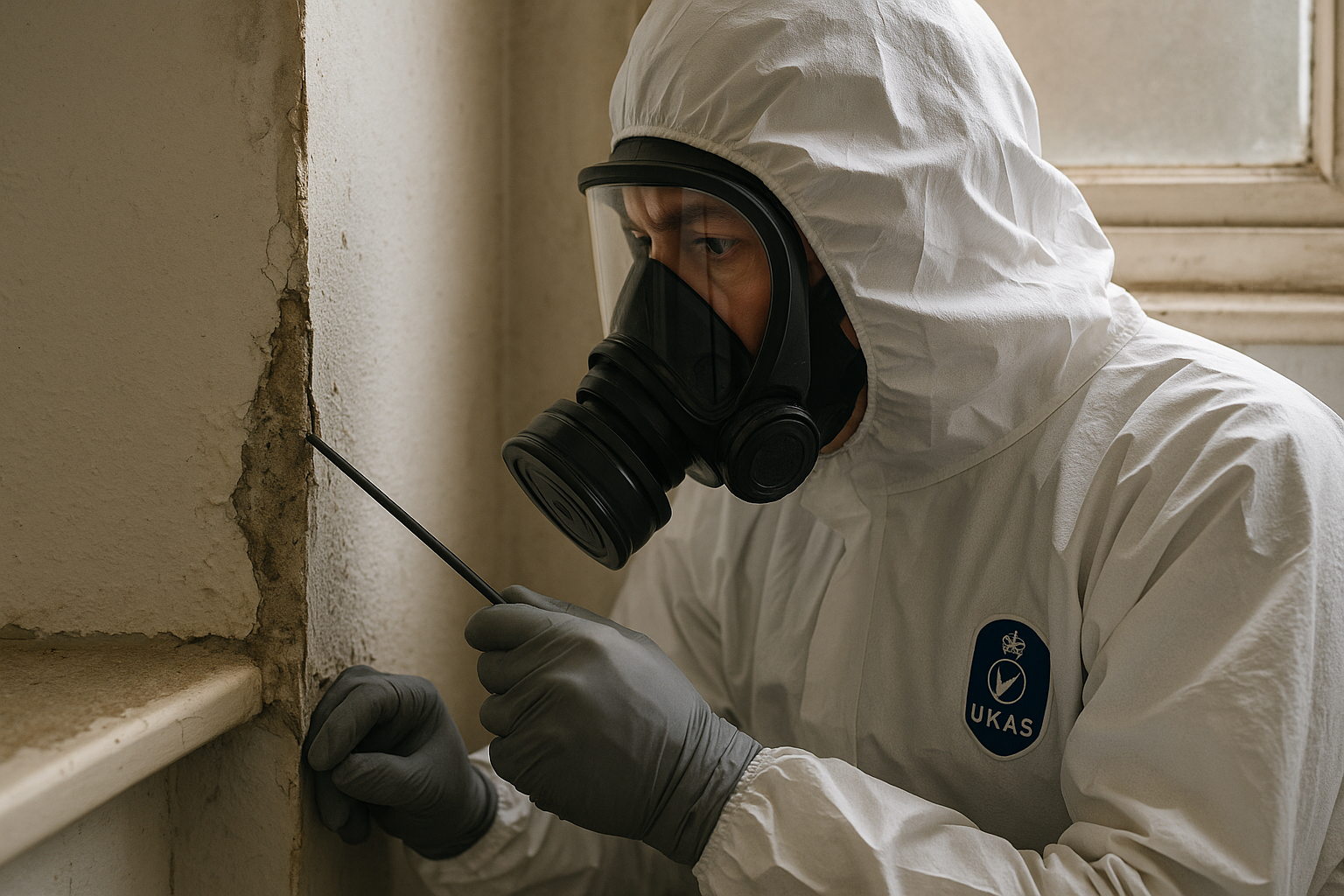
These factors shape the level of risk:
- Type of material: Pipe lagging, sprayed coatings and asbestos insulating board release fibres more easily than asbestos cement.
- Condition: Damaged, cracked or deteriorating materials are more likely to release fibres.
- Activity: Drilling, cutting, sanding, breaking and demolition create more airborne dust than leaving material undisturbed.
- Duration: Longer exposure usually increases risk, but even a short event can matter if fibre levels are high.
- Ventilation: Small enclosed spaces allow fibres to build up and remain airborne for longer.
- Clean-up method: Dry sweeping or using a domestic vacuum can spread contamination further.
- Respiratory protection: Unsuitable or badly fitted masks should not be relied on.
- Smoking history: Smoking increases the risk of asbestos-related lung cancer in people with an exposure history.
For property managers, the practical lesson is simple: never judge risk by appearance alone. A small amount of visible dust can still signal a serious asbestos issue if the material is friable.
Can one-time asbestos exposure cause cancer?
It can, but the probability is generally much lower than with repeated or prolonged exposure. Most people who experience a single short term asbestos exposure will not go on to develop an asbestos-related disease.
That said, false reassurance helps no one. Mesothelioma has been linked to relatively limited exposures in some cases, including indirect and secondary exposure. It is not possible to look at one incident and guarantee there is no future risk.
The sensible position is balanced:
- Do not assume one incident means you will become ill
- Do not assume one incident means there is no risk
- Do record exactly what happened
- Do stop any further disturbance until the material has been assessed
Does all asbestos exposure lead to mesothelioma or asbestosis?
No. Most people with short term asbestos exposure do not develop mesothelioma, asbestosis, or asbestos-related lung cancer.
Mesothelioma is strongly associated with asbestos, but exposure does not make disease inevitable. Risk is influenced by fibre type, dose, duration, and individual susceptibility.
Asbestosis is different again. It is usually linked to heavy or repeated exposure over time rather than a single low-level event. In practical terms, one brief incident is far less likely to cause asbestosis than years of poorly controlled work with friable asbestos materials.
Which asbestos materials and fibre types are more hazardous?
All asbestos types are hazardous. Amphibole fibres such as amosite and crocidolite are generally considered more dangerous in relation to mesothelioma because of how they behave in the body. Chrysotile is also dangerous and must never be treated as safe.
On site, the more immediate issue is usually the product rather than the fibre type. Some materials release fibres far more easily than others.
Higher-risk asbestos-containing materials
- Pipe lagging
- Sprayed coatings
- Loose fill insulation
- Asbestos insulating board
Lower-fibre-release materials when in good condition
- Asbestos cement sheets
- Roofing panels
- Gutters and downpipes
- Vinyl floor tiles
- Bitumen products
- Textured coatings, depending on condition and work method
You cannot identify asbestos type reliably by eye. If a suspect material has been damaged, the right step is sampling and professional assessment, not guesswork.
What happens in the body after short term asbestos exposure?
When asbestos fibres are inhaled, some are trapped in the upper airways and cleared naturally. The greatest concern is the smallest fibres, which can travel deep into the lungs and, in some cases, reach the pleural lining.
The body tries to remove these fibres using immune cells. Some fibres resist clearance and can remain for a very long time. Over many years, that persistence may contribute to inflammation, scarring, and cellular damage.
This is why asbestos-related diseases usually have a long latency period. They do not appear immediately after short term asbestos exposure.
Will you feel it happening?
No. Asbestos fibres are microscopic and have no distinctive taste, smell, or sensation. You cannot tell from your throat or lungs whether fibres have been inhaled.
Some people notice coughing or irritation after dust exposure, but those symptoms are not specific to asbestos. They do not tell you how serious the exposure was.
What to do immediately after short term asbestos exposure
If you suspect short term asbestos exposure, act quickly and calmly. The aim is to stop further fibre release, prevent spread, and create a clear record.
- Stop work immediately. Do not keep drilling, cutting, lifting, sweeping, or bagging debris.
- Keep people away. Close off the area if safe to do so and stop others entering.
- Do not dry sweep. Sweeping can re-suspend fibres into the air.
- Do not use a domestic vacuum. Only suitable H-class equipment should be used as part of the correct asbestos control measures.
- Avoid spreading contamination. Do not shake dusty clothing indoors or walk debris through occupied areas.
- Report the incident. Tell the dutyholder, site manager, employer, or health and safety lead straight away.
- Record the details. Note the location, suspected material, task being carried out, duration, and who was present.
- Arrange professional assessment. A competent asbestos surveyor or consultant should inspect the material and advise on next steps.
If the incident happened during planned works, stop the job until the area has been assessed properly. Carrying on without confirmation can turn a small incident into a major contamination problem.
Should you wash after exposure?
If dust may have settled on your skin or hair, washing and showering is sensible. If clothing may be contaminated, bag it separately and seek advice before normal handling or laundering.
Do not shake out overalls or dusty clothes indoors. That can release fibres back into the air.
Should you go to A&E?
Short term asbestos exposure does not usually need emergency treatment unless there is acute breathing difficulty or another urgent medical issue. Asbestos-related disease does not present as an immediate emergency after a single event.
If you are worried, speak to your GP or occupational health provider and explain exactly what happened. Factual detail is far more useful than a vague description.
Medical risk after short term asbestos exposure
Most concern after an incident comes from uncertainty. People want to know whether a single exposure will definitely cause cancer, whether they need a scan, or whether symptoms will appear straight away.
In most cases, the answer is no to all three. A single event usually means a relatively low risk compared with long-term occupational exposure, and asbestos-related conditions take years to develop.
What matters medically is having an accurate exposure history. If you ever develop ongoing respiratory symptoms in the future, being able to describe the incident clearly will help your GP or specialist.
When to speak to a doctor
Contact your GP or occupational health provider if:
- You are anxious about a known incident and want it recorded in your medical notes
- You had heavy dust exposure in an enclosed space
- You have repeated short term asbestos exposure from work over time
- You later develop persistent breathlessness, cough, chest discomfort, or other unexplained respiratory symptoms
Do not expect immediate tests to prove whether fibres were inhaled. After a recent incident, there is usually no quick medical test that can confirm the level of exposure.
Asbestosis: causes, symptoms and day-to-day management
Asbestosis is a chronic lung disease caused by inhaling asbestos fibres over time. It leads to scarring in the lungs, which affects breathing and oxygen transfer.
It is most commonly linked to prolonged or heavy occupational exposure rather than one isolated short term asbestos exposure.
Common causes of asbestosis
- Repeated work with friable asbestos materials
- Poor dust control during industrial or construction activity
- Removal or repair work without suitable respiratory controls
- Frequent exposure in enclosed or poorly ventilated spaces
- Historic work carried out without effective asbestos management
Symptoms of asbestosis
- Shortness of breath, especially on exertion
- Persistent cough
- Wheezing
- Fatigue
- Chest tightness or discomfort
- Clubbing of the fingertips in more advanced cases
These symptoms are not unique to asbestosis, so medical assessment is essential. If you have any asbestos exposure history, mention it clearly when speaking to your GP.
Managing asbestosis day to day
- Stop smoking
- Keep up with flu and pneumococcal vaccinations if advised by your clinician
- Attend regular medical reviews
- Stay active within your limits
- Maintain a healthy weight
- Avoid further exposure to asbestos and other airborne irritants
Short term asbestos exposure in homes and commercial properties
Many modern incidents happen outside heavy industry. They occur during routine maintenance, fit-outs, minor refurbishments, leak repairs, electrical work, and reactive jobs in buildings constructed before 2000.
Common locations include:
- Ceiling voids and service risers
- Boiler rooms and plant areas
- Textured coatings on walls and ceilings
- Floor tiles and bitumen adhesives
- Soffits, panels and cement products
- Pipe boxing and column casings
- Toilet cisterns, panels and ducts
- Roof sheets, flues and outbuildings
Domestic premises can also present risk, especially during DIY or small contractor jobs. A homeowner removing old boxing, lifting floor coverings, or drilling into a partition may have no idea asbestos is present until dust is released.
Practical advice for property managers and dutyholders
- Check the asbestos register before any intrusive work starts
- Make sure contractors can access relevant asbestos information
- Do not rely on old assumptions or verbal handovers
- Update records when materials are removed, repaired, or damaged
- Commission the right survey for the planned work
If you are managing a site in the capital, a properly scoped asbestos survey London service can help identify suspect materials before maintenance or refurbishment begins.
For North West properties, arranging an asbestos survey Manchester inspection before intrusive works is one of the simplest ways to reduce the chance of accidental fibre release.
For Midlands portfolios, booking an asbestos survey Birmingham assessment gives contractors and dutyholders clearer information before work starts.
How surveys and management plans help prevent incidents
The best way to deal with short term asbestos exposure is to stop it happening in the first place. That means identifying asbestos-containing materials, assessing their condition, and making sure the right information reaches the right people.
When a management survey is appropriate
A management survey is used to locate, as far as reasonably practicable, the presence and extent of any suspect asbestos-containing materials that could be damaged or disturbed during normal occupation, including foreseeable maintenance.
It supports the duty to manage asbestos in non-domestic premises under the Control of Asbestos Regulations.
When a refurbishment or demolition survey is needed
If the work involves intrusive access, stripping out, or demolition, a management survey is not enough. A refurbishment or demolition survey is required before work starts in the affected area.
This is where many avoidable incidents begin. Contractors are sent in for opening-up works based on incomplete information, and a brief task becomes short term asbestos exposure for everyone nearby.
What a good asbestos management approach looks like
- An up-to-date asbestos register
- Clear material assessments and priority information
- Site-specific communication to contractors
- Permit-to-work controls where needed
- Regular review after damage, changes, or removal works
Common mistakes after a suspected exposure
Small errors after an incident can make contamination worse. These are the mistakes we see most often:
- Continuing the task to “finish quickly”
- Trying to clean up with a brush and pan
- Using a standard vacuum cleaner
- Letting multiple trades walk through the area
- Bagging debris without proper controls
- Failing to record who was present
- Assuming cement products and textured coatings are always low risk
- Restarting work before sampling results or professional advice
If there is any doubt, pause the job and get competent advice. A short delay is far cheaper than a contaminated work area, exposed contractors, and a reportable compliance failure.
Frequently Asked Questions
Is short term asbestos exposure always dangerous?
No, not always to the same degree. Short term asbestos exposure can range from very low risk to significant risk depending on the material, the task, the amount of dust released, and whether the area was enclosed. It should always be taken seriously and assessed properly.
Can a single asbestos exposure cause mesothelioma?
It is possible, but the likelihood is generally far lower than with repeated or prolonged exposure. No one can honestly guarantee zero risk after a single incident, which is why recording the event and preventing any further disturbance is so important.
How long do asbestos symptoms take to appear?
Asbestos-related diseases usually have a long latency period. Symptoms do not appear immediately after exposure and may take many years to develop. That is why accurate records matter, even if you feel completely well now.
Should I get tested straight after short term asbestos exposure?
There is usually no immediate medical test that can confirm how much asbestos you inhaled after a recent event. If you are concerned, speak to your GP or occupational health provider, explain the circumstances clearly, and ask for the exposure to be noted in your records.
What is the first thing to do after disturbing suspected asbestos?
Stop work immediately. Keep people out of the area, avoid sweeping or vacuuming, report the incident, and arrange professional assessment. Do not restart work until the material has been identified and the area has been made safe.
If you need clear advice after short term asbestos exposure, or you want to prevent incidents before work starts, Supernova Asbestos Surveys can help. We carry out asbestos surveys nationwide for commercial, public sector and residential clients. Call 020 4586 0680 or visit asbestos-surveys.org.uk to book a survey or speak to our team.