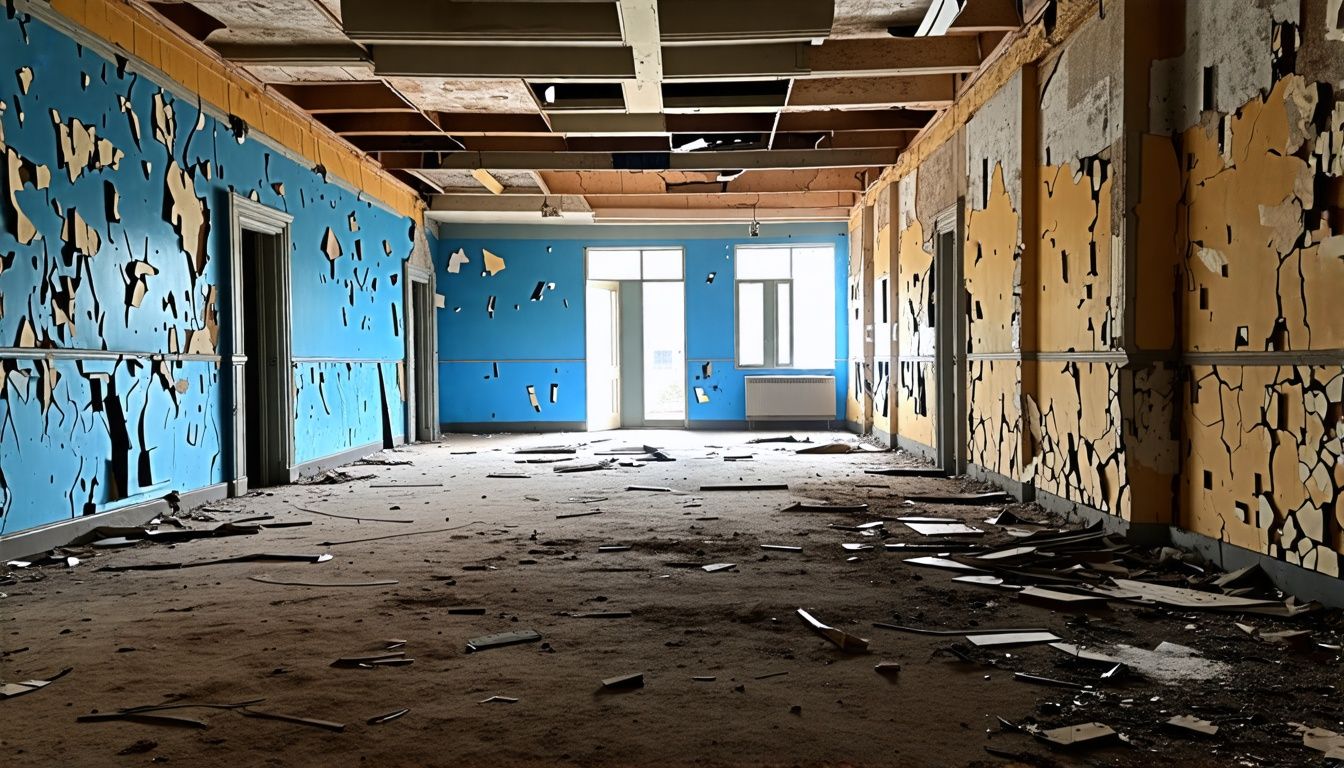
How Asbestos in Older Buildings Affects Public Health
Asbestos remains one of the most significant occupational and environmental health hazards in the UK. Thousands of people are diagnosed with asbestos-related diseases every year — and the overwhelming majority of cases trace back to exposure that happened decades earlier, often in buildings that are still standing today.
If you own, manage, or work in a property built before 2000, understanding the risks is both a legal and a moral responsibility. This is not a historic problem that has been solved. It is an ongoing public health crisis playing out in slow motion.
Why Older Buildings Continue to Pose an Asbestos Risk
Asbestos was not fully banned in the UK until 1999. Before that, it was used extensively across the construction industry — valued for its fire resistance, durability, and insulating properties. That means a substantial proportion of the UK’s existing building stock contains asbestos-containing materials (ACMs) somewhere within the fabric of the structure.
The critical point is this: asbestos in good condition and left undisturbed generally does not pose an immediate risk. The danger arises when those materials are damaged, deteriorate naturally, or are disturbed during maintenance, renovation, or demolition work — releasing microscopic fibres into the air.
Once inhaled, those fibres can lodge permanently in lung tissue. There is no safe level of asbestos exposure, and no way to reverse the damage once it has occurred.
Where Is Asbestos Typically Found in Buildings?
Asbestos-containing materials can appear in almost any part of a building constructed or refurbished before 2000. Many of these materials are not obvious to the untrained eye, and asbestos cannot be identified visually — laboratory analysis of a physical sample is the only way to confirm its presence.
The most commonly encountered ACMs include:
- Thermal insulation — on pipes, boilers, and ducting
- Sprayed coatings — applied to structural steel and concrete for fire protection
- Textured coatings — including Artex on ceilings and walls
- Asbestos cement products — corrugated roofing sheets, guttering, soffit boards, and water tanks
- Floor tiles and sheet vinyl — including the adhesive used to fix them
- Ceiling tiles and partition boards
- Rope seals and gaskets — in boilers and heating systems
- Fire doors and fire-resistant panels
- Roofing felt and bitumen products
- Plaster and joint compounds
If you are unsure whether materials in your building contain asbestos, professional asbestos testing will give you a definitive answer based on laboratory analysis rather than guesswork.
Recognising Signs of Deterioration
Even where ACMs have been previously recorded and are being managed in place, their condition must be monitored regularly. Deteriorating materials become increasingly hazardous as they release fibres more readily into the surrounding environment.
Key warning signs to look out for include:
- Crumbling, flaking, or powdering surfaces — particularly on sprayed coatings or pipe lagging
- Water damage, damp staining, or visible mould on ACMs
- Physical damage — abrasions, cuts, or holes in boards, tiles, or ceiling coatings
- Cracks or splits in asbestos cement sheets
- Wear and erosion on floor tiles
If you notice any of these signs, do not attempt to investigate further yourself. A professional re-inspection survey carried out by a qualified surveyor will determine whether the material needs remediation, encapsulation, or removal.
The Health Risks of Asbestos Exposure
Asbestos-related diseases are entirely preventable — but they are not curable. The conditions caused by asbestos exposure are serious, life-limiting, and in many cases fatal. Understanding what these diseases are, and how they develop, underlines why proper management is so critical.
Asbestosis
Asbestosis is a chronic, progressive lung disease caused by the scarring of lung tissue following prolonged asbestos inhalation. Symptoms include breathlessness, a persistent cough, and chest tightness. There is no cure; treatment focuses on slowing progression and managing symptoms.
Pleural Disease
Asbestos fibres can affect the pleura — the lining surrounding the lungs. Pleural plaques, pleural thickening, and pleural effusion (fluid build-up around the lungs) are all associated with asbestos exposure. These conditions reduce lung capacity and can cause significant, ongoing discomfort.
Lung Cancer
Asbestos exposure is a well-established cause of lung cancer. The risk is substantially higher in people who smoke and have also been exposed to asbestos — the two risk factors interact, multiplying rather than simply adding to one another. Lung cancer linked to asbestos typically manifests 15 to 35 years after the initial exposure.
Mesothelioma
Mesothelioma is a rare and aggressive cancer of the mesothelium — the lining of the lungs, chest cavity, or abdomen. It is almost exclusively caused by asbestos exposure, with a latency period that can stretch from 20 to 50 years. People being diagnosed today were likely exposed decades ago.
The UK has one of the highest rates of mesothelioma in the world — a direct legacy of the country’s heavy industrial use of asbestos throughout the twentieth century. Thousands of deaths attributed to asbestos-related disease occur in the UK every single year.
Who Is Most at Risk?
Historically, the highest-risk groups were workers in industries with direct, sustained asbestos exposure — shipbuilding, construction, insulation installation, plumbing, and electrical work. Many of those individuals are now developing diseases linked to exposure that occurred decades ago.
Today, the groups most at risk include:
- Maintenance and trades workers — electricians, plumbers, decorators, and carpenters working in older buildings are among the most frequently exposed groups
- Construction workers involved in refurbishment or demolition of pre-2000 buildings
- Facilities managers and building managers who may unknowingly commission work on ACMs without a current asbestos management plan in place
- Teachers and school staff — a significant proportion of UK school buildings contain ACMs
- Domestic renovators — DIY work on older homes remains a major route of accidental exposure
- Family members of workers who brought fibres home on clothing — known as secondary or para-occupational exposure
Risk is strongly influenced by both the duration and intensity of contact. Repeated or prolonged inhalation of high concentrations of fibres carries far greater risk than a single brief exposure. That said, even short but intense exposures — such as those that can occur during improper removal — carry genuine and serious risk.
The Wider Public Health and Community Impact
The health burden of asbestos is not just an individual concern. It has significant implications for communities, the NHS, and the wider economy. Areas with a high density of older housing stock or legacy industrial buildings tend to see higher rates of asbestos-related disease.
Schools, hospitals, and public sector buildings constructed during the post-war building boom are of particular concern, given the numbers of people who occupy them on a daily basis. When asbestos fibres are released into the environment through improper demolition or waste disposal, they can contaminate soil and persist in the local environment for extended periods.
Unlike many pollutants, asbestos fibres do not biodegrade. Wind dispersal can carry contamination well beyond the immediate site, complicating clean-up efforts and extending the geographic reach of exposure risk. This is why proper management, survey work, and — where necessary — licensed asbestos removal are so important before any demolition or major refurbishment begins.
The Legal Framework: What Duty Holders Must Do
In the UK, the Control of Asbestos Regulations place clear legal duties on those responsible for non-domestic premises. The duty to manage asbestos applies to anyone who owns, occupies, manages, or has responsibility for the maintenance of a non-domestic building.
The core obligations are:
- Identify whether ACMs are present — through a commissioned asbestos management survey
- Assess the condition and risk of any ACMs found
- Produce a written asbestos management plan and keep it up to date
- Share information about the location and condition of ACMs with anyone likely to disturb them
- Ensure ACMs are regularly monitored through periodic re-inspection surveys
For domestic properties — including houses and flats — there is no automatic duty to manage, but landlords do have obligations to ensure tenant safety. Asbestos in the common areas of HMOs and residential blocks falls within the scope of the regulations.
Before any refurbishment or demolition work begins on a pre-2000 building, a demolition survey is legally required. This is a more intrusive survey that identifies all ACMs that may be disturbed by the planned works.
The Health and Safety Executive (HSE) actively enforces these regulations, and non-compliance can result in substantial fines or, in serious cases, prosecution. HSE guidance document HSG264 sets out the standards expected for asbestos surveying and is the benchmark against which all reputable surveyors work.
Managing Asbestos Safely: A Practical Overview
Not all asbestos needs to be removed. In many cases, managing ACMs in place — through a robust asbestos management plan, regular re-inspections, and clear communication with anyone working in the building — is the appropriate and proportionate response.
Removal becomes necessary when:
- Materials are in poor condition and cannot be effectively repaired or encapsulated
- Planned construction or refurbishment work will disturb them
- The risk assessment concludes that in-situ management is no longer viable
When removal is required, the most hazardous materials — including sprayed coatings, pipe lagging, and loose-fill insulation — must be removed by a licensed asbestos removal contractor. Licensed contractors are regulated by the HSE and must notify the relevant authority before commencing notifiable work.
What Safe Removal Involves
Safe asbestos removal is a tightly controlled process. It involves:
- Full enclosure and negative pressure containment of the work area
- Appropriate PPE including P3 respiratory protection
- Wet suppression methods to minimise fibre release
- HEPA-filtered vacuum equipment
- Double-bagging and correct labelling of all waste
- Disposal at a licensed hazardous waste facility
- A four-stage clearance procedure including visual inspection and air testing before reoccupation
Cutting corners at any stage of this process puts workers, building occupants, and the surrounding community at risk.
Testing and Sampling: Confirming What You Are Dealing With
If you suspect a material may contain asbestos but do not yet have a full survey in place, sampling is the first practical step. A physical sample taken from the suspect material is sent to an accredited laboratory for analysis — this is the only reliable way to confirm the presence or absence of asbestos fibres.
For property managers or homeowners who need a quick and cost-effective way to test a specific material, a postal testing kit allows you to collect a sample safely and send it for professional sample analysis. Results are typically returned promptly, giving you the information you need to decide on next steps.
For buildings where multiple materials may be present, or where a full legal duty to manage applies, a management survey carried out by a qualified surveyor provides a complete picture of what is present, where it is located, and what condition it is in.
The Role of Fire Risk Assessments in Asbestos Management
Asbestos management does not exist in isolation from other building safety obligations. Many older buildings that contain ACMs are also subject to fire safety legislation, and the two areas of compliance often intersect — particularly where fire doors, fire-resistant panels, and sprayed coatings are involved.
A fire risk assessment evaluates the fire hazards present in a building and the measures in place to protect occupants. Where fire-resistant materials are identified as potentially containing asbestos, the findings of both the fire risk assessment and the asbestos survey must be considered together when planning any remediation or maintenance work.
Duty holders responsible for non-domestic premises should ensure that both their asbestos management plan and their fire risk assessments are current, accessible, and reviewed at appropriate intervals. Failing to integrate these two areas of compliance can create gaps in your overall building safety strategy — and those gaps can have serious consequences.
Practical Steps for Property Managers and Building Owners
If you are responsible for a pre-2000 building and have not yet taken formal steps to address the potential presence of asbestos, the following actions will put you on the right path:
- Commission a management survey — this is the starting point for any non-domestic property and forms the basis of your legal duty to manage.
- Review and update your asbestos register — if a survey has already been carried out, check when it was last updated and whether any works have been completed since that may have altered the condition or location of ACMs.
- Schedule regular re-inspections — ACMs in place must be monitored at appropriate intervals. The frequency will depend on the type and condition of the materials.
- Communicate with contractors — before any maintenance, refurbishment, or repair work takes place, ensure the relevant contractor has been briefed on the location and condition of any ACMs in the affected areas.
- Plan ahead for major works — if demolition or significant refurbishment is planned, commission a demolition survey before work begins. This is a legal requirement, not an optional extra.
- Test suspect materials promptly — if you encounter a material you cannot identify, do not disturb it. Arrange for sampling and laboratory analysis before any work proceeds.
Taking a proactive approach to asbestos management protects the people who use your building, reduces your legal exposure, and avoids the far greater costs — financial and human — that can result from uncontrolled asbestos exposure.
Frequently Asked Questions
Can I tell if a material contains asbestos just by looking at it?
No. Asbestos cannot be identified visually. The only reliable way to confirm whether a material contains asbestos is through laboratory analysis of a physical sample. If you suspect a material may be an ACM, arrange for professional testing rather than making assumptions based on appearance or age alone.
Is asbestos only a risk in commercial or industrial buildings?
No. Asbestos was widely used in residential construction as well as commercial and industrial buildings. Any property built or refurbished before 2000 may contain ACMs. While the formal duty to manage applies to non-domestic premises, homeowners and landlords should also be aware of the risks — particularly before undertaking any renovation work.
Does all asbestos need to be removed immediately?
Not necessarily. Asbestos in good condition that is not at risk of being disturbed can often be safely managed in place. The decision to remove or manage in situ should be based on a professional assessment of the material’s condition, its location, and the likelihood of disturbance. Removal is always required before demolition or major refurbishment work.
How often should an asbestos register be updated?
An asbestos register should be reviewed and updated whenever there is a change in the condition of known ACMs, following any work that may have disturbed or removed materials, and at regular intervals as part of a structured re-inspection programme. The frequency of re-inspections will depend on the type and condition of the materials present, but annual reviews are common practice for many building types.
What is the difference between a management survey and a demolition survey?
A management survey is carried out on buildings in normal occupation and use. It identifies the location and condition of ACMs that could be disturbed during routine maintenance and management activities. A demolition survey is a more intrusive investigation required before any demolition or major refurbishment work. It aims to locate all ACMs in the areas to be affected by the planned works, including those that would only be accessible by breaking into the building fabric.
Get Expert Asbestos Support from Supernova
Supernova Asbestos Surveys has completed over 50,000 surveys across the UK, working with property managers, building owners, local authorities, and businesses of all sizes. Whether you need a management survey, a demolition survey, asbestos testing, or guidance on your legal obligations, our qualified surveyors are ready to help.
Call us on 020 4586 0680 or visit asbestos-surveys.org.uk to find out more about our services or to book a survey. Acting now is always better than dealing with the consequences of asbestos exposure after the fact.