WHO Asbestos Health Risks: What the Global Evidence Tells Us — and Why It Still Matters in the UK
Asbestos kills. That is not hyperbole — it is a straightforward fact confirmed by decades of medical evidence and acknowledged by the World Health Organisation (WHO). What is far less straightforward is how dramatically WHO asbestos health risks play out differently depending on where in the world you live, work, or manage property.
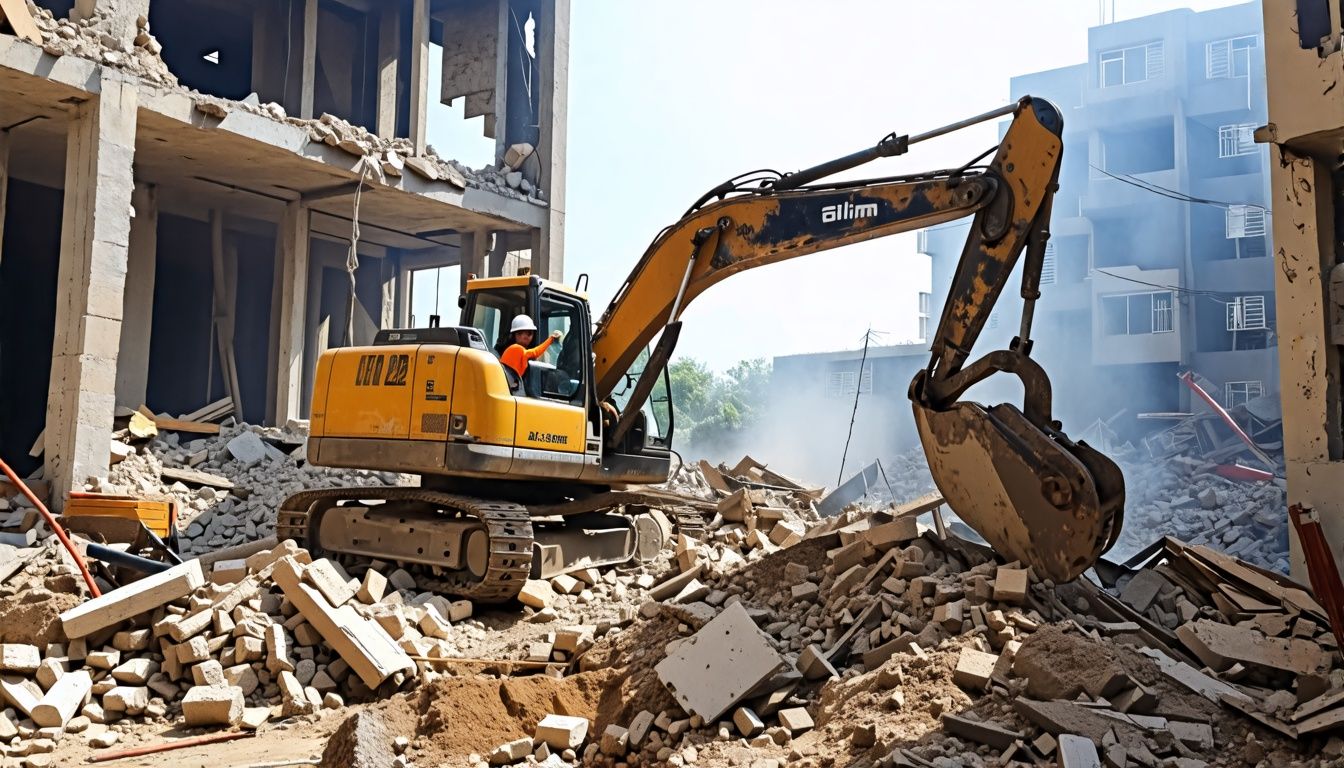
In the UK, asbestos is banned. We have established regulations, trained surveyors, licensed removal contractors, and a legal framework designed to protect workers and building occupants. In parts of Asia, Africa, and South America, asbestos is still being mined, manufactured into products, and used in construction — often with no meaningful protection for the people handling it.
This gap is not a regulatory footnote. It represents a profound and ongoing public health crisis — one with direct lessons for how we manage asbestos risk in the UK today.
Where Asbestos Is Still Being Used Around the World
Global asbestos use has declined significantly since the latter half of the twentieth century, but it has not stopped. Russia, China, and Kazakhstan remain the world’s dominant producers, accounting for the vast majority of global output. India, Indonesia, and several African nations continue to be significant consumers, largely in the construction sector.
More than 60 countries have implemented comprehensive bans on the production, import, and use of asbestos — including all EU member states and the UK. But a substantial number of developing nations either lack formal bans or lack the enforcement capacity to make existing rules meaningful.
The result is a two-speed world: one where asbestos is a managed legacy risk in ageing buildings, and another where it is still being actively introduced into the environment every day.
WHO Asbestos Health Risks: What Exposure Actually Does to the Human Body
Before examining how risk differs between countries, it is worth being precise about what asbestos does to the body. There is no safe level of asbestos fibre exposure — the risk is dose-dependent, but even relatively limited exposure can trigger fatal disease decades later.
Mesothelioma
Mesothelioma is a cancer of the mesothelium — the thin lining surrounding the lungs, heart, and abdomen. It is almost exclusively caused by asbestos exposure and is almost always fatal, typically within 12 to 18 months of diagnosis.
The UK has one of the highest rates of mesothelioma in the world, a direct consequence of widespread industrial asbestos use throughout the twentieth century. The disease has a latency period of 20 to 50 years, meaning someone exposed in the 1980s may only now be developing symptoms — which makes linking disease to exposure genuinely difficult.
Asbestosis
Asbestosis is a chronic, progressive lung disease caused by the inhalation of asbestos fibres over time. The fibres embed in lung tissue, causing irreversible scarring that progressively reduces lung capacity. There is no cure.
Symptoms — breathlessness, persistent cough, chest tightness — worsen over time and can be severely debilitating. Workers with prolonged high-level exposure face the greatest risk, though the disease has also been recorded in people with lower-level exposure over extended periods.
Lung Cancer and Other Malignancies
Asbestos is a recognised cause of lung cancer, and the risk is dramatically higher for those who smoke. Pleural plaques, pleural thickening, and diffuse pleural thickening are also associated with asbestos exposure, ranging from asymptomatic to significantly impairing lung function.
There is also evidence linking asbestos exposure to laryngeal and ovarian cancers. All of these conditions share one characteristic: they are preventable. The tragedy is that the exposure causing them often occurred years or decades before the dangers were properly communicated — or before those in authority chose to act on what was already known.
How Regulation Differs Between Developed and Developing Nations
The UK Regulatory Framework
The UK’s approach to asbestos is governed by the Control of Asbestos Regulations, which place clear legal duties on dutyholders — typically the owners or managers of non-domestic buildings. Those duties include identifying asbestos-containing materials (ACMs), assessing their condition and risk, and managing them safely.
Key requirements under UK law include:
- Conducting an asbestos management survey before a building is occupied or used
- Carrying out a demolition survey before any refurbishment or intrusive works begin
- Maintaining an asbestos register and a written management plan
- Ensuring workers who may disturb ACMs are trained and appropriately protected
- Using licensed contractors for the removal of high-risk asbestos materials
The Health and Safety Executive (HSE) enforces these regulations, and failure to comply can result in significant fines and prosecution. HSG264 — the HSE’s technical guidance on asbestos surveys — sets out detailed methodology for surveyors and is the benchmark against which survey quality is assessed.
This framework is not perfect. Enforcement can be inconsistent, and asbestos in domestic properties remains largely unregulated. But it represents a robust, evidence-based approach to managing a known hazard — one that has taken decades to build and that genuinely saves lives.
The Regulatory Reality in Developing Countries
In many developing nations, the picture is starkly different. Where regulations exist on paper, enforcement is often minimal. Occupational health and safety infrastructure may be underfunded, understaffed, or simply absent at site level.
Workers in asbestos mining, manufacturing, and construction may have no training, no protective equipment, and no access to health monitoring. Economic pressure compounds the problem — asbestos is cheap, and alternatives carry a higher upfront cost that is genuinely prohibitive in low-income construction markets.
This is not a justification. It is a structural problem that requires international support to resolve, not simply domestic willpower from nations that may lack the resources to act unilaterally.
The Public Health Burden: A Tale of Two Systems
How the UK Is Managing Its Asbestos Legacy
The UK is dealing with asbestos as a legacy issue. The material was used extensively throughout the twentieth century in everything from pipe lagging and ceiling tiles to floor adhesives and roofing sheets. It remains present in a significant proportion of buildings constructed before 2000.
The public health burden is real and ongoing. Mesothelioma deaths in the UK remain persistently high, and asbestosis continues to claim lives every year. The NHS bears the cost of diagnosing and treating these diseases, and specialist oncology services are under sustained pressure to manage an ageing cohort of patients with asbestos-related conditions.
There is also a significant legal and compensation infrastructure. The UK has well-established routes for asbestos disease sufferers to claim compensation from former employers or their insurers. This system, while imperfect, provides a degree of financial support to patients and their families — something largely absent in countries without comparable legal frameworks.
The Crisis Facing Developing Countries
Developing nations face a fundamentally different — and in many ways more acute — challenge. They are dealing not with a legacy of past use but with active, ongoing exposure combined with healthcare systems that are often ill-equipped to respond.
The barriers are significant and interconnected:
- Diagnostic capacity: Mesothelioma and asbestosis require specialist imaging and pathology to diagnose accurately. These resources are scarce in many low-income countries, meaning cases are frequently missed, misdiagnosed, or identified only in the terminal stages.
- Treatment access: Even where diagnosis occurs, access to oncology treatment — chemotherapy, immunotherapy, palliative care — is severely limited. Outcomes are correspondingly worse.
- Data gaps: Without robust occupational health surveillance or disease registries, the true scale of asbestos-related illness in many countries is unknown. Underreporting is endemic.
- Awareness: Workers may simply not know that the material they are handling is dangerous. Asbestos fibres are invisible to the naked eye, and symptoms do not appear for decades after exposure.
The cumulative effect is a silent epidemic in slow motion. Countries currently using asbestos extensively will face a rising tide of disease in the coming decades — precisely when their populations may be least prepared to manage it.
The Economic Argument: Short-Term Savings, Long-Term Costs
One of the most persistent arguments made by asbestos-producing nations is that the material supports economic development — jobs in mining, affordable housing construction, accessible roofing materials. There is a surface logic to this that cannot simply be dismissed.
But the economics look very different over a longer time horizon. The healthcare costs associated with asbestos-related diseases are enormous. Lost productivity from workers who develop fatal illnesses in their fifties and sixties represents a significant economic drag. And as global awareness grows, countries with active asbestos industries face reputational and trade consequences that can offset any short-term gains.
In developed countries, the legal costs alone have been staggering. Companies that manufactured or used asbestos products have faced decades of litigation, with some driven into bankruptcy by compensation claims. Insurers have had to set aside vast reserves for asbestos-related liability.
For developing nations, the lesson should be clear: the perceived savings from cheap asbestos are a false economy. The bill comes due — it just arrives a generation later, and it is far larger than the initial saving.
The UK vs High-Use Nations: A Study in Contrasts
The contrast between the UK’s experience and that of high-use countries is instructive. The UK banned asbestos comprehensively and has invested heavily in survey, management, and removal infrastructure. While mesothelioma deaths remain high due to historical exposure, the trajectory is downward — a direct result of stopping new exposure decades ago.
In countries where asbestos use continues at scale, the disease burden has not yet peaked. The 20-to-50-year latency period means that populations exposed today will not begin to experience peak rates of mesothelioma until well into the middle of this century. By that point, the scale of the crisis may be very difficult to manage.
Brazil offers a nuanced example. Once a major asbestos producer, Brazil implemented a national ban following a sustained legal and public health campaign. The transition was economically disruptive but demonstrated that change is achievable with sufficient political will and international support.
What the International Community Is Doing — and What Still Needs to Happen
The WHO has consistently called for a global ban on all forms of asbestos, and the International Labour Organisation has developed guidance on protecting workers from asbestos exposure. The Rotterdam Convention — an international treaty on hazardous chemicals — has been the site of ongoing debate about whether chrysotile (white asbestos) should be subject to prior informed consent procedures, a move blocked repeatedly by producing nations.
Progress has been frustratingly slow, but there are grounds for cautious optimism:
- More countries are implementing bans with each passing decade
- International research is building an evidence base that is increasingly difficult to ignore
- Civil society organisations in affected countries are advocating effectively for change
- Affordable alternative materials are becoming more accessible in developing markets
The direction of travel is clear. The question is whether it will happen quickly enough to prevent the next wave of preventable deaths.
What This Means for UK Property Owners and Managers Today
Understanding the global context of WHO asbestos health risks is not merely an academic exercise. It reinforces why the UK’s regulatory framework exists and why compliance with it matters — not just legally, but morally.
If you own or manage a non-domestic building constructed before 2000, the probability that it contains asbestos is high. The Control of Asbestos Regulations place a legal duty on you to know what is in your building, where it is, and what condition it is in. Ignorance is not a defence.
Practical steps you should be taking right now:
- Commission a management survey if you do not already have one. A management survey identifies the location and condition of any ACMs in your building so you can manage them safely.
- Keep your asbestos register up to date. Circumstances change — materials deteriorate, buildings are modified. Your register should reflect current conditions.
- Brief your contractors. Anyone carrying out maintenance or repair work should be shown the asbestos register before they start. This is a legal requirement, not a courtesy.
- Plan ahead for any refurbishment. If you are planning significant works, a refurbishment and demolition survey must be completed before work begins. This protects your contractors and keeps you legally compliant.
- Use accredited surveyors. Survey quality varies enormously. Always use a UKAS-accredited surveying company with demonstrable experience.
Whether you need an asbestos survey in London, an asbestos survey in Manchester, or an asbestos survey in Birmingham, the principles are the same: know what you have, manage it properly, and act before problems arise rather than after.
Frequently Asked Questions
What are the main WHO asbestos health risks identified by medical research?
The WHO identifies mesothelioma, lung cancer, asbestosis, and laryngeal and ovarian cancers as the primary asbestos-related diseases. All are caused or exacerbated by the inhalation of asbestos fibres, and all are preventable through eliminating exposure. There is no established safe level of asbestos fibre exposure — any exposure carries some degree of risk.
Why does the UK still have high rates of mesothelioma if asbestos is banned?
Mesothelioma has a latency period of 20 to 50 years between exposure and the development of disease. The UK’s high rates today reflect the widespread use of asbestos in industry, shipbuilding, and construction during the twentieth century. As the cohort of workers exposed during that era ages, mesothelioma rates are expected to gradually decline — but this process takes decades.
Is asbestos in my building dangerous if it is not disturbed?
Asbestos-containing materials that are in good condition and are not being disturbed do not typically release fibres and do not pose an immediate risk. The danger arises when ACMs are damaged, deteriorating, or disturbed by maintenance or construction work. This is why identifying and monitoring ACMs through a management survey is so important — so that deteriorating materials can be managed or removed before they become a hazard.
What is the difference between a management survey and a demolition survey?
A management survey is designed for buildings in normal use. It locates and assesses ACMs that could be disturbed during routine occupation and maintenance. A demolition or refurbishment survey is far more intrusive — it involves accessing all areas of a building, including behind walls and above ceilings, to locate all ACMs before significant works begin. Both are required under different circumstances by the Control of Asbestos Regulations.
Do developing countries face worse asbestos health outcomes than the UK?
In many cases, yes — for several compounding reasons. Active asbestos use means ongoing new exposure rather than a managed legacy. Healthcare systems in many developing nations lack the diagnostic and treatment capacity to respond effectively to asbestos-related diseases. And without robust disease surveillance, the true scale of harm is often not captured in official data. The WHO and international health bodies have consistently highlighted this as a major and growing global public health concern.
Talk to Supernova Asbestos Surveys
With over 50,000 surveys completed nationwide, Supernova Asbestos Surveys is one of the UK’s most experienced asbestos surveying companies. Our UKAS-accredited surveyors work across England and Wales, delivering management surveys, refurbishment and demolition surveys, and asbestos testing services to property owners, managers, and contractors.
If you are unsure about your legal obligations, concerned about asbestos in your building, or need a survey completing quickly and accurately, get in touch with our team today.
Call us on 020 4586 0680 or visit asbestos-surveys.org.uk to request a quote or find out more about our services.