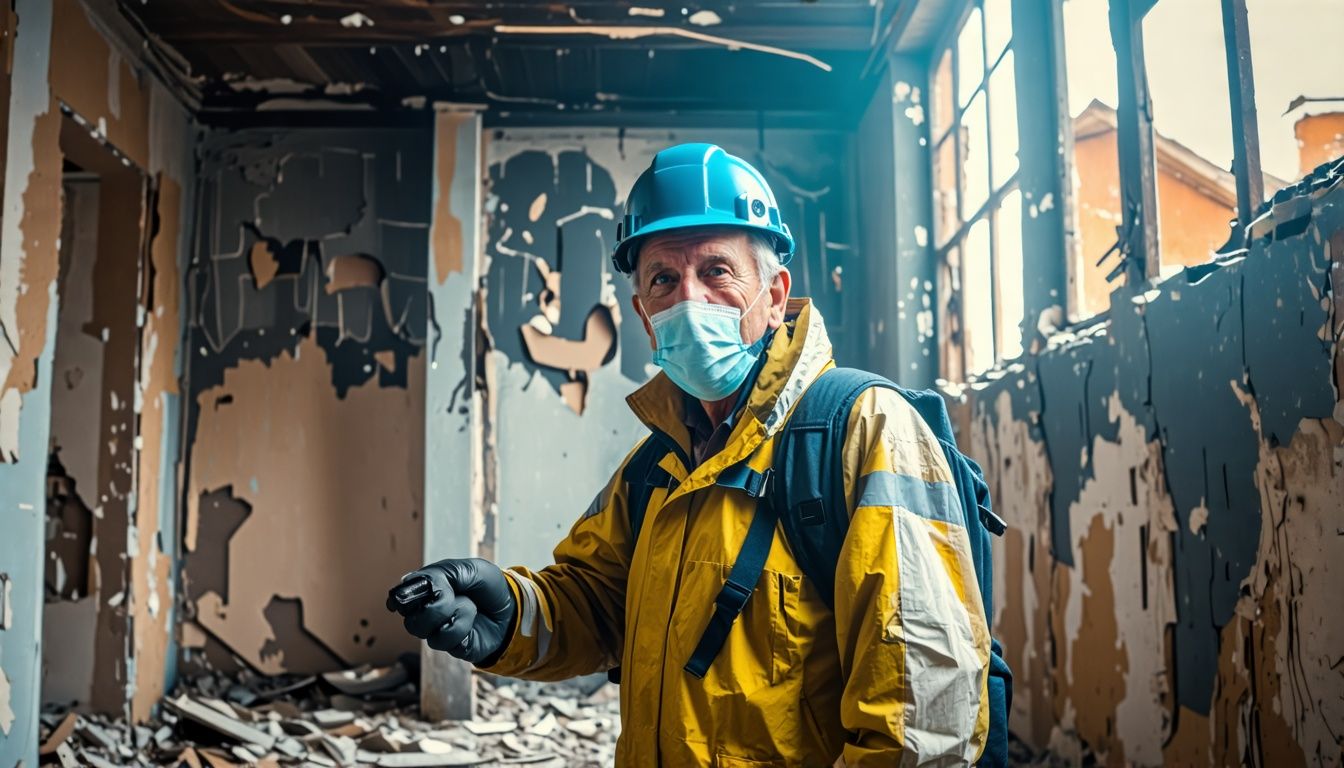
From Wonder Material to Public Health Crisis: How the Discovery of Health Risks Affected the Use of Asbestos
Asbestos was once celebrated as one of the most remarkable industrial materials ever discovered. Heat-resistant, durable, cheap to produce, and extraordinarily versatile — it seemed almost too good to be true. As it turned out, it was.
Understanding how has the discovery of health risks affected the use of asbestos is not a purely historical question. The legacy of this material is embedded in UK buildings, in occupational health law, and in the thousands of people still receiving diagnoses today from exposures that happened decades ago.
This is the story of how science, regulation, and hard-won legal accountability transformed one of the world’s most widely used industrial materials into a banned substance — and what that means for anyone responsible for a building in the UK today.
The Early Warning Signs: When the Evidence Began to Accumulate
The first credible concerns about asbestos did not emerge from government agencies or academic institutions. They came from factory floors, mines, and the observations of coroners and medical inspectors who noticed that asbestos workers were dying young, with distinctive and severe lung damage.
By the early 1900s, workers in asbestos textile mills were developing a debilitating condition characterised by progressive lung scarring. Breathing became increasingly difficult. The pattern was unmistakable to anyone paying attention.
UK insurance companies had begun refusing life cover to asbestos workers by the 1930s — a commercially driven acknowledgement that the industry understood the risks long before the public did. Asbestosis was formally recognised as an occupational disease in Britain in 1931, making the UK one of the first countries to acknowledge the link officially.
That recognition, however, did not immediately translate into protective action at the scale the evidence demanded. The gap between scientific understanding and regulatory response would cost many lives.
The Cancer Link: Mesothelioma and the Point of No Return
Establishing the connection between asbestos and cancer took longer. Mesothelioma — a rare and aggressive cancer affecting the lining of the lungs, abdomen, or heart — had been observed sporadically, but its cause remained unclear for many years.
Research through the mid-20th century proved conclusively that asbestos exposure dramatically elevated the risk of both lung cancer and mesothelioma. Studies of insulation workers showed rates of disease far exceeding those of the general population. These findings were impossible to dismiss or minimise.
The International Agency for Research on Cancer subsequently classified all forms of asbestos as confirmed human carcinogens — the highest risk category. The conclusion that followed was stark and unambiguous: there is no safe level of exposure to asbestos fibres.
That single finding reshaped industrial policy, occupational health law, and building management practice across the developed world. It is the scientific bedrock on which all current UK asbestos regulation rests.
Why Asbestos Was So Widely Used in the First Place
To appreciate the scale of the challenge the UK now faces, you need to understand just how enthusiastically asbestos was adopted across industries from the 1950s through to the 1980s. This was not a niche or specialist material — it was woven into the fabric of British construction, shipbuilding, and manufacturing at an extraordinary scale.
Common applications included:
- Sprayed coatings on steel beams and ceilings for fire protection
- Insulation boards around boilers, pipes, and heating ducts
- Ceiling tiles and floor tiles
- Roofing sheets and guttering in cement-bonded form
- Textured decorative coatings, including Artex
- Rope seals and gaskets in industrial plant
- Shipbuilding — extensively throughout engine rooms and bulkheads
- Schools, hospitals, and public buildings of virtually every type
The majority of UK buildings constructed before 2000 are likely to contain some form of asbestos-containing material (ACM). That is the scale of the legacy we are managing today.
The sheer breadth of its use explains why the health consequences were so far-reaching — and why the regulatory response, when it finally came, had to be so substantial.
How the Discovery of Health Risks Affected the Use of Asbestos Through UK Regulation
British regulation tightened progressively as the evidence mounted, though the response was slower than the science warranted. The UK took a staged approach to restricting asbestos rather than implementing an immediate blanket prohibition.
The Phased Banning of Asbestos Types
Different forms of asbestos were banned at different points, reflecting both the evolving science and the commercial pressures of the time:
- Blue asbestos (crocidolite) — the most dangerous form — was banned in 1985
- Brown asbestos (amosite) was banned in 1985 alongside crocidolite
- White asbestos (chrysotile) — the most commonly used form — remained legal until 1999
The complete ban on the import, supply, and use of all asbestos in the UK came into force in 1999, making the UK one of the earlier major economies to implement a comprehensive prohibition.
The Control of Asbestos Regulations
The current legislative framework is the Control of Asbestos Regulations, enforced by the Health and Safety Executive (HSE). These regulations place clear legal duties on those responsible for non-domestic premises through the so-called “duty to manage” and set out requirements for:
- Identifying and recording the location and condition of ACMs in buildings
- Assessing and managing the risk those materials present
- Providing information to anyone who may disturb ACMs during maintenance or construction work
- Ensuring that any work with asbestos is carried out only by appropriately trained and, where required, licensed contractors
The HSE’s guidance document HSG264 provides the technical framework for how asbestos surveys should be planned and conducted. Failure to comply with the regulations is not a technicality — it carries serious legal consequences and, more importantly, puts people at genuine risk of fatal disease.
The Health Conditions Caused by Asbestos Exposure
When asbestos-containing materials are disturbed, microscopic fibres become airborne. Once inhaled, they lodge in lung tissue and the surrounding membranes and cannot be expelled by the body. Over time, this causes progressive and irreversible damage.
Asbestosis
Asbestosis is chronic scarring of the lung tissue caused by accumulated fibre deposits. It results in progressively worsening breathlessness and a significantly reduced quality of life. There is no cure, and the condition is not reversible.
Mesothelioma
Mesothelioma is an aggressive cancer of the mesothelial lining — most commonly affecting the pleura, the lining of the lungs. It carries a very poor prognosis. The latency period between first exposure and diagnosis is typically between 20 and 50 years, which is why new cases are still appearing today from exposures that occurred decades ago.
Lung Cancer
Asbestos exposure significantly increases the risk of lung cancer, with the risk multiplied further in those who also smoke. This combination is particularly lethal and accounts for a substantial proportion of asbestos-related deaths in the UK each year.
Pleural Plaques and Pleural Thickening
Thickening or calcification of the pleural lining can occur without developing into cancer but may restrict lung function and cause discomfort. Pleural plaques are often the first indicator that significant asbestos exposure has occurred historically.
The long latency period of these conditions is one of the most important and frequently misunderstood aspects of asbestos risk. A person exposed in the 1970s may only be receiving a diagnosis today. The UK still records thousands of mesothelioma deaths each year — a figure that reflects past industrial exposure rather than current workplace failures, though it serves as a constant reminder of why the current regulations exist.
The Litigation Legacy: Accountability Through the Courts
As the medical evidence became irrefutable and workers began dying in large numbers, the courts became a significant arena for asbestos-related accountability. UK asbestos litigation has resulted in some of the largest occupational disease compensation claims in legal history.
Workers — and in some cases their families — pursued employers and manufacturers for negligence, arguing successfully that companies knew or ought to have known about the dangers and failed to protect their workforce. These cases established important legal precedents around employer duty of care that continue to shape health and safety law.
The UK government established statutory compensation schemes for those with asbestos-related diseases, including provisions under the Pneumoconiosis etc. (Workers’ Compensation) Act and the Diffuse Mesothelioma Payment Scheme. These schemes exist because many employers and their insurers no longer exist by the time a diagnosis is made.
If you or a family member has been diagnosed with an asbestos-related condition, seeking specialist legal advice promptly is essential — time limits apply to compensation claims.
The Global Picture: A Patchwork of Prohibition
The UK sits within a group of countries that have implemented comprehensive asbestos bans. The European Union banned asbestos across all member states. Australia banned all forms in 2003. Canada followed in 2018.
However, a significant number of countries — including Russia, India, and parts of central Asia — continue to mine, export, and use chrysotile asbestos in substantial quantities. Russia remains one of the world’s largest asbestos producers.
The global picture is therefore far from resolved. Asbestos-containing products can still enter international supply chains in ways that require vigilance. For those working in UK construction or property management, this is a reminder that the risk is not solely historical — materials sourced internationally warrant careful scrutiny and verification.
Managing Asbestos in UK Buildings Today
The complete ban on asbestos use does not mean the problem is resolved. It means the problem is fixed in place — no new asbestos is being installed — but the existing stock of ACMs in UK buildings will remain a management issue for decades to come.
The Duty to Manage
If you are a building owner, facilities manager, landlord, or employer responsible for non-domestic premises built before 2000, you have a legal duty to manage asbestos. In practical terms, this means commissioning an management survey to identify any ACMs within the property, maintaining an up-to-date asbestos register, and implementing a management plan that is reviewed regularly.
ACMs that are in good condition and undisturbed are generally safer left in place than removed — it is disturbance that releases fibres. But that assessment must be made by a qualified surveyor, not assumed by a building manager working from guesswork.
Before Refurbishment or Demolition
A management survey is not sufficient before significant building work. The Control of Asbestos Regulations require a demolition survey to be completed before any work that will disturb the fabric of a building. This is a more intrusive survey, designed to locate ACMs in areas that will be affected by planned works.
Skipping this step is not only illegal — it puts workers and building occupants at serious risk, and it puts the responsible party in line for prosecution by the HSE.
Ongoing Re-Inspection
Managing asbestos is not a one-off task. Known ACMs must be monitored over time to check whether their condition is deteriorating. A periodic re-inspection survey keeps your asbestos register current and ensures that any change in condition is identified and acted upon before fibres are released into the building environment.
The frequency of re-inspection will depend on the type, location, and condition of the materials identified. Your surveyor will advise on an appropriate schedule.
Who Bears Responsibility Under Current UK Law?
One of the most significant ways that how the discovery of health risks affected the use of asbestos has manifested in law is through the allocation of clear, enforceable responsibilities. The duty to manage asbestos falls on the “dutyholder” — typically the person or organisation with control over the premises.
This can include:
- Commercial landlords and property owners
- Facilities and estate managers
- Local authorities and housing associations
- School governors and NHS trust managers
- Employers who occupy and control their own premises
The duty is not optional, and ignorance of the regulations is not a defence. The HSE has the power to issue improvement notices, prohibition notices, and to pursue criminal prosecution where dutyholders have failed to meet their obligations.
Understanding your legal position is the first step. Commissioning a proper survey is the second.
Asbestos Surveys Across the UK: Where Supernova Operates
The need for professional asbestos surveying is nationwide. Whether you manage a single commercial unit or a portfolio of properties across multiple cities, the legal obligations are the same and the risks are equally real.
Supernova Asbestos Surveys provides accredited surveying services across the country. If you need an asbestos survey London for a commercial or public building in the capital, our teams are experienced across all London boroughs and property types.
For those managing property in the North West, our asbestos survey Manchester service covers the city and surrounding areas, with surveyors who understand the industrial heritage of the region and the ACMs commonly found in its building stock.
In the Midlands, our asbestos survey Birmingham service supports property owners and managers across the city and beyond, with the same rigorous standards applied regardless of location.
What a Professional Asbestos Survey Actually Involves
There is sometimes confusion about what an asbestos survey entails and why it must be carried out by a qualified professional. The HSE’s guidance document HSG264 sets out the standards that surveys must meet, and reputable surveying companies hold UKAS accreditation to demonstrate they operate to those standards.
A management survey involves a thorough visual inspection of accessible areas, with sampling of materials suspected to contain asbestos. Samples are analysed in an accredited laboratory. The resulting report details the location, type, condition, and risk rating of any ACMs found, along with recommendations for management or remediation.
A refurbishment and demolition survey is more invasive — it may involve opening up walls, floors, and ceilings to access areas that would be disturbed during planned works. It is designed to ensure that no ACMs are encountered unexpectedly once contractors are on site.
Neither survey should be treated as a box-ticking exercise. The information they generate is the foundation of your legal compliance and your duty of care to everyone who enters the building.
Frequently Asked Questions
How has the discovery of health risks affected the use of asbestos in the UK specifically?
The discovery that asbestos causes fatal diseases including mesothelioma, lung cancer, and asbestosis led to a series of increasingly strict regulations in the UK. Different types of asbestos were progressively banned, with a complete prohibition on all asbestos use coming into force in 1999. The Control of Asbestos Regulations now impose legal duties on building owners and managers to identify, assess, and manage any asbestos-containing materials that remain in existing buildings.
Is asbestos still dangerous in buildings today, even though it is banned?
Yes. The ban prevents new asbestos from being installed, but it does not remove the asbestos already present in buildings constructed before 2000. Asbestos-containing materials that are in good condition and left undisturbed pose a low risk. The danger arises when those materials are disturbed — during maintenance, refurbishment, or demolition — releasing microscopic fibres that can be inhaled. This is why ongoing management, regular re-inspection, and pre-works surveys remain legally required.
What diseases are caused by asbestos exposure?
Asbestos exposure is linked to several serious and often fatal conditions: asbestosis (progressive lung scarring), mesothelioma (an aggressive cancer of the lung or abdominal lining), lung cancer, and pleural thickening or pleural plaques. All of these conditions have a long latency period — symptoms may not appear until 20 to 50 years after exposure occurred, which is why new diagnoses continue to be made today from historical exposures.
Who is legally responsible for managing asbestos in a building?
Under the Control of Asbestos Regulations, the legal duty falls on the “dutyholder” — the person or organisation that has control over the non-domestic premises. This typically includes commercial landlords, facilities managers, local authorities, school governors, and employers who occupy their own premises. The duty to manage asbestos includes commissioning appropriate surveys, maintaining an asbestos register, and implementing a management plan.
Do I need an asbestos survey before renovation work?
Yes. A standard management survey is not sufficient before refurbishment or demolition work. The Control of Asbestos Regulations require a refurbishment and demolition survey to be carried out before any work that will disturb the fabric of a building. This more intrusive survey is designed to locate all asbestos-containing materials in the areas that will be affected, ensuring contractors are not unknowingly exposed to fibres during the works.
Speak to Supernova Asbestos Surveys
With over 50,000 surveys completed nationwide, Supernova Asbestos Surveys is one of the UK’s most experienced and trusted asbestos surveying companies. Our UKAS-accredited surveyors operate across England, Scotland, and Wales, providing management surveys, refurbishment and demolition surveys, and re-inspection services to building owners, facilities managers, local authorities, and contractors.
If you are unsure about your legal obligations, concerned about asbestos in a building you manage, or need a survey completing before planned works, contact us today.
Call us on 020 4586 0680 or visit asbestos-surveys.org.uk to request a quote or find out more about our services.