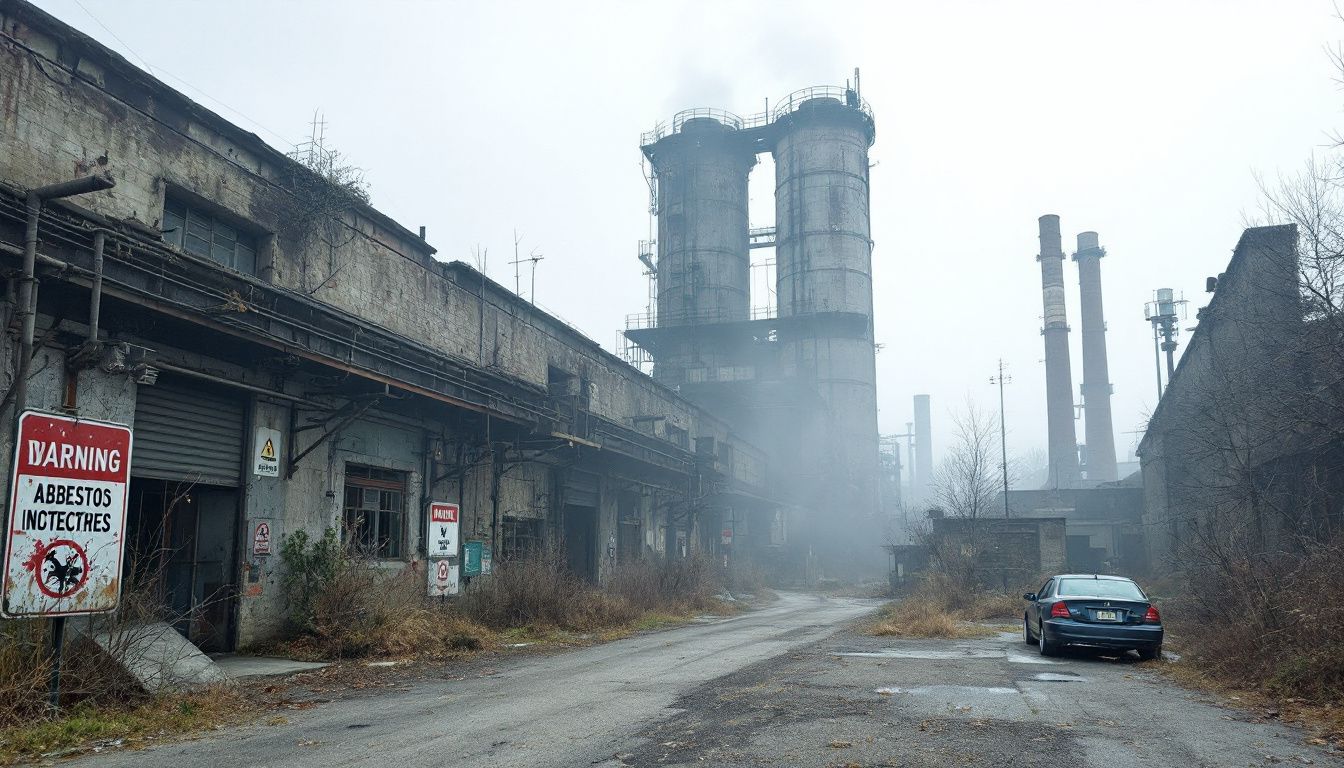
The UK Asbestos Ban: What It Means, Who It Protects, and What You Still Need to Do
The asbestos ban in the United Kingdom was not handed down in a single piece of legislation. It was hard-won over decades — shaped by mounting medical evidence, relentless campaigning by affected workers and their families, and the devastating human cost of a material that industry once considered indispensable.
If you own, manage, or have responsibility for a building constructed before 1999, the history of the ban and its limits are not just background knowledge. They have direct implications for your legal obligations right now.
How the UK Arrived at an Asbestos Ban
Asbestos has been in use for thousands of years, prized for its extraordinary resistance to heat, fire, and chemical damage. By the late 19th century, industrial-scale mining had turned it into a cornerstone of modern construction, shipbuilding, and manufacturing.
In the UK, use peaked through the 1960s and 1970s — the same period when evidence of its lethal consequences was becoming impossible to dismiss. What is often overlooked is that UK regulators were among the first in the world to act. Asbestos industry regulations were introduced as far back as the 1930s, following documented cases of lung disease among factory workers.
Despite this early awareness, widespread use continued — partly because the full scale of the health consequences was not yet understood, and partly because the economic value of asbestos was considered too significant to sacrifice. The result was a slow, painful reckoning that would take another half-century to resolve.
The Phased UK Asbestos Ban: A Timeline
The UK did not prohibit all asbestos in a single stroke. Restrictions were introduced progressively, targeting the most dangerous forms first:
- Blue asbestos (crocidolite) — banned in 1985
- Brown asbestos (amosite) — banned in 1985 alongside crocidolite
- White asbestos (chrysotile) — banned in 1999
The 1999 chrysotile ban brought the UK in line with European Union policy, following an EU Directive requiring all member states to prohibit asbestos use. The UK acted ahead of the EU’s deadline.
Since 1999, the import, supply, and use of all forms of asbestos has been prohibited in the UK. That prohibition, however, only applies to new use. It does nothing about the asbestos already installed in buildings constructed before the ban took effect — and that is where the real, ongoing challenge lies.
How the UK Asbestos Ban Compares Internationally
The UK’s position places it among the earlier-acting nations globally. The international picture, however, remains deeply uneven. Here is how the UK’s timeline compares with other countries:
- Iceland — banned asbestos in 1983
- Norway — banned in 1984
- Denmark — banned in 1986
- Sweden — banned in 1989
- Germany and the Netherlands — banned in 1993
- France — banned in 1997
- UK — full ban completed in 1999
- Australia — ban completed in 2003
- Japan — banned in 2004
- New Zealand — banned in 2016
- Canada — banned in 2018, despite being one of the world’s largest historical producers
Sweden’s experience offers a particularly instructive example of why early action matters. Following its ban, Sweden recorded a measurable reduction in mesothelioma cases among men born after 1955 — a direct result of reduced occupational exposure over time.
Countries Where Asbestos Use Continues
Despite significant global progress, asbestos remains in active use in a number of countries. Russia remains the world’s largest producer and continues to export substantial volumes. India operates hundreds of asbestos-cement manufacturing facilities, and several countries across Asia, Africa, and Latin America continue to use asbestos in construction materials — often citing the cost of alternatives as the barrier to change.
This ongoing global use sustains supply chains that many public health organisations argue should be shut down entirely. It also means that in countries without robust bans, asbestos-containing materials continue to be installed in new buildings, creating future liability that those nations will inherit for decades to come.
The Economic Challenges Behind a Global Asbestos Ban
One of the reasons a complete global asbestos ban remains out of reach is economic. Canada’s experience illustrates this clearly. Despite being a major historical producer, Canada closed its last two asbestos mines in 2011 and eventually implemented a full ban in 2018. The closure of those mines resulted in significant job losses in communities that had been economically dependent on the industry for generations.
South Africa ended asbestos mining in 2001, with the loss of a substantial number of jobs across mining communities. These are not abstract figures — they represent communities that faced genuine hardship as a direct result of doing the right thing for public health.
The market for non-asbestos alternatives has grown substantially. Products including glass fibre, cellulose fibre, and synthetic mineral fibres now perform many of the functions that asbestos once served. As the cost of these alternatives falls and their performance improves, the economic case for maintaining asbestos industries becomes progressively harder to sustain.
Why the Asbestos Ban Alone Does Not Protect You
This is where many property owners make a genuinely dangerous assumption. They hear that asbestos is banned and conclude that asbestos is no longer a problem. That logic is fatally flawed.
The ban prevents new asbestos from being installed. It does nothing about the asbestos already present in the millions of buildings constructed before 1999 across the UK. Schools, offices, residential blocks, warehouses, hospitals — a vast proportion of the UK’s built environment was constructed during the decades when asbestos use was at its height.
Asbestos-containing materials (ACMs) that remain undisturbed and in good condition present a lower immediate risk. The danger arises when those materials are disturbed — through renovation, maintenance work, or simple deterioration — releasing fibres into the air.
When inhaled, those fibres can cause mesothelioma, asbestosis, and lung cancer — diseases that can take 20 to 50 years to develop after exposure. That latency period is precisely why the consequences of past use continue to be felt today. The asbestos ban was a necessary and vital step. But it marked the beginning of a long management challenge, not the end of one.
Your Legal Obligations Under the Control of Asbestos Regulations
The legal framework governing asbestos management in the UK is the Control of Asbestos Regulations. These regulations impose a clear duty to manage asbestos on anyone who owns, occupies, or has responsibility for non-domestic premises.
Under Regulation 4 — the Duty to Manage — you are required to:
- Identify whether asbestos-containing materials are present in your building
- Assess the condition and risk of any ACMs found
- Produce and maintain an up-to-date asbestos register
- Implement a management plan to control the risk
- Ensure anyone who might disturb ACMs is made aware of their location
Failure to comply is not a technicality. It carries the risk of significant fines and, far more seriously, the risk of exposing workers, contractors, and building occupants to a known carcinogen.
HSE guidance published in HSG264 — Asbestos: The Survey Guide — sets out exactly how surveys should be conducted and what your management plan must contain. Supernova Asbestos Surveys follows HSG264 standards on every job we carry out.
What Type of Asbestos Survey Do You Need?
Not all surveys are the same, and choosing the wrong type can leave you legally exposed and people on site at risk. Here is a straightforward breakdown of which survey applies to your situation.
Management Survey
A management survey is the standard survey required for any non-domestic building in normal occupation and use. It identifies the location and condition of ACMs that could be disturbed during everyday activities or routine maintenance, and provides the basis for your asbestos management plan.
If you are responsible for a commercial property, school, or any non-domestic building without an up-to-date asbestos register, this is where you start. Operating without one puts you in breach of the Control of Asbestos Regulations.
Refurbishment Survey
If you are planning renovation, refurbishment, or any work that will disturb the building fabric, you need a refurbishment survey before work begins. This is a more intrusive survey that accesses areas a management survey would not — including voids, ceiling spaces, and structural elements.
Carrying out refurbishment work without this survey in place is both illegal and extremely dangerous. Contractors disturbing unidentified ACMs is one of the most common causes of serious asbestos exposure incidents in the UK.
Demolition Survey
Before any building is demolished, a demolition survey is required. This is the most thorough and intrusive type of survey, designed to locate all ACMs throughout the entire structure — including those that would not normally be accessible during occupation. It must be completed before demolition work commences, without exception.
Re-inspection Survey
Once you have an asbestos register in place, your management plan must include periodic checks on the condition of known ACMs. A re-inspection survey provides a formal, documented assessment of whether the condition of those materials has changed and whether your risk rating needs updating.
Most management plans require re-inspections annually, though frequency may vary depending on the condition and accessibility of the materials. Skipping re-inspections is a common compliance gap — and one that the HSE takes seriously.
What If You Are Unsure Whether Asbestos Is Present?
If you are dealing with a property where you have no asbestos records and are uncertain whether materials contain asbestos, the safest first step is to get samples tested. Supernova offers a testing kit that allows you to collect samples from suspect materials and have them analysed at a UKAS-accredited laboratory.
This is a cost-effective way to gain certainty before committing to a full survey. That said, if multiple materials are suspect or you are preparing for refurbishment work, a full survey will always be the more thorough and legally robust option.
Asbestos and Fire Safety: A Connection Often Overlooked
There is one aspect of asbestos management that frequently goes unaddressed: its relationship to fire safety. Asbestos was widely used as a fire-resistant material, and in many older buildings, ACMs were installed specifically to provide fire protection to structural elements, ceilings, and service ducts.
When asbestos management plans are developed, fire risk must be considered alongside asbestos risk. A fire risk assessment carried out alongside your asbestos survey gives you a complete picture of the hazards present in your building and ensures your management approach addresses both.
In some cases, removing or encapsulating an ACM that serves a fire protection function requires careful planning to ensure that protection is maintained by other means. Managing one hazard in isolation from the other is not good practice — and in some circumstances, it can create new risks in the process of resolving old ones.
Asbestos Surveys Across the UK: We Come to You
The duty to manage asbestos applies regardless of where your property is located. Supernova Asbestos Surveys operates nationwide, with specialist teams available across all major cities and regions.
If you need an asbestos survey in London, our teams cover the full capital and surrounding areas, from the City to the outer boroughs. For those in the North West, our asbestos survey in Manchester service covers Greater Manchester and the surrounding region. In the Midlands, our asbestos survey in Birmingham team is on hand for commercial and industrial properties across the city and beyond.
Wherever your property is located, our UKAS-accredited surveyors will attend promptly, carry out the correct type of survey for your situation, and deliver a clear, actionable report that satisfies your legal obligations.
The Bigger Picture: What the Asbestos Ban Achieved and What Remains
The UK’s asbestos ban was a landmark achievement in occupational health. It removed a lethal material from the supply chain and sent a clear signal that workers’ lives matter more than industrial convenience. The countries that acted earliest have, over time, seen the public health benefits reflected in falling rates of asbestos-related disease among younger generations.
But the legacy of decades of unrestricted use cannot be legislated away. The fibres already embedded in the fabric of the UK’s buildings will remain a risk for as long as those buildings stand — and in many cases, well beyond that, given the long latency of asbestos-related diseases.
The practical implication is straightforward: the asbestos ban changed what could be built. It did not change what already exists. For anyone responsible for a pre-1999 building, active, documented management of that risk is not optional — it is a legal duty and a moral one.
Understanding the history of the ban helps explain why the regulations are structured the way they are. The Duty to Manage under the Control of Asbestos Regulations exists precisely because prohibition alone was never going to be sufficient. The material is still there. The obligation to manage it safely falls on you.
Frequently Asked Questions
When was asbestos banned in the UK?
The UK introduced a phased asbestos ban over several decades. Blue asbestos (crocidolite) and brown asbestos (amosite) were banned in 1985. White asbestos (chrysotile) — the most commonly used type — was banned in 1999. Since 1999, the import, supply, and use of all forms of asbestos has been prohibited in the UK.
Does the asbestos ban mean my building is safe?
Not necessarily. The ban prevents new asbestos from being installed, but it has no effect on the asbestos already present in buildings constructed before 1999. If your building dates from before the ban, asbestos-containing materials may still be present and will need to be identified, assessed, and managed in accordance with the Control of Asbestos Regulations.
Am I legally required to have an asbestos survey?
If you own, occupy, or manage a non-domestic building, you have a legal Duty to Manage asbestos under the Control of Asbestos Regulations. This requires you to identify whether ACMs are present, assess the risk, and maintain an asbestos management plan. A management survey is typically the first step in meeting that obligation. Domestic properties are not subject to the same duty, though surveys are strongly advisable before any renovation work.
Which countries still use asbestos?
Despite the UK and many other nations having implemented a full asbestos ban, asbestos remains in active use in several countries. Russia is the world’s largest current producer and exporter. Significant use also continues in parts of Asia, Africa, and Latin America, where the cost of alternatives remains a barrier to change. The World Health Organisation has called for a global ban, but progress remains uneven.
What happens if I don’t comply with asbestos regulations?
Failure to comply with the Control of Asbestos Regulations can result in significant financial penalties and, in serious cases, prosecution. More critically, non-compliance puts workers, contractors, and building occupants at risk of exposure to a substance that causes fatal diseases including mesothelioma and lung cancer. The HSE actively enforces these regulations and carries out inspections across a wide range of premises.
Speak to Supernova Asbestos Surveys Today
Supernova Asbestos Surveys has completed over 50,000 surveys across the UK. Our UKAS-accredited team carries out management surveys, refurbishment surveys, demolition surveys, re-inspection surveys, and fire risk assessments — all conducted to HSG264 standards and delivered with clear, actionable reporting.
If you are unsure about your obligations, have a survey due, or are about to start work on a pre-1999 building, call us on 020 4586 0680 or visit asbestos-surveys.org.uk to get started. Do not wait until a problem forces your hand — the time to act on asbestos is before anyone is put at risk.