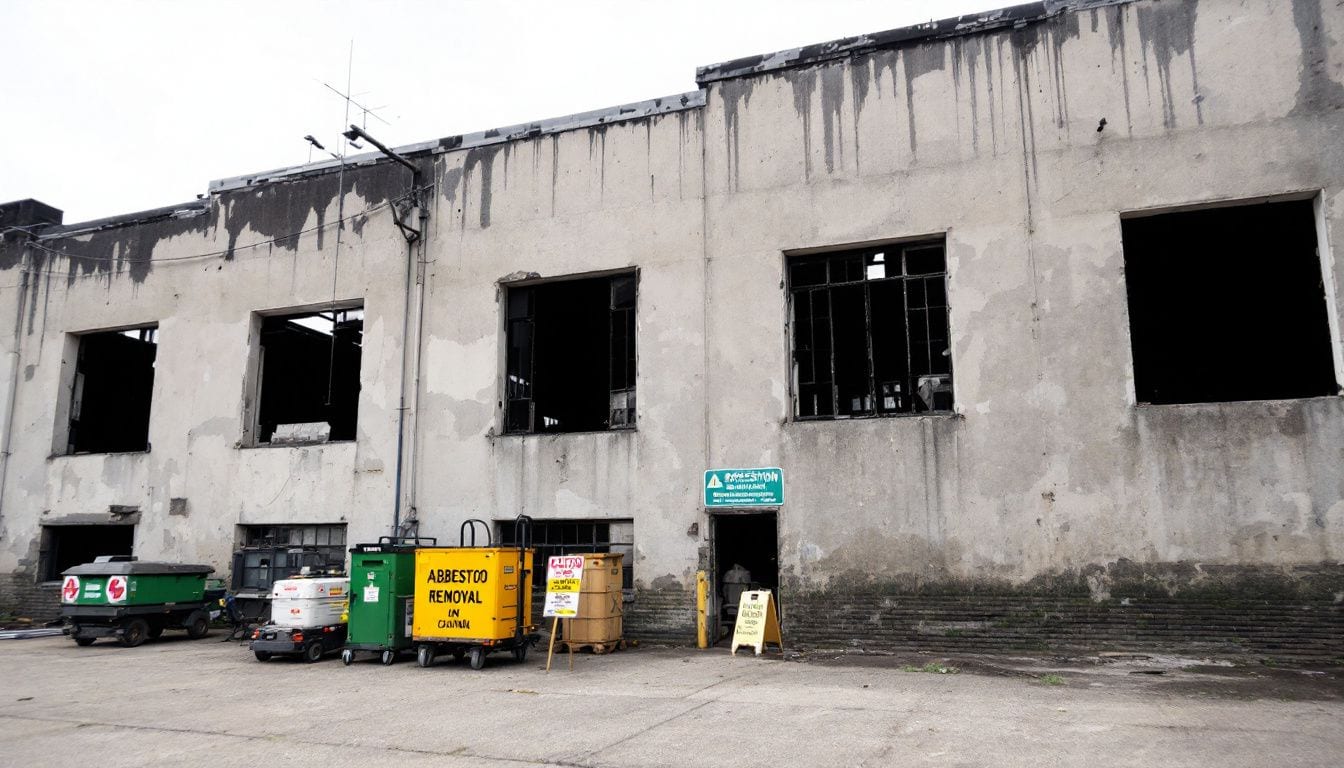
The Fight to Build a Future Without Asbestos: Eradicating the Material and Its Legacy
Asbestos does not announce itself. It hides inside walls, ceiling tiles, pipe lagging, and floor coverings — silent, invisible, and still deadly decades after the UK banned its use. The fight to build a future without asbestos, to eradicate the material and its legacy from our buildings and our communities, remains one of the most pressing public health challenges this country faces. Despite genuine progress, the work is far from over.
Why Asbestos Remains a Live Threat Across the UK
The UK banned asbestos in November 1999 — a genuinely significant milestone that placed Britain among the first major economies to impose a total prohibition. But banning the import and use of a material does not make the material already in place disappear.
An estimated 1.5 million buildings across the UK still contain asbestos-containing materials (ACMs). Schools, hospitals, offices, factories, and homes built before the ban are all candidates. Every time someone drills a wall, cuts a tile, or disturbs an old ceiling, there is a risk of releasing fibres capable of causing mesothelioma, lung cancer, and asbestosis.
Asbestos-related diseases kill around 5,000 people in the UK every year — more than road traffic accidents. What makes this figure particularly sobering is that many of those deaths are in people who never worked directly with the material. Teachers, nurses, office workers, and tradespeople who simply spent time in affected buildings are among those dying today from exposures that happened decades ago.
The latency period for mesothelioma — often 20 to 50 years between exposure and diagnosis — means the consequences of past failures are still playing out. The fight to eradicate asbestos and its legacy is not historical. It is happening right now.
The Regulatory Framework Driving the Fight Forward
Regulation is the backbone of the UK’s approach to managing asbestos risk. The Control of Asbestos Regulations sets out the legal obligations for anyone who owns, manages, or works in non-domestic premises. At the centre of this framework is the duty to manage — the legal requirement for dutyholders to identify ACMs, assess their condition, and put a plan in place to manage the risk they present.
The HSE’s guidance document HSG264 provides the definitive framework for how asbestos surveys should be conducted. It sets out the primary survey types and specifies the standards that surveyors must meet. Any survey that does not follow HSG264 is not fit for purpose — full stop.
Regulation 4: The Duty to Manage
Regulation 4 of the Control of Asbestos Regulations is arguably the most important provision in the entire framework. It places a clear, enforceable obligation on dutyholders to take asbestos management seriously — not as a box-ticking exercise, but as an ongoing responsibility.
In practice, this means commissioning a management survey to identify and assess any ACMs within the building, creating a formal asbestos register, and reviewing that register regularly. It also means ensuring that anyone who might disturb those materials — contractors, maintenance workers, cleaning staff — is made aware of where the ACMs are and what precautions to take.
Training and Awareness
Regulation 4 also mandates that workers who may encounter asbestos receive appropriate training. Tens of thousands of individuals across the UK receive asbestos awareness training each year — covering construction, maintenance, demolition, and non-trade sectors including education and healthcare.
This training is not optional. Workers who disturb asbestos without proper awareness put themselves and everyone around them at serious risk. Proper asbestos awareness training remains one of the most cost-effective interventions available to reduce exposure incidents across the country.
The Global Picture: Why the Fight Is Bigger Than the UK
The UK’s ban was a landmark achievement, but asbestos remains legal and widely used in many parts of the world. Countries including India, Russia, and Brazil continue to mine, export, and use asbestos — often in construction materials that are cheap and widely available. This creates a global public health problem that does not respect borders.
There have been documented cases of asbestos-containing materials being imported into the UK from overseas — sometimes unknowingly, sometimes not. Enforcement at the border and throughout the supply chain is essential to ensure that banned materials do not re-enter the built environment through the back door.
Internationally, governments, non-governmental organisations, and public health bodies continue to push for a global ban. The World Health Organisation has called for the elimination of asbestos-related diseases. Progress is being made — but the economic interests of asbestos-producing nations remain a significant obstacle.
The UK can play a meaningful role in this global effort by maintaining rigorous import controls, supporting international advocacy, and demonstrating through its own regulatory model that a ban is both achievable and beneficial.
The Buildings We Must Deal With Now
Eradicating asbestos’s legacy means confronting the enormous stock of buildings that still contain it. This is not a problem that resolves itself. ACMs do not become safe simply because time passes — in many cases, ageing materials become more friable and more dangerous as they deteriorate.
Schools and Hospitals
Public buildings present a particular challenge. Many schools built between the 1950s and 1980s contain asbestos within their structure. The same is true of NHS hospitals and other healthcare facilities. The people inside these buildings — children, patients, teachers, nurses — are not there by choice in the way a construction worker might be. They have a right to expect a safe environment.
Managing asbestos in occupied public buildings requires a careful, risk-based approach. Not all ACMs need to be removed immediately — materials in good condition that are unlikely to be disturbed are often best left in place and managed. But that management must be active, documented, and regularly reviewed.
A re-inspection survey is the appropriate mechanism for ensuring that conditions have not changed and that the risk assessment remains current. Skipping re-inspections is not a cost saving — it is a liability waiting to materialise.
Residential Properties
The duty to manage applies to non-domestic premises, but asbestos is also present in millions of private homes — particularly those built or refurbished before 2000. Homeowners planning renovation work should treat any suspect material with caution before a single tool is picked up.
An asbestos testing kit can be a practical first step for identifying whether a material contains asbestos before any work begins. It is a straightforward, accessible option that removes the guesswork from early-stage planning.
Where renovation or demolition is planned, a refurbishment survey is the appropriate tool — a more intrusive inspection that identifies all ACMs in the areas to be disturbed, allowing contractors to plan the work safely and legally.
Commercial and Industrial Properties
Factories, warehouses, and commercial premises from the mid-twentieth century are among the most heavily contaminated building types. Many have changed hands multiple times, with asbestos registers lost or never created in the first place.
Bringing these buildings into compliance — and ensuring that any future works are properly managed — is a significant ongoing task. Where full demolition is planned, a demolition survey is a legal requirement before any structural work begins. There are no exceptions to this rule.
What Safe Asbestos Removal Looks Like
Where ACMs are in poor condition, or where building works will disturb them, removal is often the right course of action. But asbestos removal is not a job for unqualified contractors. Done incorrectly, it creates far greater risk than leaving materials in place.
Licensed asbestos removal — required for the most hazardous materials, including sprayed coatings, lagging, and most asbestos insulating board — must be carried out by a contractor holding a licence from the HSE. The work must be notified to the HSE in advance, conducted under controlled conditions, and followed by a thorough clearance inspection before the area is reoccupied.
Cutting corners on removal is not just dangerous — it is a criminal offence. Any property owner or manager commissioning removal work should verify that their contractor is properly licensed and that all documentation is in order before work begins. Ask for the licence. Check it is current. Do not assume.
The Role of Professional Surveys in the Eradication Effort
You cannot manage what you do not know about. Professional asbestos surveys are the foundation of any credible asbestos management strategy — for individual buildings and for the country as a whole.
A management survey, conducted by a qualified surveyor in line with HSG264, identifies the location, type, and condition of ACMs throughout a building. It produces an asbestos register and a risk assessment that tells the dutyholder exactly what they are dealing with and what action — if any — is required. Without this baseline, everything else is guesswork.
Where there is uncertainty about a specific material, asbestos testing provides a definitive answer. Samples are analysed at a UKAS-accredited laboratory, producing results that are accurate, legally defensible, and fit for purpose. This removes all ambiguity from the equation.
For those who want to carry out an initial check before engaging a full survey team, a testing kit allows samples to be collected and submitted for laboratory analysis — a straightforward, accessible option for homeowners and small landlords in particular.
Beyond Asbestos: The Broader Building Safety Picture
Asbestos management does not exist in isolation. Buildings that contain asbestos often have other legacy safety issues that need to be addressed alongside it. Fire safety is a prime example — many of the same buildings that contain asbestos also have fire protection systems or compartmentation measures that require professional assessment.
A fire risk assessment is a legal requirement for most non-domestic premises and complements asbestos management as part of a thorough approach to building safety. Addressing both together is efficient, cost-effective, and demonstrates a genuine commitment to the safety of everyone who uses the building.
What a Future Without Asbestos Actually Requires
A future without asbestos — where the material and its legacy have been genuinely eradicated — will not arrive by accident. It requires sustained effort across several fronts simultaneously. Here is what that looks like in practice:
- Continued enforcement: The HSE and local authorities must have the resources to investigate breaches of the Control of Asbestos Regulations and prosecute those who put workers and the public at risk. Regulation without enforcement is meaningless.
- Investment in remediation: Public buildings — especially schools and hospitals — need dedicated funding to survey, manage, and where necessary remove asbestos. Leaving this to individual institutions with stretched budgets is not a credible long-term strategy.
- Better data: A national picture of where asbestos is located, in what condition, and what is being done about it would allow resources to be targeted more effectively. Improved data sharing between dutyholders, local authorities, and the HSE would strengthen the overall response considerably.
- Global leadership: The UK should use its experience and credibility as an early adopter of the asbestos ban to push for international progress. Supporting the global movement to end asbestos mining and use is both a moral obligation and a practical contribution to reducing the long-term burden of asbestos-related disease worldwide.
- Professional standards: The quality of asbestos surveys, management plans, and removal work must remain high. Industry bodies, accreditation schemes, and professional training all play a role in ensuring that the people doing this work are genuinely competent.
- Public awareness: Many property owners and occupiers still do not fully understand their legal obligations or the risks they face. Clear, accessible public information — from government, from industry, and from professionals — is essential to close this knowledge gap.
None of these elements works in isolation. A future without asbestos requires all of them working together, consistently, over the long term. That is the scale of the challenge — and the scale of the opportunity to get this right.
The Responsibility Starts With Individual Buildings
Grand ambitions about eradicating asbestos nationally and globally ultimately come down to decisions made at the level of individual buildings, individual dutyholders, and individual contractors. Every asbestos register that is properly maintained, every survey that is correctly commissioned, and every removal job that is done to the required standard is a contribution to the broader effort.
If you manage a building and do not have an up-to-date asbestos register, that is where the work starts. If you are planning works in a building built before 2000, commissioning the appropriate survey before work begins is not optional — it is a legal obligation and a basic duty of care to the people carrying out the work.
The materials are still there. The diseases are still developing. The legal framework is clear. What is needed now is consistent, professional action — building by building, survey by survey, until the legacy of asbestos has genuinely been addressed.
Frequently Asked Questions
Is asbestos still found in UK buildings today?
Yes. Despite the UK ban on asbestos use and importation, an estimated 1.5 million buildings across the country still contain asbestos-containing materials. These are predominantly buildings constructed or refurbished before 2000, including schools, hospitals, offices, factories, and private homes.
What is the duty to manage and who does it apply to?
The duty to manage is set out in Regulation 4 of the Control of Asbestos Regulations. It applies to anyone who owns, manages, or has responsibility for non-domestic premises. It requires dutyholders to identify ACMs, assess their condition, produce an asbestos management plan, and ensure that anyone who might disturb those materials is made aware of their location and condition.
Do I need an asbestos survey before renovation or demolition work?
Yes. A refurbishment survey is required before any work that will disturb the fabric of a building, and a demolition survey is a legal requirement before any structural demolition begins. These surveys identify all ACMs in the affected areas so that contractors can plan and execute the work safely and in compliance with the law.
How do I find out if a specific material in my property contains asbestos?
The only reliable way to confirm whether a material contains asbestos is through laboratory analysis of a sample. You can arrange professional asbestos testing through a qualified surveyor, or use a testing kit to collect a sample yourself and submit it to a UKAS-accredited laboratory. Visual inspection alone is not sufficient — many ACMs are indistinguishable from non-asbestos materials without testing.
Can asbestos-containing materials be left in place rather than removed?
In many cases, yes. ACMs that are in good condition and are unlikely to be disturbed are often best managed in place rather than removed. Removal itself carries risks if not done correctly. The key is to have a current, accurate asbestos register, a documented management plan, and a programme of regular re-inspections to monitor the condition of materials over time. Where materials are deteriorating or where works will disturb them, removal by a licensed contractor is typically the appropriate course of action.
Work With Supernova Asbestos Surveys
Supernova Asbestos Surveys has completed over 50,000 surveys across the UK. Our qualified surveyors operate in line with HSG264, covering everything from initial management surveys and refurbishment surveys through to demolition surveys, re-inspection surveys, and asbestos testing. We also work alongside licensed removal contractors to ensure that the full process — from identification through to clearance — is handled professionally and compliantly.
If you are a property owner, manager, or dutyholder and you need to take the next step in managing asbestos safely, get in touch with our team today.
Call us on 020 4586 0680 or visit asbestos-surveys.org.uk to find out how we can help.