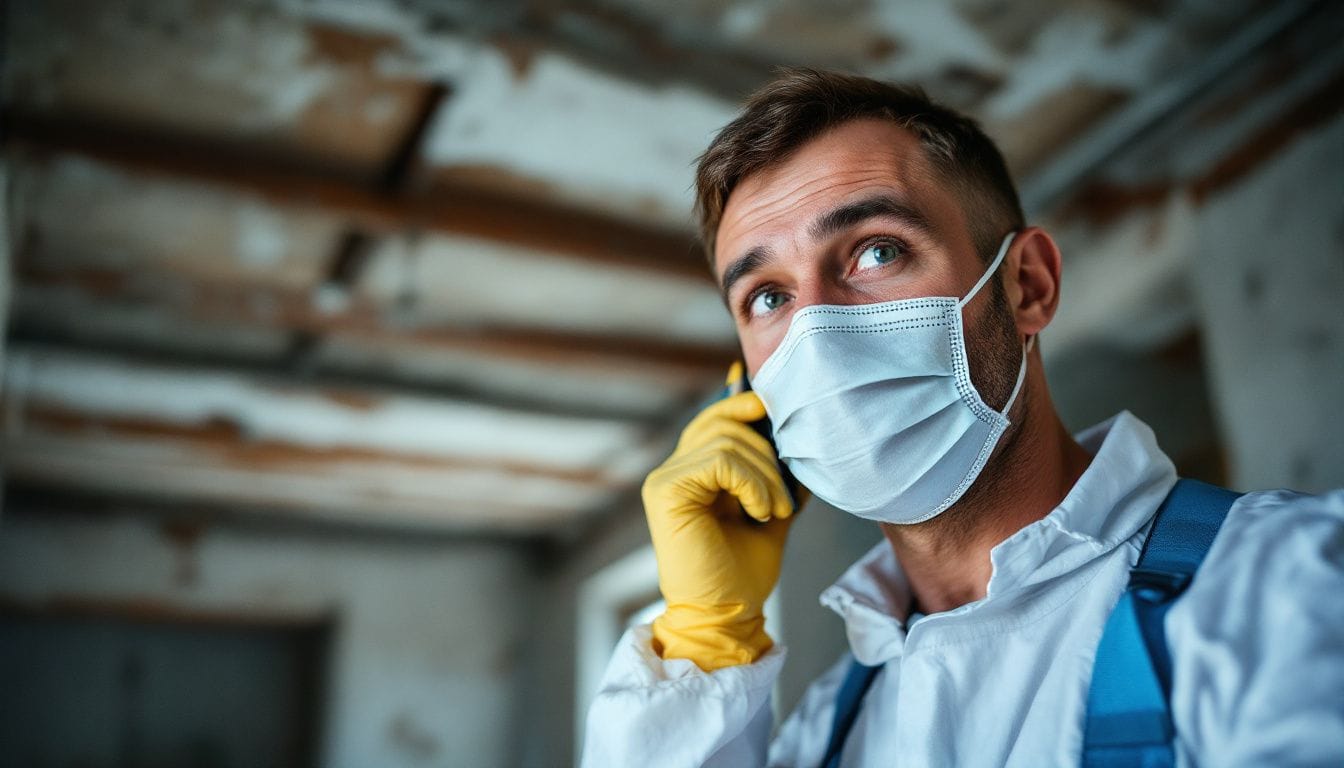
When Asbestos Survey and Removal Go Hand in Hand
Asbestos doesn’t announce itself. It hides in ceiling tiles, floor coverings, pipe lagging, and roof sheets — silent and invisible until something disturbs it. For anyone responsible for a building constructed before 2000, understanding the relationship between asbestos survey and removal isn’t optional. It’s a legal and moral duty.
Getting the survey right is what makes safe removal possible. Without an accurate picture of what’s in your building, where it is, and what condition it’s in, removal becomes guesswork — and guesswork with asbestos can be fatal.
Why an Asbestos Survey Must Come Before Removal
The Control of Asbestos Regulations sets out clear obligations for duty holders. Before any refurbishment, demolition, or intrusive work takes place, a survey must be conducted to identify asbestos-containing materials (ACMs) and assess their condition.
This isn’t bureaucracy for its own sake. Disturbing asbestos without knowing exactly what you’re dealing with — its type, location, and friability — puts workers, occupants, and the wider public at serious risk of exposure to airborne fibres. Those fibres cause mesothelioma, asbestosis, and lung cancer, often decades after exposure.
There are three types of asbestos that surveyors look for:
- Chrysotile (white asbestos) — the most commonly used, found in roofing sheets, floor tiles, and textured coatings
- Amosite (brown asbestos) — often found in thermal insulation and ceiling tiles
- Crocidolite (blue asbestos) — considered the most hazardous, used historically in pipe insulation and spray coatings
Each carries its own risk profile, and identifying which type is present — and in what quantity — directly shapes the removal strategy.
Types of Asbestos Survey and What They Cover
Not every survey is the same. The type you need depends on what you’re planning to do with the building and what information you already have.
Management Survey
A management survey is the standard survey for buildings in normal use. It identifies ACMs that could be disturbed during everyday activities — maintenance, minor repairs, or routine access. The result is an asbestos register and risk assessment that informs your ongoing asbestos management plan.
This survey is primarily about managing asbestos in place, not necessarily removing it. However, it often reveals materials that warrant removal due to poor condition or high risk.
Refurbishment Survey
If you’re planning structural works, a refurbishment survey is mandatory before work begins. This is a more intrusive investigation — it involves accessing voids, lifting floors, and breaking into walls to locate all ACMs in areas that will be disturbed.
This survey type is the essential precursor to any asbestos removal programme linked to refurbishment or demolition. Without it, contractors cannot safely price or plan the removal works.
Demolition Survey
When an entire structure is being taken down, a demolition survey is required. This is the most thorough and intrusive survey type, covering every part of the building — including areas not normally accessible. It must be completed in full before demolition work commences.
The demolition survey gives contractors and duty holders a complete picture of all ACMs present, ensuring nothing is missed when the building comes down.
Re-Inspection Survey
Once ACMs have been identified and a management plan is in place, the duty holder is required to review and update that plan periodically. A re-inspection survey assesses whether the condition of known ACMs has changed — whether materials that were previously stable have deteriorated and now require intervention or removal.
Re-inspections are not a formality. Asbestos materials degrade over time, and a material that posed low risk two years ago may now be damaged, friable, or at risk of disturbance.
What Happens During an Asbestos Survey
Understanding the process helps you prepare the site and get the most accurate results. Here’s how Supernova’s surveys work in practice.
- Booking: Contact us by phone or online. We confirm availability — often within the same week — and send a booking confirmation.
- Site Visit: A BOHS P402-qualified surveyor attends at the agreed time and conducts a thorough visual inspection of the property.
- Sampling: Representative samples are collected from suspect materials using correct containment procedures to prevent fibre release.
- Laboratory Analysis: Samples are analysed under polarised light microscopy (PLM) at our UKAS-accredited laboratory, confirming the presence and type of asbestos.
- Report Delivery: Within 3–5 working days, you receive a detailed asbestos register, risk-rated management plan, and full written report — fully compliant with HSG264 guidance.
The report gives you everything you need: a clear record of ACMs, their condition, risk ratings, and recommended actions. If removal is required, the report provides the evidential basis for scoping and tendering that work.
If you’d prefer to collect samples yourself from accessible, non-licensed materials, our testing kit allows you to send samples directly to our UKAS-accredited laboratory for analysis.
From Survey to Safe Asbestos Removal
Once the survey identifies ACMs that need to go, the removal process must follow strict protocols. Not all asbestos removal requires a licensed contractor — but much of it does.
Licensed vs Non-Licensed Removal
Work with high-risk materials — such as sprayed coatings, lagging, and insulation board — must be carried out by a contractor holding a licence from the HSE. This is non-negotiable. The surveyor’s report will indicate whether the identified ACMs fall under licensed, notifiable non-licensed, or non-licensed categories.
For licensed work, the contractor must notify the HSE at least 14 days before work begins. Workers must hold appropriate training certificates, and health surveillance records must be maintained.
Containment and Control During Removal
Safe asbestos removal relies on creating controlled environments. Licensed contractors typically erect enclosures with negative pressure units to prevent fibres from escaping into the wider building. Respiratory protective equipment (RPE) and disposable coveralls are mandatory throughout.
Air monitoring during and after removal confirms that fibre levels are within safe limits before the enclosure is taken down and the area is returned to use.
Waste Disposal
Asbestos waste is classified as hazardous waste under UK legislation. It must be double-bagged in UN-approved packaging, clearly labelled, and transported to a licensed waste disposal facility.
Fly-tipping asbestos waste is a serious criminal offence with significant penalties. There are no shortcuts when it comes to disposal — and any contractor suggesting otherwise should be avoided entirely.
The Legal Framework: What Duty Holders Must Know
Compliance with asbestos legislation isn’t something you can defer. The key regulations governing asbestos survey and removal in the UK are:
- Control of Asbestos Regulations: The primary legislation covering work with asbestos in Great Britain. It sets out licensing requirements, notification duties, and the obligation to protect workers and others from exposure. Regulation 4 places a specific duty to manage asbestos on owners and managers of non-domestic premises.
- HSG264 — Asbestos: The Survey Guide: The HSE’s definitive guidance on conducting management and refurbishment/demolition surveys. Every Supernova survey is conducted in accordance with HSG264 standards.
- RIDDOR: Asbestos-related injuries and dangerous occurrences must be reported under the Reporting of Injuries, Diseases and Dangerous Occurrences Regulations. This includes cases of mesothelioma and asbestosis diagnosed in workers.
Failure to comply can result in substantial fines and, in serious cases, imprisonment. More importantly, non-compliance puts lives at risk — and that is a burden no property manager or owner should carry.
Asbestos Survey and Removal: The Health Stakes
Asbestos-related diseases remain a leading cause of occupational death in the UK. Mesothelioma — a cancer of the lining of the lungs caused almost exclusively by asbestos exposure — kills thousands of people every year in Great Britain.
Asbestosis, a chronic scarring of lung tissue, causes significant long-term suffering. Both conditions have latency periods of 20–40 years, meaning exposure today won’t manifest as illness until decades later. That makes it impossible to undo harm once it’s done.
Prevention — through proper surveying and controlled removal — is the only effective strategy. Clear asbestos management plans protect workers from occupational exposure, and health surveillance of staff who handle asbestos is a legal requirement for licensed work.
Industrial hygiene monitoring during removal ensures that airborne fibre concentrations remain within legal limits throughout the works. It also provides a documented record of compliance — something that becomes critical if questions are ever raised about how work was conducted.
Survey Costs and Transparent Pricing
Transparent pricing matters. At Supernova, there are no hidden fees — you receive a fixed-price quote before any work begins. Here’s a guide to our standard pricing:
- Management Survey: From £195 for a standard residential or small commercial property
- Refurbishment and Demolition Survey: From £295, covering all areas to be disturbed prior to works
- Re-inspection Survey: From £150, plus £20 per ACM re-inspected
- Bulk Sample Testing Kit: From £30 per sample, posted to you for collection where permitted
- Fire Risk Assessment: From £195 for a standard commercial premises
All prices are subject to property size and location. If you’re also required to carry out a fire risk assessment — a legal requirement for most non-domestic premises — Supernova can arrange this alongside your asbestos survey, saving you time and cost.
Get a free quote tailored to your specific requirements — no obligation, no pressure.
Where We Work Across the UK
Supernova operates nationwide, with surveyors covering every region of England, Scotland, and Wales. Whether you need an asbestos survey in London, an asbestos survey in Manchester, or cover anywhere else in the country, we have qualified surveyors ready to attend — often within the same week.
Same-week availability is something we prioritise because surveys are frequently time-critical — tied to project timelines, property transactions, or urgent safety concerns. We don’t make you wait.
Why Choose Supernova Asbestos Surveys
With over 50,000 surveys completed and more than 900 five-star reviews, Supernova is one of the UK’s most trusted asbestos consultancies. Here’s what sets us apart:
- BOHS P402/P403/P404 Qualified Surveyors: All our surveyors hold British Occupational Hygiene Society qualifications — the gold standard in asbestos surveying
- UKAS-Accredited Laboratory: All samples are analysed in our accredited lab, ensuring accurate and legally defensible results
- HSG264-Compliant Reports: Every report meets the HSE’s definitive survey guidance and satisfies all regulatory requirements
- UK-Wide Coverage: We operate across England, Scotland, and Wales with same-week availability
- Transparent Fixed Pricing: No hidden fees, no surprises — just clear, competitive pricing from the outset
Don’t leave asbestos management to chance. Whether you need a management survey for ongoing duty of care, a refurbishment survey before renovation works, or a complete asbestos removal programme, Supernova is ready to help.
📞 Call us on 020 4586 0680 to speak with a specialist today.
🌐 Visit asbestos-surveys.org.uk to request your free quote online.
Frequently Asked Questions
What is the difference between an asbestos survey and asbestos removal?
An asbestos survey identifies and assesses the condition of asbestos-containing materials within a building. It produces a register and risk assessment that informs your management plan. Asbestos removal is the physical process of safely extracting those materials — and it must always be preceded by an appropriate survey. The survey tells you what needs to go, where it is, and how it should be handled.
Do I need a survey before asbestos removal can take place?
Yes. A refurbishment and demolition survey is legally required before any work that will disturb asbestos-containing materials. Without it, contractors have no way of safely scoping or pricing the removal works, and proceeding without one would breach the Control of Asbestos Regulations. A management survey alone is not sufficient for planned removal works.
How long does an asbestos survey take?
The site visit itself typically takes between one and four hours depending on the size and complexity of the property. Samples are then sent to our UKAS-accredited laboratory for analysis, and you’ll receive your full written report — including the asbestos register and risk-rated management plan — within 3–5 working days of the site visit.
Does all asbestos have to be removed?
Not necessarily. The Control of Asbestos Regulations requires duty holders to manage asbestos — not automatically remove it. If ACMs are in good condition and are not likely to be disturbed, it is often safer to leave them in place and manage them through a documented asbestos management plan, with periodic re-inspections to monitor their condition. Removal is required when materials are damaged, deteriorating, or will be disturbed by planned works.
Can I carry out asbestos removal myself?
Some limited, low-risk asbestos work can be carried out without a licence — but only where the material falls into the non-licensed category and strict conditions are met. High-risk materials such as sprayed coatings, lagging, and asbestos insulation board must be removed by an HSE-licensed contractor. Attempting to remove licensed asbestos without the appropriate qualifications and controls is illegal and extremely dangerous. Always check the surveyor’s report to confirm the category of work before proceeding.