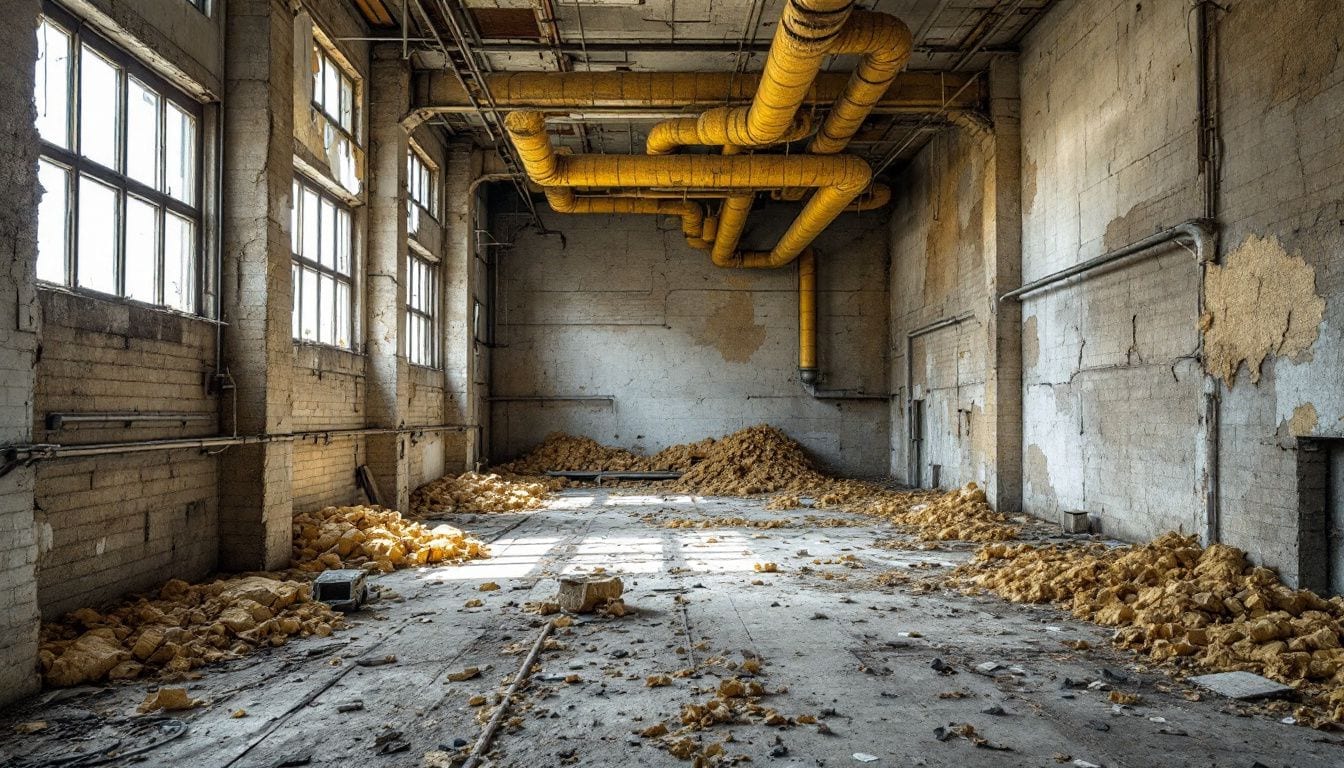
The Asbestos Corporate Cover-Ups: Decades of Calculated Deception That Cost Thousands of Lives
The asbestos corporate cover ups truth behind lies is not a conspiracy theory or a matter of disputed history. It is a documented, court-proven record of industrial betrayal on a massive scale. For decades, powerful corporations knowingly concealed evidence that their products were killing workers — deliberately, systematically, and with full awareness of the consequences.
Understanding this history is not merely an exercise in looking backwards. It directly shapes why asbestos regulation exists today, and why property owners and employers must take their legal duties seriously.
Early Warnings That Were Deliberately Buried
The dangers of asbestos were not a sudden discovery. Reports flagging it as an occupational hazard emerged in the late 19th century across Canada, Europe, and the United States. Factory inspectors noted unusually high rates of lung disease among asbestos workers, and the evidence was accumulating long before the public heard a word of it.
In 1924, physician William Cooke documented the death of a young asbestos worker and formally warned of the material’s risks. Research through the 1920s linked asbestos dust to asbestosis — a progressive, irreversible scarring of the lungs. By the 1930s, the connection between asbestos exposure and lung cancer had been established through peer-reviewed science.
None of this information reached the workers breathing in the dust every day. Companies receiving these findings chose suppression over disclosure. Internal documents — later uncovered during legal proceedings — showed executives were fully aware of the risks and actively chose to conceal them from the people most at risk.
The Key Players Behind the Asbestos Corporate Cover-Ups
Several major corporations played central roles in orchestrating and sustaining the cover-ups over multiple decades. Their methods varied, but the underlying strategy was the same: protect profits at the expense of human life.
Johns Manville
Johns Manville was one of the largest asbestos manufacturers in the world and one of the most aggressive in suppressing evidence of harm. Between the 1920s and the 1970s, the company worked to prevent workers from learning the results of their own medical examinations.
Lewis Brown, a senior executive, openly admitted in internal correspondence that workers were kept uninformed because disclosure would damage profits. This was not a grey area — it was a deliberate policy decision made at the highest levels of management.
Raybestos-Manhattan
Raybestos-Manhattan collaborated closely with Johns Manville to suppress critical research data. The two companies coordinated efforts to ensure that damaging scientific findings never reached the public domain. Internal memos exchanged between executives at both firms revealed a shared strategy of denial and deliberate delay.
Turner & Newall
In the United Kingdom, Turner & Newall became a global conglomerate built substantially on asbestos production. The company concealed health risks from its workforce for decades. What made this particularly egregious was the political dimension — prominent figures actively defended Turner & Newall in Parliament and lobbied for looser safety regulations, helping to extend the period during which workers remained unprotected.
Metropolitan Life Insurance
Metropolitan Life Insurance colluded with asbestos manufacturers to help suppress evidence of disease. The insurer had a direct financial interest in minimising compensation claims and worked alongside manufacturers to undermine the credibility of research linking asbestos to fatal illness. This was not passive negligence — it was active participation in the cover-up.
Johnson & Johnson and Talcum Powder
The cover-ups were not confined to construction materials. Reuters reported that Johnson & Johnson had been aware of asbestos contamination in its talcum powder products since the 1970s and concealed this from consumers. The company ultimately ceased global sales of talcum powder in 2023, decades after the internal knowledge of contamination was first documented.
The Turning Point: Science, Law, and the Beginning of Accountability
A significant shift came when Dr Irving Selikoff presented research demonstrating a powerful statistical link between occupational asbestos exposure and cancer. His work was rigorous, peer-reviewed, and impossible to dismiss — though corporations tried. Selikoff’s findings brought the issue into the public and scientific mainstream in a way that could no longer be entirely suppressed.
The first asbestos-related lawsuit in 1971 marked the beginning of a legal reckoning that would eventually expose the full extent of corporate deception. Court proceedings forced the disclosure of internal documents that companies had spent decades keeping secret.
What those documents revealed was not negligence — it was deliberate, calculated concealment carried out at the highest levels of corporate management. The truth behind lies that had been sustained for half a century began to unravel not through corporate conscience, but through litigation and the courage of independent researchers willing to challenge well-funded industry opposition.
The Human Cost: Lives Lost to Corporate Deception
The consequences of these asbestos corporate cover ups are measured not in financial penalties but in lives. The UK continues to record around 4,000 asbestos-related deaths each year — a figure that reflects exposures that occurred decades ago, given the long latency period of diseases like mesothelioma.
Mesothelioma, the aggressive cancer of the lining of the lungs and other organs, is almost exclusively caused by asbestos exposure. It typically develops 20 to 50 years after initial exposure, which means people are still dying today from asbestos they encountered in the 1970s and 1980s — during the very years when the cover-ups were at their most active.
Construction Workers and Tradespeople
Construction workers, plumbers, electricians, and maintenance staff bore the heaviest burden. Approximately a quarter of mesothelioma victims in the UK worked in building and maintenance trades — people who handled asbestos-containing materials daily, often without any protective equipment and without ever being told what they were working with.
These were not abstract statistics. They were individuals who went to work each day believing their employers were keeping them safe, while internal memos confirmed those same employers knew exactly what was happening to their lungs.
Teachers and School Staff
One of the most disturbing aspects of this legacy is the impact on school buildings. An estimated 13,000 schools were built using asbestos-containing materials. Between 1991 and 2000, 79 UK teachers died from asbestos-related disease.
These were not industrial workers — they were educators in environments that should have been among the safest in the country. The failure to protect them was a direct consequence of the information suppression that had been sustained for decades.
Compensation Failures
Legal settlements have provided some measure of justice, but the process has been far from straightforward. The Turner & Newall compensation scheme left many victims without a fair share of the available funds. Globally, the legal and financial fallout from asbestos litigation has run into hundreds of billions of dollars — a scale of liability that reflects the scale of the original wrongdoing.
Why the Cover-Ups Lasted So Long: The Structural Conditions of Deception
Understanding how these deceptions persisted for so long requires looking at the structural conditions that enabled them. Asbestos was extraordinarily profitable. It was used in insulation, fireproofing, roofing, flooring, textiles, and vehicle components. The industries that depended on it had enormous economic and political influence.
Regulatory bodies were slow to act, in part because the companies lobbying them were the same ones funding research and controlling the flow of scientific information. When independent researchers published damaging findings, industry-funded scientists were deployed to challenge, delay, and confuse.
This playbook — funding doubt rather than admitting harm — has since been replicated by other industries facing inconvenient scientific consensus. Workers had little power to push back. The asymmetry of power between corporations and workers made sustained concealment not just possible, but easy to maintain across multiple decades and multiple countries.
The specific mechanisms that enabled the cover-ups to persist included:
- Companies controlling access to workers’ own medical examination results
- Industry-funded research deployed to contradict independent science
- Political lobbying that delayed regulatory action for years
- Workers lacking legal resources to challenge powerful corporations
- The long latency period of asbestos disease, which made causation harder to prove in the short term
The Regulatory Response: What the Cover-Ups Built
The eventual legal and regulatory response to the asbestos corporate cover ups fundamentally changed how asbestos is managed in the UK. The Control of Asbestos Regulations established a strict legal framework governing the identification, management, and removal of asbestos-containing materials.
These regulations place a legal duty on the owners and managers of non-domestic premises to identify asbestos, assess its condition, and manage the risk it poses. This duty cannot be delegated, ignored, or treated as optional.
The HSE’s HSG264 guidance sets out the technical standards for asbestos surveying — defining what surveys must include, how samples must be taken, and how findings must be reported. This guidance exists precisely because of the decades of corporate negligence that preceded it. Every clause in that document represents a lesson learned from preventable death.
If you manage a commercial property, a school, a housing block, or any building constructed before the year 2000, you have legal obligations that cannot be sidestepped. These obligations are not bureaucratic inconvenience — they are the direct result of what happens when safety information is suppressed.
Meeting Your Legal Obligations: The Surveys That Matter
Management Surveys: The Starting Point for Compliance
A management survey is the standard starting point for any duty holder. It identifies the location and condition of asbestos-containing materials and forms the basis of your asbestos management plan. Without one, you have no way of knowing what risks exist in your building or whether you are meeting your legal obligations.
Given that the entire history of asbestos corporate cover ups was built on keeping people ignorant of the risks in their environment, commissioning a management survey is the most direct way to ensure that ignorance ends with you.
Refurbishment Surveys: Essential Before Any Building Work
Where renovation or demolition work is planned, a refurbishment survey is legally required before works begin. This is a more intrusive inspection that ensures no asbestos-containing materials will be disturbed unknowingly during construction activity.
Disturbing asbestos without prior identification is not just a legal failure — it is precisely the kind of preventable exposure that the cover-up era made so catastrophically common. Do not allow work to proceed on any pre-2000 building without this survey in place.
Re-Inspection Surveys: Ongoing Monitoring of Known Risks
Once asbestos has been identified and a management plan is in place, conditions must be monitored over time. A re-inspection survey allows duty holders to track whether the condition of known asbestos-containing materials has deteriorated and whether risk ratings need to be updated.
Asbestos management is not a one-off exercise. It requires ongoing vigilance — precisely because the risks do not disappear simply because they have been identified once.
Fire Risk Assessments and Asbestos: A Complete Picture of Building Safety
For properties where fire safety is also a consideration, a fire risk assessment should be carried out alongside asbestos management to ensure a complete picture of building safety obligations. Fire events can disturb asbestos-containing materials and create additional exposure risks — the two disciplines are closely linked in practice.
Responsible property management means addressing both hazards together, not treating them as separate concerns. Supernova Asbestos Surveys can coordinate fire risk assessments alongside asbestos surveying to give you a fully integrated view of your building’s safety obligations.
The Legacy of Lies and the Responsibility It Creates
The asbestos corporate cover ups truth behind lies is a story about power, profit, and the calculated suppression of information that would have saved lives. It is also a story about how that suppression was eventually dismantled — through litigation, independent science, and the slow but irreversible force of legal accountability.
The regulatory framework that exists today in the UK was not built on good intentions alone. It was built on the evidence of what happens when those with power over safety information choose concealment over disclosure. Every duty holder who commissions a survey, maintains an asbestos register, and monitors their building’s condition is doing something those corporations refused to do for decades: telling the truth about risk.
Whether you manage a building in the capital and need an asbestos survey London, require an asbestos survey Manchester for a commercial property in the North West, or need an asbestos survey Birmingham for a site in the Midlands, Supernova Asbestos Surveys operates nationwide with over 50,000 surveys completed.
The history of asbestos corporate deception is a permanent reminder that the consequences of ignoring risk do not disappear — they simply take decades to arrive. Act now, act correctly, and make sure the people in your building are protected by accurate information rather than the absence of it.
Speak to Supernova Asbestos Surveys
Supernova Asbestos Surveys is the UK’s leading asbestos surveying company, with over 50,000 surveys completed across the country. Our UKAS-accredited surveyors work to HSG264 standards, providing legally compliant reports that give duty holders the information they need to manage risk properly.
To book a survey or discuss your obligations, call us on 020 4586 0680 or visit asbestos-surveys.org.uk. We cover the whole of the UK, with specialist teams operating in London, Manchester, Birmingham, and beyond.
Frequently Asked Questions
How long did asbestos companies know about the health risks before they disclosed them?
Evidence suggests that major asbestos manufacturers were aware of serious health risks — including lung disease and cancer — from at least the 1920s and 1930s. In many cases, internal documents show executives were informed of these risks decades before any public disclosure was made. Court proceedings from the 1970s onwards forced the release of documents that confirmed this knowledge had been systematically suppressed.
What diseases are caused by asbestos exposure?
The primary diseases caused by asbestos exposure include mesothelioma (an aggressive cancer of the lining of the lungs, abdomen, or heart), lung cancer, asbestosis (progressive scarring of the lung tissue), and pleural thickening. Mesothelioma is almost exclusively linked to asbestos exposure and typically develops 20 to 50 years after initial contact with the material.
Is asbestos still present in UK buildings?
Yes. Asbestos was widely used in UK construction until its full ban came into effect. Any building constructed before the year 2000 may contain asbestos-containing materials. This includes schools, offices, hospitals, residential blocks, and industrial premises. The Control of Asbestos Regulations place a legal duty on owners and managers of non-domestic premises to identify and manage asbestos in their buildings.
What is the legal duty for asbestos management in the UK?
Under the Control of Asbestos Regulations, the duty holder for a non-domestic premises must identify whether asbestos-containing materials are present, assess their condition, and put in place a written management plan to control the risk. This typically begins with a management survey carried out by a qualified asbestos surveyor. Failure to comply can result in prosecution, unlimited fines, and imprisonment.
Why do people still die from asbestos exposure today if it was banned decades ago?
Asbestos-related diseases have an exceptionally long latency period — typically 20 to 50 years between initial exposure and the onset of disease. People dying from mesothelioma today were often exposed in the 1970s and 1980s, during the period when corporate cover-ups were at their most active and workers had little protection or information. The UK records around 4,000 asbestos-related deaths each year, a figure that reflects this delayed timeline of harm.