Why Asbestos-Containing Materials Are Still a Daily Risk in UK Buildings
If your property was built or refurbished before the year 2000, there is a realistic chance it contains asbestos. Identifying asbestos containing materials and potential sources of exposure is not simply a box-ticking exercise — it is the difference between a safe building and a serious, irreversible health risk. Knowing where asbestos hides, how it deteriorates, and what to do about it is knowledge every property owner, manager, and tenant needs.
The Reason Asbestos Remains in Millions of UK Buildings
Asbestos was not fully banned in the UK until 1999. Before that, it was used extensively across construction, manufacturing, and industry because of its exceptional heat resistance, durability, and low cost. The result is that a vast number of buildings across England, Scotland, Wales, and Northern Ireland still contain asbestos in one form or another.
The material is not automatically dangerous when left undisturbed. The risk arises when asbestos-containing materials (ACMs) are damaged, disturbed, or begin to deteriorate — releasing microscopic fibres into the air that can be inhaled. Those fibres can cause serious and often fatal diseases, including mesothelioma, asbestosis, and lung cancer, sometimes decades after the original exposure.
Under the Control of Asbestos Regulations, duty holders — anyone responsible for the maintenance or repair of non-domestic premises — are legally required to manage asbestos in their buildings. That obligation starts with knowing where it is.
Common Asbestos-Containing Materials and Where They Are Found
Asbestos was incorporated into hundreds of different building products. The following are among the most frequently encountered ACMs in UK properties, and understanding them is the first step in identifying potential sources of exposure.
Insulation Materials
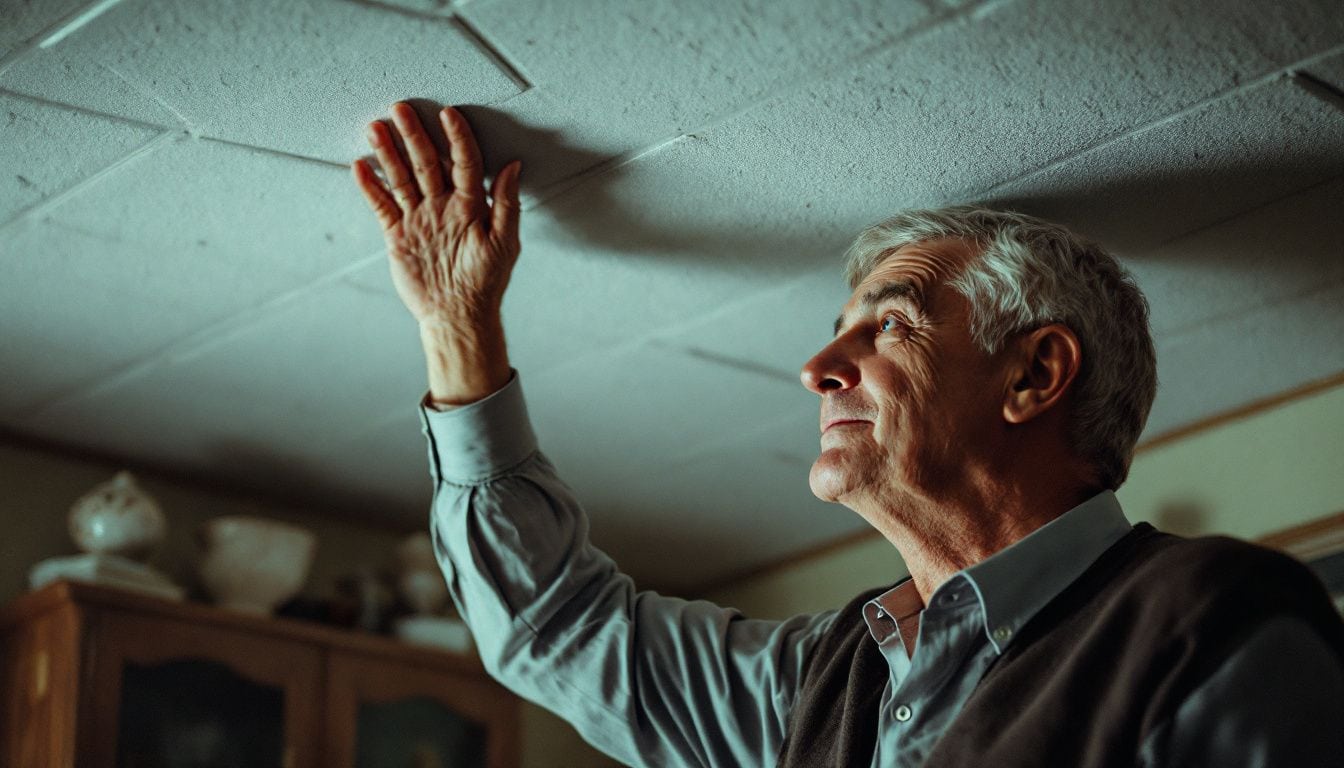
Asbestos insulation board (AIB) was widely used in ceiling tiles, partition walls, fire doors, and around boilers and pipework. It is one of the more hazardous forms of ACM because it can release fibres relatively easily when disturbed.
Pipe lagging — the material wrapped around heating pipes — frequently contained asbestos, particularly in properties built between the 1950s and 1970s. Loose-fill insulation is another serious concern. Some properties had loose asbestos fibres blown into cavity walls or roof spaces as insulation, and this material is particularly dangerous because it is friable and disturbs easily.
Roofing and External Materials
Corrugated asbestos cement roofing sheets were a staple of industrial buildings, garages, sheds, and agricultural structures. Asbestos cement is considered a lower-risk material because the fibres are bound within the cement matrix — but as it weathers and cracks with age, it becomes increasingly hazardous.
Roof slates, guttering, downpipes, and external wall cladding panels from the mid-twentieth century may all contain asbestos cement. Do not assume that because a material is outside, it poses a lower risk.
Floor and Ceiling Materials
Vinyl floor tiles — particularly the 9-inch square variety common in schools, offices, and homes from the 1950s to 1980s — frequently contained chrysotile asbestos. The black mastic adhesive used to fix them often contained asbestos too. Removing these tiles without proper precautions can release fibres from both the tile and the adhesive beneath.
Textured coatings on ceilings and walls — often referred to as Artex — were commonly applied using asbestos-containing compounds until the mid-1980s. Sanding, scraping, or drilling through these surfaces without testing first is a significant exposure risk.
Fireproofing and Sprayed Coatings
Sprayed asbestos coatings were applied to structural steelwork, columns, and beams as fireproofing in commercial and industrial buildings. This is one of the most hazardous forms of ACM — it is friable, crumbles easily, and can release large quantities of fibres when disturbed. Buildings constructed or refurbished between the 1950s and 1970s are most likely to contain sprayed coatings.
Decorative and Composite Products
Beyond textured coatings, other composite products also warrant attention. Rope, gaskets, and seals used around boilers, furnaces, and industrial equipment frequently contained asbestos. Older electrical equipment, fuse boxes, and storage heaters may also contain asbestos components that are not immediately obvious.
Recognising Signs of Deteriorating Asbestos-Containing Materials
You cannot identify asbestos by sight alone — laboratory analysis is the only way to confirm its presence. However, certain visual signs should prompt you to treat a material as suspect and seek professional assessment without delay.
- Crumbling or powdery surfaces — particularly on pipe lagging, ceiling tiles, or insulation board. Friable materials are the most dangerous because they release fibres with minimal disturbance.
- Water damage or staining — water ingress accelerates the degradation of ACMs, making fibre release more likely.
- Visible damage — cracks, holes, or broken sections in materials that may contain asbestos should be treated as a potential exposure risk immediately.
- Disturbed or missing sections — if insulation, ceiling tiles, or other materials show signs of having been removed, drilled through, or broken, fibres may already have been released into the area.
- Age of the building — any property constructed or significantly refurbished before 2000 should be treated as potentially containing ACMs until proven otherwise.
If you spot any of these warning signs, do not disturb the material further. Seal off the area if possible and arrange for professional assessment as soon as practicable.
Health Risks Associated with Asbestos Exposure
Understanding the health consequences of asbestos exposure reinforces why identifying ACMs matters so much. Asbestos-related diseases are entirely preventable — but once fibres have been inhaled, the damage cannot be reversed.
- Mesothelioma — a cancer of the lining of the lungs, abdomen, or heart, caused almost exclusively by asbestos exposure. It has a latency period of 20 to 50 years, meaning people are often diagnosed long after the original exposure occurred.
- Asbestosis — scarring of the lung tissue caused by inhaled asbestos fibres, leading to progressive breathing difficulties, chest tightness, and a persistent cough. There is no cure.
- Lung cancer — the risk is significantly elevated in people who have been exposed to asbestos, particularly those who also smoked.
- Pleural thickening — thickening of the membrane surrounding the lungs, which can cause breathlessness and chest discomfort.
Short-term symptoms following a significant exposure event may include coughing, breathlessness, and chest discomfort. Anyone who believes they have been exposed to asbestos should seek medical advice promptly and inform their GP of the circumstances.
What to Do If You Suspect Asbestos-Containing Materials
Suspecting the presence of asbestos is not a reason to panic — but it is a reason to act carefully and systematically. Follow these steps.
Step 1: Do Not Disturb the Material
The single most important rule is to leave suspected ACMs alone. Do not drill, sand, scrape, cut, or break any material you believe may contain asbestos. If the material is intact and undisturbed, the risk is significantly lower than if it is broken or agitated.
Step 2: Restrict Access to the Area
If a material is damaged or deteriorating and you suspect it contains asbestos, restrict access to the area immediately. This is particularly critical in workplaces, where the Control of Asbestos Regulations places a clear duty of care on employers and building managers to protect workers and visitors.
Step 3: Test the Material
The only way to confirm whether a material contains asbestos is through testing. There are two practical options depending on your circumstances.
For a straightforward initial check on a specific material, an asbestos testing kit allows you to collect a sample safely and send it to an accredited laboratory for analysis. This is a cost-effective first step when you want to check one or two materials without commissioning a full survey.
For a thorough assessment of an entire property, professional asbestos testing carried out by a UKAS-accredited analyst provides reliable, legally defensible results across all suspect materials simultaneously.
Step 4: Commission a Professional Asbestos Survey
If you manage a non-domestic property, or if you are planning any building work, a professional asbestos survey is not optional — it is a legal requirement under the Control of Asbestos Regulations. HSE guidance document HSG264 sets out the standards that surveys must meet, including the qualifications required of surveyors and the format of the resulting report.
There are two main types of survey to be aware of:
- A management survey identifies ACMs in their current condition and assesses the risk they pose during normal occupation and routine maintenance. It is the standard survey for properties in day-to-day use.
- A refurbishment survey is required before any demolition or refurbishment work begins. It involves a more intrusive inspection to locate all ACMs that could be disturbed by the planned work, including those hidden within the building fabric.
Step 5: Follow Professional Advice on Management or Removal
Not all ACMs need to be removed. In many cases, the safest approach is to manage them in place — monitoring their condition, preventing disturbance, and keeping an accurate asbestos register. Where removal is necessary, it must be carried out by a licensed contractor under strictly controlled conditions.
Never attempt DIY removal of asbestos. Even well-intentioned efforts to remove suspect materials without proper training, equipment, and legal authorisation can cause serious harm and carry significant legal liability for the person responsible.
Your Legal Obligations as a Duty Holder
The Control of Asbestos Regulations place specific legal duties on those responsible for non-domestic premises. If you own, manage, or have responsibility for the maintenance of a commercial, industrial, or public building, you are likely a duty holder.
Your core obligations include:
- Taking reasonable steps to find out whether ACMs are present in the premises and their location and condition.
- Presuming that materials contain asbestos unless there is strong evidence to the contrary.
- Making and keeping an up-to-date written record — the asbestos register — of the location and condition of all known or presumed ACMs.
- Assessing the risk from those materials and putting in place a written plan — the asbestos management plan — to manage that risk.
- Providing information about the location and condition of ACMs to anyone who is liable to disturb them, including contractors and maintenance workers.
Failure to comply with these obligations is a criminal offence and can result in prosecution, substantial fines, and — most importantly — preventable harm to the people who use your building.
Asbestos Surveys Across the UK
Asbestos is not a regional problem — it is found in buildings throughout the United Kingdom, from city-centre offices to rural agricultural buildings. The legal obligations and the health risks apply equally regardless of location.
Supernova Asbestos Surveys operates nationwide. If you need an asbestos survey London for a commercial or residential property in the capital, our teams cover all London boroughs. For properties in the North West, our asbestos survey Manchester service covers the city and surrounding areas. In the Midlands, our asbestos survey Birmingham team provides fast, accurate assessments for all property types.
With over 50,000 surveys completed nationwide, Supernova Asbestos Surveys has the experience, accreditation, and local knowledge to handle properties of any size, age, or complexity.
Take Action Before Work Begins — Not After
The most dangerous moment in any building project is when work starts on a property that has not been properly assessed for asbestos. Contractors disturbing unknown ACMs, maintenance staff drilling through insulation board, or renovation teams sanding textured ceilings — these are the scenarios that lead to serious exposure events and, years later, life-limiting diagnoses.
The good news is that identifying asbestos containing materials and potential sources of exposure is straightforward when you work with accredited professionals. A survey takes hours. The protection it provides lasts the lifetime of the building.
If you are unsure whether your property has been assessed, or if you are planning any work that could disturb building materials, contact Supernova Asbestos Surveys today. Call us on 020 4586 0680 or visit asbestos-surveys.org.uk to arrange a survey or speak to one of our specialists. Do not wait until a material is disturbed to find out what it contains.
Frequently Asked Questions
What are asbestos-containing materials?
Asbestos-containing materials (ACMs) are any materials or products in which asbestos fibres have been incorporated during manufacture. They include insulation board, floor tiles, textured coatings, pipe lagging, roofing sheets, and a wide range of other building products. ACMs are most commonly found in properties built or refurbished before 2000. When intact and undisturbed, they may pose a low risk — but when damaged or degraded, they can release harmful fibres into the air.
How do I identify potential sources of asbestos exposure in my property?
You cannot confirm the presence of asbestos by sight alone, but you can identify suspect materials by their age, location, and condition. Common sources include ceiling tiles, pipe lagging, textured wall and ceiling coatings, vinyl floor tiles, and asbestos cement roofing. Any material in a pre-2000 building that is crumbling, damaged, or in poor condition should be treated as a potential ACM until tested. A professional asbestos survey is the most reliable way to identify all sources of potential exposure across an entire building.
Is it safe to leave asbestos-containing materials in place?
In many cases, yes — provided the material is in good condition and is not at risk of being disturbed. The HSE and the Control of Asbestos Regulations both recognise that managing ACMs in place is often the safest approach. The key is to monitor their condition regularly, maintain an accurate asbestos register, and ensure that anyone working in the building is aware of the location of ACMs. Removal should only be considered when materials are deteriorating beyond safe management or when building work requires it.
What is the difference between a management survey and a refurbishment survey?
A management survey is carried out on a property in normal occupation. It identifies the location and condition of ACMs accessible during routine use and maintenance, and assesses the risk they pose. A refurbishment survey is required before any demolition or significant building work begins. It is more intrusive — surveyors may need to access voids, lift floor coverings, and inspect concealed areas — because it must locate every ACM that could be disturbed during the planned works. HSG264 sets out the requirements for both survey types.
Can I test for asbestos myself?
You can collect a sample for laboratory analysis using a testing kit, which is a legitimate and cost-effective way to check a specific material. However, sample collection must be done carefully to avoid disturbing fibres, and the kit instructions must be followed precisely. For a full property assessment, or where the results will be used to satisfy legal obligations, professional asbestos testing by a UKAS-accredited analyst is always the recommended route.