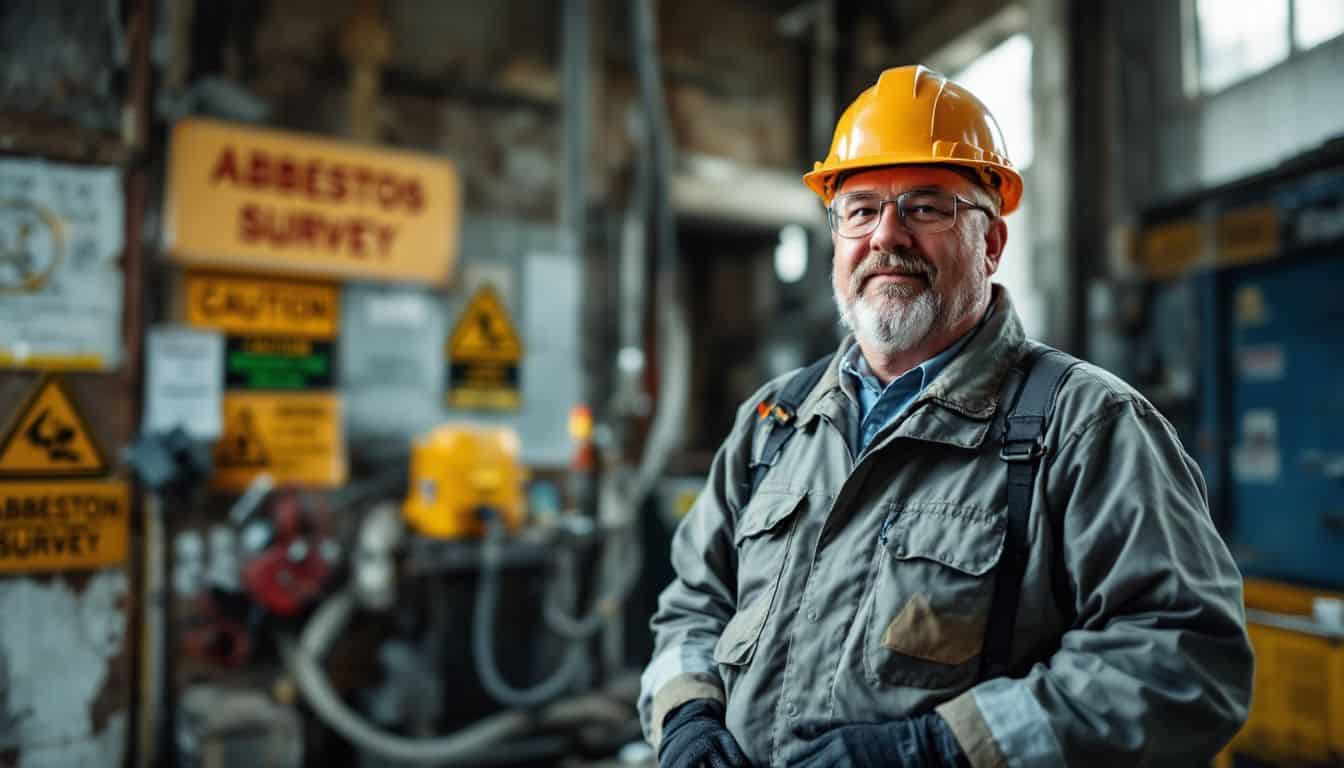
How Safe Surveying Methods Protect Asbestos Surveyors on Every Job
Asbestos kills more people in Great Britain each year than any other single work-related cause. For surveyors entering buildings that may contain it, the risks are immediate and real — but so are the protections. Safe surveying methods have evolved significantly, combining rigorous regulation, specialist equipment, and disciplined site practice to keep surveyors protected from the moment they arrive on site to the moment they leave.
This post breaks down exactly how those protections work in practice: from identifying asbestos-containing materials and wearing the right PPE, to emergency decontamination and legal compliance. Whether you manage a commercial property, oversee a construction project, or simply want to understand what a professional survey actually involves, this is what responsible asbestos surveying looks like.
Understanding the Risks Before Setting Foot on Site
Asbestos fibres are invisible to the naked eye. When materials containing asbestos are disturbed — even slightly — those fibres become airborne and can be inhaled deep into the lungs. The consequences include asbestosis, lung cancer, and mesothelioma, a cancer with no cure and a typically poor prognosis.
Great Britain records around 5,000 asbestos-related deaths annually, a figure that reflects decades of historic exposure. Surveyors working in older buildings are at risk of fresh exposure if they do not follow strict protocols at every stage of their work.
Identifying Asbestos-Containing Materials
Before any physical inspection begins, surveyors study available building records and historical data. Buildings constructed or refurbished before the year 2000 are most likely to contain asbestos-containing materials (ACMs), and these can appear almost anywhere — floor tiles, ceiling tiles, pipe lagging, roof sheeting, textured coatings, and service ducts.
On site, surveyors take a systematic approach. They collect samples from suspect materials — typically around 12 per area — and send these to UKAS-accredited laboratories for analysis. The results confirm the presence, type, and condition of any asbestos found. This sampling process is itself governed by safe surveying methods to prevent unnecessary fibre release during collection.
Why Disturbed Asbestos Is Especially Dangerous
Asbestos in good condition and left undisturbed poses a lower immediate risk. The danger escalates sharply when materials are damaged, crumbling, or disturbed by drilling, cutting, or demolition work. Surveyors must therefore handle suspect materials with extreme care — using wet methods to suppress dust, avoiding unnecessary breakage, and treating every sample as a potential hazard until proven otherwise.
Legal Responsibilities and Compliance
Safe surveying methods are not optional extras — they are legal requirements. The Control of Asbestos Regulations sets out the duties that employers and building owners must meet, and surveyors operate within this framework on every job.
Employer Duties Under Asbestos Regulations
Employers of asbestos surveyors carry significant legal responsibilities. These include:
- Providing asbestos awareness training to all relevant staff
- Ensuring surveyors are competent and appropriately qualified
- Supplying suitable personal protective equipment and ensuring it is used correctly
- Carrying out risk assessments before any survey work begins
- Engaging only licensed asbestos removal contractors for high-risk tasks
- Meeting all regulatory requirements under the Control of Asbestos Regulations
HSE guidance — particularly HSG264, which covers asbestos surveying — sets out the standards that professional surveyors must meet. Reputable surveying companies work to these standards as a baseline, not a ceiling.
Maintaining an Asbestos Register and Management Plan
Duty holders for non-domestic buildings are legally required to manage asbestos on their premises. This means maintaining an up-to-date asbestos register that records the location, type, and condition of all known ACMs, along with a management plan that outlines how those materials will be monitored and controlled.
Surveyors contribute directly to this process. A management survey is the standard type used to locate and assess ACMs in buildings that are in normal use — giving duty holders the information they need to fulfil their legal obligations. All samples are analysed by ISO 17025 accredited laboratories, ensuring results are reliable and legally defensible.
Personal Protective Equipment: The First Line of Defence
No amount of planning eliminates the need for the right PPE. Safe surveying methods depend on surveyors wearing appropriate protective equipment — correctly fitted and properly used — throughout every asbestos inspection.
Respiratory Protection
Respiratory protection is the most critical element of a surveyor’s PPE. Options used in professional asbestos surveying include:
- Half-face respirators with P100 filters — these provide 99.97% filtration efficiency against airborne particles, including asbestos fibres
- Powered air-purifying respirators (PAPRs) with HEPA filters — used for extended surveys or higher-risk environments, offering enhanced protection and greater wearer comfort over longer periods
- Full-face respirators — used where eye protection is also required alongside respiratory protection
Fit testing is mandatory. A respirator that does not seal properly against the face provides little meaningful protection. Every surveyor must be individually fit tested for the specific mask they use, and this testing must be repeated regularly and whenever there is a change in facial features that might affect the seal.
Protective Clothing and Other PPE
Alongside respiratory protection, surveyors wear a full complement of protective clothing. The standard requirements include:
- Disposable coveralls (Type 5 minimum) that prevent fibre contact with skin and clothing
- Gloves that prevent fibre transfer to the hands
- Eye protection where there is any risk of fibre contact with the eyes
- Disposable boot covers or dedicated site footwear
All contaminated PPE is treated as hazardous waste. Coveralls, gloves, and other disposable items are removed carefully using a specific doffing sequence designed to prevent self-contamination, then sealed and labelled for disposal at a licensed facility.
Safe Handling and Disposal of Asbestos Materials
Safe surveying methods extend well beyond what surveyors wear. The way asbestos materials are handled, contained, and disposed of is equally important — both for the surveyor’s protection and for the safety of anyone else who might be affected.
Handling Procedures During Surveys
When surveyors need to collect samples or assess materials more closely, they follow a strict set of procedures:
- Inspect the work area thoroughly before disturbing any materials
- Use wet methods — dampening materials before sampling — to suppress fibre release
- Use HEPA-filtered vacuum cleaners to clean up any debris immediately
- Seal and label samples securely before transporting them to the laboratory
- Contain any waste material within designated areas throughout the survey
- Clean all tools and equipment before leaving the work area
These steps are not bureaucratic box-ticking. Each one directly reduces the risk of fibre release and subsequent exposure.
Containment and Disposal of Asbestos Waste
Any asbestos waste generated during a survey — including sample material, used PPE, and contaminated cleaning materials — must be disposed of correctly. The standard approach involves:
- Double-bagging waste in heavy-duty polythene bags
- Sealing each bag securely and labelling it clearly as asbestos waste
- Transporting sealed waste in approved, labelled containers
- Delivering waste to a licensed hazardous waste facility
Environmental regulations govern the entire chain from generation to disposal. Surveyors and their employers must maintain records of waste disposal as part of their duty of care obligations.
Survey Protocols: Management, Refurbishment, and Demolition
Not all asbestos surveys are the same. The type of survey required depends on the purpose — whether a building is in use, being refurbished, or being demolished. Each type demands specific safe surveying methods tailored to the level of risk involved.
Management Surveys
A management survey is carried out in buildings that are occupied and in normal use. The aim is to locate ACMs in all accessible areas, assess their condition, and provide the duty holder with the information needed to manage them safely. Surveyors inspect every accessible room, corridor, roof void, and service area, using the least intrusive methods possible to minimise disturbance.
The survey must be thorough. Missed or misidentified ACMs can lead to inadvertent disturbance during routine maintenance, putting workers at risk.
Refurbishment Surveys
Before any refurbishment work begins, a refurbishment survey is required. This is a more intrusive inspection, designed to locate all ACMs in the areas affected by the planned works — including those that may be hidden within walls, floors, or ceilings. The survey must be completed before contractors begin work, so that any asbestos can be removed or made safe in advance.
Surveyors carrying out refurbishment surveys are working in areas that may not have been accessed for years. The potential for disturbance is higher, and PPE requirements are correspondingly stricter.
Demolition Surveys
A demolition survey is the most comprehensive type. It must cover the entire building — every area, every material — because demolition will disturb everything. Surveyors use destructive inspection techniques where necessary, accessing concealed spaces and taking samples from materials that would not normally be disturbed. The results feed directly into the asbestos removal programme that must be completed before demolition can proceed.
Samples collected during demolition surveys are analysed using polarised light microscopy (PLM) or transmission electron microscopy (TEM), depending on the level of detail required. Both methods are conducted by accredited laboratories to ensure accurate results.
Emergency Preparedness and Decontamination
Even with the best planning and equipment, incidents can happen. Safe surveying methods include clear emergency procedures that surveyors follow if an unexpected asbestos disturbance occurs or if exposure is suspected.
Responding to Accidental Asbestos Exposure
If an asbestos disturbance occurs unexpectedly during a survey, the immediate steps are:
- Evacuate the affected area immediately and restrict access
- Ensure all personnel in the area have appropriate respiratory protection
- Report the incident to the site supervisor and, where required, under RIDDOR
- Seek medical advice if exposure may have occurred
- Do not re-enter the area until it has been assessed and cleared by a competent person
Speed and clarity matter in these situations. Surveyors are trained to respond quickly and methodically, not to improvise.
Decontamination of Personnel and Equipment
Decontamination is a structured process, not simply washing hands before leaving site. Professional asbestos surveyors use a three-stage airlock decontamination system where required, which involves:
- A dirty end where contaminated PPE is removed and bagged
- A shower or wet decontamination stage to remove any residual fibres from skin and hair
- A clean end where fresh clothing is put on before leaving the controlled area
HEPA vacuum cleaners are used to remove fibres from equipment before it is moved out of the work area. Fit testing of respirators is verified before each survey, not just at initial issue. These measures collectively ensure that fibres are not carried off site on clothing, equipment, or personnel.
Where asbestos removal is subsequently required following survey findings, the same rigorous decontamination standards apply throughout the removal process.
Nationwide Coverage: Safe Surveys Wherever You Are
Supernova Asbestos Surveys operates across the whole of the UK, applying the same safe surveying methods and regulatory standards on every job regardless of location. If you need an asbestos survey in London, our surveyors are familiar with the specific challenges of the capital’s older commercial and residential stock. For an asbestos survey in Manchester or an asbestos survey in Birmingham, the same standards apply — thorough, accredited, and fully compliant with HSE guidance and the Control of Asbestos Regulations.
With over 50,000 surveys completed nationwide, our teams have the experience to handle everything from straightforward management surveys in occupied offices to complex demolition surveys on large industrial sites.
Frequently Asked Questions
What PPE do asbestos surveyors wear during a survey?
Surveyors wear disposable Type 5 coveralls, gloves, and eye protection alongside respiratory protection — typically a half-face respirator with P100 filters or a powered air-purifying respirator (PAPR) with HEPA filters for longer or higher-risk surveys. All respiratory equipment must be individually fit tested. Contaminated PPE is treated as asbestos waste and disposed of at a licensed facility.
How do surveyors prevent asbestos fibres from spreading during an inspection?
Surveyors use wet methods when collecting samples to suppress fibre release, and HEPA-filtered vacuum cleaners to clean up immediately after. Waste is double-bagged and sealed on site. Decontamination procedures — including a three-stage airlock system where required — prevent fibres from being carried off site on clothing or equipment.
What is the difference between a management survey, a refurbishment survey, and a demolition survey?
A management survey is used in occupied buildings to locate and assess accessible ACMs for ongoing management. A refurbishment survey is required before any building work begins and covers the specific areas affected by the planned works, including hidden materials. A demolition survey is the most thorough type, covering the entire building before demolition to ensure all asbestos is identified and removed beforehand.
What should happen if an asbestos disturbance occurs unexpectedly during a survey?
The area should be evacuated immediately and access restricted. The incident must be reported to the site supervisor and, where legally required, under RIDDOR. Anyone potentially exposed should seek medical advice. The area must not be re-entered until it has been assessed and cleared by a competent person. Surveyors are trained to follow these steps quickly and calmly.
Are asbestos surveyors legally required to follow specific regulations?
Yes. Asbestos surveying in Great Britain is governed by the Control of Asbestos Regulations, with HSE guidance — particularly HSG264 — setting out the standards for survey work. Employers of surveyors have legal duties to provide appropriate training, PPE, and risk assessments. Samples must be analysed by UKAS-accredited, ISO 17025 laboratories. Failure to comply can result in enforcement action and significant legal liability.
Speak to Supernova Asbestos Surveys
If you need a professional asbestos survey carried out to the highest safety standards, Supernova Asbestos Surveys can help. We have completed over 50,000 surveys across the UK, and every one is conducted using safe surveying methods that fully comply with the Control of Asbestos Regulations and HSE guidance.
Call us on 020 4586 0680 or visit asbestos-surveys.org.uk to book your survey or speak to one of our specialists about your specific requirements.