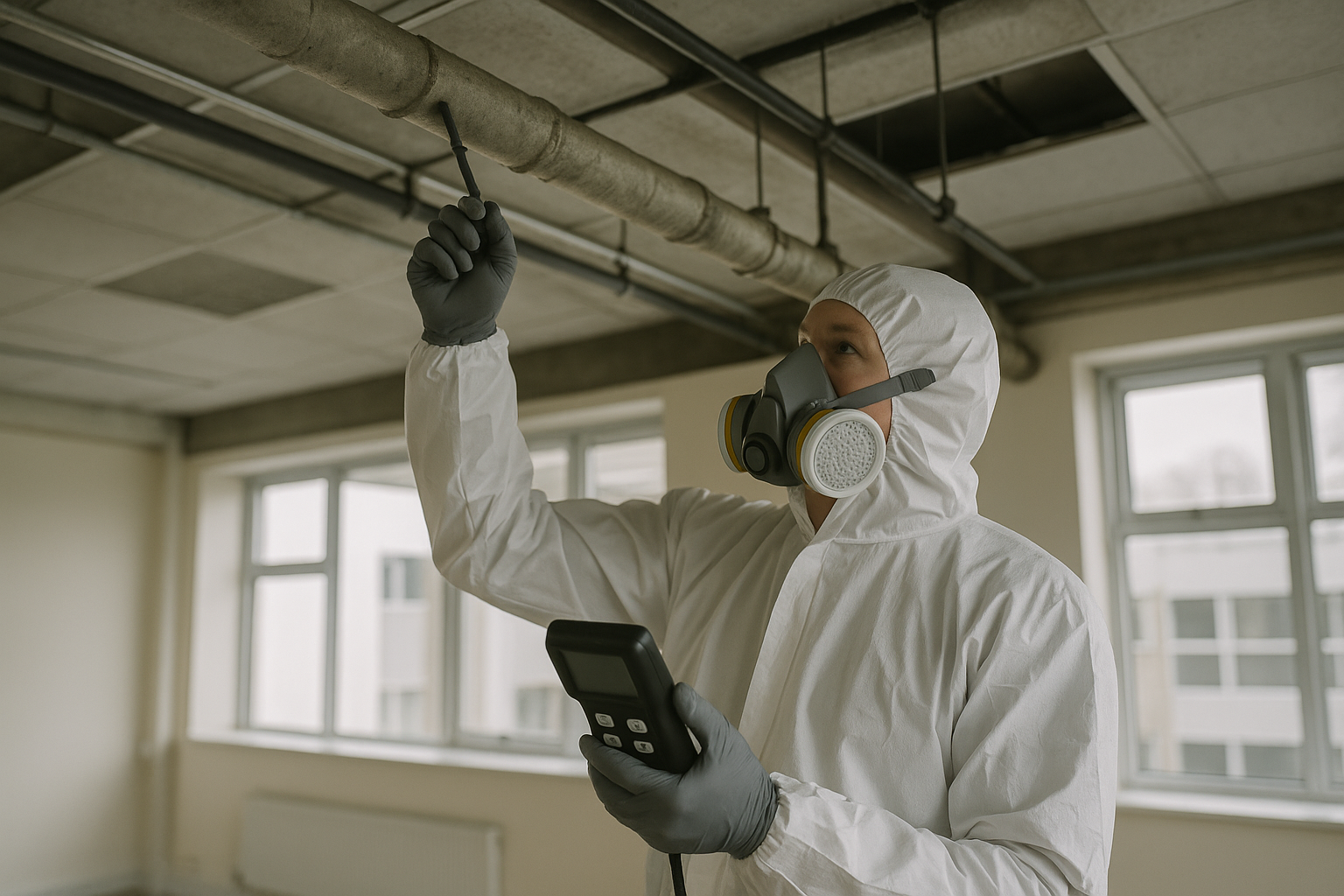
A cracked drain, a leaking soil stack or an exposed service run can turn asbestos pipes from a forgotten legacy material into an urgent site risk. Across the UK, asbestos cement pipework still appears in older buildings, buried utility routes, schools, industrial estates and housing stock, and the biggest problems usually start when someone disturbs it without knowing what it is.
If you manage property, estates, maintenance or refurbishment works, asbestos pipes need attention before contractors pick up tools. Good planning helps you avoid fibre release, project delays, contaminated work areas and the kind of emergency decisions that cost far more than getting the right survey in place early.
What are asbestos pipes and why were they used?
In most cases, asbestos pipes are made from asbestos cement. This is a hard, dense material created by mixing cement with asbestos fibres to improve strength, durability and resistance to corrosion.
They were widely used because they were practical, relatively inexpensive and suitable for a range of internal and external services. Many installations remained in place for decades, which is why asbestos pipes still turn up during repairs, surveys and redevelopment projects today.
Use of asbestos in pipes
The use of asbestos in pipes was common in both public infrastructure and private construction. You could find asbestos cement pipework in water supply systems, drainage runs, soil stacks, rainwater goods, ducts, service risers and some industrial process lines.
Specifiers favoured asbestos cement because it offered a useful combination of performance and cost. It was lighter than some metal alternatives, did not rust in the same way as steel and coped well in many buried or exposed environments.
- Water mains and service connections
- Drainage and sewer pipework
- Soil vent pipes
- Rainwater downpipes and hopper heads
- External waste pipes
- Service ducts and plant areas
- Agricultural and industrial utility routes
Most asbestos cement products used chrysotile, though some older materials may contain amphibole asbestos types. Because the fibres are bound into a cement matrix, the material is generally lower risk than friable asbestos insulation, but that does not make it safe to cut, drill, snap or remove without proper controls.
Where asbestos pipes are still found in UK properties
Many people think of asbestos as insulation board or sprayed coating, but asbestos pipes remain a common legacy material in older premises. They are often discovered during reactive maintenance rather than planned asbestos management.
Older estates and sites with poor records are especially vulnerable. The first sign may be a trench opened for repair, a cracked external pipe, or a contractor exposing a cement-like service line during intrusive works.
Common locations for asbestos pipes
- Schools and colleges
- Hospitals and healthcare sites
- Local authority housing estates
- Factories and warehouses
- Farm buildings and rural infrastructure
- Commercial premises altered during the asbestos era
- Shared service corridors and buried estate-wide routes
Buried pipework is a particular challenge because it may not appear on modern plans. If records are incomplete, asbestos pipes should be treated as a realistic possibility until inspection and, where needed, sampling confirms otherwise.
Downpipes, drainpipes, and gutters
DOWNPIPES, DRAINPIPES, AND GUTTERS are among the most commonly misidentified asbestos cement products on older buildings. External rainwater goods can look harmless, but age, weathering and accidental impact can damage them.
Typical warning signs include a whitish-grey or cement-coloured finish, a rigid brittle feel and a thicker wall than modern plastic systems. Surface weathering, moss or lichen can make identification harder, not easier.
If you are planning repairs, replacement or façade works, do not assume old rainwater goods are safe to remove. Arrange inspection first, especially where pipework connects into soffits, hoppers or concealed drainage routes.
Are asbestos pipes dangerous?
Asbestos pipes can be dangerous when disturbed. Intact asbestos cement in good condition is usually considered lower risk than friable asbestos insulation, but the risk changes quickly when the material is broken, sawn, drilled, ground, snapped or badly weathered.
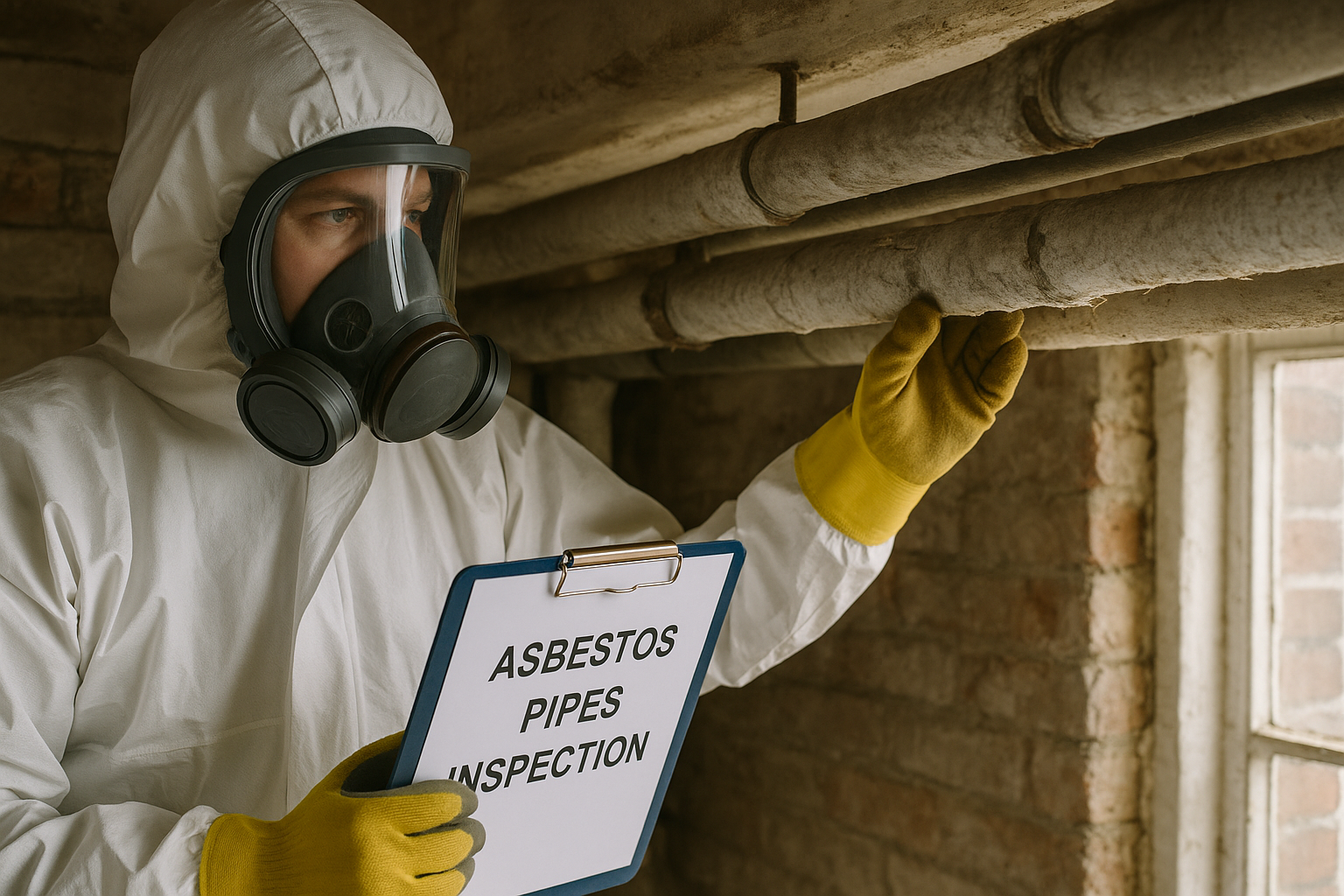
The main health concern is inhalation of airborne asbestos fibres. That means the highest risk usually arises during work activities rather than ordinary occupation.
How exposure to asbestos pipes happens
Exposure commonly happens when people work on pipework without accurate asbestos information. The danger is often less about the pipe existing and more about someone mistaking it for ordinary cement, fibre cement or obsolete plastic.
- Plumbers
- Groundworkers
- Drainage engineers
- Builders
- Demolition teams
- Maintenance operatives
- Utility contractors
- Caretakers and site staff
One mistaken cut into suspect pipework can stop a project immediately. It can also trigger area isolation, emergency cleaning, waste management issues and a review of whether other hidden asbestos materials are present.
Health risks linked to disturbed asbestos pipes
When fibres are released and inhaled, asbestos exposure is associated with serious diseases. These include mesothelioma, asbestos-related lung cancer, asbestosis, pleural thickening and pleural plaques.
The level of risk depends on the type of material, its condition, the task being carried out and the controls used. That is why identifying asbestos pipes before maintenance, refurbishment or demolition matters so much.
Asbestos pipe insulation and other asbestos insulation risks
Not every pipe-related asbestos risk comes from asbestos cement pipework itself. Older buildings may also contain asbestos pipe insulation, lagging, insulation debris, insulating wraps, gaskets and associated residues around valves, joints and service penetrations.
This distinction matters. Asbestos cement is usually more tightly bound, while asbestos insulation can be far more friable and more likely to release fibres if disturbed.
Asbestos pipe insulation
Asbestos pipe insulation was used to reduce heat loss and protect services. It may appear as pre-formed sections, lagging, cloth wraps, insulating cement or debris around older heating systems and plant areas.
If you uncover soft, crumbly or layered insulation around old pipework, treat it as a higher-risk material until proven otherwise. Do not rely on visual judgement alone, and do not allow maintenance teams to strip it back for a better look.
Zonolite insulation
Zonolite Insulation is a vermiculite-based insulation product associated with asbestos contamination in some cases. While it is not the same thing as asbestos cement pipework, it is relevant because older buildings with one asbestos-related material may contain others in lofts, service voids or around pipe penetrations.
If refurbishment works involve ceilings, risers, loft spaces or boxed-in services, ask your surveyor to consider whether loose-fill insulation is present alongside suspect pipework. Cross-contamination and hidden residues can complicate what initially looks like a simple pipe replacement job.
Mr. Fluffy insulation
Mr. Fluffy Insulation is best known from a major contamination issue outside the UK, but it still appears in search results and public discussions about asbestos insulation. For UK property managers, the practical lesson is simple: names and brands matter less than identifying the actual material on site and assessing the real risk.
If contractors mention historic insulation products or assume something is harmless because it does not look like pipe lagging, stop and verify. Any suspect insulation around pipework, ducts or roof spaces should be assessed by a competent asbestos professional.
Drinking water and asbestos pipes
Drinking Water concerns are one of the most common reasons people search for information about asbestos pipes. In the UK, the established primary health concern with asbestos is inhalation rather than ingestion.

That means the main risk from asbestos cement water pipes is usually linked to damage, repair, cutting, deterioration or replacement work rather than normal day-to-day water use. The practical issue for dutyholders is controlling disturbance, not creating alarm where there is no evidence of fibre release into air.
What to do if you are concerned about water supply pipework
- Check available drawings, O&M manuals and asbestos records.
- Confirm whether the pipe is private, shared or part of a wider utility network.
- Do not authorise cutting or removal based on guesswork.
- Arrange competent inspection and sampling where necessary.
- Use suitably trained contractors for any repair, encapsulation or replacement work.
If a water supply pipe is suspected to be asbestos cement, the sensible response is verification and planning. Most costly incidents happen when the material is assumed rather than confirmed.
How to identify asbestos pipes
You should never rely on appearance alone, but there are common clues that make asbestos pipes suspect. A competent surveyor will consider age, location, use, visible condition and surrounding materials before deciding whether sampling is needed.
Visual assessment can guide decisions. It cannot provide legal certainty on its own.
Common visual characteristics
- Grey, off-white or whitish cement colouring
- Smooth but slightly coarse surface texture
- Rigid, brittle appearance
- Thicker wall than many modern plastic pipes
- Weathering, lichen or surface erosion on external sections
- Older cement-style joints or couplings
Buried sections may only become visible during excavation. Broken edges, cement texture and ageing fittings often raise suspicion, but laboratory analysis is still needed for confirmation.
Why sampling matters
Only suitable sampling and laboratory analysis can confirm whether suspect pipework contains asbestos. Breaking off a piece without planning is exactly what should be avoided.
If there is doubt, arrange professional inspection and testing before any intrusive work starts. That protects workers, keeps the site compliant and avoids turning a manageable issue into a contamination event.
Legal duties for managing asbestos pipes
If you are responsible for non-domestic premises, or the common parts of multi-occupied residential buildings, you may have duties under the Control of Asbestos Regulations. The practical requirement is straightforward: asbestos must be identified and managed so that people are not exposed.
For many dutyholders, the issue is not whether asbestos pipes exist somewhere on site. The real question is whether you have enough reliable information to prevent accidental disturbance during maintenance, repair, refurbishment or demolition.
What duty to manage means in practice
- Identify suspect asbestos-containing materials
- Assess their condition and likelihood of disturbance
- Maintain an up-to-date asbestos register
- Share relevant information with anyone who may disturb them
- Review the arrangement regularly
Buried, boxed-in or concealed pipework can easily be missed. That is why good records, site-specific surveys and clear contractor communication are essential.
HSG264 and survey requirements
Asbestos survey work should follow HSG264. The right survey depends on what you are planning to do.
For routine occupation and normal maintenance, a management survey helps locate, as far as reasonably practicable, asbestos-containing materials that could be disturbed. If you are planning major intrusive work, strip-out or structural alterations, a more intrusive survey is required.
Before demolition or full structural take-down, a demolition survey is typically needed so hidden asbestos materials can be identified before the building fabric is disturbed.
HSE guidance on site
HSE guidance is clear on the practical point: no one should disturb asbestos-containing materials without proper assessment, planning and controls. For asbestos pipes, that means plumbers, drainage contractors, groundworkers and maintenance teams need the right information before work begins.
The correct control measures depend on the material, work method and likely fibre release. If the pipe is damaged or likely to be disturbed, competent contractors and suitable waste procedures are essential.
What to do if you find asbestos pipes
Finding suspect asbestos pipes does not always mean immediate removal is required. The right response depends on condition, accessibility, location and whether the material is likely to be disturbed.
The worst approach is improvisation. If contractors have already exposed suspect pipework, stop and assess before any further work continues.
Immediate steps to take
- Stop work in the affected area.
- Prevent further disturbance.
- Keep others away from the material.
- Do not sweep, drill, cut or break the pipe.
- Contact a competent asbestos professional.
- Record the location and inform the dutyholder or site manager.
If the pipe has been damaged, the area may need to be isolated while the situation is assessed. The next step should be based on evidence, not assumptions from site staff or general builders.
Manage in place or remove?
Undamaged asbestos cement pipework in a low-risk location can sometimes be managed in place. That may involve labelling, recording, monitoring condition and making sure anyone likely to work nearby has the right information.
Removal is more likely where the pipe is damaged, deteriorated, in the way of planned works or in a location where accidental disturbance is likely. The decision should be based on condition, risk and the planned use of the area.
Compensation for exposure to asbestos insulation and pipe-related materials
Compensation for Exposure to Asbestos Insulation is a subject that often comes up after historic maintenance work, industrial employment or unplanned site incidents. If someone believes they were exposed through asbestos pipe insulation, lagging, damaged asbestos pipes or other asbestos-containing materials, legal and medical advice may be needed.
From a property management perspective, the key lesson is prevention and documentation. If an incident occurs, accurate records of surveys, asbestos registers, contractor briefings, work methods and site decisions can become critically important.
Practical steps after suspected exposure
- Stop the work immediately
- Secure the affected area
- Record who was present
- Document what material was disturbed and how
- Arrange competent asbestos assessment
- Report internally through the organisation’s incident process
- Seek legal or occupational health advice where appropriate
Supervisors should avoid giving off-the-cuff assurances. The right response is to preserve facts, obtain professional assessment and make sure future works are controlled properly.
Legal options for asbestos pipe exposure
Legal Options for Asbestos Pipe Exposure will depend on the circumstances. That could involve workplace exposure, contractor negligence, failures in asbestos management, or historic exposure linked to an employer or dutyholder.
Surveyors do not provide legal advice, but property managers should understand the practical side of risk reduction. If asbestos pipes are present and records are poor, every maintenance task becomes harder to defend after an incident.
When legal issues tend to arise
- Workers were not informed about known asbestos materials
- No suitable survey was commissioned before intrusive works
- Asbestos registers were missing, outdated or not shared
- Unsafe removal or breakage caused contamination
- Dutyholders failed to manage known asbestos risks
The best protection is not paperwork alone. It is a combination of competent surveys, clear communication, suitable controls and proper contractor management.
Need an asbestos survey for your property?
NEED AN ASBESTOS SURVEY FOR YOUR PROPERTY? If asbestos pipes may be present, the right survey should be arranged before maintenance becomes intrusive or refurbishment starts opening up the building.
Survey choice depends on the work you are planning. For day-to-day occupation and routine maintenance, a management survey may be enough. For intrusive projects, more targeted survey work is often needed to inspect hidden service routes, boxed-in pipework, risers, voids and buried connections.
If your site is in the capital, booking an asbestos survey London service before planned works can help identify suspect materials early. For projects in the North West, an asbestos survey Manchester can support safer planning where older estates and service infrastructure are involved.
If you manage property in the Midlands, arranging an asbestos survey Birmingham service before refurbishment or demolition can reduce the risk of costly surprises once contractors start opening up the site.
Our local teams can assist with any of the following asbestos-related works –
Our local teams can assist with any of the following asbestos-related works –
- Management surveys for occupied buildings
- Refurbishment and intrusive asbestos surveys
- Demolition surveys before structural take-down
- Sampling and laboratory testing of suspect pipework
- Asbestos registers and reinspection support
- Advice on damaged asbestos cement products
- Survey support before roofing, drainage or façade works
- Pre-purchase and pre-lease asbestos due diligence
Where asbestos pipes are part of a wider issue, surveys can also identify associated materials such as insulation debris, asbestos cement panels, service duct linings and older rainwater goods. That broader view is often what prevents repeat incidents on complex sites.
Asbestos removal near me: when local response matters
Searches for Asbestos Removal near me usually happen when a pipe has already cracked, leaked or been exposed during work. At that stage, speed matters, but so does doing the right thing in the right order.
Removal should not be the first assumption in every case. First confirm the material, assess the condition and decide whether management, repair, encapsulation or removal is the correct route.
How to choose the right next step
- Identify whether the material is suspected asbestos cement or a more friable insulation product.
- Assess whether it is damaged or likely to be disturbed.
- Review the planned works and access requirements.
- Confirm what survey information is already available.
- Use competent asbestos professionals to recommend the safest option.
For property managers, the best local support is not just someone who can remove material. It is a team that can survey, identify, advise and help you plan works properly from the start.
Practical advice for property managers dealing with asbestos pipes
Most asbestos pipe incidents are avoidable. They happen when information is missing, assumptions are made or urgent repairs move faster than the asbestos process.
A few practical controls make a big difference.
- Check asbestos records before authorising intrusive maintenance
- Flag older drainage and rainwater goods as suspect until assessed
- Brief contractors on known or presumed asbestos locations
- Do not let site teams sample materials themselves
- Update the asbestos register after discoveries or removals
- Review buried services before excavation works start
- Plan surveys early instead of waiting for reactive failures
If your building portfolio includes older schools, healthcare sites, social housing or industrial premises, asbestos pipes should be part of routine risk planning. They are easy to overlook until a repair turns into an incident.
Frequently Asked Questions
Are asbestos pipes dangerous if left alone?
Asbestos pipes in good condition are generally lower risk than friable asbestos insulation, but they can still become dangerous if damaged or disturbed. The main risk is inhaling fibres released during cutting, drilling, breakage, removal or heavy deterioration.
Can asbestos pipes contaminate drinking water?
In the UK, the primary health concern with asbestos is inhalation rather than ingestion. For asbestos cement water pipes, the main practical risk is usually during repair, deterioration or replacement work rather than normal use of drinking water systems.
How can I tell if a downpipe or drainpipe contains asbestos?
You cannot confirm asbestos by appearance alone, but older cement-like pipes with a grey or whitish finish, brittle texture and thicker walls may be suspect. Professional inspection and, where appropriate, laboratory sampling are needed for confirmation.
Do I need a survey before replacing old pipework?
If the building or service installation is old enough for asbestos-containing materials to be present, a suitable survey should be arranged before intrusive work starts. The exact survey depends on whether the work is routine maintenance, refurbishment or demolition.
Should asbestos pipes always be removed?
No. Some asbestos pipes can be managed in place if they are in good condition and unlikely to be disturbed. Removal is more likely where the material is damaged, deteriorated, accessible to accidental impact or affected by planned works.
If you suspect asbestos pipes in your property, do not wait for a leak, breakage or contractor mistake to force the issue. Supernova Asbestos Surveys can help with asbestos surveys, sampling and practical advice nationwide. Call 020 4586 0680 or visit asbestos-surveys.org.uk to book the right survey for your site.