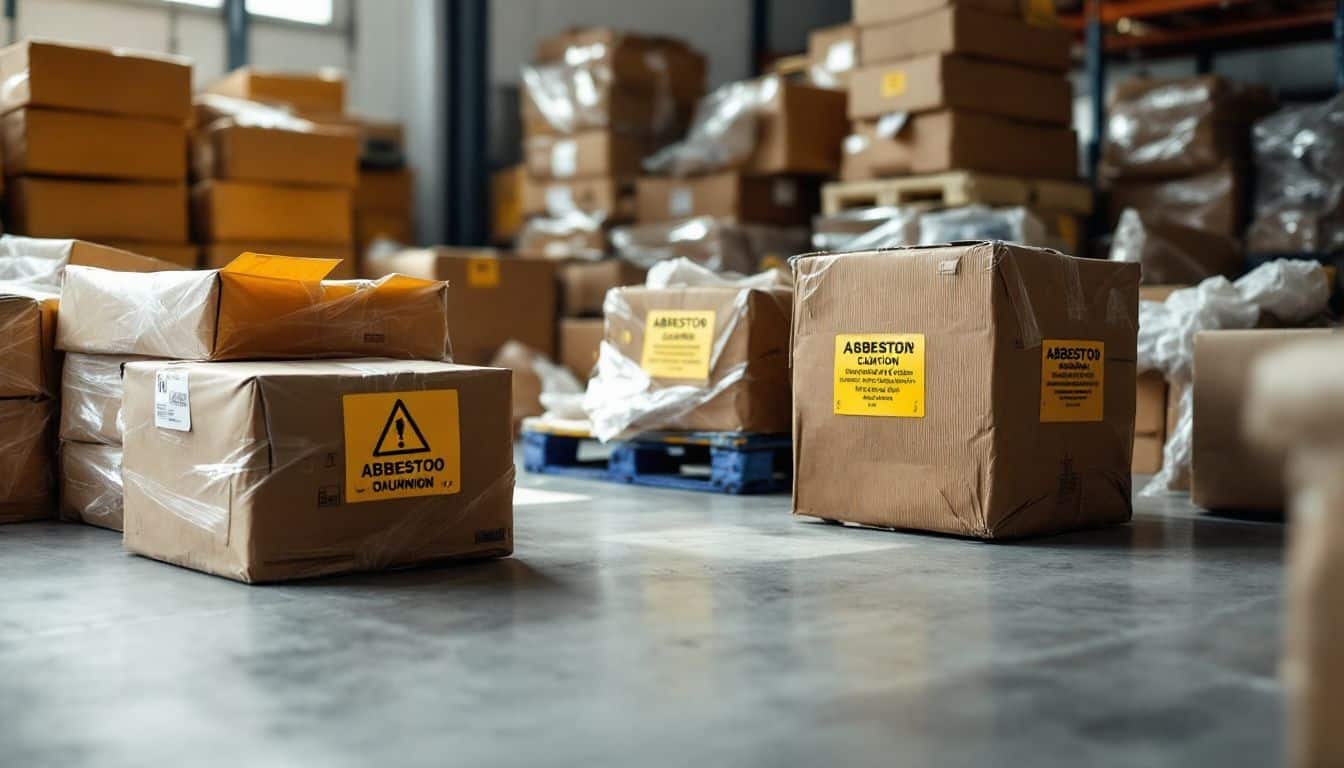
Asbestos Products in the UK: Import Bans, Export Controls, and What You Need to Know
Asbestos products were once woven into the fabric of British construction. From ceiling tiles and pipe lagging to roofing sheets and floor tiles, asbestos-containing materials were used extensively across the UK for much of the twentieth century. Today, the trade in asbestos products is tightly controlled — and in most cases, outright banned.
Understanding where the law stands is essential for anyone managing property, overseeing construction work, or dealing with older buildings. Whether you are a facilities manager, a landlord, or a contractor, knowing your obligations around asbestos products could be the difference between compliance and a criminal prosecution.
Why the UK Banned Asbestos Products
The UK did not arrive at a total ban overnight. It came in stages, as the evidence linking asbestos exposure to fatal diseases became impossible to ignore. Asbestos fibres, when disturbed and inhaled, can cause mesothelioma, lung cancer, and asbestosis — conditions that can take decades to develop but are often fatal once diagnosed.
Blue asbestos (crocidolite) and brown asbestos (amosite) were the first to be banned from import, recognised as the most dangerous fibre types. White asbestos (chrysotile), long argued by some industries to be safer, was eventually banned in 1999 — completing a full prohibition on all asbestos products being imported into or used in the UK.
Before these controls took effect, an enormous quantity of raw asbestos fibre had already entered the country over several decades. The scale of that legacy is precisely why so many buildings constructed before 2000 still contain asbestos-containing materials (ACMs) today.
Current UK Regulations Governing Asbestos Products
The primary legal framework is the Control of Asbestos Regulations, enforced by the Health and Safety Executive (HSE). These regulations set out the duties placed on employers, building owners, and contractors when it comes to managing, handling, and disposing of asbestos products.
The Control of Asbestos Regulations
Under these regulations, employers must assess whether asbestos-containing materials are present in any premises where work is to be carried out. If ACMs are found, a management plan must be put in place, and workers who may be exposed must receive appropriate training before any work begins.
Licensed contractors are required for higher-risk asbestos removal work — for example, removing sprayed coatings, lagging, or heavily damaged insulation boards. The HSE’s guidance document HSG264 provides surveyors and duty holders with detailed technical guidance on identifying and assessing asbestos products in buildings.
The Duty to Manage
Regulation 4 of the Control of Asbestos Regulations places a specific duty to manage asbestos on those responsible for non-domestic premises. If you own or manage a commercial property, school, hospital, or any building constructed before 2000, you are legally required to:
- Identify whether asbestos products are present
- Assess the condition and risk of those materials
- Produce and maintain an asbestos management plan
- Share that information with anyone likely to disturb those materials
- Monitor the condition of ACMs regularly
Failing to meet this duty is a criminal offence. Penalties can include fines of up to £20,000 and a six-month custodial sentence in a magistrates’ court. For the most serious breaches, unlimited fines and up to two years’ imprisonment are possible in a Crown Court.
Import Restrictions on Asbestos Products
The UK ban on importing asbestos products is comprehensive. All six commercially used asbestos types — chrysotile, crocidolite, amosite, anthophyllite, tremolite, and actinolite — are prohibited from being imported into the UK. This applies not only to raw asbestos fibre but also to products that contain asbestos as a component.
Asbestos-cement sheets, gaskets, friction materials, and textiles containing asbestos fibres cannot legally be brought into the UK market. The HSE works alongside Border Force to monitor and intercept shipments suspected of containing prohibited asbestos products.
Why Vigilance Still Matters
Despite the ban, asbestos products can still enter the UK through indirect routes — particularly in goods manufactured in countries where asbestos remains in active use. Some nations continue to mine and incorporate chrysotile into construction materials, brake pads, and industrial equipment.
Importers have a responsibility to verify the composition of goods before bringing them into the country. Purchasing cheap construction materials from suppliers in countries with weaker asbestos controls carries a real legal and health risk. If asbestos is discovered in imported goods, the importer faces prosecution — not just the supplier.
Export Controls and the Prior Informed Consent Regime
The UK’s approach to exporting asbestos products is governed by the Prior Informed Consent (PIC) regulatory regime. This system requires that before any controlled substance — including certain asbestos types — can be exported, the importing country must be formally notified and must give its explicit consent.
How the PIC System Works
PIC is an internationally recognised framework designed to ensure that countries receiving hazardous chemicals and substances are fully informed about the risks involved. The UK’s implementation aligns with the Rotterdam Convention, which lists chrysotile asbestos as a substance subject to PIC procedures.
Under this system, UK exporters must:
- Notify the relevant authority before any export of a PIC-listed substance
- Obtain documented consent from the importing country’s designated national authority
- Maintain accurate records of all export activities and asbestos inventories
- Report exports to ensure transparency and regulatory accountability
Non-compliance with PIC requirements can result in criminal prosecution. The framework is designed to prevent the UK from effectively exporting health hazards to countries with less developed regulatory systems.
The Broader International Context
The UK’s controls on asbestos products also connect to the Basel Convention, which governs the transboundary movement of hazardous wastes. Asbestos waste — including materials removed during refurbishment or demolition — is subject to strict controls on how it can be transported across borders.
Licensed waste carriers must be used, and the receiving country must have appropriate facilities to handle the material safely. This is not a bureaucratic formality — it is a genuine safeguard against asbestos waste ending up in communities without the means to manage it safely.
Types of Asbestos Products Still Found in UK Buildings
While importing and manufacturing asbestos products is banned, a vast quantity of ACMs remain in the existing building stock. Anyone managing older properties needs to know where asbestos products are most commonly found — and what they look like in practice.
- Insulation boards: Used extensively in partition walls, ceiling tiles, and fire doors in buildings from the 1950s to 1980s
- Pipe lagging: Asbestos insulation wrapped around hot water and heating pipes, common in older boiler rooms and plant rooms
- Sprayed coatings: Applied to structural steelwork and ceilings as fireproofing, particularly in industrial and commercial buildings
- Asbestos cement: Found in roofing sheets, guttering, water tanks, and external cladding — one of the most widespread asbestos products in UK buildings
- Floor tiles: Vinyl floor tiles from the 1960s and 1970s often contain chrysotile asbestos
- Textured coatings: Products such as Artex applied to ceilings and walls can contain asbestos fibres
- Gaskets and rope seals: Found in older boilers, furnaces, and industrial equipment
The presence of these materials does not automatically mean a building is dangerous. Asbestos products in good condition and left undisturbed pose a low risk. The danger arises when they are damaged, deteriorating, or disturbed during maintenance or renovation work.
What Happens When Asbestos Products Are Found
If an asbestos survey identifies ACMs in your property, the appropriate response depends on the type, condition, and location of the material. Not all asbestos needs to be removed — in many cases, managing it in place is the safer and more practical option.
However, when removal is necessary — perhaps because of planned refurbishment or because materials are in poor condition — it must be carried out correctly. Asbestos removal must be undertaken by licensed contractors for most notifiable work, following strict procedures to prevent fibre release and ensure safe disposal.
Asbestos waste must be double-bagged in clearly labelled, UN-approved packaging and disposed of at a licensed hazardous waste facility. It cannot be mixed with general construction waste — doing so is a criminal offence in its own right.
The Role of Asbestos Surveys
Before any construction, refurbishment, or demolition work on a pre-2000 building, an asbestos survey is a legal requirement. There are two main types, and choosing the right one matters.
Management Surveys
A management survey is used to locate and assess asbestos products that could be disturbed during normal occupation and routine maintenance. It is the standard survey required to fulfil the duty to manage and should be in place for all non-domestic premises built before 2000.
The survey produces an asbestos register — a document that records the location, type, and condition of all identified or presumed ACMs. This register must be kept up to date and made available to any contractor working on the building.
Refurbishment and Demolition Surveys
A demolition survey is required before any work that will disturb the building fabric. It is more intrusive than a management survey and aims to locate all ACMs in the areas to be affected — including those hidden within the structure, behind linings, or beneath floor coverings.
Skipping this survey before refurbishment or demolition is not just a regulatory failure — it puts workers at direct risk of exposure to asbestos fibres, with potentially fatal consequences.
Enforcement and Penalties
The HSE takes breaches of asbestos regulations seriously. Inspectors carry out both planned and reactive inspections, and they have the power to issue improvement notices, prohibition notices, and prosecute duty holders who fail to comply.
Penalties are not limited to fines. Directors and senior managers can face personal prosecution if it can be shown that a breach occurred with their consent or due to their negligence. The reputational damage from an asbestos-related prosecution can be severe and long-lasting.
The HSE publishes details of enforcement actions and prosecutions, and these are publicly accessible. Property managers and employers should treat asbestos compliance as a core part of their health and safety obligations — not an optional extra.
Practical Steps for Property Managers and Employers
If you manage or own a building constructed before 2000, here is what you should have in place:
- A current asbestos register identifying all known or presumed ACMs
- A written asbestos management plan reviewed at regular intervals
- Records of all asbestos surveys, re-inspections, and any remedial work carried out
- A system for informing contractors and maintenance workers about ACMs before they start work
- A process for reviewing the asbestos register whenever new work is planned
If you are unsure whether your building has been properly surveyed, or if your existing asbestos register is out of date, commissioning a new survey is the most straightforward way to establish your legal position and protect everyone who uses the building.
Asbestos Surveys Across the UK
Supernova Asbestos Surveys provides fully accredited asbestos surveys nationwide, carried out by experienced, qualified surveyors. If you need an asbestos survey London property managers rely on, our London team is ready to assist. We also cover the Midlands — if you require an asbestos survey Birmingham based clients trust — and the North West, with an asbestos survey Manchester service available for commercial and residential properties alike.
With over 50,000 surveys completed, we have the experience and accreditation to help you meet your legal obligations quickly and accurately. Call us on 020 4586 0680 or visit asbestos-surveys.org.uk to book a survey or discuss your requirements.
Frequently Asked Questions
Are all asbestos products banned from import into the UK?
Yes. All six types of asbestos — including chrysotile (white), crocidolite (blue), and amosite (brown) — are banned from being imported into the UK. This ban covers raw asbestos fibre and any products that contain asbestos as a component. Importers who bring goods containing asbestos into the UK can face criminal prosecution, regardless of whether the asbestos was declared on the shipment.
Can asbestos products be exported from the UK?
The export of asbestos products from the UK is controlled through the Prior Informed Consent (PIC) regime. Exporters must notify the relevant authority and obtain documented consent from the receiving country before any export can take place. Non-compliance with PIC requirements is a criminal offence. The regime aligns with the Rotterdam Convention and is designed to prevent hazardous substances from being shipped to countries without adequate regulatory protections.
Do I need to remove asbestos products if they are found in my building?
Not necessarily. Asbestos products that are in good condition and are unlikely to be disturbed can often be managed safely in place. The priority is to assess the condition and risk of the material, record it in an asbestos register, and monitor it regularly. Removal becomes necessary when materials are deteriorating, are at risk of being disturbed, or when refurbishment or demolition work is planned in the area.
What type of asbestos survey do I need?
The type of survey depends on what you intend to do with the building. A management survey is appropriate for ongoing occupation and routine maintenance — it identifies ACMs that could be disturbed during normal use. A refurbishment and demolition survey is required before any work that will disturb the building fabric. Both types must be carried out by a qualified surveyor, and the results must be recorded in an asbestos register.
What are the penalties for failing to comply with asbestos regulations?
Penalties under the Control of Asbestos Regulations range from improvement notices through to criminal prosecution. In a magistrates’ court, fines of up to £20,000 and custodial sentences of up to six months are possible. In a Crown Court, unlimited fines and up to two years’ imprisonment can be imposed. Individual directors and managers can also face personal prosecution where a breach is linked to their negligence or consent.