A cracked ceiling coating, an old floor tile or a weathered garage roof can look harmless until somebody drills, sands or strips it out. Asbestos testing is the only reliable way to confirm whether a suspect material contains asbestos, and that answer can prevent unsafe work, costly delays and breaches of legal duties.
If you manage property, oversee maintenance or plan building work, guessing is not good enough. You cannot identify asbestos by sight alone, and the age or appearance of a material should never replace proper asbestos testing.
Why asbestos testing matters in older properties
Asbestos was used widely across UK homes, commercial buildings and public premises because it was durable, heat resistant and affordable. Many older properties still contain asbestos-containing materials in places that seem ordinary until they are disturbed.
That is why asbestos testing matters. It gives you evidence instead of assumptions, so you can decide whether a material can stay in place, needs to be managed, or must be removed before work starts.
The main risk is disturbance. Materials in good condition may present a lower risk if left alone and managed properly, but once they are cut, drilled, broken, sanded or removed, fibres can be released.
For homeowners, landlords, facilities teams and dutyholders, the first question is usually simple: do you need one suspect item analysed, or do you need a survey? Getting that right early saves time and helps you stay compliant with the Control of Asbestos Regulations, HSG264 and relevant HSE guidance.
Where asbestos is commonly found
Asbestos can be present in both higher-risk and lower-risk products. Some materials, such as asbestos cement, hold fibres more tightly. Others, including insulating products, can release fibres more easily if damaged.
Common indoor locations
- Textured coatings on ceilings and walls
- Asbestos insulating board in partitions, soffits and risers
- Pipe lagging and boiler insulation
- Vinyl floor tiles and bitumen adhesive
- Ceiling tiles and backing boards
- Loose fill insulation in lofts or voids
- Bath panels, toilet cisterns and service boxing
Common outdoor locations
- Garage and outbuilding roof sheets
- Soffits and fascias
- Rainwater goods and flues
- Wall cladding and cement panels
- Shed linings and outbuilding partitions
If a building predates the asbestos ban, the safest approach is to assume a suspect material may contain asbestos until asbestos testing proves otherwise. That reflects HSE guidance and reduces the chance of accidental exposure.
What asbestos testing actually involves
At its simplest, asbestos testing means taking a representative sample of a suspect material and sending it to a competent laboratory for analysis. The result confirms whether asbestos fibres are present in that sample.
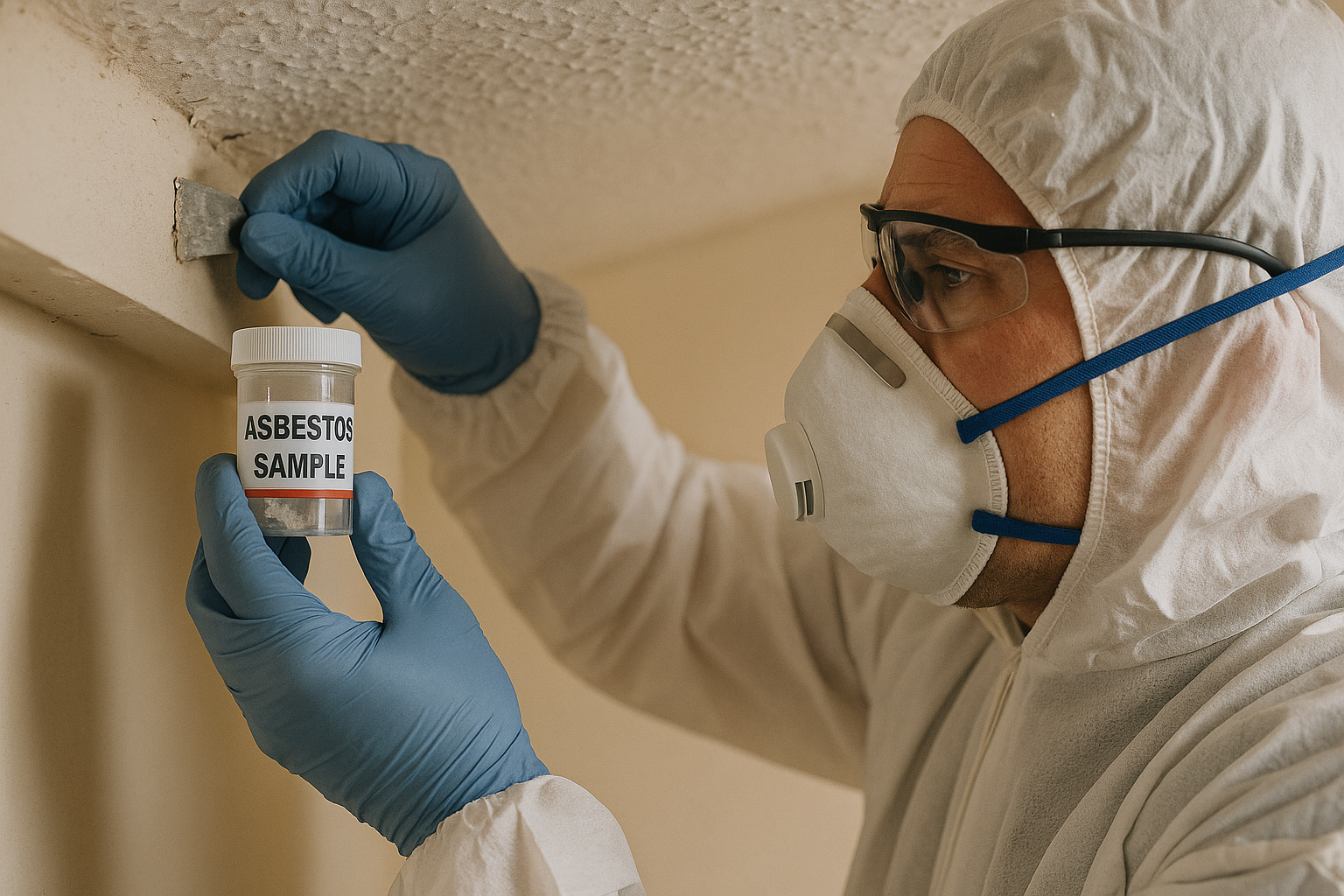
That sounds straightforward, but the context matters. A single sample result answers a narrow question about one item. It does not automatically tell you what else is present in the building, whether hidden asbestos exists nearby, or whether a wider survey is required.
Professional sampling
Professional sampling is usually the safest option where the material is overhead, difficult to reach, damaged, friable or part of a wider property risk. A trained surveyor can minimise disturbance and advise on the next step.
If you need clear answers on a suspect material, arranging professional asbestos testing is often faster and safer than trying to piece together isolated results yourself.
Self-sampling
Self-sampling can be suitable in limited domestic situations where there is one accessible suspect material and the sample can be taken with minimal disturbance. It is not a substitute for a survey, and it does not fulfil the duty to manage asbestos in non-domestic premises.
The key point is simple: the result applies only to the sample submitted. If you are responsible for a workplace, communal area or a building about to undergo intrusive works, isolated asbestos testing is rarely enough on its own.
Asbestos testing kit: when it helps and when it does not
An asbestos testing kit can be useful when you have a single suspect material in a domestic setting and need a laboratory answer. It is best seen as a sample submission pack, not as a replacement for a building survey.
If you are considering an asbestos testing kit, check exactly what is included and what it is designed to do. A proper kit should help you collect a small sample safely, seal it correctly and return it to the laboratory with clear instructions.
When a kit may be suitable
- One accessible suspect material in a domestic property
- No major refurbishment or demolition planned
- The material can be sampled with minimal disturbance
- You only need confirmation on that specific item
When a kit is not enough
- You manage non-domestic premises or communal areas
- Multiple suspect materials are present
- The material is damaged, friable or hard to reach
- Refurbishment or demolition works are planned
- You need an asbestos register or management plan
If you are comparing products online, look beyond price. Check how many samples are included, whether postage is covered, how results are issued and whether the provider explains what to do after a positive result.
For domestic users who only need one sample analysed, a testing kit can be practical. If there is any doubt about safety or legal scope, arrange professional advice before taking a sample.
PPE and RPE for safe asbestos testing
If self-sampling is appropriate, the protective equipment matters just as much as the laboratory result. Taking a sample without suitable PPE and RPE is a false economy.
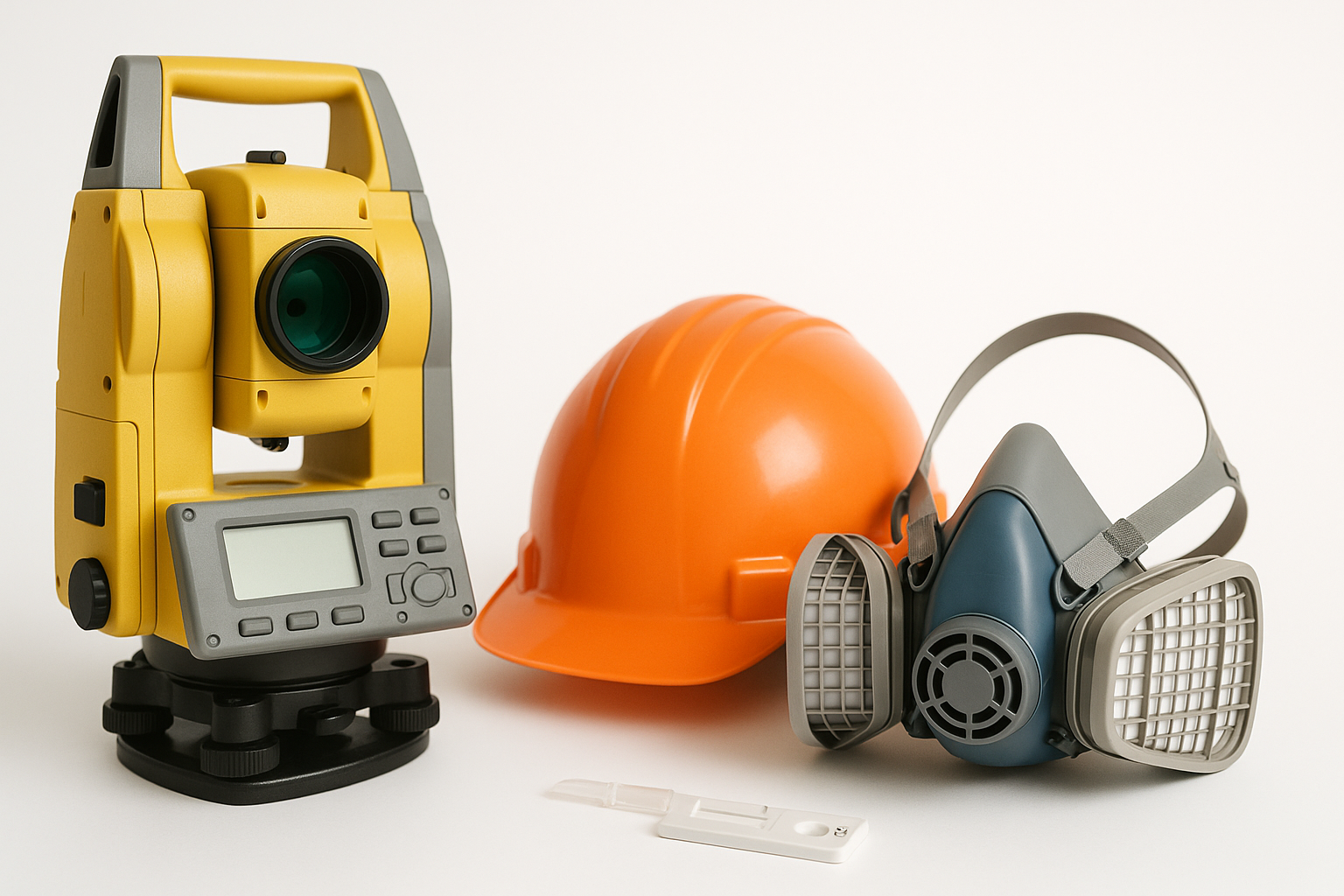
PPE helps stop dust settling on your skin and clothing. RPE protects your breathing zone from airborne fibres, which matters because inhalation is the main route of harm.
What PPE means
PPE usually includes disposable gloves and a disposable coverall. The aim is to reduce contamination and stop dust being carried into other parts of the property.
Disposable overshoes can also help if the area is dusty. Used PPE should be removed carefully, bagged as instructed and never shaken out indoors.
What RPE means
RPE stands for respiratory protective equipment. For limited sampling, an FFP3 disposable mask is generally the minimum standard expected for protection against asbestos fibres. A basic paper dust mask from a DIY shop is not suitable.
If a sample pack does not include appropriate respiratory protection or clearly state what is needed, it is not properly specified for asbestos work.
What a sensible sampling pack should include
- FFP3-rated disposable mask
- Disposable gloves
- Disposable coverall
- Sealable sample bags
- Labels and submission form
- Clear instructions for dampening, sampling and sealing
- Guidance for cleaning the immediate area afterwards
These are not optional extras. They are part of responsible asbestos testing where self-sampling is genuinely suitable.
How many samples do you need?
One sample is not always enough. Different materials in the same room may have been installed at different times, by different contractors, and may contain different asbestos types or none at all.
A textured ceiling, the adhesive beneath old floor tiles and a panel boxing in pipework should not be treated as one material simply because they are close together. Each distinct suspect material may need separate asbestos testing.
Practical rules for sample numbers
- Take separate samples from different material types
- Take separate samples where appearance, age or location differs
- Do not assume similar-looking products are identical
- If planned works are extensive, do not rely on ad hoc sampling alone
For a single garage roof sheet at a domestic property, one sample may be enough. For a flat refurbishment involving ceilings, flooring, risers and partitions, isolated sampling is unlikely to give you enough information to proceed safely.
When a survey is better than asbestos testing alone
Asbestos testing answers a narrow question: does this sample contain asbestos? A survey answers a broader and often more useful question: what asbestos-containing materials are present, where are they, what condition are they in, and what action is needed?
That distinction matters under the Control of Asbestos Regulations. If you are the dutyholder for non-domestic premises or communal parts of residential buildings, you need enough information to manage asbestos properly.
A few sample results on their own will not create an asbestos register or management plan. In many cases, the correct next step is a survey carried out to HSG264 principles.
Management survey
A management survey is used to locate, as far as reasonably practicable, the presence and extent of suspect asbestos-containing materials that could be damaged or disturbed during normal occupancy, including routine maintenance.
This type of survey supports the duty to manage. It helps you record materials, assess condition and decide how they will be monitored, labelled, controlled or reviewed.
Refurbishment survey
If refurbishment work is planned, a refurbishment survey is needed in the areas affected. This survey is intrusive by design because hidden asbestos must be identified before contractors start opening up the building.
Trying to rely on limited asbestos testing instead can leave concealed asbestos in walls, ceilings, floor voids or service ducts. That creates risk for tradespeople and legal exposure for the client.
Demolition survey
Where a structure is due to be demolished, a demolition survey is required. Its purpose is to identify and locate asbestos-containing materials so they can be removed or otherwise dealt with safely before demolition proceeds.
This is not an area for shortcuts. Demolition without proper asbestos investigation can contaminate a site quickly and lead to major delays and clean-up costs.
Re-inspection survey
If asbestos has already been identified and is being managed in place, a re-inspection survey checks whether the condition of known materials has changed. It helps keep the asbestos register current and supports ongoing compliance.
That is particularly useful for landlords, facilities teams and managing agents responsible for older premises over time.
Practical advice for safe sample collection
Where self-sampling is appropriate, the aim is to collect the smallest representative sample with the least possible disturbance. If the material is damaged, crumbly, overhead, difficult to access or likely to release dust, stop and arrange professional help.
- Read the instructions fully before opening anything.
- Keep other people out of the area.
- Wear the supplied PPE and RPE correctly.
- Lightly dampen the sampling point if instructed.
- Take a small sample only.
- Seal the sample immediately in the correct bag.
- Wipe down the immediate area as directed.
- Bag used wipes and disposable PPE as instructed.
- Wash your hands thoroughly afterwards.
Do not vacuum debris with a standard household vacuum. Do not sand, snap or break extra material off out of curiosity. The goal of asbestos testing is controlled identification, not unnecessary disturbance.
What happens after a positive asbestos testing result?
A positive result does not automatically mean the material must be removed straight away. The correct response depends on the material type, condition, location, accessibility and whether planned works will disturb it.
In many cases, the next step is one of the following:
- Leave the material in place and manage it
- Encapsulate or protect it from damage
- Label it and record it in the asbestos register
- Arrange a survey to understand the wider risk
- Plan removal by the appropriate contractor where disturbance is unavoidable
This is where context matters more than panic. An asbestos cement sheet in good condition is a very different risk from damaged insulating board in a service riser.
If your result is positive and you are unsure what to do next, get advice before any work continues. Stopping a job for a day is far better than exposing workers or contaminating a building.
Asbestos testing for homeowners, landlords and property managers
Different people need asbestos testing for different reasons. The right approach depends on what you are responsible for and what work is planned.
Homeowners
For homeowners, asbestos testing is often about peace of mind before DIY, repairs or buying a property with older materials. If you only have one suspect item, a sample may be enough.
If you are planning structural changes, new bathrooms, rewiring or kitchen alterations, a survey is usually the safer route. Hidden materials are common in ceilings, partition walls, ducts and floor build-ups.
Landlords
Landlords need to think about tenant safety, communal areas and contractor exposure. In blocks, the common parts fall within the duty to manage, so isolated asbestos testing may not be sufficient.
If asbestos has already been identified, keep records current and review condition regularly. If it has not been assessed properly, start with the right survey rather than waiting for maintenance to uncover a problem.
Property managers and dutyholders
For property managers, asbestos testing should sit within a wider compliance process. You need to know what is present, where it is, who might disturb it and what controls are in place.
That usually means combining laboratory results with clear site records, contractor communication and periodic review. If you manage multiple sites, consistency matters just as much as speed.
Common mistakes to avoid
Most asbestos problems are not caused by the material itself. They are caused by poor decisions before work starts.
- Assuming a material is safe because it looks solid
- Relying on old paperwork that does not match current building layouts
- Using asbestos testing where a full survey is required
- Letting contractors start before suspect materials are checked
- Taking multiple samples without proper PPE or RPE
- Forgetting that different layers can contain different materials
- Ignoring a positive result because the material seems undamaged
The practical fix is straightforward: pause, identify the scope of work, and choose the correct level of asbestos investigation before anybody starts disturbing the building fabric.
Choosing the right asbestos testing service
Not all enquiries need the same response. The quickest job is not always the right one, and the cheapest option can become expensive if it leaves gaps in your information.
When choosing asbestos testing, ask these questions:
- Is this a single material sample or a wider property issue?
- Is the property domestic, commercial or mixed-use?
- Are any works planned that will disturb the fabric of the building?
- Do you need a one-off result, or an asbestos register and management advice?
- Is the suspect material easy to access and in sound condition?
If the answer points to a wider risk, move beyond isolated sampling. For planned works in a capital project, for example, an asbestos survey London service may be more appropriate than ad hoc samples alone. The same applies to regional portfolios where a local asbestos survey Manchester team can support surveys, sampling and follow-up actions efficiently.
If you simply need a second route to book a sample analysis service, you can also arrange asbestos testing directly online.
How to decide between asbestos testing and a survey
If you are unsure which route to take, use this practical rule of thumb.
- Choose asbestos testing when you have one accessible suspect material and only need to know whether that item contains asbestos.
- Choose a survey when you are responsible for a non-domestic property, communal areas, planned refurbishment, demolition, or multiple suspect materials.
That simple distinction prevents a lot of wasted time. It also helps you avoid paying for the wrong service and still ending up without the information you actually need.
Where there is any uncertainty, ask for advice before sampling or starting work. A short conversation at the start can prevent exposure, project delays and unnecessary remedial costs later.
Frequently Asked Questions
Can asbestos be identified without testing?
No. You cannot confirm asbestos by sight alone. Materials can look identical but contain different fibres or no asbestos at all, which is why asbestos testing is needed for reliable identification.
Is asbestos testing enough before refurbishment work?
Usually not. If refurbishment will disturb the building fabric, a refurbishment survey is normally required in the affected areas. Isolated asbestos testing may miss hidden materials.
Can I use an asbestos testing kit at home?
Possibly, but only in limited domestic situations where the material is accessible, in reasonable condition and can be sampled with minimal disturbance. If the material is damaged, friable, overhead or part of a wider project, use a professional service instead.
What should I do if asbestos testing comes back positive?
Do not disturb the material further. The next step depends on the material type, condition and whether it will be affected by planned works. It may need to be managed in place, protected, surveyed further or removed by the appropriate contractor.
How quickly should asbestos be checked before maintenance or building work?
Before any work starts. Leaving asbestos testing until contractors are on site increases the risk of delays, accidental disturbance and compliance problems. Early identification is always the safer option.
If you need fast, reliable asbestos testing or the right survey for your property, speak to Supernova Asbestos Surveys. We provide sampling, surveys and practical advice nationwide. Call 020 4586 0680 or visit asbestos-surveys.org.uk to book.