Getting asbestos qualifications wrong is rarely a paperwork problem. It usually shows up later as a poor survey, unsafe maintenance work, confused responsibilities, or a contractor who cannot prove they are competent when it matters most.
If you manage property, oversee compliance, or appoint surveyors and contractors, you need to know what asbestos qualifications actually mean in practice. Under the Control of Asbestos Regulations, anyone who may disturb asbestos, manage asbestos risks, survey asbestos-containing materials, or carry out asbestos work must have suitable information, instruction and training for the task they perform.
That does not mean everyone needs the same certificate. A caretaker, a facilities manager, an asbestos surveyor and a licensed removal operative all need different levels of competence. The key is matching the training route to the real work on site.
Why asbestos qualifications matter
Asbestos risk management depends on competence. If the person inspecting a building does not understand likely asbestos locations, material types, sampling methods or reporting standards, the survey can be unreliable from the start.
The same applies to maintenance and removal work. Someone with asbestos awareness training is not qualified to take samples, carry out intrusive inspection work, or remove asbestos-containing materials. Awareness training is about avoiding disturbance, not intervening.
For surveying work, HSG264 sets the benchmark for how asbestos surveys should be planned, completed and reported. The Health and Safety Executive also makes clear that training must be appropriate to the work being carried out. In other words, the right asbestos qualifications support legal compliance, but they also protect building occupants, contractors and anyone else who may be affected by the work.
If you are appointing a consultant or contractor, do not stop at asking whether they are trained. Ask what qualification they hold, what practical experience they have, how their work is supervised, and what quality assurance checks are in place.
Who needs asbestos qualifications?
People often assume asbestos qualifications are only relevant to surveyors. In reality, several roles may need asbestos training, and some need formal qualifications as part of demonstrating competence.
- Asbestos surveyors and bulk samplers
- Duty holders for non-domestic premises
- Facilities and estates managers
- Maintenance teams and caretakers
- Electricians, plumbers, builders and decorators
- Main contractors planning refurbishment or demolition works
- Project managers overseeing intrusive works
- Licensed asbestos removal operatives and supervisors
- Consultants managing asbestos registers and plans
The level of training depends on the task. Someone who may come across asbestos during routine work needs awareness. Someone carrying out surveys needs a surveying qualification and practical competence. Someone removing asbestos needs role-specific training suitable for licensable or non-licensable work.
Duty holders and property managers
If you are responsible for a non-domestic building, you do not necessarily need to become a surveyor. You do, however, need enough knowledge to understand survey findings, maintain an asbestos register, arrange re-inspections, brief contractors and make sensible decisions about remedial action.
That management-level understanding is often overlooked. It is one reason asbestos information sits in a file but never gets used properly on live sites.
Tradespeople and maintenance staff
Trades working in older buildings are among the most likely to disturb asbestos accidentally. Awareness training helps them recognise suspect materials, understand the risk, and stop work before damage is done.
That training should be relevant to their day-to-day tasks. Generic slides are not enough if your team regularly works above ceilings, in risers, plant rooms, service ducts or older back-of-house areas.
Main types of asbestos qualifications and training
When people search for asbestos qualifications, they are usually trying to identify the right route for a specific role. The main categories are straightforward once you separate awareness, surveying, management and practical asbestos work.
1. Asbestos awareness training
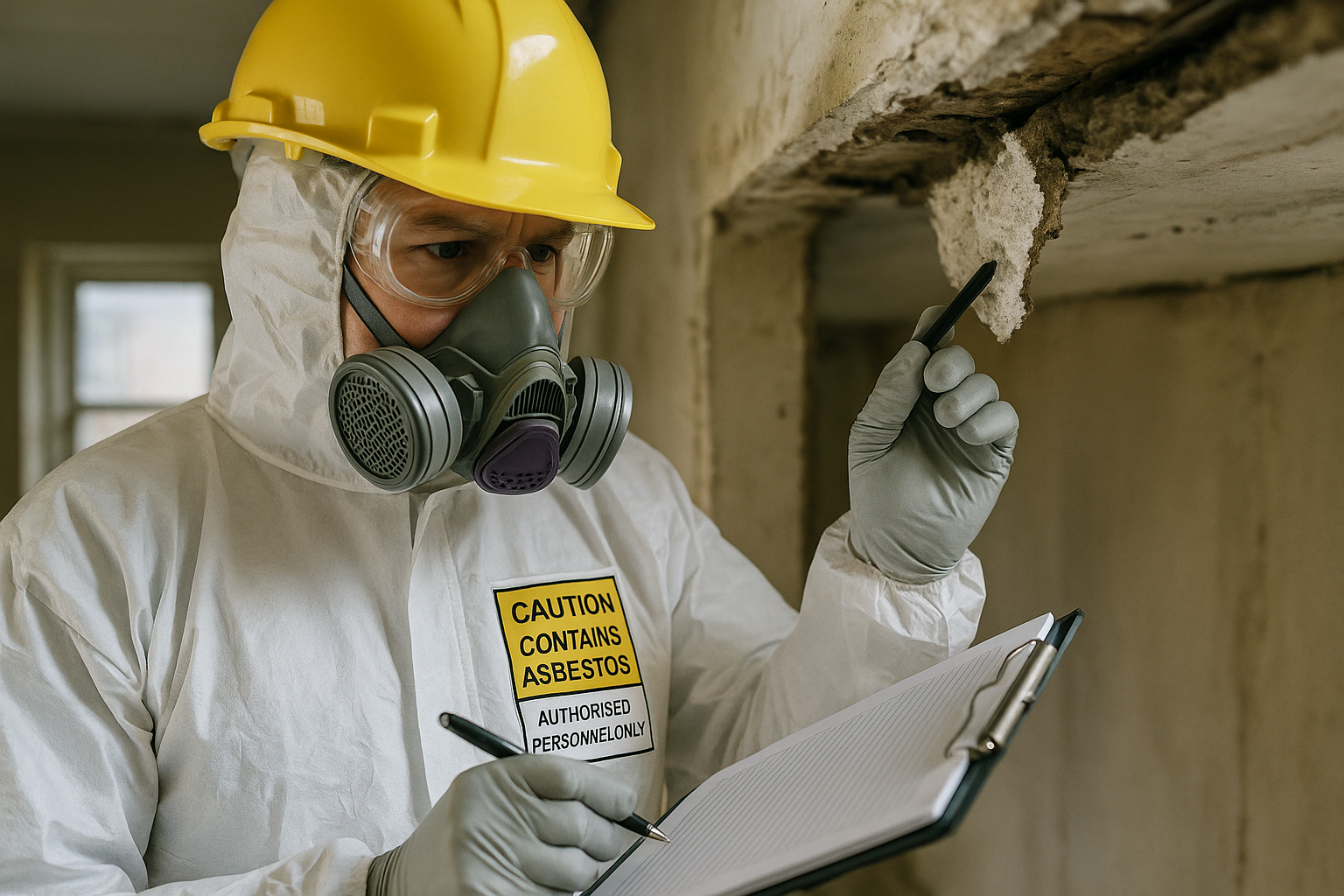
This is the baseline level of asbestos training. It is designed for people who might encounter asbestos but are not expected to disturb it deliberately.
Typical candidates include:
- Maintenance operatives
- Caretakers
- Electricians and plumbers
- Decorators and joiners
- IT and cabling installers
- General contractors working in older premises
Good awareness training should cover:
- What asbestos is and why it is hazardous
- Common asbestos-containing materials and where they may be found
- The health effects of exposure
- How to avoid disturbing suspect materials
- What to do if asbestos is discovered or damaged
- Basic legal duties under the Control of Asbestos Regulations
It is worth repeating: asbestos awareness does not qualify anyone to survey, sample, repair or remove asbestos.
2. Surveying and bulk sampling qualifications
For asbestos surveyors, recognised qualifications such as BOHS P402, or an equivalent regulated route, are commonly used to demonstrate technical knowledge. These qualifications focus on inspecting buildings, identifying suspect materials, taking representative samples safely, and reporting findings in line with accepted standards.
If you need a management survey, ask what qualification the individual surveyor holds rather than only checking the company name. You should also ask how reports are reviewed internally and whether surveyors receive ongoing supervision and refresher training.
A certificate matters, but it is only part of the picture. Competence also depends on site experience, methodical inspection skills, safe sampling techniques and report quality.
3. Management-focused asbestos training
Some asbestos qualifications and training routes are aimed at duty holders, compliance leads and property managers rather than field surveyors. These are useful if you need to understand registers, material risk, priority assessment, contractor control and ongoing monitoring.
This level of training is especially valuable for organisations with multiple sites. When asbestos information is handled consistently across a portfolio, it becomes far easier to brief contractors, prioritise remedial works and maintain defensible records.
That also links directly to follow-up inspections. A properly timed re-inspection survey helps keep records current and ensures known asbestos-containing materials are still in the condition your register describes.
4. Training for non-licensable work and notifiable non-licensed work
Some lower-risk asbestos tasks do not require a licence, but they still require task-specific training. In some cases, the work may fall into the category of notifiable non-licensed work, which brings additional procedural requirements.
Training for this type of work should cover:
- The materials involved in the specific task
- Risk assessment and plans of work
- Control measures and safe systems of work
- Correct use of PPE and RPE
- Decontamination arrangements
- Waste handling and disposal
- Emergency procedures if materials are damaged unexpectedly
Employers should be cautious here. Assuming a worker can move from awareness training into hands-on asbestos work is a common and serious mistake.
5. Training for licensable asbestos work
Higher-risk asbestos work requires a licensed contractor, with role-specific training for operatives, supervisors and managers. This is a specialist area with stricter controls, more detailed planning and closer oversight.
Where a survey identifies asbestos that must be removed before refurbishment, maintenance or demolition, the next step is to appoint a properly competent contractor for asbestos removal. Their staff should be trained for the exact type of work being undertaken, and records should be available to demonstrate that competence.
What good asbestos qualifications should actually cover
Not all training is equal. The best asbestos qualifications are relevant to the role, independently assessed where appropriate, and reinforced by practical experience.
Depending on the course level, useful training content should include:
- Properties of asbestos and its health effects
- Types, uses and typical locations of asbestos-containing materials
- Legal duties under the Control of Asbestos Regulations
- Relevant HSE guidance for the work activity
- How to prevent fibre release
- Emergency arrangements if asbestos is damaged
- Sampling, inspection and reporting methods where applicable
- Use of PPE and RPE where applicable
- Waste handling, decontamination and site controls
For surveyors specifically, strong training should also develop the ability to inspect methodically, identify suspect materials without guesswork, take samples safely, assess material condition, and produce clear reports aligned with HSG264.
If you are appointing a surveyor, ask to see a sample report. A well-trained surveyor should be able to produce findings that are clear, proportionate and usable by contractors and building managers.
How to choose the right asbestos qualifications for the role
The easiest way to choose asbestos qualifications is to start with the task, not the job title. Two people with similar titles may need very different training depending on what they actually do on site.

- List the activities involved. Are they avoiding asbestos, managing asbestos information, surveying, sampling, or carrying out asbestos work?
- Match the training level to the task. Awareness is for avoidance. Surveying qualifications are for inspection and sampling. Removal training is for hands-on asbestos work.
- Check whether practical assessment is included. This matters for surveying and asbestos work, where theory alone is not enough.
- Review experience as well as certificates. A newly qualified person may still need supervision before working independently.
- Keep records and refresh training when needed. Competence has to be maintained, not just achieved once.
For employers, this process should be documented. If the HSE asks how you decided someone was competent, you need more than a verbal assurance that they had done a course at some point.
Questions to ask before appointing a surveyor or contractor
- What asbestos qualifications does the individual hold?
- Is the qualification independently recognised or regulated?
- How much practical experience do they have in similar buildings?
- How is their work checked or audited internally?
- What refresher training do they complete?
- Can they provide clear examples of reports or project documentation?
Those questions are just as relevant whether you need an asbestos survey London service, support for a regional estate, or a one-off project in a single building.
How to apply for asbestos qualifications
The route into asbestos qualifications is usually straightforward, although the exact process depends on the level of training and the awarding body.
- Identify the correct qualification. Start with the role and tasks involved.
- Check entry requirements. Some courses are suitable for beginners, while others assume prior site experience.
- Choose an approved provider. Make sure the course is delivered and assessed to the right standard.
- Book the training and assessment. Confirm whether there is a written exam, practical assessment, or both.
- Complete the course properly. For higher-level asbestos qualifications, practical competence matters as much as theory.
- Retain training records. Keep certificates, assessment outcomes and refresher dates centrally.
If you manage teams across more than one location, standardise this process. A central training matrix makes it much easier to track who is qualified for what and where the gaps are.
This is especially useful for organisations operating across several cities. Whether you need support linked to an asbestos survey Manchester instruction or project planning around an asbestos survey Birmingham requirement, consistency in training records helps avoid costly confusion.
Choosing an approved training provider
When selecting a provider for asbestos qualifications, approval and quality assurance matter. A low-cost course that produces a certificate but does not build real competence can create far more risk than value.
Before booking, check:
- Whether the provider is approved by the relevant awarding body
- Whether the qualification is independently regulated where appropriate
- Who delivers the course and what industry experience they have
- Whether practical elements are assessed properly
- What support is available after the course
- How often course content is updated to reflect current guidance and working methods
It is also sensible to ask how the course relates to real site conditions. Good trainers can explain not just the syllabus, but how it applies in plant rooms, schools, offices, industrial units, housing stock and refurbishment projects.
For buyers of asbestos services, the lesson is simple: ask what route a contractor or surveyor has followed and whether their asbestos qualifications are recognised and relevant to the work you are commissioning.
Certificates, records and proving competence
A certificate is not the same as competence, but you still need it. Employers must be able to show that staff and contractors have received suitable information, instruction and training for their role.
Training records should normally include:
- Name of the learner
- Course or qualification title
- Training provider
- Date completed
- Assessment result where relevant
- Recommended refresher date
Keep these records centrally and make them easy to retrieve. If you are audited, investigated after an incident, or asked to justify your contractor controls, scattered emails and missing certificates will not help.
Good record keeping should sit alongside your asbestos register, management plan, survey reports and contractor briefing procedures. Together, these documents show that asbestos is being managed as a live compliance issue rather than a historic file.
Refresher training: when it is needed
Asbestos qualifications should not be treated as a one-off exercise. Refresher training helps maintain awareness, reinforce safe systems of work and keep pace with changes in duties or working methods.
Refreshers are particularly sensible when:
- Staff change roles
- New tasks expose them to different materials or building types
- Internal procedures change
- An incident or near miss exposes a knowledge gap
- Training records are out of date
- Surveying or removal methods have changed
For practical asbestos work, refresher training is even more important. It should revisit safe methods, use of equipment, decontamination standards, emergency procedures and lessons from audits or site observations.
For surveyors, refresher development may also include report review, sampling technique checks and updates on how to interpret building defects, access restrictions and material condition during inspection.
Common mistakes people make with asbestos qualifications
Most problems do not come from a complete lack of training. They come from using the wrong training for the wrong task or assuming a certificate tells the whole story.
- Confusing awareness with competence to work on asbestos. Awareness only teaches avoidance.
- Checking the company but not the individual. The named surveyor or operative must be competent.
- Ignoring practical experience. Qualifications need to be supported by supervised site work.
- Failing to refresh training. Knowledge fades and procedures change.
- Keeping poor records. If you cannot prove training, you may struggle to prove compliance.
- Not matching training to the building type. Complex estates often require more experience and stronger supervision.
A practical way to avoid these mistakes is to build asbestos competence checks into procurement. Make qualification review part of contractor onboarding, not an afterthought once work has started.
What property managers should do next
If you are responsible for a building or estate, start by reviewing who does what. Identify which staff only need awareness, which need management-level understanding, and which activities should always be outsourced to specialist surveyors or licensed contractors.
Then check your records. Make sure you can answer these questions quickly:
- Do we know where asbestos-containing materials are or may be present?
- Do we have the right survey for the planned work?
- Are our asbestos records current?
- Do our contractors receive the asbestos information before they start?
- Can we prove our staff and suppliers have suitable asbestos qualifications or training?
If the answer to any of those is unclear, deal with that before the next maintenance job or refurbishment project begins. It is far easier to resolve competence gaps at planning stage than after an accidental disturbance.
Frequently Asked Questions
Do you need formal asbestos qualifications to carry out an asbestos survey?
Yes. Anyone carrying out an asbestos survey should have suitable training, knowledge and experience for surveying work. In practice, recognised surveying qualifications, supported by practical competence and quality assurance, are the standard expectation.
Is asbestos awareness training enough for maintenance staff?
It is enough if their role is limited to recognising asbestos risk and avoiding disturbance. It is not enough if they are expected to sample materials, carry out intrusive work on asbestos-containing materials, or remove asbestos.
How often should asbestos training be refreshed?
There is no single answer for every role, but refresher training should be provided when duties change, records become outdated, incidents occur, or practical work methods are updated. For ongoing asbestos work, regular review is essential.
What should I ask an asbestos surveyor about their qualifications?
Ask what qualification the individual surveyor holds, how much practical experience they have, how their reports are checked, and what refresher or continuing training they complete. Also ask to see an example report if you are appointing them for a live project.
Are asbestos qualifications alone enough to prove competence?
No. Qualifications are important, but competence also includes practical experience, supervision, quality assurance, and the ability to apply knowledge correctly on site. The best appointments are based on all of those factors together.
If you need expert advice on surveys, re-inspections or next steps after asbestos is identified, Supernova Asbestos Surveys can help. We deliver nationwide support, practical guidance and clear reporting for property managers, landlords and duty holders. Call 020 4586 0680 or visit asbestos-surveys.org.uk to arrange a survey or discuss your requirements.