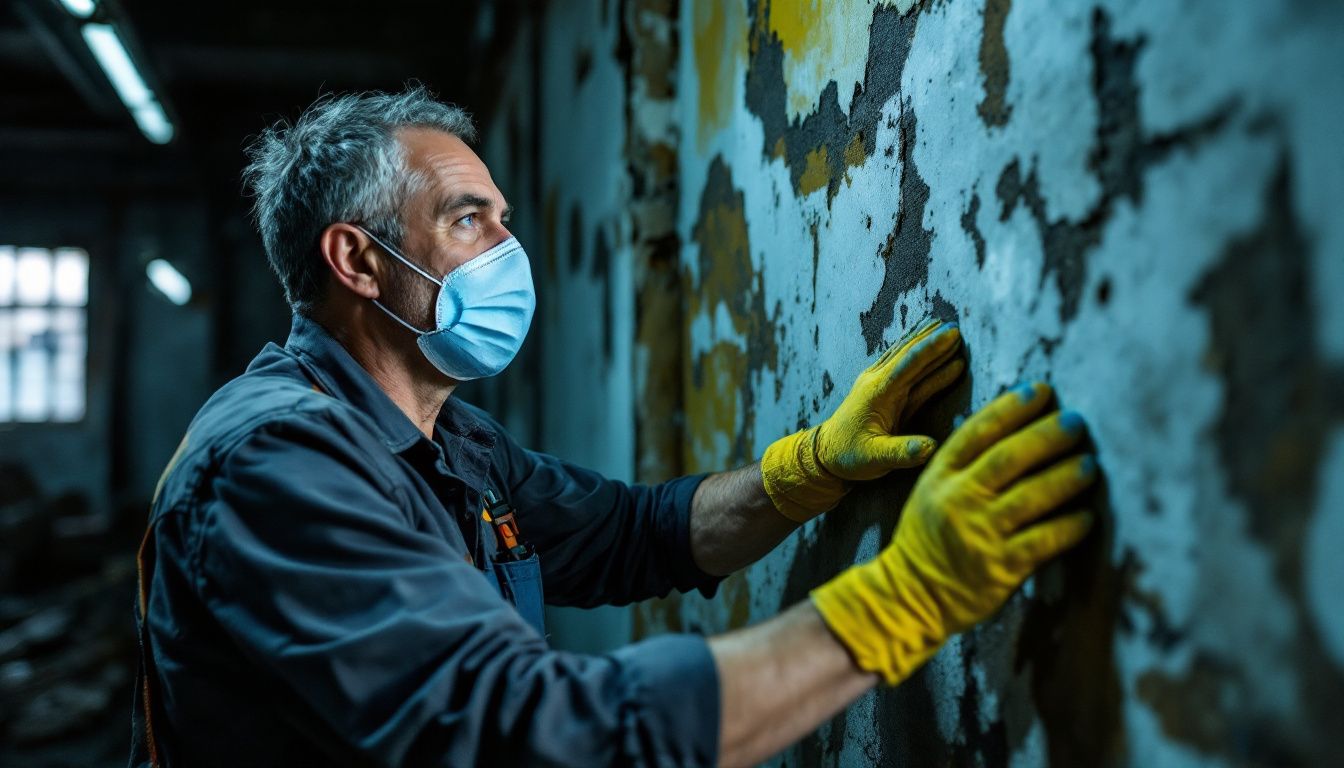
Asbestos Is Still Out There — And UK Workplaces Are Still at Risk
The ban came into force over two decades ago, but asbestos did not disappear from UK buildings the moment it was prohibited. Millions of commercial and public properties built before 2000 still contain asbestos-containing materials (ACMs), and every time those materials are disturbed — through drilling, cutting, or renovation — fibres become airborne and pose a serious health risk. Taking precautions and staying safe from asbestos in the UK workplace is not a historical footnote. It is an active, daily responsibility for employers, building managers, and workers across the country.
Conditions such as mesothelioma, asbestosis, and asbestos-related lung cancer have latency periods of 20 to 40 years. Symptoms may not appear until decades after exposure, which is precisely what makes asbestos so insidious — the harm is invisible until it is irreversible. The Health and Safety Executive recognises asbestos-related disease as the single greatest cause of work-related deaths in the UK.
Understanding your legal duties, knowing where asbestos hides, and putting practical safety measures in place is not optional. Here is what every dutyholder, employer, and worker needs to know.
Where Asbestos Hides in UK Buildings
Asbestos was widely used in UK construction from the 1950s through to the late 1990s. Its fire-resistant, insulating properties made it a popular choice in schools, hospitals, offices, factories, and residential blocks. If your building was constructed or refurbished before 2000, there is a realistic possibility it contains ACMs — even if it looks perfectly well-maintained.
Common locations include:
- Ceiling tiles and floor tiles
- Pipe lagging and boiler insulation
- Roof sheeting and guttering
- Textured coatings such as Artex
- Insulating board around doors, windows, and fire breaks
- Spray coatings on structural steelwork
- Gaskets and rope seals in older heating systems
- Cavity barriers and fire door components
Asbestos cannot be identified by sight alone. A material may look entirely ordinary — smooth, painted, undamaged — and still contain asbestos fibres. Professional asbestos testing is the only reliable way to confirm whether a suspect material is hazardous.
Never assume a material is safe because it appears intact or because it has been in place for decades. Deterioration can be gradual, and even a small fibre release in an enclosed space carries genuine risk.
The Legal Framework: What UK Employers Must Do
The Control of Asbestos Regulations set the legal baseline for managing asbestos in non-domestic premises across the UK. They place clear duties on employers and those responsible for buildings — duties that are enforceable by the HSE and carry serious consequences if ignored. Non-compliance can result in substantial fines and, in serious cases, criminal prosecution.
The Duty to Manage
Regulation 4 of the Control of Asbestos Regulations requires the dutyholder — typically the building owner, employer, or facilities manager — to identify whether ACMs are present, assess their condition and risk, and produce a written asbestos management plan. That plan must be kept up to date and made accessible to anyone who might disturb the materials, including contractors and maintenance teams.
Commissioning a management survey is typically the first step in fulfilling this duty. A management survey identifies the location and condition of ACMs in areas that are normally occupied or accessed, without causing unnecessary disruption to the building or its occupants.
Before Refurbishment or Demolition
If you are planning any building works — even minor renovations — a refurbishment survey is legally required before work begins. This is a more intrusive survey designed to locate all ACMs in areas that will be disturbed during the works.
Sending workers in to cut, drill, or strip materials without this survey in place puts lives at risk and exposes employers to serious legal liability.
Licensed vs Non-Licensed Work
Not all asbestos work requires an HSE licence, but the distinction matters enormously. High-risk work — such as removing asbestos insulation, asbestos coating, or asbestos insulating board — must be carried out by a licensed contractor. Non-licensed work still requires a written risk assessment, a method statement, and appropriate training for everyone involved.
Assuming a task falls into the non-licensed category without checking is a common and costly mistake.
Record-Keeping Requirements
Employers must maintain an asbestos register documenting the location, type, condition, and risk rating of every ACM identified on the premises. This register must be retained for a minimum of 40 years. It forms the backbone of your asbestos management plan and must be reviewed and updated whenever the condition of materials changes or new works are planned.
Taking Precautions and Staying Safe from Asbestos in the UK Workplace: Practical Measures
Knowing the rules is one thing; putting them into practice on a busy site or in a working building is another. Effective asbestos safety at ground level requires the right equipment, the right procedures, and the right training — consistently applied.
Personal Protective Equipment
Workers who may come into contact with ACMs must be equipped with appropriate PPE. The minimum requirements include:
- P3 respirators — the minimum standard for respiratory protection around asbestos fibres
- Disposable coveralls (Type 5) — to prevent fibres settling on clothing and being carried out of the work area
- Nitrile gloves — to protect hands during sampling or handling of suspect materials
- Safety goggles — to protect eyes from airborne debris
Workers must be clean-shaven to ensure a proper seal on a close-fitting respirator. Even stubble breaks the seal and renders the mask ineffective. Where a tight-fitting mask cannot be worn, a powered air-purifying respirator (PAPR) should be used as an alternative.
Decontamination Procedures
When work in an asbestos-affected area is complete, decontamination is not optional. A three-stage airlock system is standard practice: workers move from the contaminated work area through a dirty changing area, then a shower unit, and finally into a clean area.
Contaminated disposable coveralls must be bagged, sealed, and disposed of as hazardous waste — they must never be taken home, reused, or placed in general waste. Any tools used in the work area must be decontaminated before removal. All asbestos waste must be transported and disposed of in accordance with waste carrier regulations, using appropriately labelled, sealed packaging.
Asbestos Awareness Training
Regulation 10 of the Control of Asbestos Regulations requires that anyone liable to disturb asbestos during their work receives adequate information, instruction, and training. This applies not just to specialist asbestos workers but also to tradespeople — electricians, plumbers, carpenters, and decorators — who regularly work in older buildings.
Training should cover what asbestos is, where it is likely to be found, the health risks associated with exposure, and what to do if suspect materials are encountered. Refresher training should be provided regularly, because awareness is only effective if it is current.
What to Do If You Discover Suspect Material
If you or a worker encounters a material suspected of containing asbestos, the immediate response is straightforward: stop work. Do not attempt to drill, cut, sand, or remove it. Seal off the affected area where possible, inform your supervisor, and arrange for a professional assessment without delay.
A testing kit can be used to collect a sample safely for laboratory analysis if you are confident in following the safe collection procedure. That said, arranging for a qualified surveyor to attend and take samples under proper containment conditions is always the safer and more legally defensible option.
All samples should be analysed by a UKAS-accredited laboratory to ensure the results are reliable and legally recognised. Never assume a material is safe because it looks undamaged — ACMs can deteriorate gradually, and even a small release of fibres in an enclosed space carries genuine risk.
Health Monitoring and Emergency Planning
Asbestos management does not end once ACMs have been identified and recorded. Ongoing health surveillance and emergency planning are critical components of a robust asbestos management programme.
Health Surveillance for Exposed Workers
Workers engaged in licensed asbestos work are required to undergo health monitoring, which typically includes chest X-rays and lung function tests conducted by an employment medical adviser or appointed doctor. Records of health surveillance must be retained for 40 years.
Even for workers carrying out non-licensed asbestos work, employers should consider whether health surveillance is appropriate based on the frequency and nature of exposure. The HSE’s guidance document HSG264 provides detailed advice on assessing this and setting appropriate monitoring intervals.
Emergency Response Planning
Every workplace where asbestos is present should have a documented emergency response plan. This should set out what happens if ACMs are accidentally disturbed — including immediate containment measures, evacuation procedures, decontamination protocols, and the process for notifying the HSE where required.
Having this plan in place before an incident occurs is far preferable to improvising under pressure. Review and test the plan regularly, and ensure that all relevant staff know their role within it.
Keeping Your Asbestos Register Current
An asbestos register is not a document you produce once and file away. The condition of ACMs changes over time — materials can deteriorate, be damaged, or be partially removed during maintenance work. A periodic re-inspection survey — typically carried out every 12 months — reviews the condition of known ACMs and updates the register accordingly.
This is particularly important in buildings with heavy footfall or regular maintenance activity, where materials are more likely to be disturbed. A current, accurate register protects both building occupants and the dutyholder from liability.
When the register is updated, ensure contractors and maintenance teams are informed of any changes. An out-of-date register handed to a contractor creates a false sense of security — and that is more dangerous than having no register at all.
Asbestos and Fire Risk: The Overlap You Cannot Ignore
Asbestos management and fire safety are closely linked in older buildings. Many ACMs are located within fire-protection systems — around structural steelwork, in fire doors, and within cavity barriers. Disturbing these materials during fire safety works without a prior survey can create a dual hazard: asbestos exposure and compromised fire protection simultaneously.
A fire risk assessment carried out alongside your asbestos management plan ensures that both risks are understood and managed together. This is particularly relevant for commercial landlords, housing associations, and facilities managers responsible for multi-occupancy buildings.
Treating these as entirely separate concerns is a common mistake — and one that can have serious consequences for both occupant safety and legal compliance.
Sampling and Laboratory Analysis: Getting It Right
When suspect materials are identified, confirming whether they contain asbestos requires proper sampling and laboratory analysis. Professional asbestos testing involves collecting a bulk sample from the material in question and submitting it to a UKAS-accredited laboratory for analysis using polarised light microscopy or electron microscopy techniques.
The key requirements for reliable results are:
- Samples must be collected safely, with appropriate PPE and containment measures in place
- The sample must be representative of the material — not just surface dust or paint
- The laboratory must hold UKAS accreditation for asbestos fibre analysis
- Results must be documented and retained as part of your asbestos register
DIY sampling without proper training carries risk — both to the person collecting the sample and to the integrity of the result. Where there is any doubt about the process, commission a surveyor to carry out the sampling on your behalf.
Nationwide Coverage: Surveys Wherever You Are
Asbestos does not respect geography, and neither should your approach to managing it. Whether you manage a commercial property in the capital or a manufacturing facility in the Midlands, the same legal duties apply and the same risks exist.
Supernova Asbestos Surveys provides professional asbestos surveys across the UK. If you need an asbestos survey in London, our team covers all central and Greater London postcodes. For properties in the North West, we offer a full asbestos survey in Manchester and the surrounding region. And if you are based in the West Midlands, our asbestos survey in Birmingham service covers the city and beyond.
Every survey is carried out by qualified, experienced surveyors working to the standards set out in HSG264. Reports are clear, actionable, and delivered promptly so you can meet your legal obligations without delay.
Frequently Asked Questions
How do I know if my workplace contains asbestos?
If your building was constructed or significantly refurbished before 2000, there is a realistic chance it contains ACMs. The only reliable way to confirm this is through a professional asbestos management survey, which identifies the presence, location, and condition of any asbestos-containing materials on the premises. Visual inspection alone is not sufficient — asbestos fibres are invisible to the naked eye and many ACMs look entirely ordinary.
What should I do if a worker accidentally disturbs asbestos?
Stop work immediately and evacuate the affected area. Prevent others from entering and, where possible, seal off the space to contain any airborne fibres. Anyone who may have been exposed should remove and bag their clothing, shower thoroughly, and seek medical advice. Notify the HSE if the disturbance is significant, and arrange for a professional assessment and air monitoring before the area is reoccupied. Your emergency response plan should set out these steps in detail before any incident occurs.
Is asbestos awareness training a legal requirement?
Yes. Regulation 10 of the Control of Asbestos Regulations requires that any worker who is liable to disturb asbestos during their normal work must receive adequate training. This includes tradespeople such as electricians, plumbers, and decorators who work in older buildings, not just specialist asbestos operatives. Training must be appropriate to the level of risk and should be refreshed regularly to remain effective.
How often should an asbestos register be reviewed?
The HSE recommends that the condition of known ACMs is reviewed at least every 12 months through a re-inspection survey. More frequent reviews may be necessary in buildings with high levels of maintenance activity or where materials are at greater risk of disturbance. The register should also be updated immediately following any incident, change in material condition, or completion of works that affect ACMs on the premises.
Can I remove asbestos myself to save money?
In most cases, no — and attempting to do so can be both illegal and extremely dangerous. High-risk asbestos removal work, including the removal of asbestos insulation, asbestos insulating board, and asbestos coating, must be carried out by an HSE-licensed contractor. Even lower-risk, non-licensed work requires a written risk assessment, appropriate PPE, and trained personnel. The cost of professional removal is far lower than the cost of enforcement action, remediation, or the long-term health consequences of exposure.
Speak to Supernova Asbestos Surveys
With over 50,000 surveys completed across the UK, Supernova Asbestos Surveys has the experience and expertise to help you meet your legal obligations and protect everyone in your building. From initial management surveys through to re-inspection, sampling, and laboratory analysis, we provide a complete asbestos management service.
Call us on 020 4586 0680 or visit asbestos-surveys.org.uk to book a survey or speak to a member of our team. We cover the whole of the UK and can typically arrange surveys at short notice.