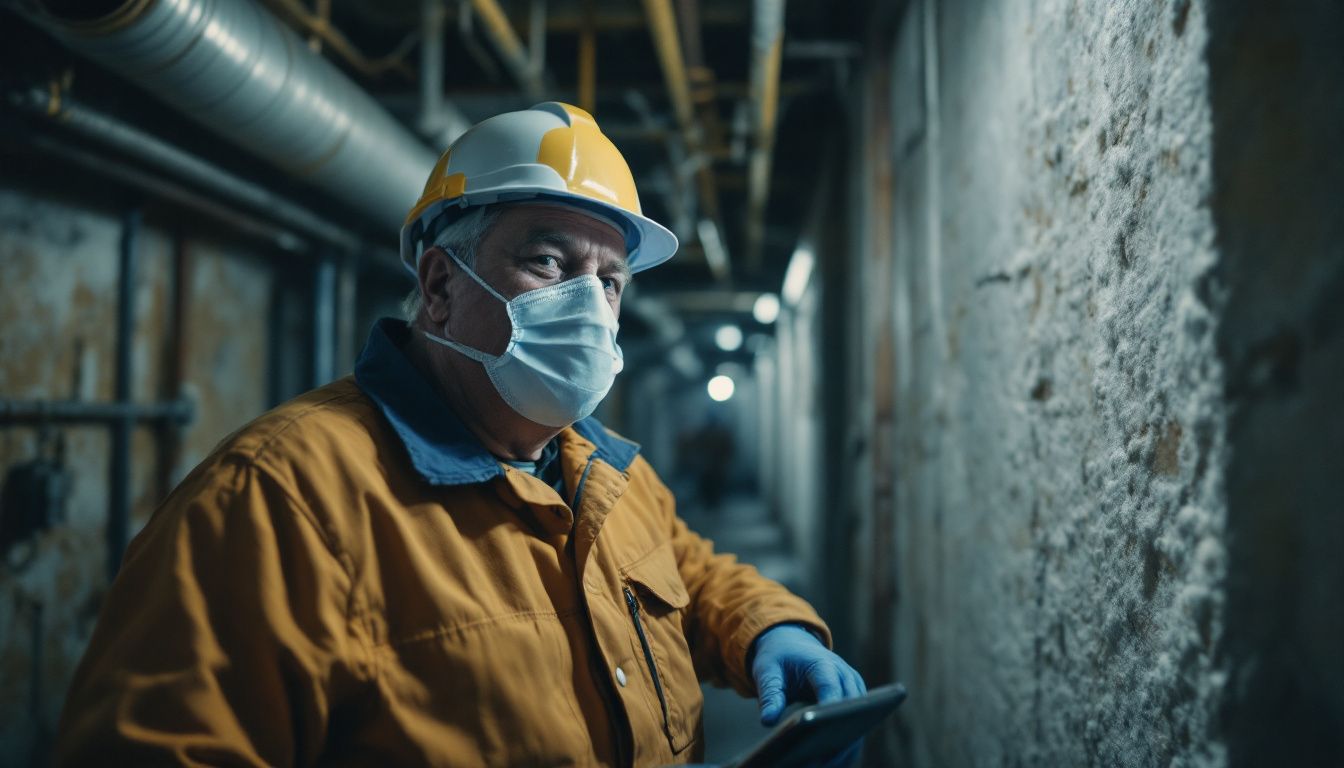
What Every Office Manager Needs to Know About Office Asbestos Surveys
Asbestos doesn’t announce itself. It sits quietly inside ceiling tiles, floor coverings, pipe lagging, and partition walls — and in thousands of UK offices built before 2000, there’s a very real chance it’s present right now. Office asbestos surveys exist to find it before it becomes a problem.
If you manage or own a commercial workspace, understanding what those surveys involve isn’t optional — it’s a legal duty under the Control of Asbestos Regulations. Getting this wrong carries serious consequences, both for the health of everyone who uses the building and for your legal standing as a dutyholder.
Why Offices Are Particularly High-Risk Buildings
Many people assume asbestos is only a concern on industrial sites or in old factories. The reality is quite different. Office buildings constructed between the 1950s and 1999 frequently contain asbestos-containing materials (ACMs) in places that aren’t immediately visible.
Common locations in office environments include:
- Suspended ceiling tiles and ceiling panels
- Textured coatings on walls and ceilings (such as Artex-style finishes)
- Floor tiles and the adhesive used to fix them
- Pipe lagging in service ducts and risers
- Insulation boards around boilers and heating systems
- Partition walls and fire doors
- Roof sheets and soffit panels
The danger isn’t simply the presence of asbestos — it’s disturbance. Maintenance work, office fit-outs, cable runs, and even routine repairs can all disturb ACMs and release fibres into the air.
Workers and contractors can be exposed without anyone realising until it’s far too late. That’s precisely why office asbestos surveys are the foundation of any responsible building management strategy.
The Legal Framework Behind Office Asbestos Surveys
The Control of Asbestos Regulations place a duty to manage asbestos on anyone responsible for non-domestic premises. This applies directly to offices and places a legal obligation on the dutyholder — typically the employer, building owner, or facilities manager — to identify whether asbestos is present, assess its condition, and manage the risk accordingly.
The HSE’s guidance document HSG264 provides the technical standard for how surveys should be conducted. It defines the different survey types, the qualifications required of surveyors, and what a compliant survey report must contain. Any office asbestos survey worth commissioning will be carried out in line with HSG264.
Non-compliance is not a minor administrative matter. The HSE has powers to issue improvement notices, prohibition notices, and pursue prosecutions. Dutyholders who fail to manage asbestos properly face unlimited fines and, in serious cases, custodial sentences.
Types of Office Asbestos Surveys Explained
Not every survey serves the same purpose. The type of office asbestos survey you need depends entirely on what you’re planning to do with the building. Here’s how the main types break down.
Management Survey
A management survey is the standard survey for offices in normal use with no planned refurbishment. It locates ACMs that could be disturbed during everyday activities — maintenance, cleaning, minor repairs — and assesses their condition and risk level.
The surveyor will inspect accessible areas, take samples where ACMs are suspected, and produce a detailed report. This report forms the basis of your asbestos register and management plan, both of which you are legally required to maintain and keep up to date.
A management survey is minimally intrusive. It doesn’t involve breaking into the fabric of the building beyond what’s necessary to assess accessible materials. It’s the starting point for any office with no existing asbestos records.
Refurbishment Survey
If you’re planning office fit-out works or structural alterations, a refurbishment survey is required before any work begins. This is a more intrusive inspection that involves accessing hidden voids, lifting floors, and breaking into the building fabric to locate all ACMs that could be disturbed during the works.
This type of survey must be completed before contractors start work. Sending workers in to refurbish an office without a refurbishment survey in place is a serious legal breach — and a genuine health risk to everyone on site.
Demolition Survey
Where a building or part of a building is being demolished entirely, a demolition survey is required. This is the most thorough and intrusive survey type, designed to locate every ACM in the structure before demolition work begins. It cannot be skipped or substituted with a management survey.
Re-Inspection Survey
Once you have an asbestos register in place, you’re required to review and update it regularly. A re-inspection survey checks the condition of known ACMs to confirm whether their risk rating has changed, whether any have been damaged, and whether your management plan needs updating.
HSG264 recommends re-inspections at least annually, though higher-risk materials or more active buildings may require more frequent checks. Skipping re-inspections doesn’t just create legal exposure — it means you could be managing outdated information about materials that have since deteriorated.
What Happens During an Office Asbestos Survey
Understanding what to expect on the day makes the process smoother and ensures your surveyor can do their job properly. Here’s a typical sequence for a management survey in an office environment.
- Pre-survey information gathering: The surveyor reviews any existing building records, previous survey reports, and construction drawings if available.
- Visual inspection: A room-by-room walkthrough to identify materials that may contain asbestos, based on their appearance, location, and age.
- Sampling: Small samples are taken from suspected ACMs and sent to an accredited laboratory for analysis. This is where asbestos testing confirms whether fibres are actually present and identifies the asbestos type.
- Condition assessment: Each identified or suspected ACM is assessed for its current condition and the likelihood that it could release fibres.
- Report production: A full written report is produced, including an asbestos register, risk assessments for each material, photographic evidence, and laboratory certificates.
A competent surveyor will also flag any areas that couldn’t be accessed and recommend follow-up action. Inaccessible areas should be presumed to contain asbestos until proven otherwise — that’s not caution for its own sake, it’s the HSG264 standard.
Asbestos Testing: The Laboratory Side of the Process
Sampling and testing are what transform a visual inspection into a legally defensible survey. Samples must be analysed by a UKAS-accredited laboratory using polarised light microscopy or electron microscopy to identify asbestos fibre types — chrysotile, amosite, crocidolite, and others.
If you’ve had previous work carried out in your office and you’re not certain whether asbestos was present, standalone asbestos testing of specific materials can provide clarity without requiring a full survey. This is particularly useful when a single suspect material has been identified during maintenance work.
The results of laboratory analysis feed directly into the risk rating applied to each ACM in your asbestos register. Higher-risk materials — those in poor condition or in locations where disturbance is likely — require more active management or removal.
Building Your Asbestos Management Plan
A survey report is only useful if it leads to action. Once you have your office asbestos survey results, you need a management plan that sets out how identified ACMs will be managed, monitored, and — where necessary — removed.
Your management plan should include:
- A complete asbestos register listing all identified and presumed ACMs
- Risk ratings for each material based on condition, location, and likelihood of disturbance
- A schedule for re-inspections
- Procedures for informing contractors and maintenance staff about ACM locations
- Emergency procedures in the event of accidental disturbance
- Records of any remediation or removal work carried out
The management plan must be kept on-site and made available to anyone who might disturb the fabric of the building — including cleaning contractors, IT engineers, and anyone carrying out maintenance. Keeping it locked in a drawer defeats the purpose entirely.
When Asbestos Removal Is the Right Answer
Not all asbestos needs to be removed. In many cases, ACMs in good condition and in locations where they’re unlikely to be disturbed can be safely managed in place. Removal is not always the lower-risk option — the act of removing asbestos creates disturbance and fibre release if not handled correctly.
Removal becomes necessary when:
- Materials are in poor or deteriorating condition
- Refurbishment or demolition work will disturb them
- The location makes ongoing management impractical
- The risk rating indicates that management in place is no longer appropriate
Licensed contractors must be used for high-risk materials such as sprayed coatings, lagging, and loose-fill insulation. Notifiable Non-Licensed Work (NNLW) must be reported to the HSE before it begins. When asbestos removal is required, your survey report should clearly indicate which category any identified materials fall into — so you know exactly what you’re dealing with before appointing a contractor.
Choosing the Right Asbestos Surveying Company
Not all asbestos surveyors are equal. When commissioning office asbestos surveys, there are specific qualifications and accreditations you should look for before appointing anyone.
Key things to check:
- UKAS accreditation: The surveying company should hold UKAS accreditation to ISO 17020, which demonstrates competence in inspection work.
- P402 qualified surveyors: Individual surveyors should hold the British Occupational Hygiene Society (BOHS) P402 qualification or equivalent.
- Laboratory accreditation: Samples should be analysed by a UKAS-accredited laboratory.
- Professional indemnity insurance: Confirm the company carries adequate professional indemnity and public liability cover.
- Clear reporting: Ask to see a sample report before appointing. A good survey report is detailed, clearly structured, and immediately actionable.
Be cautious of very low prices. A cut-price survey that misses ACMs or produces a poorly evidenced report is worse than no survey at all — it creates a false sense of security and can leave you legally exposed.
Office Asbestos Surveys Across the UK
Supernova Asbestos Surveys operates nationwide, covering commercial and office properties in every region. With over 50,000 surveys completed, our teams understand the specific building stock, construction history, and typical ACM locations found in offices across the country.
If you’re based in the capital, our team provides specialist asbestos survey London services across all London boroughs, handling everything from single-floor offices to multi-storey commercial buildings.
For businesses in the North West, our asbestos survey Manchester service covers the Greater Manchester area and surrounding regions, with rapid turnaround times and full HSG264-compliant reporting.
In the Midlands, our asbestos survey Birmingham team serves commercial properties across Birmingham and the wider West Midlands, with surveyors who understand the specific construction history of the area.
Getting Started With Your Office Asbestos Survey
If your office building was constructed or refurbished before 2000 and you don’t have a current, documented asbestos register, you need to act now. The longer this is left unaddressed, the greater the risk — both to the health of your staff and contractors, and to your own legal position as a dutyholder.
Here’s a simple checklist to get you started:
- Check whether your building has any existing asbestos records or a previous survey report.
- If records exist, check when the last re-inspection was carried out and whether it’s still current.
- If no records exist, commission a management survey as your first step.
- If you’re planning any refurbishment or fit-out work, commission a refurbishment survey before any work begins — not during or after.
- Ensure your management plan is accessible to all contractors and maintenance staff who work in the building.
- Schedule annual re-inspections to keep your register up to date.
The process doesn’t have to be complicated or disruptive. A professional office asbestos survey is typically completed in a single visit for most commercial premises, with a full report delivered within a few working days. The peace of mind — and the legal protection — it provides is well worth the investment.
To book an office asbestos survey or discuss your requirements with one of our qualified surveyors, call Supernova Asbestos Surveys on 020 4586 0680 or visit asbestos-surveys.org.uk. We cover the whole of the UK and can usually arrange a survey at short notice.
Frequently Asked Questions
Do I legally need an asbestos survey for my office?
Yes. If your office is in a building constructed or refurbished before 2000, you have a legal duty under the Control of Asbestos Regulations to manage the risk of asbestos. This begins with identifying whether asbestos is present, which requires a professional survey. Even if you believe no asbestos is present, you need documented evidence to support that position — an assumption is not sufficient.
How long does an office asbestos survey take?
For most standard office premises, a management survey can be completed in a single visit. The time on-site depends on the size and complexity of the building. A small single-floor office might take a few hours; a large multi-storey commercial building could take a full day or more. The written report is typically delivered within a few working days of the survey being completed.
Can my office stay open during the survey?
In most cases, yes. A management survey is minimally intrusive and can usually be carried out while the office is in normal use. The surveyor will work around your staff and operations. A refurbishment survey is more intrusive and may require access to areas that need to be cleared beforehand — your surveyor will advise on what’s needed before they attend.
What’s the difference between an asbestos survey and asbestos testing?
A survey is a structured inspection of the whole building or a defined area, carried out by a qualified surveyor. Asbestos testing refers to the laboratory analysis of samples taken during the survey to confirm whether asbestos fibres are present and identify the type. Testing is a component of a full survey, but it can also be commissioned as a standalone service when a specific suspect material has been identified and you need confirmation of its composition.
How often should office asbestos surveys be repeated?
Once a management survey has been completed and an asbestos register is in place, HSG264 recommends that known ACMs are re-inspected at least annually. The frequency may need to increase for materials in poorer condition or in areas subject to more activity. A new management survey may be required if significant changes have been made to the building or if the existing records are significantly out of date. A refurbishment or demolition survey must be carried out before any relevant works begin, regardless of when the last management survey took place.