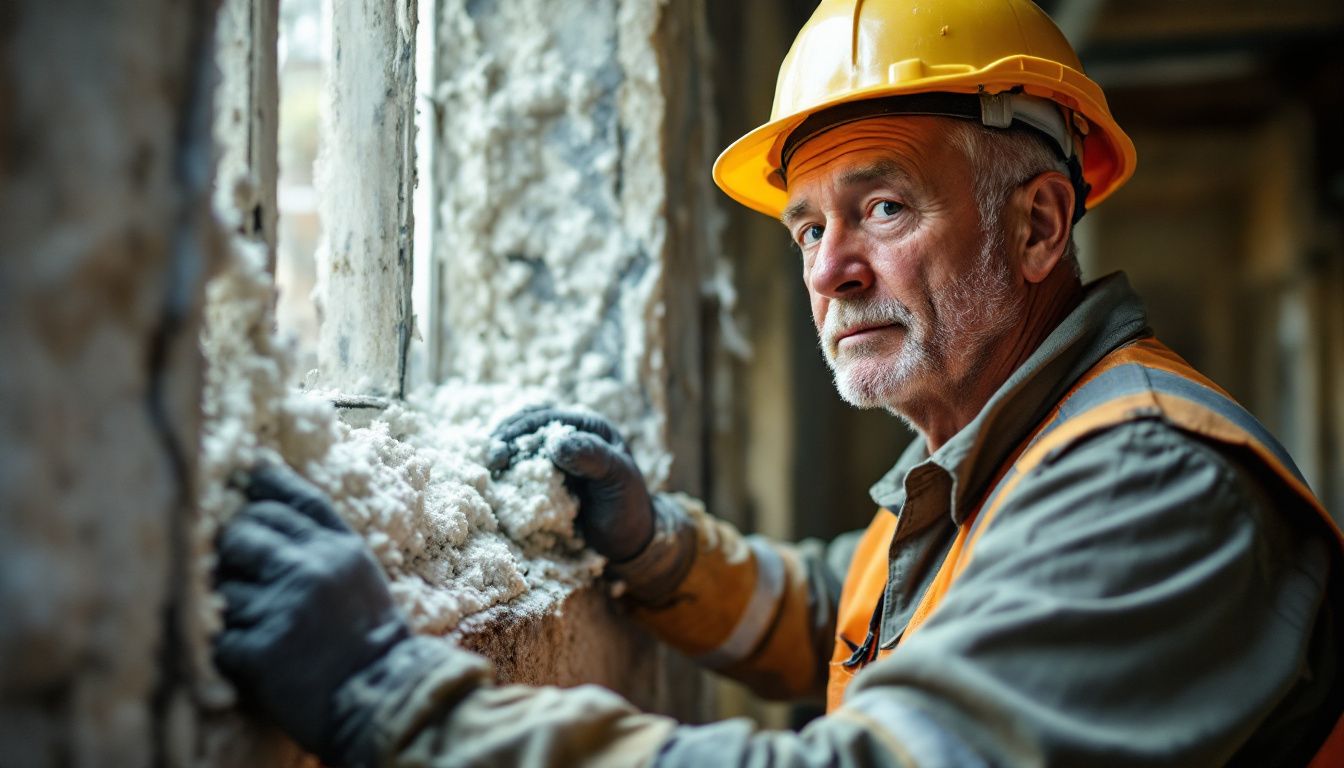
Why Asbestos Health and Safety Still Matters in UK Workplaces
Asbestos was once hailed as a wonder material — fireproof, durable, and cheap to produce at scale. Decades after its ban, it remains the UK’s single biggest cause of work-related deaths. Asbestos health and safety isn’t a historical footnote; it’s an active, ongoing obligation for every employer, building owner, and facilities manager responsible for a property built before the year 2000.
Understanding the risks, knowing who faces the greatest danger, and taking the right preventive steps isn’t just good practice — it’s the law. What follows sets out everything you need to protect your workers, meet your legal duties, and manage asbestos responsibly.
The Health Risks of Asbestos Exposure
When asbestos-containing materials are disturbed, microscopic fibres are released into the air. These fibres are invisible to the naked eye and can remain airborne for hours after the initial disturbance.
Once inhaled, they become lodged in lung tissue and cannot be expelled by the body. Over time — often many decades — this causes serious, life-limiting diseases with no cure.
Mesothelioma
Mesothelioma is an aggressive cancer of the lining of the lungs, chest wall, or abdomen. It is almost exclusively caused by asbestos exposure, and the prognosis remains extremely poor. More than 2,500 people are diagnosed with mesothelioma in the UK each year, and there is currently no cure.
Lung Cancer
Workers exposed to asbestos are significantly more likely to develop lung cancer than those who have not been exposed. That risk increases further for those who smoke — the combination of asbestos exposure and smoking creates a compounding effect that dramatically raises the likelihood of developing the disease.
Asbestosis
Asbestosis is a chronic scarring of the lung tissue caused by prolonged asbestos fibre inhalation. It causes breathlessness, a persistent cough, and chest tightness. The condition is irreversible and can significantly reduce both quality of life and life expectancy.
Other Respiratory Conditions
Asbestos exposure is also associated with pleural plaques and pleural thickening — changes to the lining of the lungs that cause discomfort and breathing difficulties. These conditions may not be immediately life-threatening, but they are markers of significant exposure and can worsen over time.
The latency period for asbestos-related diseases ranges from 10 to 50 years. Workers exposed in the 1970s and 1980s are only now developing symptoms, and the UK currently records around 5,000 asbestos-related deaths every year.
Who Is Most at Risk?
Asbestos health and safety concerns apply across many sectors, but certain workers face a disproportionately higher level of risk due to the nature of their daily work.
Construction and Trades Workers
Builders, electricians, plumbers, plasterers, and carpenters working on pre-2000 buildings are among the most frequently exposed groups. Drilling, cutting, sanding, or disturbing building materials — floor tiles, pipe insulation, ceiling boards, or textured coatings — can all release fibres without warning.
Many tradespeople are unaware that the materials they are working with contain asbestos. This is precisely why a refurbishment survey is a legal requirement before any intrusive work begins on a non-domestic property.
Shipyard Workers
Asbestos was used extensively in shipbuilding from the 1930s through to the 1970s — in insulation, fireproofing, and engine rooms. Workers in naval dockyards and commercial shipyards were exposed to extremely high concentrations of fibres over sustained periods.
The legacy of that exposure continues to affect former shipyard workers and their families today, with disease diagnoses still emerging decades after the initial contact.
Industrial and Manufacturing Workers
Steel mills, chemical plants, and manufacturing facilities built before the asbestos ban used the material heavily in machinery insulation, boiler lagging, and fire protection. Workers in these environments faced regular, often unprotected exposure during routine maintenance and repair work.
Power Plant Workers
Power stations relied on asbestos for its heat-resistant properties throughout much of the twentieth century. Workers involved in maintenance, repair, and decommissioning of older power plant infrastructure continue to face elevated risks from residual asbestos in ageing structures.
Firefighters
Firefighters responding to incidents in older buildings can be exposed to asbestos fibres released during fires and structural collapse. Research has linked firefighting with elevated rates of certain cancers, with asbestos exposure considered a contributing factor. Respiratory protection and decontamination procedures are essential in this profession.
Facilities Managers and Building Maintenance Staff
It is not only those in heavy industry who face risk. Caretakers, maintenance staff, and facilities managers working in older schools, offices, hospitals, and public buildings may disturb asbestos-containing materials during routine tasks — fixing a ceiling tile, chasing a cable, or drilling into a partition wall.
The danger is real, and the exposure is often entirely unintentional. That is what makes proactive asbestos management so important.
UK Legal Framework: What the Regulations Require
Asbestos health and safety in the UK is governed by a clear legal framework. Employers and duty holders are not operating in a grey area — the obligations are explicit, and the consequences of non-compliance are serious.
The Control of Asbestos Regulations
The Control of Asbestos Regulations set out the legal requirements for managing and working with asbestos in Great Britain. They establish licensing requirements for high-risk asbestos work, set out notification duties, and place a clear obligation on employers to protect workers and others from exposure.
Employers must carry out a suitable and sufficient assessment of the risk from asbestos before any work begins. Where asbestos is present or likely to be present, appropriate controls must be put in place.
The Duty to Manage (Regulation 4)
Owners and managers of non-domestic premises have a legal duty to manage asbestos. This means identifying whether asbestos-containing materials are present, assessing their condition and risk, and maintaining an up-to-date asbestos register and management plan.
A management survey is the standard method for meeting this duty. It identifies the location, type, and condition of any asbestos-containing materials within a building so that they can be properly managed going forward.
HSG264 — The HSE’s Survey Guidance
HSG264 is the Health and Safety Executive’s definitive guidance on conducting asbestos surveys. It sets out the methodology surveyors must follow and the standards reports must meet.
Any survey that does not comply with HSG264 is unlikely to satisfy your legal obligations or withstand scrutiny from an enforcing authority. Always check that your surveying company works to this standard.
Licensed Removal
Certain types of asbestos work — particularly involving sprayed coatings, lagging, and asbestos insulating board — can only be carried out by a licensed contractor. Attempting to remove these materials without the appropriate licence is a criminal offence.
Supernova’s asbestos removal service uses only licensed operatives working to the highest safety standards, with full documentation provided on completion.
Preventive Measures: Protecting Workers in Practice
Knowing the risks is one thing. Putting effective controls in place is another. Here is what good asbestos health and safety practice looks like in a real workplace.
Survey Before You Start
Before any construction, maintenance, or refurbishment work on a pre-2000 building, commission the appropriate asbestos survey. Do not assume a building is asbestos-free because it looks modern — many buildings constructed or refurbished in the 1980s and 1990s still contain asbestos-containing materials in less obvious locations.
Maintain an Up-to-Date Asbestos Register
An asbestos register is only useful if it is current. Materials deteriorate, buildings change, and new risks emerge over time. A re-inspection survey should be carried out at least annually — or more frequently if the condition of known asbestos-containing materials is poor — to ensure the register accurately reflects the current state of the building.
Use the Right Personal Protective Equipment
Where work with asbestos cannot be avoided, appropriate personal protective equipment is essential. PPE is a last line of defence, not a substitute for proper risk assessment and control measures — always implement engineering controls and safe working practices first.
Required PPE typically includes:
- Respirators fitted with P100 (FFP3) filters
- Disposable coveralls (Type 5 Category 3)
- Nitrile gloves
- Protective boots or overshoes
- Eye protection where there is a risk of splash or dust
Use Wet Methods to Suppress Dust
Wetting asbestos-containing materials before and during any work significantly reduces the release of fibres into the air. This is a straightforward and effective control measure that should be standard practice wherever asbestos is being disturbed.
Carry Out Air Monitoring
Air monitoring during and after asbestos work provides objective evidence that fibre levels are within acceptable limits. It is a requirement for licensed asbestos work and good practice for notifiable non-licensed work too.
Provide Adequate Training
Anyone who is liable to disturb asbestos during their work must receive adequate information, instruction, and training. This is a legal requirement under the Control of Asbestos Regulations.
Awareness training for non-licensed workers and specific training for those carrying out notifiable non-licensed work are both available through accredited providers. Training records should be kept and refreshed regularly.
Implement Health Surveillance
Workers who are regularly exposed to asbestos should be enrolled in a health surveillance programme. Regular medical assessments allow early detection of any changes in lung function, giving the best possible chance of timely intervention if problems do arise.
Testing: When You Are Not Sure What You Are Dealing With
Sometimes a building’s history is unclear, or materials are found during work that may or may not contain asbestos. In these situations, testing is the only reliable way to know for certain.
Supernova’s testing kit allows samples to be collected and sent to our UKAS-accredited laboratory for analysis under polarised light microscopy. Results confirm whether asbestos is present and, if so, which type — information that is essential for making the right decisions about risk management and removal.
Do not guess. If there is any doubt about whether a material contains asbestos, treat it as though it does until testing proves otherwise. This precautionary approach is both legally sound and practically sensible.
Asbestos Health and Safety and Fire Risk: Understanding the Overlap
Asbestos health and safety does not exist in isolation from other building safety obligations. In older buildings, asbestos and fire risk often go hand in hand — many of the materials used for fire protection in pre-2000 buildings contained asbestos.
A fire risk assessment is a separate legal requirement for most non-domestic premises, but it is worth considering both obligations together when planning your building safety strategy. Knowing where asbestos is located is directly relevant to emergency planning — firefighters and other first responders need to be aware of asbestos risks in the buildings they enter.
Managing both hazards together gives you a more complete picture of your building’s risk profile and helps ensure that nothing falls through the gaps between different compliance obligations.
Where Asbestos Is Typically Found in UK Buildings
One of the most common mistakes employers and building managers make is assuming they would know if asbestos were present. In reality, asbestos-containing materials were used in hundreds of different applications, and many are not immediately obvious.
Common locations include:
- Ceiling tiles and textured coatings — Artex and similar products frequently contained asbestos
- Floor tiles and adhesives — Vinyl floor tiles and the bitumen adhesive beneath them are a common source
- Pipe and boiler lagging — Thermal insulation around pipes and heating systems
- Partition walls and ceiling panels — Asbestos insulating board was widely used in internal partitions
- Roofing and guttering — Asbestos cement was used extensively in flat and corrugated roofing
- Electrical panels and fuse boxes — Asbestos was used as a fire-resistant backing material in older electrical installations
- Sprayed coatings on structural steelwork — Common in industrial and commercial buildings for fire protection
The only way to know with certainty whether a material contains asbestos is to have it surveyed and, where necessary, sampled and tested by a qualified professional.
Asbestos Surveys Across the UK
Supernova Asbestos Surveys operates nationwide, with experienced surveyors covering every region of Great Britain. Whether you manage a single commercial property or a large portfolio of buildings, we can help you meet your legal obligations and protect the people who work in your buildings.
If you are based in the capital, our asbestos survey London service covers all London boroughs and surrounding areas. In the North West, our asbestos survey Manchester team provides fast turnaround times across Greater Manchester and beyond. And for clients in the Midlands, our asbestos survey Birmingham service covers the city and the wider West Midlands region.
With over 50,000 surveys completed, we have the experience and the accreditations to deliver surveys you can rely on.
Building a Culture of Asbestos Awareness
Compliance with the Control of Asbestos Regulations is the legal minimum. The most effective organisations go further — embedding asbestos awareness into their day-to-day operations so that risks are identified and managed before they become incidents.
Practical steps to build that culture include:
- Ensure your asbestos register is accessible — Every contractor and maintenance worker entering the building should be able to check it before starting work
- Include asbestos in your induction process — New staff and contractors should be made aware of the building’s asbestos status from day one
- Establish a clear reporting procedure — Anyone who suspects they have disturbed asbestos should know exactly what to do and who to contact
- Review your management plan regularly — Circumstances change; your plan should reflect the current condition of the building and any recent works
- Keep records — Maintain documentation of all surveys, inspections, training, and remedial work. This protects you legally and demonstrates due diligence
A well-managed asbestos programme does not just protect workers from harm — it also protects the organisation from enforcement action, civil liability, and reputational damage.
Frequently Asked Questions
What is the legal duty to manage asbestos in non-domestic premises?
Under Regulation 4 of the Control of Asbestos Regulations, the duty holder for a non-domestic property must take reasonable steps to find out whether asbestos-containing materials are present, assess their condition, and manage them safely. This typically involves commissioning a management survey, maintaining an asbestos register, and producing a written management plan that is kept up to date.
Which workers are most at risk from asbestos exposure?
Tradespeople working on pre-2000 buildings — including electricians, plumbers, plasterers, and carpenters — face some of the highest risks due to regular contact with building materials that may contain asbestos. Facilities managers, maintenance staff, and firefighters are also at elevated risk. Anyone who works in or around older buildings without knowing the asbestos status of the materials they are disturbing is potentially at risk.
Do I need a survey before carrying out maintenance work on an older building?
Yes. Before any intrusive maintenance, refurbishment, or demolition work on a non-domestic pre-2000 building, a refurbishment and demolition survey is legally required. This type of survey is more intrusive than a standard management survey and is designed to locate all asbestos-containing materials in the areas where work will take place. Starting work without one puts workers at risk and exposes the duty holder to serious legal liability.
What should I do if I suspect I have disturbed asbestos?
Stop work immediately and leave the area. Do not attempt to clean up any debris. Restrict access to the affected area and inform your supervisor or the building’s duty holder. The area should be assessed by a qualified asbestos professional before any further work takes place. Air monitoring may be required to establish whether fibre levels are safe, and affected workers may need to be referred for health surveillance.
How often should an asbestos management survey be repeated?
A management survey does not need to be repeated in its entirety every year, but the condition of identified asbestos-containing materials must be monitored regularly through re-inspection surveys. The HSE recommends re-inspection at least annually, though materials in poor condition or in high-traffic areas may need to be checked more frequently. The asbestos register and management plan should be updated following every re-inspection.
Speak to Supernova Asbestos Surveys
If you are responsible for a pre-2000 building and you are not certain about your asbestos obligations, do not wait for an incident to force the issue. The consequences of getting it wrong — for your workers, your business, and your legal standing — are too serious.
Supernova Asbestos Surveys has completed over 50,000 surveys across the UK. Our accredited surveyors work to HSG264 standards and provide clear, actionable reports that help you manage your obligations with confidence.
Call us on 020 4586 0680 or visit asbestos-surveys.org.uk to book a survey or discuss your requirements with a member of our team.