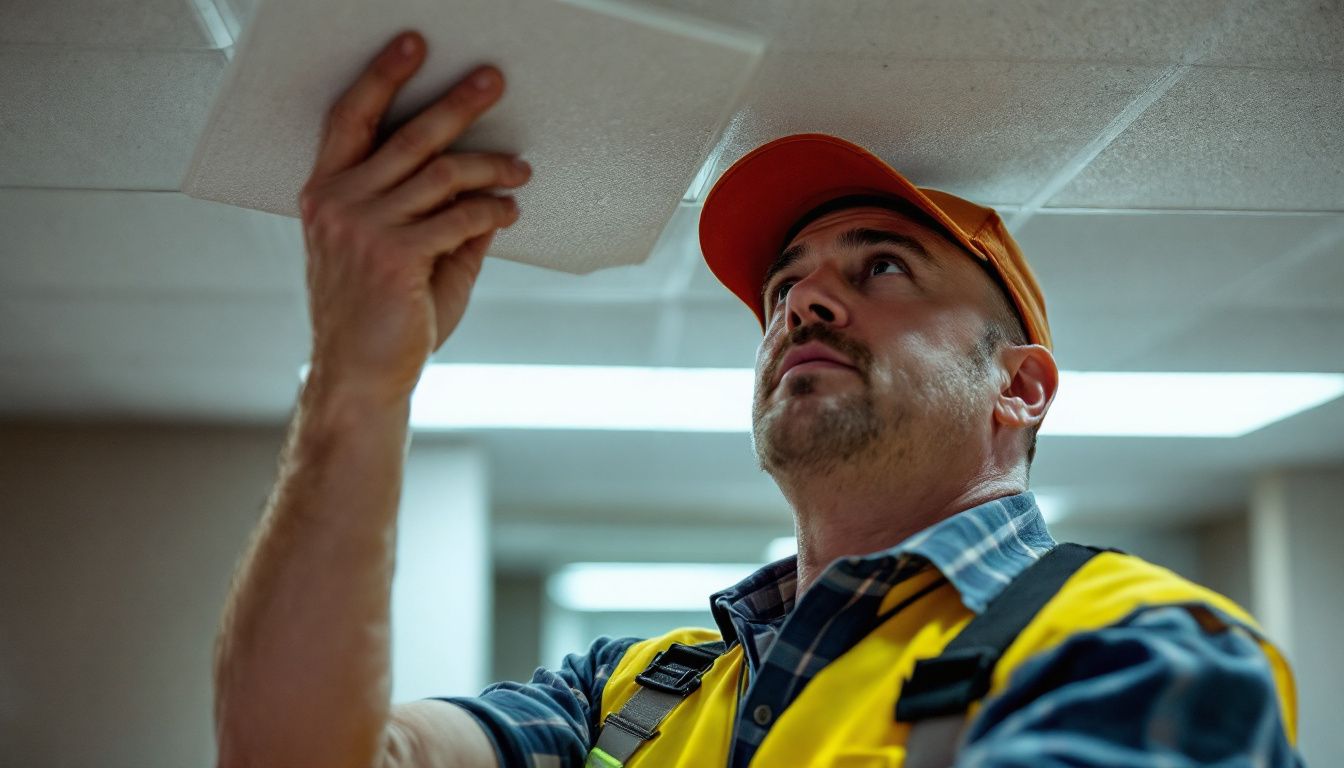
Why Ensuring Workplace Safety Through Regular Maintenance and Monitoring of Asbestos Could Save Lives
Asbestos does not announce itself. It sits quietly inside walls, ceiling tiles, pipe lagging, and floor coverings — often in buildings that look perfectly safe from the outside. For anyone responsible for a workplace built before 2000, ensuring workplace safety through regular maintenance and monitoring of asbestos is not optional. It is a legal duty, and more importantly, a moral one.
Asbestos-related diseases remain the single largest cause of work-related deaths in Great Britain. Mesothelioma, lung cancer, and asbestosis claim thousands of lives every year — and every one of those deaths was preventable. The fibres responsible were inhaled years, sometimes decades, earlier.
That is precisely why consistent monitoring and proactive maintenance matter so much. This post sets out what duty holders need to know: how to identify asbestos-containing materials (ACMs), which surveys are required, how to manage ACMs safely over time, and what practical steps protect your workers every single day.
Understanding Your Legal Obligations
The Control of Asbestos Regulations places a clear duty to manage asbestos on owners and managers of non-domestic premises. If you manage a commercial building, school, hospital, or any non-domestic property, the law requires you to identify ACMs, assess the risk they pose, and put a management plan in place.
The HSE’s guidance document HSG264 sets out exactly how asbestos surveys should be conducted and what they must cover. Compliance with HSG264 is not a box-ticking exercise — it is the baseline standard that protects you legally and protects your workers physically.
Failing to comply can result in substantial fines, prosecution, and — far worse — preventable illness and death among the people who work in your building. The regulations exist because the consequences of getting this wrong are irreversible.
The Different Types of Asbestos Survey and When You Need Them
Not every situation calls for the same type of survey. Understanding which survey applies to your circumstances is the first practical step in ensuring workplace safety through regular maintenance and monitoring of asbestos.
Management Survey
A management survey is the standard survey required for occupied premises. It identifies ACMs that could be disturbed during normal occupation and day-to-day maintenance activities. The surveyor will assess the condition of each material and assign a risk rating, which feeds directly into your asbestos register and management plan.
This type of survey does not involve significant intrusion into the building fabric. It is designed to be carried out with minimal disruption while the building remains in use.
Refurbishment Survey
Before any renovation, fit-out, or intrusive maintenance work begins, a refurbishment survey is legally required. This is a more invasive survey that identifies all ACMs in the specific areas to be disturbed. Work must not begin until this survey is complete and the results have been reviewed.
Skipping a refurbishment survey before works begin is one of the most common — and most dangerous — compliance failures in the industry.
Demolition Survey
If a building or part of a building is being demolished, a demolition survey is required. This is the most thorough type of survey, covering the entire structure and all materials within it. All ACMs must be identified and safely removed before demolition work begins.
Re-Inspection Survey
Once ACMs have been identified and a management plan is in place, the work does not stop there. A re-inspection survey should be carried out at regular intervals — typically annually — to assess whether the condition of known ACMs has changed.
Materials that were in good condition last year may have deteriorated. Building works, accidental damage, or simply the passage of time can change the risk profile of an ACM significantly. This is where ongoing monitoring becomes critical.
Building and Maintaining Your Asbestos Register
Your asbestos register is a live document. It should record every ACM identified in your building, its location, its condition, its risk rating, and any action taken. Think of it as the central record that underpins everything else in your asbestos management plan.
The register must be kept up to date. It should be reviewed whenever any of the following occur:
- A re-inspection survey is completed
- Any building works are carried out
- An ACM is damaged or disturbed
- New ACMs are discovered
- ACMs are removed or encapsulated
Anyone who might disturb ACMs — including maintenance contractors, electricians, and plumbers — must be able to access the register before they begin work. Providing that access is your responsibility as the duty holder.
Keep records of all inspections, training, air monitoring results, and any incidents. These records demonstrate compliance and are essential if you are ever subject to an HSE inspection.
Practical Safety Measures to Minimise Asbestos Exposure
Ensuring workplace safety through regular maintenance and monitoring of asbestos also means having robust day-to-day safety procedures in place. Surveys and registers are essential, but they only protect people if the information feeds into practical, enforced safety measures on the ground.
Personal Protective Equipment
Workers who may come into contact with ACMs must be provided with appropriate PPE. This includes:
- FFP3 disposable respirators, with proper face-fit testing carried out before use
- Disposable coveralls (Type 5, Category 3)
- Disposable gloves and overshoes where appropriate
PPE is the last line of defence, not the first. It should complement — not replace — proper planning, risk assessment, and safe working procedures.
Air Monitoring and Health Surveillance
Air monitoring should be conducted during and after any work that disturbs or risks disturbing ACMs. This confirms that fibre concentrations remain within safe limits and provides a documented record that work was carried out safely.
Workers who are regularly exposed to asbestos should be enrolled in a health surveillance programme. This involves periodic medical checks and lung function assessments, and it is a legal requirement for workers carrying out licensable asbestos work.
Asbestos Awareness Training
Training is not a one-off event. Everyone who works in a building where ACMs are present — or who might disturb them — needs appropriate asbestos awareness training. This typically includes:
- An initial awareness course covering what asbestos is, where it is found, and the health risks
- Annual refresher training to keep knowledge current
- A more detailed three-year course for workers who directly handle or work near ACMs
Training records should be kept alongside your asbestos register. If a worker cannot demonstrate they have received appropriate training, they should not be working near ACMs.
Emergency Procedures
Even with the best management systems in place, accidental disturbance of ACMs can happen. You need a clear emergency procedure that all relevant staff know and can follow without hesitation.
A robust procedure should include:
- Stop work immediately and evacuate the affected area
- Prevent others from entering the area
- Notify management and your asbestos manager
- Contact a licensed asbestos contractor to assess and make safe
- Report the incident as required under RIDDOR (Reporting of Injuries, Diseases and Dangerous Occurrences Regulations)
- Carry out an air clearance test before allowing re-entry
Do not attempt to clean up suspected asbestos debris yourself. Disturbing it further will only increase the risk of fibre release.
Licensed vs Non-Licensed Asbestos Work
Not all asbestos work requires a licensed contractor, but understanding the distinction is critical. The Control of Asbestos Regulations divides asbestos work into three categories: licensed work, notifiable non-licensed work (NNLW), and non-licensed work.
High-risk activities — such as working with loose-fill insulation, sprayed coatings, or lagging — must only be carried out by contractors holding a licence from the HSE. There is no grey area here. Using an unlicensed contractor for licensable work is a serious criminal offence.
For notifiable non-licensed work, you must notify the HSE at least 14 days before work begins. You must also carry out a risk assessment, designate a supervisor, and ensure workers receive appropriate training and health surveillance.
Even for non-licensed work, proper planning, risk assessment, and PPE are still required. The category of work determines the regulatory requirements — it does not determine whether precautions are needed.
What to Do If You Suspect Asbestos but Are Unsure
If you suspect a material might contain asbestos but you are not certain, do not disturb it. Treat it as if it does contain asbestos until proven otherwise.
You can arrange for a sample to be taken and tested by a UKAS-accredited laboratory. Supernova offers a postal testing kit that allows you to collect a sample safely and send it for professional analysis. This is a quick, cost-effective way to get a definitive answer without commissioning a full survey — though a full survey will still be needed for compliance purposes in most commercial settings.
If you are not confident collecting a sample safely, book a professional survey. The cost of a survey is trivial compared to the consequences of inadvertently releasing asbestos fibres.
The Role of Fire Risk Assessments in Asbestos Management
Asbestos management does not exist in isolation. A fire risk assessment is another legal requirement for most non-domestic premises, and the two processes are closely linked.
A fire can damage ACMs and release fibres into the atmosphere, turning a managed risk into an emergency. Knowing where your ACMs are located helps fire risk assessors understand the additional hazards present in your building.
Carrying out both assessments together — or at least ensuring they reference each other — gives you a more complete picture of the risks in your building and how to manage them effectively. Supernova provides fire risk assessments alongside asbestos surveys, making it straightforward to cover both obligations at once.
Ensuring Workplace Safety: Asbestos Surveys Across the UK
Supernova Asbestos Surveys operates across the whole of Great Britain, with qualified surveyors available in every major city and region. Whether you need an asbestos survey London or an asbestos survey Manchester, our teams are available — often within the same week.
All of our surveyors hold BOHS P402 qualifications — the recognised industry standard for asbestos surveying in the UK. Every survey is conducted in line with HSG264 guidance, and all samples are analysed at our UKAS-accredited laboratory.
You receive a full written report, asbestos register, and risk-rated management plan within 3–5 working days.
Survey Pricing: Clear, Fixed, and Transparent
Supernova offers fixed-price surveys with no hidden fees. Here is a guide to our standard pricing:
- Management Survey: From £195 for a standard residential or small commercial property
- Refurbishment & Demolition Survey: From £295, covering all areas to be disturbed prior to works
- Re-Inspection Survey: From £150, plus £20 per ACM re-inspected
- Bulk Sample Testing Kit: From £30 per sample
- Fire Risk Assessment: From £195 for a standard commercial premises
Pricing varies depending on property size and location. Get a free quote tailored to your specific requirements — no obligation, no pressure.
Ready to Protect Your Workplace?
Ensuring workplace safety through regular maintenance and monitoring of asbestos starts with knowing what you are dealing with. Whether you need a first-time survey, an annual re-inspection, or specialist advice on managing known ACMs, Supernova Asbestos Surveys is here to help.
With over 50,000 surveys completed nationwide, BOHS-qualified surveyors, and a UKAS-accredited laboratory, we deliver the accuracy and reliability that duty holders depend on.
Call us on 020 4586 0680 or visit asbestos-surveys.org.uk to book your survey or request a free quote today.
Frequently Asked Questions
How often should I carry out an asbestos re-inspection survey?
The Control of Asbestos Regulations and HSG264 guidance recommend that known ACMs are re-inspected at least annually. However, if conditions change — for example, after building works or accidental damage — you should arrange an inspection sooner. The frequency should reflect the risk rating of the materials involved.
Do I need an asbestos survey if my building was built after 2000?
Asbestos was banned from use in new construction in the UK in 1999. Buildings constructed entirely after this point are very unlikely to contain ACMs. However, if there is any uncertainty about the construction date or materials used, a management survey is still advisable. If the building underwent significant refurbishment using older materials, asbestos could still be present.
Who is legally responsible for managing asbestos in a workplace?
The duty to manage asbestos falls on the person or organisation in control of the premises — typically the building owner, employer, or managing agent. This duty holder must ensure that ACMs are identified, their condition monitored, and a written management plan is in place and acted upon. The duty cannot be delegated away, though the practical work can be carried out by qualified contractors.
What is the difference between licensed and non-licensed asbestos work?
Licensed asbestos work involves high-risk activities such as removing sprayed coatings, loose-fill insulation, or pipe lagging. This work must only be carried out by HSE-licensed contractors. Notifiable non-licensed work (NNLW) covers lower-risk activities that still require HSE notification, risk assessment, and health surveillance. Non-licensed work carries the least risk but still requires proper planning and PPE. If you are unsure which category applies, seek professional advice before work begins.
Can I test for asbestos myself before booking a full survey?
Yes — Supernova’s postal testing kit allows you to collect a small sample from a suspect material and send it to our UKAS-accredited laboratory for analysis. This can provide a quick, cost-effective answer if you need to confirm whether a specific material contains asbestos. However, a professional survey remains the appropriate route for full legal compliance in commercial and non-domestic premises.