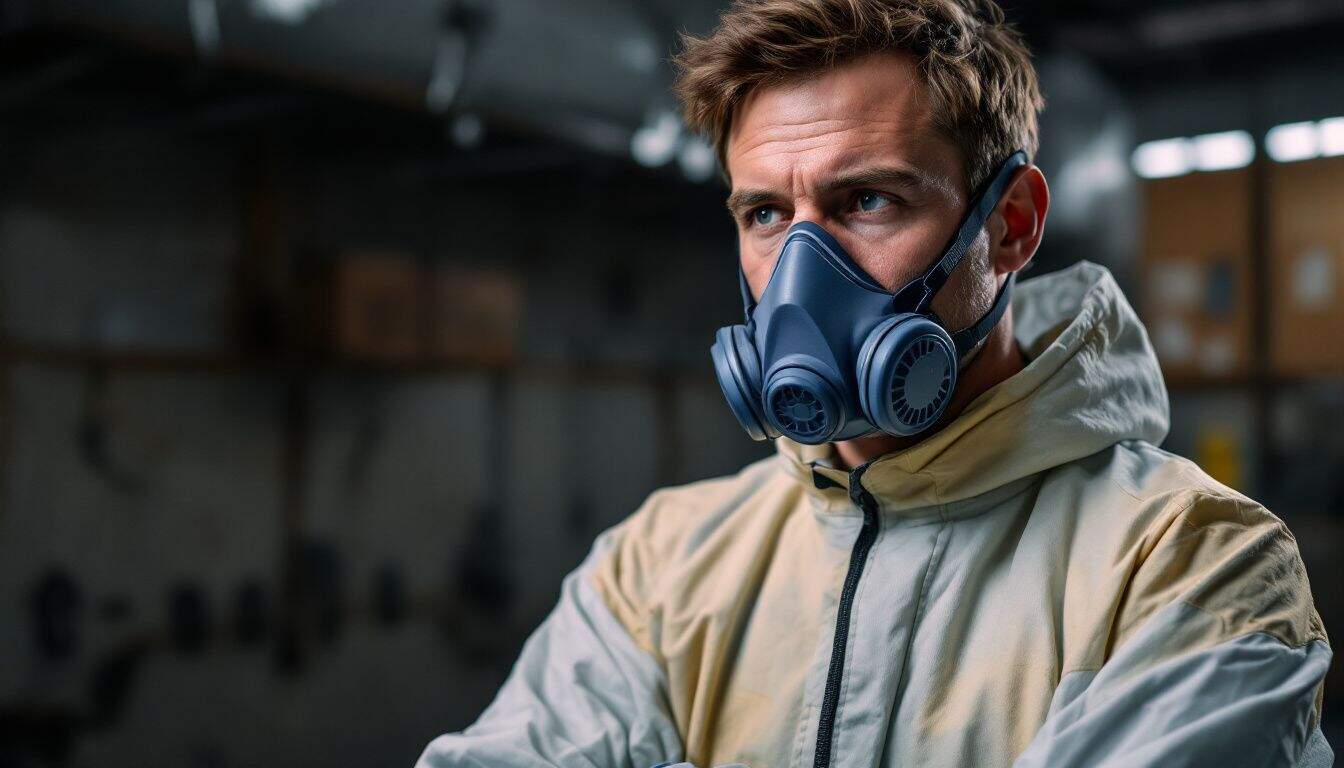
Asbestos Air Monitoring in Skelton-in-Cleveland: What You Need to Know
If you own, manage, or work in a building in Skelton-in-Cleveland, asbestos air monitoring could be the difference between a safe environment and a serious, irreversible health crisis. Any structure built or refurbished before 2000 may contain asbestos-containing materials (ACMs), and once those materials are disturbed or begin to deteriorate, microscopic fibres become airborne — invisible, odourless, and potentially lethal.
Asbestos-related diseases including mesothelioma, asbestosis, and lung cancer cannot be cured. The only effective strategy is prevention: knowing what is in your building, understanding the condition of those materials, and monitoring air quality to confirm fibre levels remain within safe limits.
This post is for property owners, landlords, facilities managers, and contractors in Skelton-in-Cleveland who need clear, accurate information about asbestos air monitoring — what it involves, when it is legally required, and how to get it right.
Why Asbestos Air Monitoring Matters in Skelton-in-Cleveland
Skelton-in-Cleveland has a strong industrial heritage. Many of its commercial, industrial, and residential properties were built during periods when asbestos was a standard construction material — used in insulation, floor and ceiling tiles, pipe lagging, roofing felt, textured coatings like Artex, and much more.
The presence of asbestos alone is not necessarily the immediate danger. The risk comes from fibre release. When ACMs are damaged, disturbed, or simply deteriorate over time, they shed microscopic fibres into the air. Those fibres are inhaled and lodge permanently in lung tissue.
Asbestos air monitoring in Skelton-in-Cleveland is the only reliable method for detecting whether fibres are present at harmful concentrations in the spaces where people live and work. You cannot see, smell, or taste asbestos fibres — standard visual inspections tell you nothing about airborne exposure levels.
Under the Control of Asbestos Regulations, duty holders have a legally enforceable obligation to manage asbestos in non-domestic premises. Part of that duty is demonstrating that ACMs are not releasing fibres at dangerous levels. Air monitoring provides the objective, documented evidence you need to satisfy that obligation.
When Is Asbestos Air Monitoring Required?
There are several distinct situations in which air monitoring moves from best practice to an absolute requirement. Understanding these scenarios helps you plan proactively rather than respond reactively.
Before, During, and After Asbestos Removal
When licensed or non-licensed asbestos removal work is carried out, air monitoring is a critical control measure at every stage. Background monitoring before work begins establishes a baseline fibre level for the area.
Clearance air testing after removal confirms the space is safe to reoccupy. Without a satisfactory clearance certificate issued by an independent analyst, the area cannot legally be handed back for use. This is a fundamental safety and legal requirement under HSE guidance — not a formality that can be skipped.
If you are planning asbestos removal at a property in Skelton-in-Cleveland, ensure independent air monitoring is built into the project plan from the outset.
During Refurbishment or Maintenance Work
Drilling, cutting, sanding, or disturbing any material that may contain asbestos creates an immediate risk of fibre release. If there is any uncertainty about the composition of materials in a building being refurbished, air monitoring during the works provides real-time data on whether workers are being exposed.
This is especially relevant across Skelton-in-Cleveland’s older commercial and industrial building stock, where refurbishment projects regularly uncover unexpected ACMs. A demolition survey carried out before any significant building work will identify ACMs in advance, reducing the likelihood of accidental disturbance and the need for emergency monitoring.
Routine Monitoring in High-Risk Environments
Buildings with known ACMs in poor or deteriorating condition should have periodic air monitoring built into their asbestos management plan. Routine sampling detects gradual increases in background fibre levels before they become a serious health hazard.
This is not excessive caution — it is sound, proportionate risk management. Gradual deterioration of damaged ACMs can produce a slow but sustained rise in fibre concentrations that would otherwise go undetected until someone falls ill.
Following Accidental Disturbance
If suspected asbestos-containing material is accidentally disturbed during routine maintenance or other activity, air monitoring must be carried out immediately. The affected area should be evacuated and sealed off until monitoring results confirm it is safe to re-enter.
Acting quickly and methodically in these situations limits both health risk and legal liability. Delaying monitoring or attempting to assess safety visually is never acceptable.
How Asbestos Air Monitoring Works
Asbestos air monitoring is a technical process that must be carried out by a competent, qualified analyst. It is not something a building manager can replicate with an off-the-shelf product. Here is how the process works in practice.
Personal Air Sampling
Personal sampling involves attaching a small pump and filter cassette to the worker closest to the area of concern. The pump draws air through the filter at a controlled flow rate, capturing any airborne fibres present during the monitoring period.
This method measures the actual exposure experienced by an individual — making it particularly valuable during active removal or maintenance work where workers face the highest risk.
Static Air Sampling
Static sampling uses pumps positioned at fixed points within the monitored area. This approach gives a broader picture of fibre concentrations across the environment and is commonly used for background monitoring and clearance testing after removal work.
Both personal and static sampling methods may be used together on the same project, depending on the nature and scale of the work being carried out.
Laboratory Analysis
Once samples are collected, filters are sent to an accredited laboratory for analysis. The two primary methods used in the UK are:
- Phase Contrast Microscopy (PCM): A widely used, cost-effective method that counts fibres visible under an optical microscope. It cannot distinguish asbestos fibre type, so it is most useful for routine monitoring where the asbestos type in the building has already been confirmed through bulk sampling.
- Transmission Electron Microscopy (TEM): A highly sensitive technique capable of detecting fibres at very low concentrations and identifying asbestos type. TEM is used when greater certainty is required — particularly for clearance testing following licensed removal work.
Results are expressed in fibres per cubic centimetre (f/cm³). The control limit set under the Control of Asbestos Regulations is 0.1 f/cm³ — no worker should be exposed above this level. The aim, however, is always to reduce exposure to as low as reasonably practicable, well below that threshold.
The Legal Framework for Asbestos Air Monitoring
The legal requirements surrounding asbestos management in the UK are clear, enforceable, and carry serious consequences for non-compliance. The Control of Asbestos Regulations places duties on employers and building owners to manage asbestos risks in non-domestic premises. HSG264 — the HSE’s guidance on asbestos surveying — sets out the standards expected for survey and monitoring work.
Air monitoring must be conducted by analysts who are independent of the contractor carrying out any removal or remediation work. This independence prevents conflicts of interest and ensures results are objective and credible.
For licensed asbestos removal work, the analyst carrying out clearance testing must hold UKAS accreditation for asbestos fibre counting. This is a non-negotiable requirement — not a preference.
Failure to comply with these requirements can result in HSE enforcement action, improvement notices, prohibition notices, and in serious cases, criminal prosecution. The financial and reputational consequences of an asbestos-related health and safety failure are severe and long-lasting.
If you are uncertain whether your current asbestos management approach meets legal requirements, a thorough re-inspection survey is often the most practical first step. It will identify any changes in the condition of known ACMs and flag areas where monitoring may now be necessary.
The Role of Asbestos Surveys in Supporting Air Monitoring
Asbestos air monitoring does not operate in isolation. It forms part of a broader management strategy that begins with a thorough survey of the building. Without knowing where ACMs are located and what condition they are in, it is impossible to target monitoring effectively or interpret results accurately.
Management Surveys
A management survey is carried out in occupied buildings to locate ACMs that could be disturbed during normal use or routine maintenance. The findings feed directly into the asbestos register and management plan — the two documents at the heart of any legally compliant asbestos management approach.
Management surveys determine which areas of a building require ongoing monitoring and at what frequency. Without one, any monitoring programme is essentially guesswork.
Refurbishment and Demolition Surveys
Before any significant building work, a full refurbishment or demolition survey is required. This is a more intrusive process that locates all ACMs that could be disturbed during the project — including those concealed within the building fabric.
Both survey types involve asbestos testing of suspect materials, with bulk samples sent to an accredited laboratory for analysis. Survey results directly inform decisions about where air monitoring is needed, how frequently, and which analytical method is most appropriate.
What Happens if Fibre Levels Are Too High?
If air monitoring reveals fibre concentrations above acceptable levels, immediate, structured action is required. The area must be evacuated and secured without delay. A thorough investigation must identify the source of fibre release, and a remediation plan — which may involve encapsulation or full removal by a licensed contractor — must be developed and executed.
Post-remediation clearance testing is then essential to confirm the area is genuinely safe before anyone returns. This is a regulated process, and cutting corners at any stage creates both legal liability and real health risk for the people in your building.
It is worth emphasising that elevated fibre levels are not always the result of dramatic, visible disturbance. Gradual deterioration of ACMs in poor condition can produce a slow but sustained increase in background fibre levels — which is precisely why routine monitoring in buildings with known ACMs is sound practice, not overcaution.
Asbestos Testing: The Foundation of Effective Monitoring
Before air monitoring can be targeted effectively, you need to know which materials in your building contain asbestos. Bulk sampling of suspect materials, followed by laboratory analysis, confirms whether asbestos is present and identifies the specific fibre type.
Different asbestos types carry different risk profiles. Crocidolite (blue asbestos) and amosite (brown asbestos) are generally considered more hazardous than chrysotile (white asbestos), though all types are dangerous and all are banned in the UK. Knowing the fibre type in your building informs decisions about management strategy, monitoring frequency, and the urgency of any remediation work.
You can find out more about the sampling and analysis process on our dedicated asbestos testing page.
Choosing the Right Asbestos Air Monitoring Provider in Skelton-in-Cleveland
Not all asbestos monitoring providers offer the same standard of service. When selecting a company to carry out asbestos air monitoring in Skelton-in-Cleveland, apply these criteria without compromise.
UKAS Accreditation
The laboratory analysing your samples must hold UKAS accreditation for asbestos fibre counting. This is non-negotiable for clearance testing following licensed removal work and is best practice for all monitoring. Always ask for evidence of accreditation before commissioning any work.
Independence from Contractors
The analyst carrying out clearance air testing must be independent of the removal contractor. This independence is a legal requirement for licensed work and a fundamental principle of objective monitoring. Verify it explicitly — do not assume.
Experience and Local Knowledge
A provider with experience working across the North East understands the regional building stock, the ACM types commonly found in the area, and the specific challenges posed by industrial and older residential properties in places like Skelton-in-Cleveland. That local knowledge translates into more accurate risk assessment and more efficient monitoring programmes.
Clear, Actionable Reporting
Monitoring results must be presented in a clear, accessible report that explains what was found, what it means, and what action — if any — is required. Raw technical data without context is not sufficient. You need conclusions and recommendations you can act on.
Asbestos Air Monitoring for Landlords and Property Managers
If you are a landlord or property manager in Skelton-in-Cleveland, your asbestos obligations are real and legally enforceable. The duty to manage asbestos applies to non-domestic premises — commercial properties, industrial units, and the communal areas of residential blocks.
A proactive approach — regular surveys, a maintained asbestos register, and periodic air monitoring where ACMs are present — is significantly less disruptive and costly than a reactive response to a health and safety incident or HSE investigation. The time and expense of getting it right upfront are modest compared to the consequences of getting it wrong.
Supernova Asbestos Surveys works with landlords and property managers across the North East and nationwide. Whether you need an asbestos survey London, an asbestos survey Manchester, or an asbestos survey Birmingham, our nationwide network delivers consistent quality and expertise wherever your properties are located.
Supernova Asbestos Surveys: Serving Skelton-in-Cleveland and the North East
Supernova Asbestos Surveys has completed over 50,000 surveys nationwide. Our experienced team provides the full range of asbestos management services to clients in Skelton-in-Cleveland and across the wider North East — from initial management and demolition surveys through to targeted air monitoring and post-remediation clearance testing.
We work with commercial property owners, housing associations, local authorities, contractors, and private landlords. Our surveyors understand the regional building stock and bring practical, no-nonsense expertise to every project.
If you need asbestos air monitoring in Skelton-in-Cleveland, or if you want to review your current asbestos management arrangements, contact our team today. Call us on 020 4586 0680 or visit asbestos-surveys.org.uk to request a quote or find out more about our services.
Frequently Asked Questions
What is asbestos air monitoring and why is it needed in Skelton-in-Cleveland?
Asbestos air monitoring is the process of sampling the air in a building to detect and measure the concentration of asbestos fibres. It is needed in Skelton-in-Cleveland because many properties in the area were built before 2000 and may contain ACMs. When those materials deteriorate or are disturbed, fibres become airborne and pose a serious health risk. Monitoring is the only reliable way to confirm whether fibre levels are within safe limits.
Is asbestos air monitoring a legal requirement?
Air monitoring is a legal requirement in specific circumstances — most importantly, clearance testing after licensed asbestos removal work must be carried out by an independent, UKAS-accredited analyst before an area can be reoccupied. More broadly, the Control of Asbestos Regulations requires duty holders to manage asbestos risks effectively, and air monitoring is a key tool for demonstrating compliance in buildings with known or suspected ACMs.
Who can carry out asbestos air monitoring?
Asbestos air monitoring must be carried out by a competent analyst — not a building manager or maintenance operative. For clearance testing following licensed removal work, the analyst must hold UKAS accreditation and must be independent of the removal contractor. Using an unqualified or non-independent analyst invalidates the results and creates both legal and health risks.
How long does asbestos air monitoring take?
The duration depends on the type and scale of monitoring required. Personal or static air sampling typically takes several hours to collect sufficient sample volume. Laboratory analysis adds further time — standard turnaround is usually a few working days, though urgent analysis is available when required. Clearance testing following removal work must be completed before the area can be reoccupied, so planning ahead is essential.
What should I do if asbestos air monitoring reveals elevated fibre levels?
If monitoring reveals fibre concentrations above acceptable levels, the affected area must be evacuated and secured immediately. An investigation should identify the source of fibre release, and a licensed contractor should carry out remediation — either encapsulation or removal. Post-remediation clearance testing must then confirm the area is safe before anyone returns. Do not attempt to continue using the space or carry out informal remediation without professional guidance.