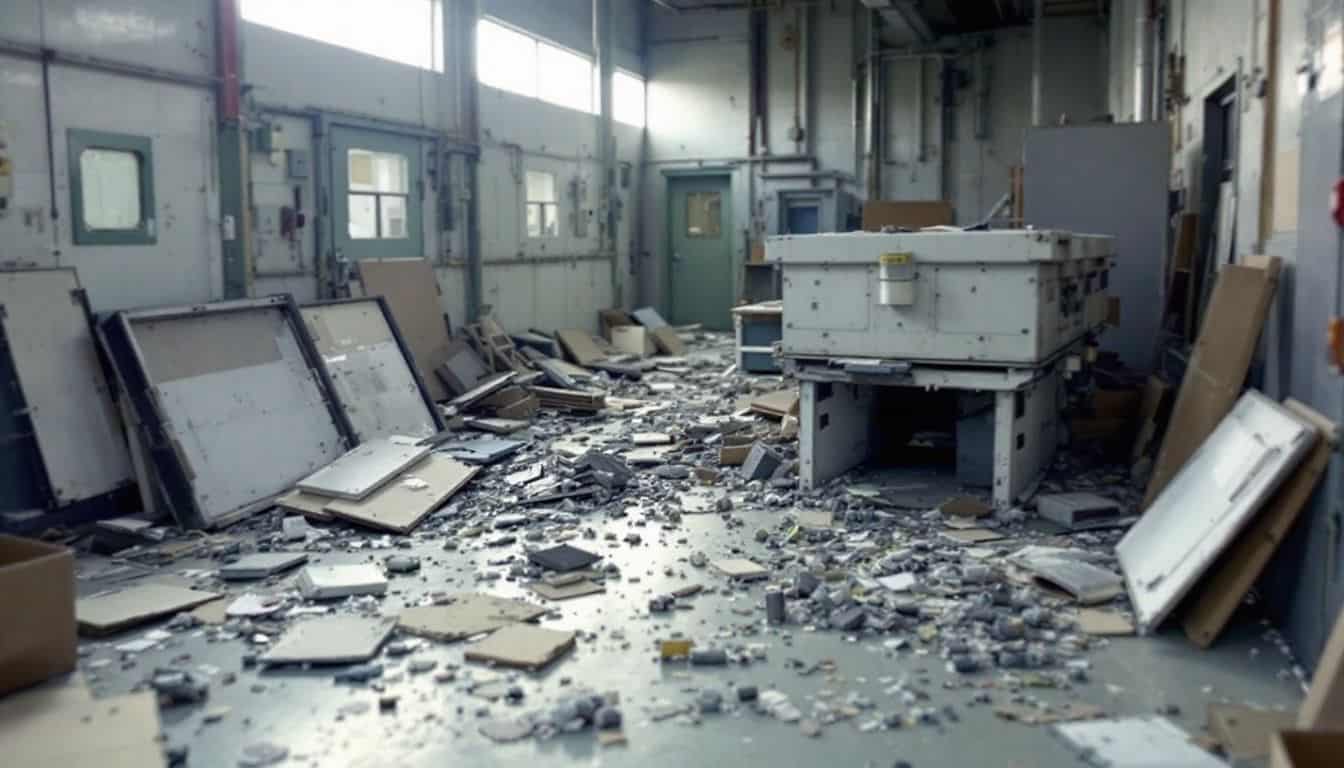
Asbestos in the Aerospace Industry: Emergency Response Plans, Regulations and What You Need to Know
The aerospace industry has a long and complicated history with asbestos. For decades, asbestos-containing materials (ACMs) were built into aircraft components — from brake linings and gaskets to insulation and fireproofing materials. That legacy hasn’t disappeared. Older aircraft, maintenance hangars, and aerospace facilities across the UK still contain asbestos, and when it’s disturbed, the consequences can be severe. So are there any emergency response plans in place for incidents involving asbestos in the aerospace industry? The short answer is yes — but the detail matters enormously.
This post breaks down exactly what those plans look like, who is responsible for enforcing them, and what aerospace organisations must do to protect their workforce when asbestos is discovered or disturbed.
Why Asbestos Remains a Live Risk in Aerospace
Asbestos wasn’t used sparingly in aviation — it was considered an ideal material. It’s heat-resistant, durable, and lightweight. Brake pads, engine gaskets, insulation panels, and electrical components in older aircraft all potentially contained asbestos. Some brake components contained asbestos at concentrations high enough to pose a serious inhalation risk during routine maintenance.
The problem is that much of this material is still in service or in storage. Mechanics carrying out inspections or repairs on vintage aircraft, decommissioned military planes, or older commercial jets may disturb ACMs without realising it. Fibres become airborne and are inhaled — often without any immediate symptoms. Diseases such as mesothelioma, asbestosis, and lung cancer can take decades to develop, which makes the risk easy to underestimate.
Secondary exposure is also a genuine concern. Workers who carry contaminated clothing home have historically put family members at risk. This is why emergency response planning in aerospace isn’t just a box-ticking exercise — it’s a matter of life and death.
Are There Emergency Response Plans in Place for Incidents Involving Asbestos in the Aerospace Industry?
Yes — and in the UK, these plans are underpinned by a robust legal framework. The Control of Asbestos Regulations requires employers to manage asbestos risks proactively, which includes having documented procedures for emergency situations. HSE guidance, particularly HSG264, sets out how asbestos should be identified, managed, and responded to when disturbed.
In aerospace specifically, emergency response plans typically include the following core elements:
- Immediate work stoppage — All activity in the affected area ceases the moment asbestos is suspected or confirmed.
- Area isolation — The zone is cordoned off with clear warning signage to prevent unauthorised access.
- Notification of relevant authorities — This includes the HSE and, where applicable, local authority environmental health teams.
- Engagement of licensed contractors — For notifiable work, only a licensed asbestos contractor can carry out removal or remediation.
- Decontamination of exposed personnel — Anyone who may have been exposed is taken through a decontamination process, including removal and safe disposal of contaminated clothing.
- Asbestos register update — The incident is logged, and the asbestos register is updated to reflect the condition, location, and quantity of ACMs involved.
- Post-incident review — The response is reviewed to identify lessons learned and update protocols accordingly.
These aren’t optional steps. Failure to follow them exposes organisations to significant legal liability and, more importantly, puts people at risk.
Immediate Actions When Asbestos Is Discovered in an Aerospace Setting
Speed and discipline are critical in the first minutes after asbestos is found or suspected. The sequence of actions matters.
Step 1: Stop All Work Immediately
Anyone working in the vicinity should stop what they’re doing and move away from the area. Don’t attempt to clean up dust or debris — this can disturb fibres further and increase exposure.
Step 2: Isolate and Secure the Area
Erect physical barriers and post clear hazard warning signs. Access should be restricted to essential personnel only. If the affected area is part of a larger hangar or workshop, consider whether adjacent zones also need to be secured.
Step 3: Notify the Right People
Your emergency plan should include a clear chain of notification — from site supervisor to health and safety manager, to the HSE where required. Don’t delay this step. Timely notification is both a legal requirement and a practical necessity.
Step 4: Decontaminate Exposed Individuals
Exposed workers should remove contaminated clothing carefully, place it in sealed bags for disposal, and wash exposed skin thoroughly. Damp cloths can help remove fibres from skin without dispersing them further into the air.
Step 5: Call in Licensed Professionals
Once the area is secured, a licensed asbestos contractor must assess the situation. Do not attempt to remove or disturb ACMs without the appropriate licence and equipment. For asbestos removal in aerospace environments, this means working with specialists who understand the specific materials and configurations involved.
Regulatory Framework Governing Asbestos Emergencies in Aerospace
The UK has some of the most stringent asbestos regulations in the world, and they apply fully to the aerospace sector. Understanding this framework is essential for anyone managing asbestos risks in aviation or aerospace maintenance.
The Control of Asbestos Regulations
This is the primary piece of legislation governing asbestos management in the UK. It places a duty on employers and building owners to identify ACMs, assess their condition, and manage them appropriately. In an emergency context, it requires that any work likely to disturb asbestos is properly planned, that workers are trained, and that licensed contractors are used for higher-risk activities.
HSG264 — Asbestos: The Survey Guide
HSE’s HSG264 guidance provides detailed direction on how asbestos surveys should be conducted. In an emergency scenario, this guidance informs how rapid assessments should be carried out and what information needs to be captured to support safe remediation.
The Duty to Manage
Under the Control of Asbestos Regulations, there is a specific duty to manage asbestos in non-domestic premises. Aerospace facilities — hangars, maintenance workshops, testing facilities — fall squarely within this scope. Duty holders must have an up-to-date asbestos management plan and must act on it when incidents occur.
Aviation-Specific Oversight
In the UK, the Civil Aviation Authority (CAA) works alongside the HSE to ensure aviation workplaces meet occupational health and safety standards. Organisations operating internationally may also need to consider the requirements of bodies such as the FAA and OSHA, particularly where US-registered aircraft or personnel are involved.
Asbestos Management and Containment in Aerospace Facilities
Effective emergency response doesn’t begin when asbestos is found — it begins long before, through proactive management and containment strategies.
Maintaining an Asbestos Register
Every aerospace facility with a reasonable likelihood of containing ACMs should have a current, accurate asbestos register. This document records the location, type, condition, and quantity of all known or suspected ACMs. In an emergency, it’s the first reference point for responders — telling them what they’re dealing with before they enter an affected area.
Registers should be reviewed and updated regularly, not just after incidents. If your facility undergoes structural changes, refurbishment, or new areas are accessed for the first time, the register needs updating.
Air Quality Monitoring
Aerospace facilities should conduct regular air quality monitoring in areas where ACMs are present or where maintenance work disturbs materials. This is particularly important in enclosed spaces such as aircraft bays and engine maintenance areas. Monitoring data should be recorded and reviewed as part of routine health and safety management.
Personal Protective Equipment
Workers in areas where asbestos exposure is possible must be provided with appropriate PPE — including respiratory protective equipment (RPE), disposable coveralls, gloves, and boot covers. PPE alone is not a substitute for proper containment and removal, but it is a critical layer of protection during emergency response.
Containment Procedures
Where ACMs cannot be immediately removed, containment is the priority. This means sealing damaged areas, applying encapsulant where appropriate, and ensuring that friable materials are not further disturbed. Containment is a temporary measure — it must be followed by a plan for proper remediation.
Training and Preparedness for Aerospace Workers
No emergency response plan is effective if the people who need to implement it don’t know what to do. Training is not optional — it’s a legal requirement under the Control of Asbestos Regulations, and it’s the foundation of any credible safety programme.
Asbestos Awareness Training
All workers who may encounter asbestos in the course of their duties must receive asbestos awareness training. This covers what asbestos looks like, where it’s commonly found in aerospace settings, what the health risks are, and what to do if they suspect they’ve encountered ACMs. This training should be refreshed regularly — not delivered once and forgotten.
Emergency Drills and Response Simulations
Theoretical knowledge only goes so far. Regular emergency drills allow teams to practise the response sequence in a controlled environment, identify gaps in their plans, and build the muscle memory that makes a difference when a real incident occurs. Drills should include:
- Simulated discovery of ACMs during maintenance work
- Practising area isolation and signage deployment
- Running through the notification chain
- Decontamination procedures for exposed personnel
- Communication with licensed contractors and authorities
After each drill, teams should conduct a structured debrief and update their emergency response plan accordingly.
Specialist Training for Supervisors and Safety Officers
Those responsible for overseeing emergency responses need a higher level of training. This includes understanding the legal framework in detail, knowing how to interpret asbestos survey reports, and being able to make rapid risk-based decisions under pressure. Investment in this level of training pays dividends when an incident occurs.
The Role of Asbestos Surveys in Emergency Preparedness
One of the most effective things an aerospace organisation can do to prepare for an asbestos emergency is to commission thorough, professional asbestos surveys of all relevant premises. You cannot manage what you don’t know about.
A management survey identifies the location and condition of ACMs in areas that are in normal use or likely to be disturbed during routine maintenance. A refurbishment and demolition survey goes further, assessing areas that will be disturbed during planned works. Both types of survey feed into the asbestos register and inform the emergency response plan.
Supernova Asbestos Surveys provides professional asbestos surveying services across the UK. Whether your facility is in London, Manchester, Birmingham, or elsewhere, our surveyors have the expertise to assess aerospace environments thoroughly and accurately. If you’re based in the capital, our asbestos survey London service covers all types of commercial and industrial premises. For facilities in the north-west, our asbestos survey Manchester team is on hand to help. And for organisations in the West Midlands, our asbestos survey Birmingham service delivers the same high standard of assessment.
Emergency Asbestos Surveying
When an incident occurs and the full extent of ACMs in an area is unknown, an emergency survey may be required before remediation work can begin safely. This is a rapid but thorough assessment that gives licensed contractors the information they need to work safely. It’s a service that requires both technical expertise and the ability to operate quickly under pressure — qualities that define Supernova’s approach.
Legal Consequences of Poor Asbestos Emergency Management
The legal and financial consequences of failing to manage asbestos incidents properly are substantial. The HSE has the power to issue improvement notices, prohibition notices, and prosecute organisations that breach the Control of Asbestos Regulations. Fines can be significant, and in cases of serious negligence, individuals — including directors and managers — can face personal liability.
Beyond regulatory action, organisations that fail to protect workers from asbestos exposure face civil claims from affected employees and their families. Mesothelioma claims in particular can result in substantial damages awards. The reputational damage from a high-profile asbestos incident can also have long-lasting consequences for an organisation’s ability to attract and retain skilled workers.
The message is clear: investing in proper emergency response planning, training, and surveying is not just the right thing to do — it’s the commercially sensible thing to do.
Frequently Asked Questions
Are there any emergency response plans in place for incidents involving asbestos in the aerospace industry?
Yes. In the UK, aerospace organisations are required under the Control of Asbestos Regulations to have documented procedures for managing asbestos incidents. These plans cover immediate work stoppage, area isolation, notification of authorities, decontamination of exposed personnel, engagement of licensed contractors, and post-incident review. The HSE’s HSG264 guidance provides additional direction on survey and assessment procedures that underpin effective emergency response.
What should I do if asbestos is discovered during aircraft maintenance?
Stop all work immediately and move personnel away from the area. Isolate the zone with barriers and warning signs, and do not attempt to clean up any dust or debris. Notify your health and safety manager and, where required, the HSE. Contact a licensed asbestos contractor to assess the situation and carry out any necessary removal or containment work. Ensure that any exposed workers go through a proper decontamination process.
Which UK regulations govern asbestos management in aerospace facilities?
The primary legislation is the Control of Asbestos Regulations, which applies to all non-domestic premises including aerospace hangars, maintenance workshops, and testing facilities. The HSE’s HSG264 guidance provides detailed direction on surveying and assessment. The duty to manage asbestos under these regulations requires duty holders to identify ACMs, assess their condition, and have a management plan in place. The Civil Aviation Authority also works alongside the HSE to ensure aviation workplaces meet occupational health and safety standards.
How often should asbestos surveys be carried out in aerospace facilities?
There is no fixed statutory interval for management surveys, but the HSE expects duty holders to keep their asbestos management plan and register up to date. In practice, surveys should be reviewed whenever the condition of known ACMs may have changed, when new areas are accessed, or when refurbishment or maintenance work is planned. In high-activity aerospace environments, annual reviews of the asbestos register — supported by periodic reinspection surveys — represent good practice.
Can aerospace organisations carry out asbestos removal themselves?
Not for most types of asbestos work. The Control of Asbestos Regulations requires that licensable asbestos work — which includes most removal of asbestos insulation, asbestos insulation board, and asbestos coatings — is carried out by a contractor licensed by the HSE. Some lower-risk, non-licensable work may be carried out by trained and competent workers, but even this must be properly planned and notified in some circumstances. When in doubt, always engage a licensed contractor.
Get Expert Asbestos Support for Your Aerospace Facility
Supernova Asbestos Surveys has completed over 50,000 surveys across the UK, working with organisations in some of the most demanding industrial environments. Our team understands the specific challenges that aerospace facilities present — from the variety of materials involved to the operational pressures that can make safety planning feel like an afterthought.
Don’t wait for an incident to find out whether your emergency response plan is fit for purpose. Get in touch with our team today to discuss asbestos surveys, management planning, and emergency support for your facility.
Call us on 020 4586 0680 or visit asbestos-surveys.org.uk to find out how we can help.