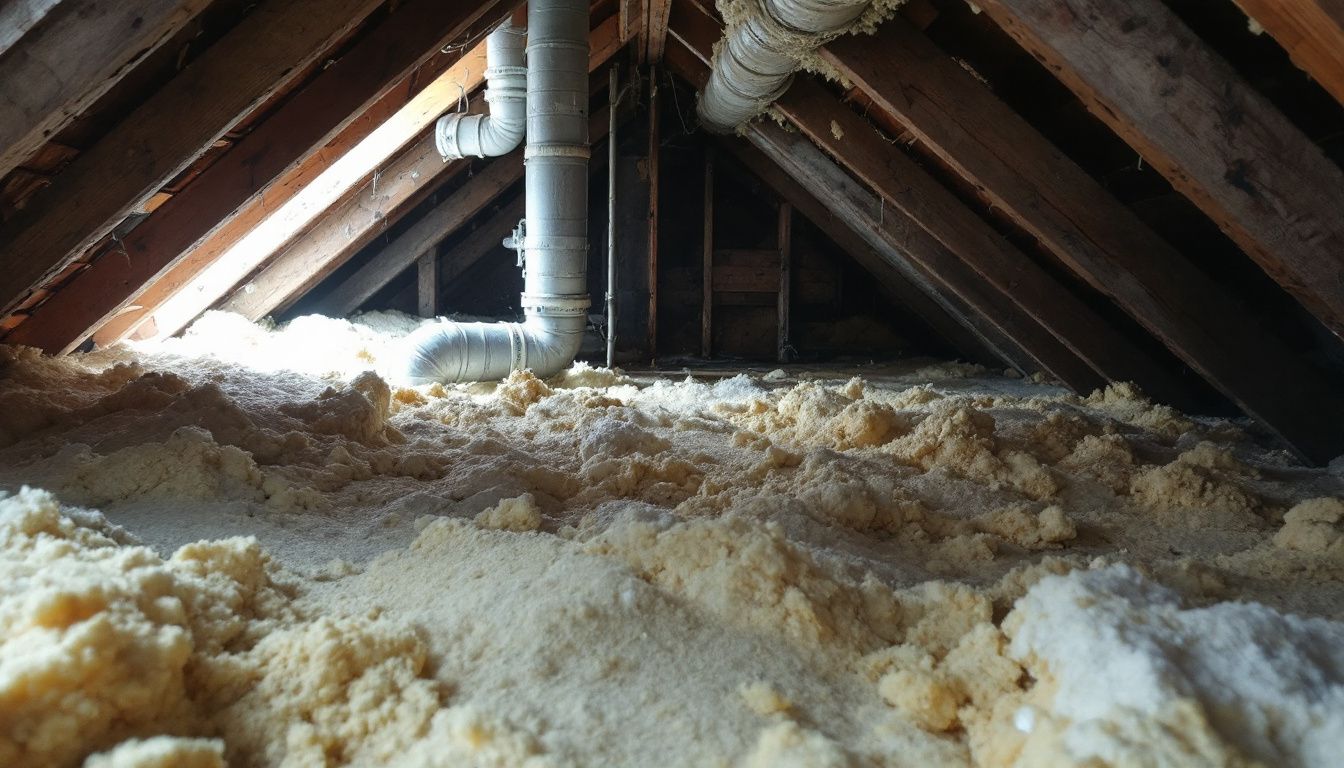
What an Asbestos Survey Priority Risk Assessment Actually Tells You
If you own or manage a property built before 2000, understanding the asbestos survey priority risk assessment explained process is one of the most important things you can do to protect the people inside it. It is not simply about finding asbestos — it is about understanding what condition it is in, where it sits in relation to human activity, and what action, if any, is needed right now.
Too many property owners receive a survey report and have no idea how to read it. This post walks you through exactly how priority risk assessments work, what the scores mean, and how to act on the findings in a way that is both legally sound and practically sensible.
Why Priority Risk Assessment Is the Heart of Any Asbestos Survey
Asbestos-containing materials (ACMs) are not all equally dangerous. A sealed, undisturbed floor tile in a rarely accessed plant room presents a very different risk profile to damaged pipe lagging in a busy corridor. The priority risk assessment exists to make that distinction clear.
The assessment scores each identified ACM against a set of criteria drawn from HSG264, the HSE’s definitive guide to asbestos surveying. Those criteria fall into two broad categories: the material’s condition and its potential to be disturbed. Together, they produce a risk rating that tells you — and any contractor who later works on the building — how urgently each material needs attention.
Without this scoring system, a survey report is just a list. With it, you have a prioritised action plan.
How the Priority Risk Assessment Score Is Calculated
Surveyors following HSG264 guidance use an algorithm that combines two separate assessments: the Material Assessment and the Priority Assessment. Understanding both helps you interpret what you are reading in the report.
Material Assessment
The material assessment looks at the ACM itself and scores it based on four factors:
- Product type — friable materials like pipe lagging or sprayed coatings score higher than bonded materials like floor tiles or cement sheets
- Extent of damage or deterioration — is the surface intact, slightly damaged, or severely damaged?
- Surface treatment — is the material sealed, painted, or bare?
- Asbestos type — amphibole fibres such as amosite (brown) and crocidolite (blue) score higher than chrysotile (white) due to their greater health risk
Each factor carries a numerical score. The total material assessment score indicates how likely the ACM is to release fibres if disturbed.
Priority Assessment
The priority assessment considers the context around the ACM — specifically, how likely people are to come into contact with it:
- Normal occupant activity — what do people typically do in that area?
- Likelihood of disturbance — could maintenance work, cleaning, or general use disturb the material?
- Human exposure potential — how many people use the area and how frequently?
- Maintenance activity — is the area subject to regular work by tradespeople?
A high-scoring material in a rarely visited roof void may produce a lower combined priority than a lower-scoring material in a frequently used corridor. Context is everything.
The Combined Risk Rating
The two scores are combined to produce an overall risk rating. Most survey reports present this as a traffic light system or a numerical band:
- High risk — immediate action required; the material poses a significant risk of fibre release in current conditions
- Medium risk — action required in the short to medium term; regular monitoring and a clear management plan are essential
- Low risk — the material can be managed in situ with periodic re-inspection, provided conditions do not change
A well-structured asbestos report will list every identified ACM with its individual scores and an overall recommendation. If yours does not, it may not be fully compliant with HSG264.
The Four Survey Types and When Each One Applies
The type of survey you commission directly affects the quality of the risk assessment data you receive. Each survey type is designed for a specific purpose, and using the wrong one can leave significant gaps in your knowledge.
Management Survey
A management survey is the standard survey for properties in normal occupation. It covers all reasonably accessible areas and is designed to locate ACMs that could be disturbed during everyday activities or routine maintenance. This is the survey most property managers will commission as part of their ongoing duty to manage obligations.
Refurbishment Survey
Before any intrusive works — whether that is a kitchen refit, a loft conversion, or a rewire — you need a refurbishment survey of the areas to be disturbed. This is a more invasive inspection that may involve opening up walls, lifting floors, and accessing concealed voids. It is not appropriate to rely on a management survey when structural or cosmetic works are planned.
Demolition Survey
A demolition survey is the most thorough and intrusive of all survey types. It is legally required before any demolition work begins and must cover the entire structure. Every ACM must be identified and removed before demolition proceeds — there is no option to manage in situ at this stage.
Re-inspection Survey
Once ACMs have been identified and a management plan is in place, the condition of those materials must be monitored over time. A re-inspection survey provides that periodic check, updating the condition scores and flagging any deterioration that changes the risk rating. The frequency of re-inspections should be determined by the initial priority assessment — high-risk materials may need checking annually or more frequently.
What Happens After the Survey: Acting on the Priority Risk Assessment
Receiving a survey report is not the end of the process — it is the beginning of your management obligations. The priority risk assessment tells you what to do and in what order. Here is how to work through the findings systematically.
High-Risk Findings
Any ACM rated as high risk needs immediate attention. Depending on the material and its condition, the options are typically:
- Removal — carried out by a licensed contractor where required under the Control of Asbestos Regulations. Licensed removal is mandatory for certain ACM types, including most sprayed coatings and pipe lagging containing amphibole fibres. Professional asbestos removal ensures the work is done safely and in full compliance with HSE notification requirements.
- Encapsulation — applying a sealant or encapsulant to prevent fibre release where removal is not immediately practicable. This is a temporary measure and must be followed up with regular monitoring.
- Immediate restriction — sealing off the area to prevent access until remediation work can be completed.
Medium-Risk Findings
Medium-risk ACMs should be included in your asbestos management plan with clear timescales for review and action. They do not necessarily require immediate removal, but they must be monitored and the risk re-evaluated if conditions change — for example, if the building use changes or maintenance work is planned nearby.
Low-Risk Findings
Low-risk ACMs can generally remain in place, provided they are undisturbed and their condition is maintained. They must still be recorded in your asbestos register and included in your re-inspection programme. Anyone working on the building — from electricians to decorators — must be made aware of their location before work begins.
The Legal Framework Underpinning Priority Risk Assessment
The priority risk assessment process is not a voluntary best practice — it sits within a clear legal framework that applies to most non-domestic premises and has implications for residential landlords and property managers too.
The Control of Asbestos Regulations place a duty to manage on those responsible for non-domestic premises. This duty includes identifying ACMs, assessing their condition and risk, and maintaining an up-to-date asbestos register and management plan. The priority risk assessment is the mechanism by which that duty is discharged in a meaningful, documented way.
HSG264 provides the technical framework surveyors follow when conducting assessments. A survey that does not follow HSG264 methodology may not be legally defensible if the matter is ever scrutinised by the HSE or a court.
For residential properties — particularly houses in multiple occupation (HMOs), leasehold blocks, and rented homes — the obligations are less prescriptive but the health risks are identical. A priority risk assessment gives any responsible landlord or homeowner the information they need to make safe, informed decisions.
Sampling, Testing, and Confirming ACM Identification
A priority risk assessment is only as reliable as the identification of ACMs that underpins it. Where materials are suspected but not confirmed, samples must be taken and analysed in a UKAS-accredited laboratory using polarised light microscopy (PLM).
Professional asbestos testing confirms not just the presence of asbestos but the fibre type — critical information for the material assessment score. Amosite and crocidolite carry a higher score than chrysotile, so correct identification directly affects the priority rating assigned to that material.
For those who suspect a specific material in their property and want a preliminary check before commissioning a full survey, a postal testing kit allows samples to be collected and submitted for laboratory analysis. This is only appropriate for accessible, clearly defined suspect materials — it is not a substitute for a full professional survey.
It is also worth noting that asbestos surveys and fire risk assessment requirements often arise at the same time — particularly in commercial premises and residential blocks. Addressing both together can reduce disruption and ensure your overall compliance position is solid.
What to Expect from a Supernova Asbestos Survey
Supernova Asbestos Surveys has completed over 50,000 surveys across the UK. Every survey follows HSG264 methodology and is conducted by BOHS P402-qualified surveyors. Here is what the process looks like from booking to report delivery.
- Booking — contact us by phone or through our website. We confirm availability quickly and provide a fixed-price quote before any work begins.
- Site visit — a qualified surveyor attends at the agreed time and conducts a thorough inspection of all relevant areas, taking representative samples from suspect materials using correct containment procedures.
- Laboratory analysis — samples are analysed at our UKAS-accredited laboratory using polarised light microscopy.
- Report delivery — you receive a detailed asbestos register, priority risk assessment scores for each identified ACM, and a clear management plan in digital format, typically within three to five working days.
The report is fully compliant with HSG264 and satisfies all requirements under the Control of Asbestos Regulations. It gives you everything you need to demonstrate legal compliance and make informed decisions about management or remediation.
Survey Costs and Pricing
Supernova Asbestos Surveys offers transparent, fixed-price surveys with no hidden fees. Indicative pricing is as follows:
- Management Survey — from £195 for a standard residential or small commercial property
- Refurbishment and Demolition Survey — from £295, covering all areas to be disturbed prior to works
- Re-inspection Survey — from £150, plus £20 per ACM re-inspected
- Bulk Sample Testing Kit — from £30 per sample for postal submission
- Fire Risk Assessment — from £195 for a standard commercial premises
All prices vary with property size and location. Request a free quote online for a figure tailored to your specific property and requirements.
Frequently Asked Questions
What is a priority risk assessment in an asbestos survey?
A priority risk assessment is a scoring system used within an asbestos survey to evaluate both the condition of identified asbestos-containing materials and their likelihood of being disturbed. The combined score determines how urgently each material needs to be managed, removed, or monitored. It follows the methodology set out in HSG264, the HSE’s guidance on asbestos surveying, and forms the basis of any compliant asbestos management plan.
How does the material assessment score differ from the priority assessment score?
The material assessment score reflects the physical condition of the ACM itself — its product type, extent of damage, surface treatment, and fibre type. The priority assessment score considers the surrounding context, including how often people use the area, the likelihood of disturbance, and the level of maintenance activity. Both scores are combined to produce the overall risk rating for each material identified during the survey.
Do I need an asbestos survey for a residential property?
For private homes, there is no strict legal requirement to commission a survey, but it is strongly advisable for any property built before 2000 — particularly before any renovation or building work. For residential landlords, HMO licence holders, and those managing leasehold blocks, the obligations are more significant and a survey with a priority risk assessment is the responsible and often legally necessary course of action. You can find out more about the right survey type by visiting the asbestos testing information page.
How often should ACMs be re-inspected once identified?
The frequency of re-inspection depends on the risk rating assigned during the original survey. High-risk materials in poor condition or in frequently used areas may require re-inspection every six to twelve months. Lower-risk, well-maintained materials in undisturbed locations may only require annual or biennial checks. The management plan produced as part of your survey report should specify the recommended re-inspection intervals for each ACM.
What should I do if a survey identifies a high-risk ACM?
A high-risk finding requires prompt action. Depending on the material type and condition, this may mean restricting access to the area immediately, arranging licensed removal, or applying encapsulation as a temporary measure. Your survey report will include recommendations specific to each high-risk material. If you are unsure how to proceed, speak directly with a qualified surveyor — acting quickly is always preferable to leaving a high-risk material unaddressed.
If your property needs an asbestos survey with a full priority risk assessment, Supernova Asbestos Surveys is ready to help. With over 50,000 surveys completed, BOHS-qualified surveyors, and a UKAS-accredited laboratory, we deliver reports you can rely on and act on with confidence.
📞 Call us on 020 4586 0680 to speak with a specialist.
🌐 Visit asbestos-surveys.org.uk to request a free quote online.