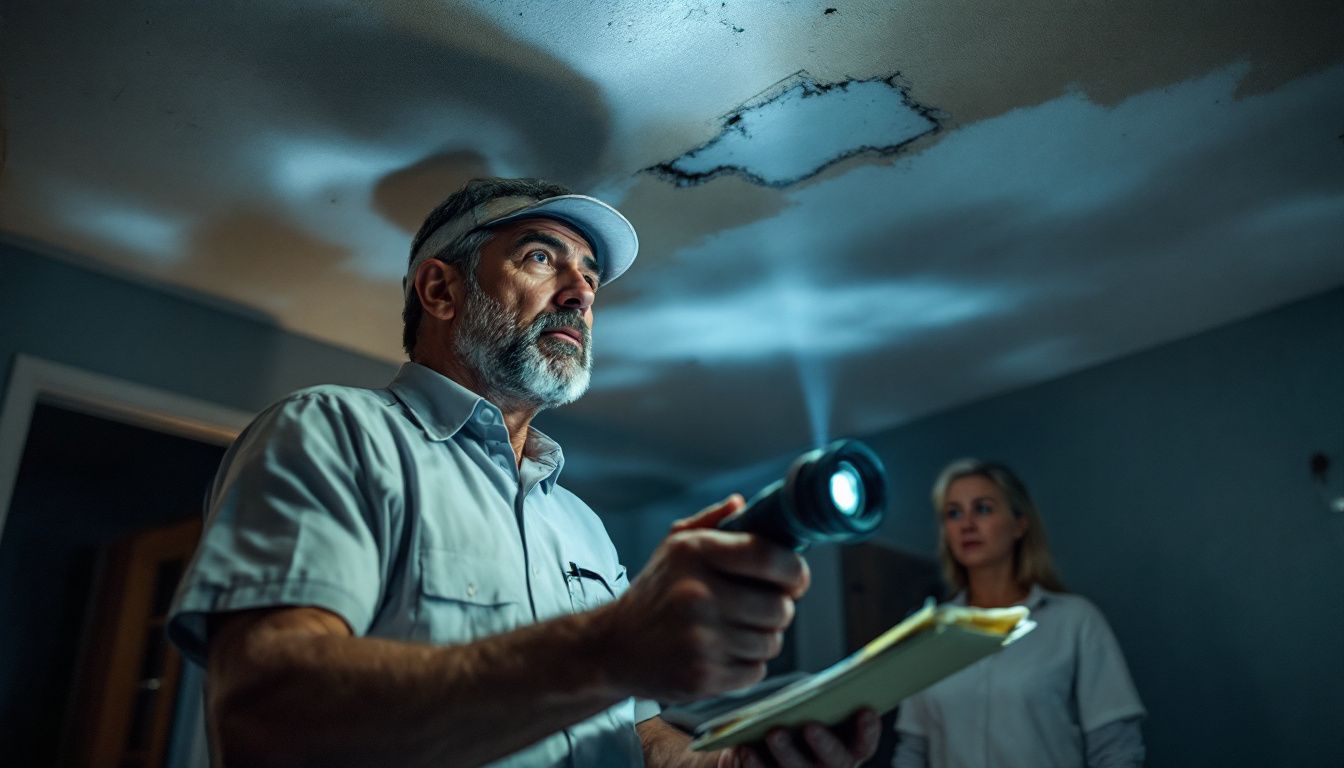
What Every Homeowner Needs to Know Before Touching a Wall
If your home was built before 2000, there is a genuine chance asbestos-containing materials (ACMs) are hidden somewhere inside it — in the walls, ceiling tiles, floor coverings, pipe lagging, or roof materials. Most homeowners never think about it until they start planning renovation work, at which point the risks become very real, very quickly.
Exploring the different types of asbestos surveys for homes is not just an academic exercise. It is a practical necessity. The wrong type of survey — or no survey at all — can lead to dangerous asbestos fibre release, serious health consequences, and significant legal liability.
This post breaks down exactly what each survey type involves, when you need one, and how to make sure you are getting the right service for your property.
Why Asbestos Surveys Matter in Residential Properties
Asbestos was widely used in UK construction from the 1950s through to the late 1990s. It was cheap, fire-resistant, and excellent at insulation — which is precisely why it ended up in so many building materials. The UK banned the use of all asbestos types by 1999, but that ban did nothing to remove what was already built into millions of homes across the country.
When ACMs are left undisturbed, they are generally considered low risk. The danger comes when materials are damaged, drilled into, cut, or disturbed during building work. At that point, microscopic fibres become airborne, and once inhaled, they can cause mesothelioma, asbestosis, and lung cancer — diseases that can take decades to develop but carry devastating consequences.
Asbestos-related disease remains one of the leading causes of work-related death in the UK. For homeowners and tradespeople alike, a proper survey before any significant work is not optional — it is the responsible course of action, and in many circumstances, a legal requirement.
The Legal Framework: What UK Regulations Actually Say
The Control of Asbestos Regulations place a duty on those responsible for non-domestic premises to manage asbestos. For purely residential properties, the legal position is somewhat different — there is no automatic statutory obligation on a homeowner to commission a survey for their own home.
However, the moment a property becomes a workplace — including during construction or renovation work — the regulations apply to the work being carried out. HSG264, the HSE’s guidance document on asbestos surveys, sets out the standards that qualified surveyors must follow. It defines survey types, sampling requirements, and reporting standards. Any reputable surveying company will work to this guidance as a baseline.
If you are a landlord, the position is clearer still. You have a duty of care to tenants, and failing to identify and manage asbestos in a rental property can expose you to enforcement action. Even for owner-occupiers, instructing qualified tradespeople to work on a property without first identifying ACMs could create liability if those workers are subsequently exposed.
Exploring the Different Types of Asbestos Surveys for Homes
There are four main survey types used in residential settings, each designed for a specific situation. Understanding the differences is essential before you commission any work — choosing the wrong one can leave you exposed both physically and legally.
Management Asbestos Survey
A management survey is the standard survey used to locate and assess the condition of ACMs in a property that is occupied and in normal use. The goal is not to find every last piece of asbestos in the building — it is to identify materials that could be disturbed during everyday activities and assess the risk they pose.
The survey involves a visual inspection of accessible areas, with sampling of suspected materials where appropriate. Surveyors will check walls, ceilings, floors, service areas, and other accessible spaces. Critically, the survey is designed to be minimally intrusive — surveyors will not break into concealed areas or cause significant disturbance to the building fabric.
At the end of a management survey, you receive a detailed report identifying all ACMs found, their location, condition, and a risk assessment. This forms the basis of an asbestos management plan — a live document that should be reviewed and updated regularly.
A management survey is the right starting point if you have just purchased an older property, if you are a landlord taking on a new rental, or if you simply want to understand what is in your home before making any decisions about maintenance or renovation.
Refurbishment Asbestos Survey
A refurbishment survey is required before any work that will disturb the fabric of the building. Extensions, loft conversions, kitchen or bathroom refits, rewiring, new central heating systems — all of these fall into this category.
Unlike a management survey, a refurbishment survey is intrusive by design. Surveyors need to access areas that would be disturbed during the planned work, which may mean breaking into walls, lifting floorboards, removing ceiling panels, or accessing roof voids. The survey must cover all areas where work is planned.
Because the survey involves disturbing building materials, it must be carried out before the refurbishment work begins — not during it. This is a critical point that homeowners and contractors sometimes overlook. Starting work without a refurbishment survey in place is not just legally problematic; it is genuinely dangerous.
The survey report will identify any ACMs in the areas to be worked on, along with recommendations for safe removal or encapsulation before work proceeds. If asbestos is found, a licensed contractor will typically need to be engaged before your builders can start.
Demolition Asbestos Survey
A demolition survey is the most thorough and intrusive of the three. It is required before any demolition work takes place — whether that is taking down an entire building or demolishing a significant part of it, such as an outbuilding, extension, or structural wall.
The survey must cover the entire structure, including all concealed areas. This means destructive inspection techniques are used — surveyors will physically open up building fabric to ensure nothing is missed. The aim is to produce a complete picture of all ACMs present so that they can be removed safely before demolition begins.
Demolition surveys are typically more time-consuming and costly than management or refurbishment surveys, reflecting the level of access and inspection required. They are, however, non-negotiable before any demolition work proceeds.
Re-Inspection Asbestos Survey
Once ACMs have been identified and an asbestos management plan is in place, those materials need to be monitored over time. A re-inspection survey does exactly that — it checks the condition of known ACMs to ensure they have not deteriorated or been disturbed since the last inspection.
Re-inspections are typically carried out annually, though the frequency may be higher if materials are in a vulnerable location or in poor condition. For landlords, regular re-inspections form an essential part of demonstrating ongoing compliance with their duty of care.
When Do You Need an Asbestos Survey at Home?
The short answer: if your home was built before 2000 and you are planning any work that could disturb building materials, you need a survey before that work starts. Here are the most common scenarios where a survey is strongly advisable or legally required:
- Buying or selling an older property — A survey gives you clarity on what you are taking on and can inform price negotiations.
- Planning a renovation or extension — Any work that disturbs walls, floors, ceilings, or roof structures requires a refurbishment survey first.
- Loft conversions — Roof spaces in older homes frequently contain asbestos insulation boards and pipe lagging.
- Kitchen or bathroom refits — Floor tiles, adhesives, and ceiling coatings in older properties can all contain asbestos.
- Rewiring or plumbing work — Tradespeople working in wall cavities or around pipe runs need to know what they are working near.
- Landlord responsibilities — If you let a property built before 2000, a management survey and ongoing re-inspections are strongly advisable.
- Demolition of any structure — Outbuildings, garages, and extensions built before 2000 are all subject to the same considerations as the main dwelling.
Properties built between the 1950s and 1970s carry the highest risk, as this was the peak period for asbestos use in UK construction. However, any property built up to 1999 should be treated with caution until a survey confirms otherwise.
Common Materials in Homes That May Contain Asbestos
One of the most useful things a homeowner can know is where asbestos is most commonly found in residential properties. The following materials are frequently identified during surveys of pre-2000 homes:
- Textured coatings such as Artex on ceilings and walls
- Floor tiles and the adhesive used to fix them
- Roof tiles and corrugated cement sheets, particularly in garages and outbuildings
- Pipe lagging and boiler insulation
- Asbestos insulation board (AIB) used in fire doors, ceiling tiles, and partition walls
- Soffit boards and fascias
- Loose fill insulation in ceiling voids
- Vinyl floor coverings and their backing materials
The presence of any of these materials does not automatically mean danger. Condition and location are critical factors. A well-maintained, undamaged asbestos cement roof sheet poses a very different risk profile to damaged AIB in a frequently accessed ceiling void. A proper survey will assess all of this in context.
What Happens During a Residential Asbestos Survey?
Understanding the process helps homeowners prepare properly and know what to expect. Here is a typical sequence for a residential asbestos survey:
- Initial consultation — The surveying company will discuss the property, its age, planned works, and any known history of asbestos. This shapes the scope of the survey.
- Site visit — A qualified surveyor attends the property and carries out a systematic inspection of all areas within scope.
- Sampling — Where materials are suspected to contain asbestos, small samples are taken and sent to an accredited laboratory for analysis.
- Laboratory analysis — Samples are analysed under polarised light microscopy to confirm the presence and type of any asbestos fibres.
- Report preparation — A detailed written report is produced, identifying all ACMs, their location, condition, and risk rating.
- Recommendations — The report includes clear recommendations on management, encapsulation, or removal as appropriate.
For situations where you suspect a specific material, targeted asbestos testing can sometimes be carried out without a full survey. This is useful when you want to confirm whether a particular material — a textured ceiling coating, for example — contains asbestos before deciding how to proceed.
Asbestos Testing: When a Full Survey Is Not Required
Sometimes a full survey is not the right tool for the job. If you have a single material you want to test — perhaps a suspicious ceiling coating or an old floor tile — asbestos testing of that specific material may be all you need.
Testing involves taking a small sample of the material in question and having it analysed by a UKAS-accredited laboratory. Results will confirm whether asbestos is present and, if so, which type. This can be a quick and cost-effective way to get clarity before deciding on next steps.
That said, targeted testing only tells you about the material sampled. It does not give you a picture of the wider property. If you are planning significant works, a full survey is always the more prudent choice.
Choosing the Right Asbestos Surveyor
Not all asbestos surveyors are equal. When selecting a company to carry out a residential survey, there are several things you should look for:
- UKAS accreditation — The laboratory analysing your samples should be accredited by the United Kingdom Accreditation Service. This is a non-negotiable quality marker.
- P402-qualified surveyors — Surveyors should hold the British Occupational Hygiene Society (BOHS) P402 qualification or equivalent. This is the industry-recognised standard for building surveys and bulk sampling.
- Clear reporting — A good survey report is detailed, clearly written, and includes photographs, location plans, and unambiguous risk ratings.
- Experience with residential properties — Residential surveys have different characteristics to commercial ones. Look for a company with a demonstrable track record in homes.
- Transparent pricing — Reputable companies will give you a clear quote upfront. Be wary of unusually low prices that may reflect shortcuts in sampling or reporting.
- Nationwide coverage — Whether you need an asbestos survey in London, an asbestos survey in Manchester, or an asbestos survey in Birmingham, choose a company with proven local expertise and national reach.
What to Do If Asbestos Is Found
Finding asbestos in your home does not automatically mean you need to take immediate action. In many cases, the right response is to leave the material undisturbed and monitor it through regular re-inspections. ACMs in good condition, in locations where they will not be disturbed, can safely remain in place for many years.
Where asbestos does need to be removed — because it is damaged, deteriorating, or in the way of planned works — removal must be carried out by a licensed contractor. The type of licence required depends on the material involved. High-risk materials such as AIB and sprayed coatings require a fully licensed contractor. Lower-risk materials may be handled by a contractor holding a notifiable non-licensed work (NNLW) notification.
Never attempt to remove asbestos yourself. Even materials that appear to be in good condition can release fibres when disturbed. The risks are simply not worth taking.
Once removal or remediation is complete, a clearance inspection should be carried out by an independent analyst to confirm that the area is safe before reoccupation or further works begin.
Asbestos Surveys Across the UK: Getting the Right Coverage
Supernova Asbestos Surveys operates nationwide, with surveyors covering residential and commercial properties across England, Scotland, and Wales. Whether your property is a Victorian terrace in a city centre or a 1980s detached house in a rural area, the same rigorous standards apply.
Local knowledge matters too. Surveyors familiar with the housing stock in a particular area will often have a clearer sense of what materials are likely to be present based on construction period and regional building practices. This experience feeds directly into the quality and accuracy of the survey.
If you are unsure which type of survey you need, a brief conversation with an experienced surveyor will usually clarify things quickly. The right company will ask the right questions before recommending anything.
Frequently Asked Questions
Do I legally have to get an asbestos survey for my home?
For owner-occupied residential properties, there is no automatic legal requirement to commission an asbestos survey under the Control of Asbestos Regulations. However, once renovation or construction work begins, the regulations apply to the work itself. If you are a landlord, you have a duty of care to tenants that makes surveys and ongoing management strongly advisable. Even for owner-occupiers, getting a survey before any significant works is the responsible approach — and protects the tradespeople working in your home.
How long does a residential asbestos survey take?
The duration depends on the size of the property and the type of survey being carried out. A management survey for an average-sized house typically takes two to three hours. A refurbishment or demolition survey may take longer, particularly if the scope of works is extensive or if the property has multiple areas requiring intrusive inspection. Your surveyor should be able to give you a realistic time estimate when you book.
Can I stay in my home during an asbestos survey?
For a management survey, occupants can generally remain in the property, though it is sensible to keep out of the rooms being inspected while sampling is taking place. For refurbishment or demolition surveys, which involve more intrusive work, your surveyor will advise on whether any areas need to be vacated temporarily. In most cases, a residential survey causes minimal disruption to daily life.
How much does a residential asbestos survey cost?
Costs vary depending on the type of survey, the size of the property, and the number of samples taken for laboratory analysis. A management survey for a standard house is generally the most affordable option. Refurbishment and demolition surveys cost more, reflecting the greater level of access and inspection involved. Always request a detailed written quote before proceeding, and be cautious of prices that seem unusually low — they may reflect reduced sampling or less thorough reporting.
What is the difference between asbestos testing and an asbestos survey?
An asbestos survey is a systematic inspection of a property to identify all suspected ACMs, assess their condition, and produce a risk-rated report. Asbestos testing refers to the laboratory analysis of a specific sample taken from a particular material. Testing can be carried out as a standalone exercise if you want to confirm whether one specific material contains asbestos. A full survey gives you a much broader picture of the entire property and is the appropriate choice before any significant works.
Speak to Supernova Asbestos Surveys
Supernova Asbestos Surveys has completed over 50,000 surveys nationwide. Our qualified surveyors work to HSG264 standards, and all laboratory analysis is carried out by UKAS-accredited facilities. Whether you need a straightforward management survey before letting a property or a full demolition survey ahead of a major project, we will match you with the right service for your situation.
Call us on 020 4586 0680 or visit asbestos-surveys.org.uk to find out more or request a quote. Do not start work on a pre-2000 property without speaking to us first.