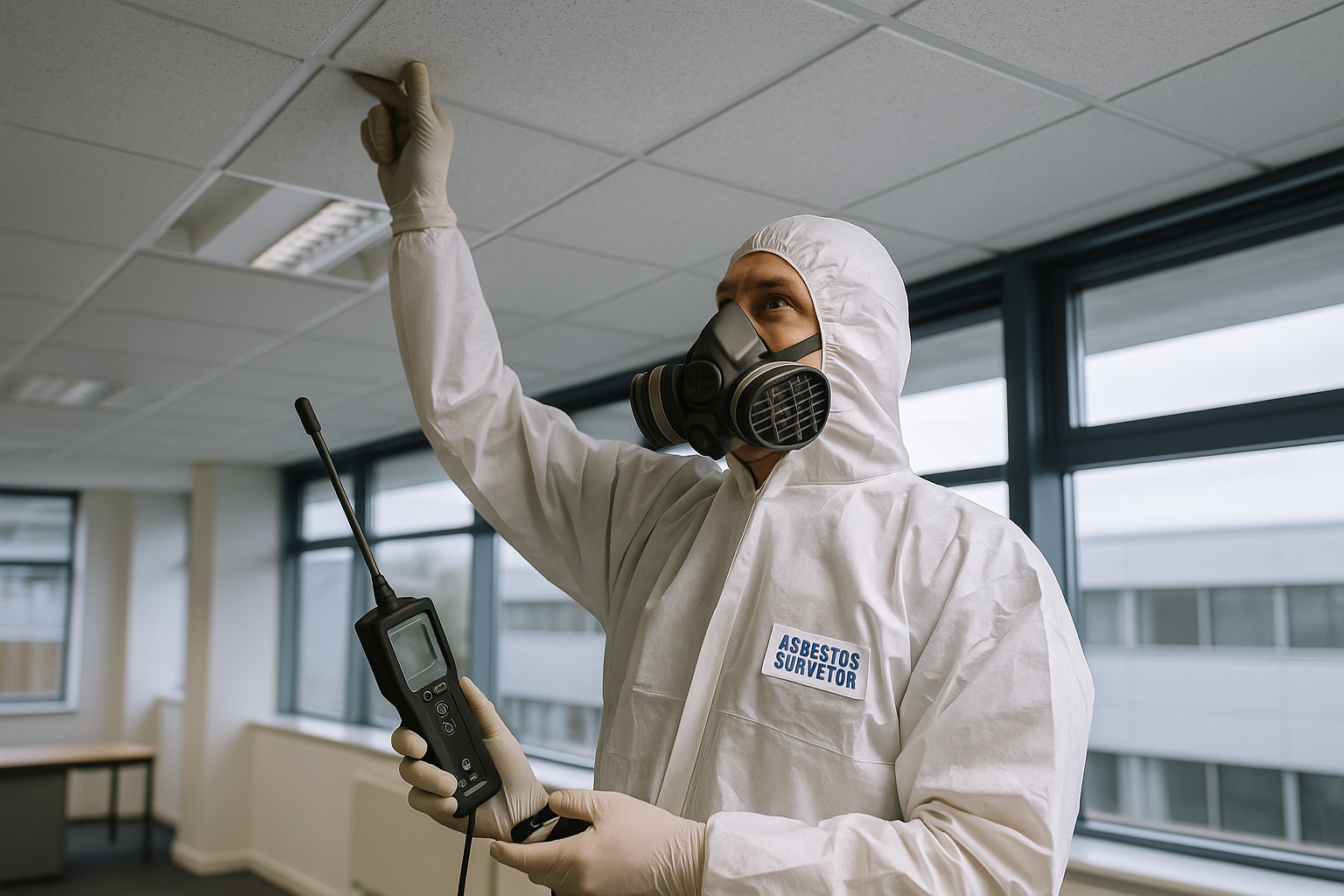
A cheap quote can become an expensive mistake when asbestos is missed. The right residential asbestos survey gives you clear evidence about what is present, what condition it is in, and what needs to happen next before routine management, refurbishment or demolition turns into disruption.
For homeowners, landlords, block managers, housing associations and freeholders, that clarity matters. A residential building may look straightforward on paper, but older houses, converted flats, HMOs and purpose-built blocks often hide asbestos in places contractors disturb first.
At Supernova Asbestos Surveys, we have completed more than 50,000 surveys across the UK. That experience is particularly valuable in residential settings, where legal duties, access arrangements and the planned works all affect which survey is suitable and what the report needs to achieve.
What is a residential asbestos survey?
A residential asbestos survey is an inspection carried out to identify, so far as is reasonably practicable, the presence and extent of suspected asbestos-containing materials in a domestic property or in the common parts of residential premises. The purpose is not to create paperwork for its own sake. It is to support safe occupation, maintenance, refurbishment or demolition.
A proper survey should follow HSG264 and align with the Control of Asbestos Regulations and wider HSE guidance. That means the inspection must match the building and the work planned, not rely on a one-size-fits-all approach.
The report should help you answer practical questions:
- Is asbestos likely to be present?
- Where is it located?
- What condition is it in?
- Could normal use or planned works disturb it?
- Does it need management, repair, encapsulation or removal?
If you are responsible for a property, a residential asbestos survey replaces guesswork with evidence. That is what allows you to plan works properly, brief contractors correctly and avoid unnecessary risk.
Which type of residential asbestos survey do you need?
The right survey depends less on whether the building is a house or a flat and more on what is about to happen there. In most cases, clients need one of three survey types.
Management survey
A management survey is used to locate, as far as reasonably practicable, asbestos-containing materials that could be damaged or disturbed during normal occupation, routine maintenance or foreseeable minor works. It is usually non-intrusive, although minor disturbance and sampling may be needed.
If the building will remain in use and you need asbestos information for day-to-day control, a management survey is often the correct starting point.
This type of residential asbestos survey is designed to help you manage asbestos safely in situ. It does not aim to expose every hidden material behind walls, floors and ceilings.
Refurbishment survey
A refurbishment survey is required before work that will disturb the fabric of the building. This includes intrusive upgrades, partial strip-outs, service alterations and internal reconfiguration.
Before opening up walls, ceilings, floors, risers or boxing, you should arrange a refurbishment survey targeted to the exact work area. This survey is intrusive by design because asbestos is often concealed behind finishes and fixed elements.
Demolition survey
If a structure is due to be demolished, a demolition survey is required. That applies to houses, garages, outbuildings and larger residential blocks where the whole structure will be taken down.
Where demolition is planned, a demolition survey is the right route. It is fully intrusive and usually carried out in vacant areas so all relevant materials can be identified before demolition begins.
When is a residential asbestos survey needed?
A residential asbestos survey is commonly needed when you are dealing with an older property and there is uncertainty about asbestos risk. In practice, that often means buildings constructed before asbestos use was fully prohibited, although age alone does not tell the whole story.
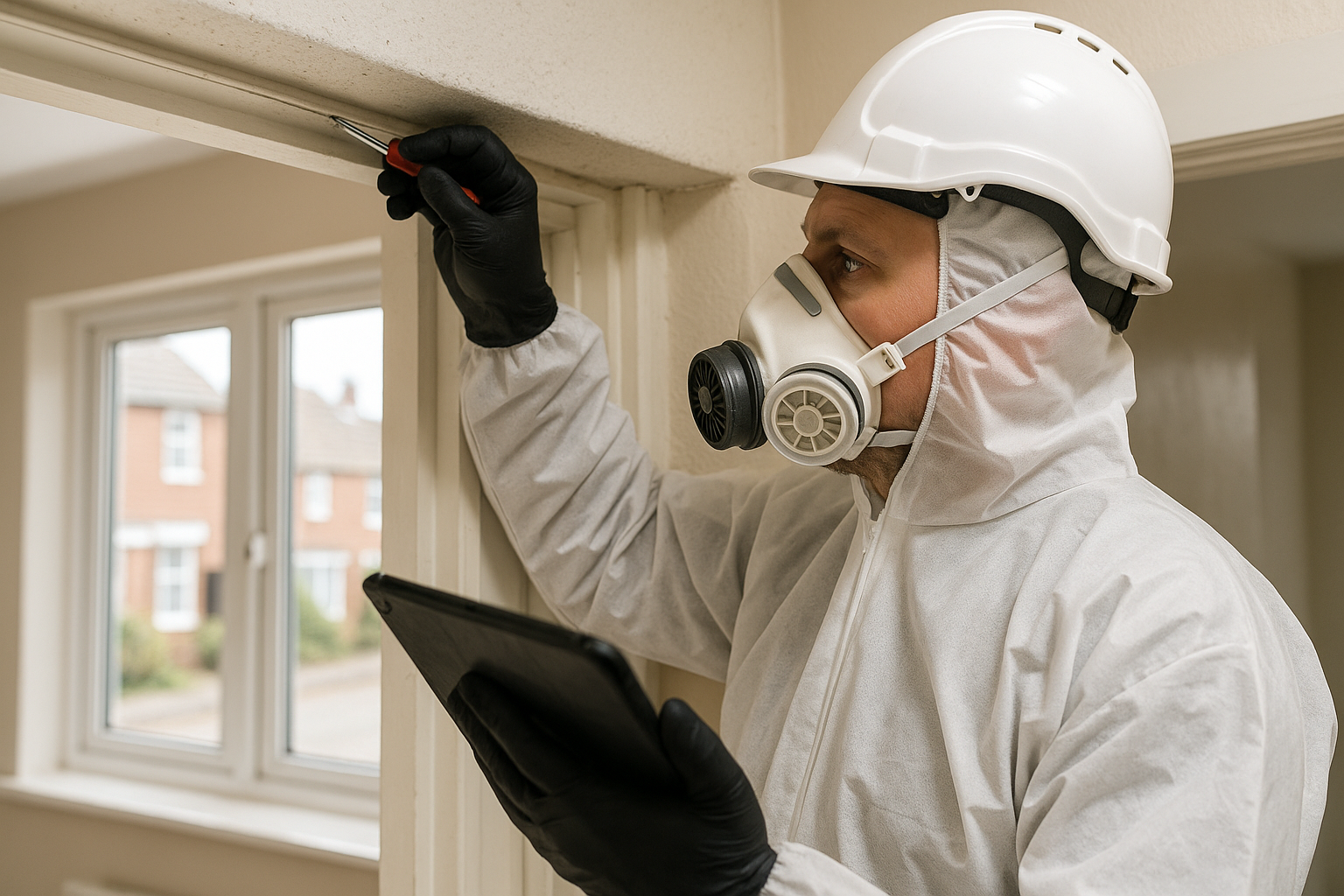
You may need a survey if you are:
- Buying an older house or flat
- Letting a property and want a clear asbestos record
- Managing communal areas in a block of flats
- Taking over a property portfolio with incomplete compliance documents
- Planning maintenance that could disturb suspect materials
- Refurbishing kitchens, bathrooms, ceilings, floors or services
- Preparing a house, garage or block for demolition
For landlords and managing agents, a residential asbestos survey often becomes the baseline document for sensible decisions. It tells you whether materials can remain undisturbed, need periodic monitoring, should be sealed, or must be dealt with before work starts.
Residential property and the legal position
The legal position in residential settings is more nuanced than in purely commercial premises. Under the Control of Asbestos Regulations, the duty to manage applies to non-domestic premises and the common parts of domestic premises.
That means shared spaces in residential buildings may fall within active asbestos management duties. Private living areas inside a single dwelling are treated differently, but that does not remove the practical need to identify asbestos before maintenance or refurbishment.
If you control common parts, commission works, or manage contractors, you need reliable asbestos information. Waiting until a contractor damages a suspect material is the most expensive way to discover it.
Common parts that often need asbestos attention
- Communal hallways and stairwells
- Lift lobbies and meter cupboards
- Service risers and ducting
- Plant rooms and boiler rooms
- Bin stores and storage rooms
- Roof void access points
- External soffits, panels and outbuildings
Where asbestos records are old, incomplete or unclear, a fresh residential asbestos survey can bring those areas back under control and give contractors usable information.
What asbestos materials are often found in homes?
Residential properties can contain a wide range of asbestos-containing materials. Some present relatively low risk if they remain in good condition and are left undisturbed. Others become far more significant if they are drilled, cut, broken or removed without proper controls.
Common examples found during a residential asbestos survey include:
- Textured coatings
- Vinyl floor tiles and bitumen adhesive
- Asbestos cement roof sheets, soffits and flues
- Asbestos insulating board in panels, cupboards and partition walls
- Boxing around pipework
- Fuse backs and older electrical components
- Ceiling tiles and lining boards
- Pipe lagging and thermal insulation
- Water tank components
- Panels behind heaters or in airing cupboards
You cannot identify asbestos reliably by appearance alone. Materials that look harmless may contain asbestos, while some suspicious-looking products may not. That is why sampling and laboratory analysis are often part of a proper residential asbestos survey.
When a management survey makes sense
If the property is occupied and no major intrusive works are planned, a management survey is usually the right starting point. It is designed to identify asbestos risks that could affect normal occupation and routine maintenance.
This is often the appropriate form of residential asbestos survey for:
- A landlord taking on a 1960s or 1970s rental flat
- A managing agent responsible for communal areas
- A housing association reviewing shared spaces in a block
- A buyer who wants clarity before budgeting for future works
- A freeholder checking stairwells, service cupboards and external stores
It is also sensible where asbestos information is missing or the existing register is outdated. A report from years ago may no longer reflect the current condition of materials, changes to the building, or areas that were previously inaccessible.
Practical steps before a management survey
- Gather previous asbestos reports, plans and maintenance records.
- List all areas under your control, including lofts, basements, garages and stores.
- Tell the surveyor about access restrictions in advance.
- Make sure keys, permits and communal cupboards can be opened on the day.
- Review the report promptly and act on recommendations.
Where communal compliance is under review, it can be efficient to coordinate asbestos checks with a fire risk assessment. That helps you organise access, documents and remedial actions in a more joined-up way.
When a refurbishment or demolition survey is essential
If you are changing the structure or disturbing fixed elements, a management survey is not enough. This is where many projects go wrong. Contractors start opening up ceilings, boxing or service voids, then hidden asbestos is discovered after work has already begun.
A refurbishment or demolition residential asbestos survey is needed before work that will disturb the building fabric. That includes partial refurbishments, not just full strip-outs.
You may need one before:
- Removing a kitchen or bathroom
- Rewiring or replumbing through walls and ceilings
- Replacing floor finishes or suspended ceilings
- Altering partitions, risers or service ducts
- Converting a loft
- Building an extension that affects the existing structure
- Replacing windows where asbestos packers or panels may be present
- Demolishing a garage, house or residential block
Why this survey is intrusive
Asbestos is often hidden under floor coverings, behind boxing, above ceilings, inside partition walls and around old services. HSG264 makes clear that the inspection must be sufficiently intrusive for the planned works.
If the scope is too limited, the survey may fail to identify materials that contractors later disturb. That creates avoidable exposure risk, delays and extra cost.
Practical steps before booking
- Define the exact scope of works first.
- Provide drawings, specifications or contractor notes where possible.
- Arrange vacant possession in the relevant area if practical.
- Do not start strip-out before the survey is complete.
- Share the final report with contractors and project managers.
If asbestos is identified and will be disturbed, the next stage may involve licensed or non-licensed remedial work depending on the material and the task. Where that is required, professional asbestos removal should be arranged in line with HSE requirements.
What affects the cost of a residential asbestos survey?
Price matters, but the cheapest survey is rarely the best value. A poor report, limited access or the wrong survey type can lead to repeat visits, delayed works and emergency costs later.
The cost of a residential asbestos survey is usually influenced by:
- Property size and layout
- Age and construction type
- Number of rooms and ancillary spaces
- Whether sampling is required
- Whether the survey is non-intrusive or intrusive
- The number of communal areas included
- Access to lofts, basements, garages and outbuildings
- Location and travel requirements
- Urgency of the instruction
Older and heavily altered buildings can take longer to inspect because they often contain a wider range of suspect materials. Converted properties can be especially complex because they may include private dwellings, shared hallways, service zones and external structures with different access arrangements.
How to avoid paying twice
One of the most common mistakes is commissioning a management survey when a refurbishment survey is actually needed. Another is booking a survey before the work scope is clear, leaving parts of the project outside the original inspection area.
To avoid unnecessary cost:
- Match the survey type to the planned use of the property
- Define work areas clearly before instruction
- Make all relevant areas accessible on the day
- Provide existing plans and asbestos records
- Use a competent surveying company that follows HSG264
The right residential asbestos survey should save money overall by preventing project interruptions and helping you deal with asbestos in a planned way rather than under pressure.
What happens during a residential asbestos survey?
Knowing what to expect makes the process easier for owners, tenants and managing agents. A residential asbestos survey usually follows a straightforward sequence, although the level of intrusion depends on the survey type.
- Initial review: the surveyor considers the property details, your objectives and any existing records.
- Site inspection: accessible areas are inspected for suspect materials.
- Sampling: where needed, small samples are taken safely for laboratory analysis.
- Assessment: materials are recorded, described and their condition noted.
- Report: you receive findings, plans or location information, and recommendations.
For a management survey, the inspection is usually less disruptive. For a refurbishment or demolition survey, opening up may be required to inspect hidden voids and building fabric properly.
If areas are inaccessible, that should be clearly stated in the report. That matters because inaccessible areas may still contain asbestos, and further inspection may be needed before works proceed.
How to prepare your property for the survey
A little preparation can make a residential asbestos survey more efficient and more useful. Delays often happen because the surveyor cannot reach key areas or does not have enough information about the intended works.
Before the visit:
- Clear access to loft hatches, meter cupboards, service risers and under-stair storage
- Unlock garages, sheds and communal cupboards
- Tell occupants what will happen and whether sampling is expected
- Provide any previous asbestos reports or refurbishment records
- Mark the exact rooms or areas affected by planned works
If the survey is intrusive, plan for dust control, temporary disruption and restricted access to the work area. In some cases, vacant possession is the safest and most practical option.
Choosing the right surveyor for a residential asbestos survey
Not all surveys are equal. A useful residential asbestos survey depends on the competence of the surveyor, the quality of the inspection and the clarity of the report.
When choosing a provider, ask practical questions:
- Do they carry out the correct survey type for the works planned?
- Do they work in line with HSG264?
- Will the report clearly identify locations, materials and recommendations?
- Can they survey common parts as well as individual dwellings where needed?
- Do they understand the needs of landlords, managing agents and housing providers?
A report should be easy to use, not just technically correct. Your contractors, project managers and maintenance teams need to understand what was found and what they must do next.
Residential asbestos survey advice for landlords, agents and homeowners
The best time to arrange a residential asbestos survey is before uncertainty becomes a problem. If you wait until contractors are on site, tenants are complaining, or a sale is being delayed, your options narrow quickly.
For landlords and managing agents, practical control usually means:
- Keeping asbestos information current for common parts
- Reviewing old reports after significant alterations
- Checking asbestos risk before maintenance contracts begin
- Making sure contractors receive the relevant survey information
- Arranging further surveys before intrusive works
For homeowners, the main point is simpler. If you are renovating an older home, do not assume a material is safe because it looks ordinary. A residential asbestos survey before work starts is usually far cheaper than stopping a project halfway through.
Local support for residential surveys
Supernova carries out residential surveys nationwide, including major cities and surrounding areas. If your property is in the capital, our asbestos survey London team can help with houses, flats and communal areas.
For properties in the North West, we also provide an asbestos survey Manchester service for landlords, homeowners and block managers. In the Midlands, our asbestos survey Birmingham service supports residential compliance and pre-works planning.
Need a residential asbestos survey?
If you need clear, practical advice on the right residential asbestos survey for your property, Supernova Asbestos Surveys can help. We carry out management, refurbishment and demolition surveys across the UK, with clear reporting and experienced surveyors who understand residential buildings.
Call 020 4586 0680 or visit asbestos-surveys.org.uk to book a survey or discuss the most suitable option for your property.
Frequently Asked Questions
Do I need a residential asbestos survey before renovating my home?
If the renovation will disturb walls, ceilings, floors, pipe boxing, service voids or other fixed elements, yes, you will usually need a refurbishment survey before work starts. A management survey is not enough for intrusive refurbishment works.
Is a residential asbestos survey a legal requirement for every home sale?
No, a survey is not automatically required for every sale of a private home. However, if the property is older and there are concerns about asbestos, or if refurbishment is planned after purchase, arranging a survey is often a sensible step.
What is the difference between a management survey and a refurbishment survey?
A management survey helps identify asbestos that could be disturbed during normal occupation and routine maintenance. A refurbishment survey is intrusive and is required before works that will disturb the building fabric.
Can asbestos be identified without taking samples?
Not reliably in many cases. Some materials can be strongly suspected during inspection, but laboratory analysis is often needed to confirm whether asbestos is present.
How long does a residential asbestos survey take?
That depends on the size of the property, the survey type, the number of areas included and access conditions. A small flat may be quicker to inspect than a converted building with communal spaces, basements and outbuildings.