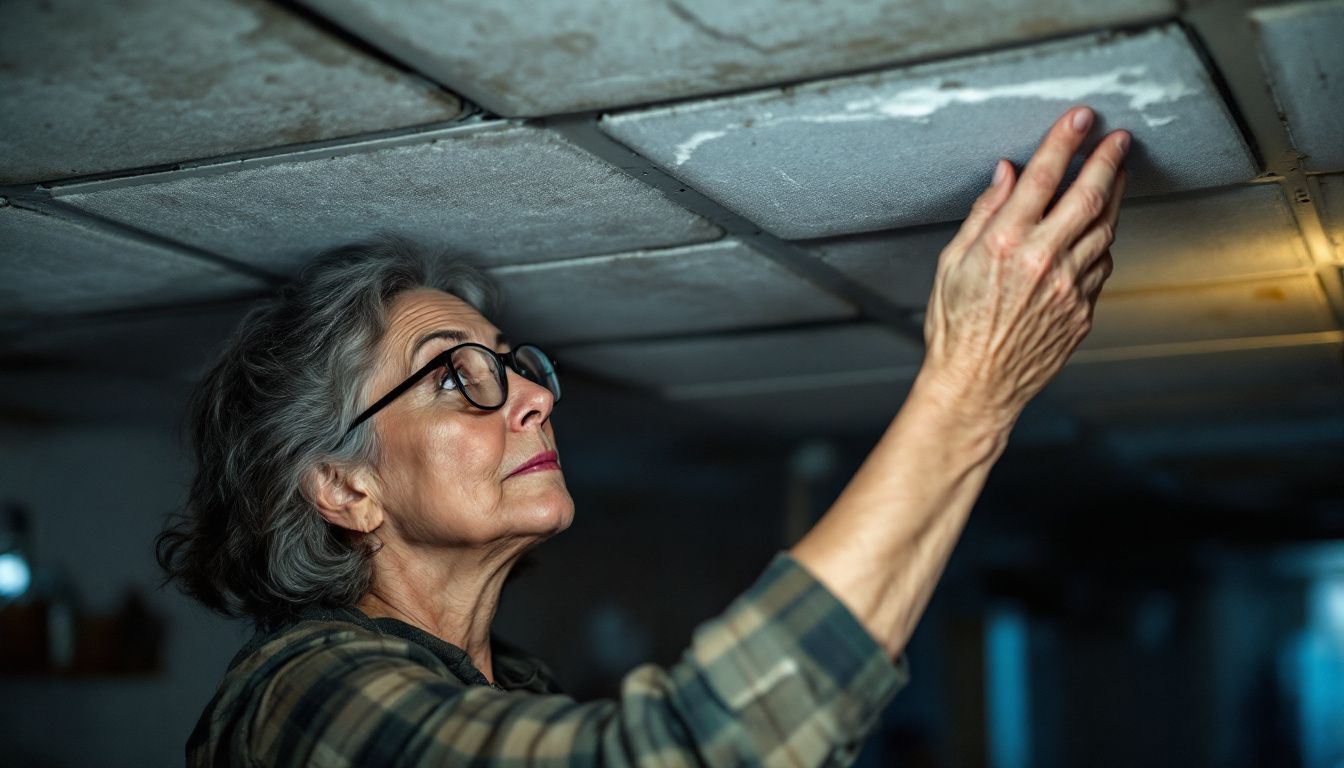
The Asbestos Myths That Put Homeowners at Real Risk
There are more common misconceptions about asbestos in residential buildings than almost any other home safety topic — and some of those myths are genuinely dangerous. Homeowners dismiss risks they shouldn’t, disturb materials they shouldn’t touch, and skip surveys they legally or practically need.
Asbestos was used extensively in UK residential construction right up until its full ban in 1999. That means millions of homes built or refurbished before 2000 could contain asbestos-containing materials (ACMs). Knowing the truth about where it hides, what it does, and how to manage it safely isn’t optional — it’s essential.
Misconception 1: “My Home Is Too New to Contain Asbestos”
This is one of the most persistent common misconceptions about asbestos in residential buildings. Many homeowners assume that because their property was built in the 1980s or even the early 1990s, they’re in the clear. They’re not necessarily.
Asbestos use in the UK was phased out gradually. Brown and blue asbestos were banned in 1985, but white asbestos (chrysotile) remained legal for use in certain products until 1999. Properties built or significantly renovated right up to that point may still contain ACMs in floor tiles, artex coatings, pipe lagging, roof panels, soffit boards, and more.
If your home was built before 2000, the only way to know for certain is to have it surveyed by a qualified professional. Assumptions based on age alone can leave you and your family exposed to a risk you didn’t know existed.
Misconception 2: “Asbestos Is Only Dangerous If You Disturb It”
There’s a kernel of truth here, but it’s dangerously oversimplified. Asbestos fibres become hazardous when they’re airborne — and yes, undisturbed, well-bonded ACMs in good condition are generally considered lower risk. However, materials don’t stay undisturbed forever.
Asbestos textured coatings can degrade over time. Pipe lagging can crack. Floor tiles can chip during everyday use. Even routine maintenance — drilling a wall, sanding a ceiling, replacing a light fitting — can disturb hidden ACMs without the homeowner realising it.
The HSE is clear: there is no known safe level of asbestos exposure. Every fibre inhaled carries a degree of risk. Diseases caused by asbestos — including mesothelioma, lung cancer, and asbestosis — can take 20 to 40 years to develop after exposure, which means the damage is often done long before any symptoms appear.
What the Health Risks Actually Look Like
Around 2,500 people are diagnosed with mesothelioma in the UK each year. This is a cancer of the lining of the lungs or abdomen caused almost exclusively by asbestos exposure, and it has no cure.
Asbestosis — scarring of the lung tissue — and pleural plaques are also directly linked to asbestos fibre inhalation. Smoking significantly increases the risk of asbestos-related lung cancer. But even non-smokers with no occupational exposure can develop these diseases through what’s known as secondary or para-occupational exposure — for example, washing the clothes of a family member who worked with asbestos.
Misconception 3: “A Dust Mask Will Protect Me If I Need to Work Near Asbestos”
This misconception genuinely costs lives. Standard dust masks — including many disposable FFP2 or FFP3 respirators used on general building sites — do not provide adequate protection against asbestos fibres. Asbestos fibres are microscopic, and many pass straight through inadequate filtration.
Work involving asbestos requires asbestos-specific personal protective equipment (PPE), including correctly fitted, asbestos-grade respiratory protective equipment (RPE). For licensed work, this means full-face powered air-purifying respirators or similar. The equipment must be worn correctly, and workers must be trained and medically fit-tested to use it.
The Control of Asbestos Regulations set out strict requirements for anyone carrying out work with or near ACMs. These aren’t bureaucratic formalities — they exist because the health consequences of getting it wrong are catastrophic and irreversible.
Misconception 4: “I Can Remove Asbestos Myself to Save Money”
DIY asbestos removal is one of the most dangerous things a homeowner can attempt. Beyond the obvious health risks, it is also illegal in many circumstances and can result in significant fines.
Under the Control of Asbestos Regulations, certain types of asbestos work require a licence from the HSE. Even for non-licensable work, strict notification, containment, and disposal rules apply. Asbestos waste cannot be placed in your household bin or taken to a standard recycling centre — it must be double-bagged in specialist asbestos waste sacks, labelled correctly, and taken to a licensed disposal site.
If you’re considering any work that might disturb suspected ACMs, the right first step is a refurbishment survey carried out before work begins. This identifies exactly what’s present, where it is, and what needs to happen before contractors start. Skipping this step can expose workers, family members, and neighbours to fibres — and leave you legally liable.
What Happens to Asbestos Waste?
Asbestos waste is classified as hazardous waste under UK law. It cannot be mixed with general building rubble or skip waste. Disposal must be handled by a licensed waste carrier, and a consignment note must accompany the waste to a licensed landfill site.
If you’re using a contractor who doesn’t mention waste documentation, that’s a serious warning sign. Reputable licensed contractors handle the full waste chain and provide paperwork as a matter of course.
Misconception 5: “Asbestos Only Affects Construction Workers”
Historically, the highest rates of asbestos-related disease were seen in industries like shipbuilding, construction, and insulation work. But the idea that asbestos is purely an occupational hazard for tradespeople is badly outdated.
Homeowners carrying out DIY renovations, teachers in schools with deteriorating ACMs, office workers in older buildings — all can be exposed. Women and children have developed mesothelioma through secondary exposure, having never worked in a trade in their lives.
In residential settings specifically, the risk often comes from well-meaning renovation work. Knocking down a wall, ripping out an old artex ceiling, or pulling up 1970s floor tiles without first checking for asbestos can release significant quantities of fibres into the home environment.
Misconception 6: “Once Asbestos Is Identified, It Always Has to Be Removed Immediately”
This surprises many people, but immediate removal is not always the right approach — and can sometimes make things worse. Disturbing ACMs that are in good condition and low risk can release more fibres than leaving them in place and managing them carefully.
The HSE’s approach, reflected in HSG264 guidance, is based on risk assessment. ACMs in good condition that are unlikely to be disturbed can often be managed in situ, with their condition monitored through regular inspections.
A management survey is the standard starting point for any occupied residential or commercial property — it identifies ACMs, assesses their condition, and produces a risk-rated register and management plan. Where materials are deteriorating, damaged, or in an area where work is planned, asbestos removal or encapsulation may be the appropriate course of action. But that decision should be made by a qualified professional based on evidence, not assumption.
The Role of Regular Re-Inspection
Managing asbestos in place isn’t a one-time decision. The condition of ACMs can change over time, particularly in properties that are occupied, heated, and subject to general wear and tear.
A re-inspection survey carried out at regular intervals — typically annually for higher-risk materials — ensures that any deterioration is caught early and acted upon before fibres are released. Skipping re-inspections is a common failing in both residential and commercial properties, and for duty holders managing non-domestic premises it’s also a legal compliance issue.
Misconception 7: “I Can Tell If a Material Contains Asbestos Just by Looking at It”
You cannot. Asbestos fibres are invisible to the naked eye, and ACMs often look identical to non-asbestos equivalents. Artex containing asbestos looks the same as artex that doesn’t. Asbestos cement panels look like standard fibre cement. Floor tiles with and without chrysotile are visually indistinguishable.
The only reliable way to confirm whether a material contains asbestos is laboratory analysis of a sample. If you want to test a specific material before deciding whether to commission a full survey, a testing kit can be posted to you, allowing you to collect a sample safely for professional analysis.
However, sampling should only be done by someone who understands how to do it safely — incorrect sampling can itself release fibres. For any property where multiple suspect materials are present, a professional survey is always the more thorough and reliable approach.
Misconception 8: “Asbestos Surveys Are Only for Commercial Properties”
The legal duty to manage asbestos under the Control of Asbestos Regulations applies specifically to non-domestic premises. But that doesn’t mean residential homeowners have no reason to commission a survey.
Mortgage lenders, buyers’ solicitors, and insurers increasingly require evidence of asbestos status for older properties. If you’re planning renovation work in a pre-2000 home, a survey is not just sensible — it’s the only way to ensure contractors aren’t unknowingly disturbing ACMs. Landlords renting residential properties also have a duty of care to tenants, and many choose to commission surveys as part of responsible property management.
- If you’re based in or near the capital, an asbestos survey London can be arranged quickly, often within the same week.
- For properties across the north-west, an asbestos survey Manchester is equally straightforward to book.
- For those in the West Midlands, an asbestos survey Birmingham is available through Supernova’s nationwide network of qualified surveyors.
Misconception 9: “Asbestos Removal Always Solves the Problem”
Professional asbestos removal carried out by a licensed contractor is absolutely the right solution in many circumstances. But it’s not a silver bullet, and it doesn’t eliminate all risk by default.
Removal must be carried out under controlled conditions with proper containment, air monitoring, and clearance testing before the area is reoccupied. Poorly executed removal — whether by an unlicensed contractor cutting corners or an inexperienced operative — can leave residual contamination or cause wider spread of fibres.
Always use a licensed removal contractor for licensable work, and ensure a four-stage clearance procedure is completed before any area is signed off as safe. Your surveyor should be able to advise on this process and recommend appropriate contractors.
Asbestos and Fire Safety: A Consideration Often Overlooked
One area where asbestos and property safety intersect — and which is frequently missed — is fire risk. Some ACMs, particularly certain types of insulation board and ceiling tiles, were used in fire-resistant applications. Removing or damaging these materials without understanding their role in a building’s fire strategy can inadvertently compromise fire safety.
If you’re managing an older property and haven’t recently reviewed your fire safety arrangements, a fire risk assessment alongside your asbestos survey gives you a complete picture of the property’s safety status. These two areas of compliance often overlap in older residential and mixed-use buildings, and addressing them together is both efficient and thorough.
What to Do If You Suspect Asbestos in Your Home
If you suspect ACMs are present in your property, the steps are straightforward — but the order matters.
- Don’t disturb anything. Leave suspected materials alone until you have professional advice. Drilling, sanding, cutting, or scraping any material that might contain asbestos is the single action most likely to create a hazard where none previously existed.
- Commission a survey. A management survey will identify what’s present, assess its condition, and tell you what — if anything — needs to happen next. If you’re planning renovation or demolition work, a refurbishment survey is the appropriate type.
- Follow the management plan. If ACMs are found but are in good condition and not at risk of disturbance, the plan will typically recommend monitoring rather than immediate removal. Follow that advice — don’t take unilateral action.
- Use licensed contractors for removal. If removal is recommended, always verify that your contractor holds a current HSE licence for licensable work. Ask for documentation — reputable contractors will provide it without hesitation.
- Keep records. Whether you’re a homeowner, landlord, or managing agent, maintaining a clear record of survey findings, management decisions, and any work carried out protects you legally and practically.
Why These Misconceptions About Asbestos in Residential Buildings Persist
Many of the common misconceptions about asbestos in residential buildings survive because the topic feels abstract until something goes wrong. Asbestos-related diseases have a long latency period — the gap between exposure and diagnosis can be decades. That delay makes it psychologically difficult to connect today’s DIY project with a health risk that might not manifest for 30 years.
There’s also a cost factor. Surveys, professional removal, and proper waste disposal all carry a price tag, and some homeowners convince themselves that the risk is overstated to avoid facing that cost. It isn’t overstated. The UK still has one of the highest rates of mesothelioma in the world, a direct legacy of its industrial use of asbestos throughout the 20th century.
The good news is that managing asbestos correctly doesn’t have to be complicated or prohibitively expensive. A professional survey gives you the information you need to make the right decisions — and in many cases, the outcome is simply a management plan and a monitoring schedule rather than costly removal work.
Understanding the facts, rather than acting on myths, is what keeps households safe. And for pre-2000 properties specifically, that process starts with knowing what you’re dealing with.
Frequently Asked Questions
Do I legally have to have an asbestos survey done on my home?
The legal duty to manage asbestos under the Control of Asbestos Regulations applies to non-domestic premises, not private homes. However, if you’re a landlord, you have a duty of care to your tenants. Even for owner-occupiers, a survey is strongly advisable before any renovation or building work in a pre-2000 property — and some mortgage lenders and insurers now require evidence of asbestos status before proceeding.
How do I know if my artex ceiling contains asbestos?
You cannot tell by looking at it. Artex applied before the late 1980s very commonly contained chrysotile (white asbestos), and even some products used into the 1990s may contain ACMs. The only reliable way to confirm is laboratory analysis of a sample. A professional surveyor can take a sample safely, or you can use a postal testing kit for a single material — though a full survey is recommended where multiple suspect materials are present.
Is it safe to live in a house that contains asbestos?
In many cases, yes — provided the ACMs are in good condition, unlikely to be disturbed, and properly managed. Asbestos fibres only become a health hazard when they’re airborne. Undisturbed, well-bonded materials in sound condition present a much lower risk than materials that are deteriorating or at risk of damage. A management survey will assess the condition of any ACMs found and advise on the appropriate course of action.
Can I remove a small amount of asbestos myself?
Some minor, non-licensable asbestos work can legally be carried out by a competent non-specialist, but the rules around what qualifies as non-licensable are specific, and the safety requirements are still stringent. For most homeowners, the safest and most practical approach is to use a licensed contractor. DIY removal carries serious health risks, and improper disposal of asbestos waste is a criminal offence under UK law.
How often should asbestos in a property be re-inspected?
HSE guidance recommends that ACMs managed in situ are re-inspected at regular intervals — typically at least annually for higher-risk materials. The frequency should reflect the condition of the materials, how likely they are to be disturbed, and the type of property. A re-inspection survey documents any changes in condition and updates the management plan accordingly, ensuring that deterioration is identified and addressed before it becomes a hazard.
Get Accurate Advice from Supernova Asbestos Surveys
Supernova Asbestos Surveys has completed over 50,000 surveys across the UK, working with homeowners, landlords, managing agents, and contractors. Our qualified surveyors provide clear, evidence-based reports — not guesswork — so you can make informed decisions about your property.
Whether you need a management survey, a refurbishment survey ahead of building work, or advice on a specific material you’re concerned about, we’re here to help. Call us on 020 4586 0680 or visit asbestos-surveys.org.uk to book a survey or speak to a member of our team.