Asbestos in Domestic Properties: What Every UK Homeowner Needs to Know
If your home was built before 2000, there is a realistic chance it contains asbestos. That is not a reason to panic — but it is absolutely a reason to be informed. Asbestos domestic exposure remains one of the most preventable health risks in UK housing, and understanding where it hides, how to identify it, and what your options are could protect your family’s long-term health in a very real way.
No jargon, no scare tactics — just practical guidance grounded in UK regulations and the experience of a team that has completed over 50,000 surveys across the country.
What Is Asbestos and Why Does It Matter in Domestic Properties?
Asbestos is a naturally occurring mineral fibre that was used extensively in UK construction throughout the twentieth century. Builders and manufacturers valued it for its resistance to heat, fire, water, and chemical damage. It was cheap, durable, and seemingly ideal for insulation, fireproofing, and strengthening building materials.
The problem is what happens when those fibres become airborne. Inhaled asbestos fibres lodge in the lungs and cannot be expelled by the body. Over years or decades, this can lead to serious and often fatal diseases including mesothelioma — a cancer of the lining of the lungs — as well as asbestosis, lung cancer, and pleural disease.
There is no safe level of exposure. The UK banned blue (crocidolite) and brown (amosite) asbestos in 1985, followed by white (chrysotile) asbestos in 1999. Any property built or refurbished before that final ban may contain asbestos-containing materials (ACMs). That covers an enormous proportion of the UK’s housing stock — and the risk does not disappear simply because the material has been there for decades.
Where Is Asbestos Found in Domestic Properties?
Asbestos was used in so many building products that it can turn up almost anywhere in an older home. Knowing the most common locations helps you make informed decisions before starting any work — particularly if you are planning DIY or renovation.
Common Locations to Check
- Textured coatings: Artex and similar finishes on ceilings and walls frequently contain asbestos, particularly in homes decorated between the 1960s and 1990s.
- Floor tiles: Vinyl floor tiles and their adhesive backing from this era often contain chrysotile asbestos.
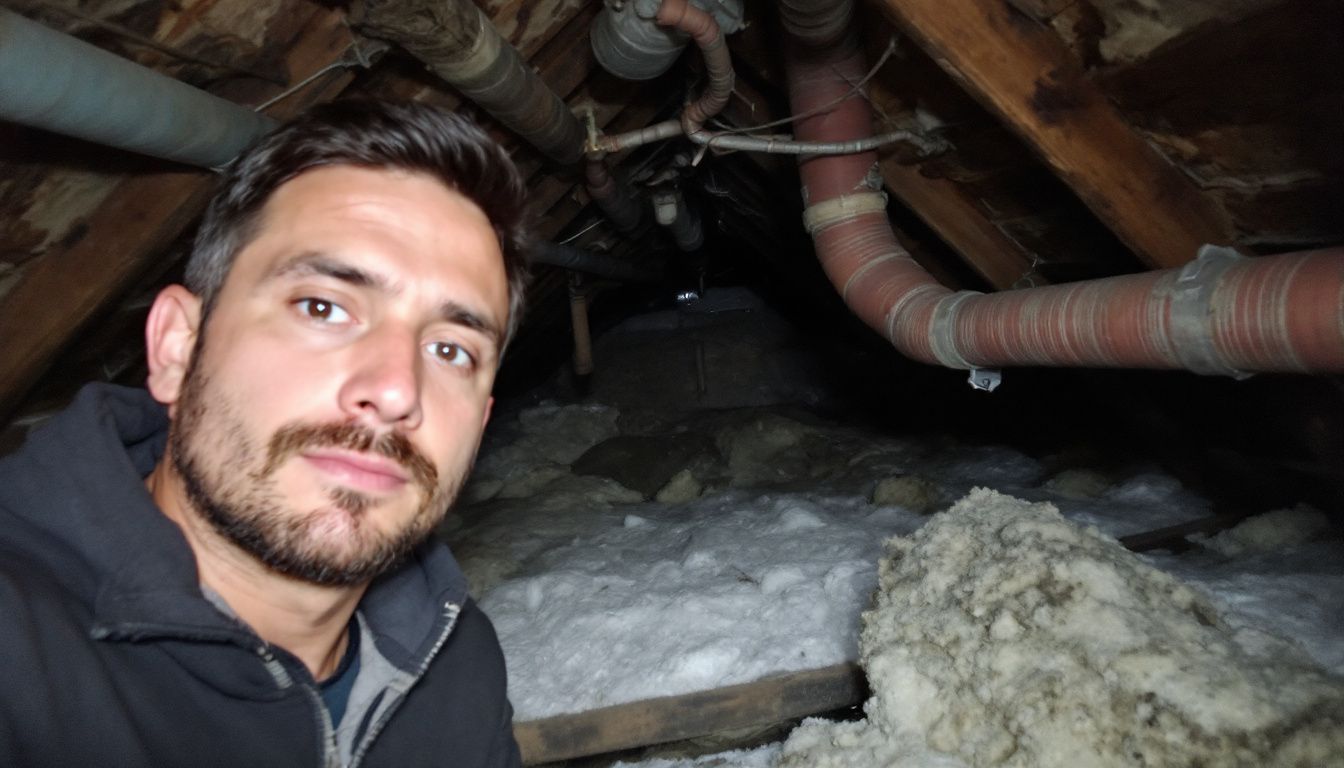
- Pipe lagging: Thermal insulation wrapped around boiler pipes and in airing cupboards is one of the higher-risk materials due to its friable nature.
- Roof sheeting and gutters: Asbestos cement was widely used for garage roofs, outbuildings, and flat roof sections.
- Soffits and fascias: External boards on older properties — particularly pre-1990s builds — may be asbestos cement.
- Loose-fill insulation: Some loft spaces were insulated with loose asbestos fibre, one of the most hazardous forms due to how readily it disperses.
- Insulating board: Used around fireplaces, in partition walls, and as ceiling tiles, asbestos insulating board (AIB) is a high-risk material requiring licensed handling.
- Boilers and storage heaters: Older heating systems may contain asbestos components, particularly around seals and insulation panels.
Undisturbed asbestos in good condition generally does not pose an immediate risk. The danger arises when materials are drilled, cut, sanded, or otherwise disturbed — releasing fibres into the air. This is precisely why renovation and DIY work in older homes carries such significant risk.
How to Test for Asbestos in Your Home
You cannot identify asbestos by sight alone. Some materials look perfectly ordinary yet contain significant quantities of asbestos fibre. The only reliable way to confirm its presence is through laboratory analysis of a physical sample.
DIY Testing Kits
For homeowners who want a cost-effective first step, a professional testing kit allows you to collect a small sample from a suspect material and send it to a UKAS-accredited laboratory for analysis. This is suitable where the material is in good condition and can be sampled without significant disturbance.
Sampling must still be done carefully. Dampen the area before taking the sample to suppress fibre release, wear gloves and a disposable mask, seal the sample in a double bag, and clean the area thoroughly afterwards. Results will confirm whether asbestos is present and, if so, which type.
Professional Asbestos Surveys
For a more thorough assessment — particularly before buying a property, undertaking renovation work, or if you have concerns about the condition of materials — a professional survey carried out by a qualified surveyor is the appropriate route.
A management survey is the standard survey for an occupied domestic property. It identifies the location, extent, and condition of any ACMs that could be disturbed during normal occupation or routine maintenance. The surveyor will produce a written report including an asbestos register and a risk assessment, in line with HSG264 guidance.
If you are planning significant renovation, extension, or demolition work, you will need a refurbishment survey instead. This is a more intrusive inspection covering all areas that will be disturbed, and it must be completed before any work begins. Contractors need this information to plan their work safely and legally.
Asbestos Domestic Regulations: What the Law Says
The legal framework around asbestos in the UK is primarily set out in the Control of Asbestos Regulations, which apply across Great Britain. These regulations establish licensing requirements, notification duties, and obligations to protect workers and others from asbestos exposure. The HSE’s definitive guidance document, HSG264, sets the standard for how surveys should be conducted and reported.
Does the Duty to Manage Apply to Homeowners?
The formal legal duty to manage asbestos — under the Control of Asbestos Regulations — applies to the owners and managers of non-domestic premises. If you own a private home and live in it, you are not legally required to commission a survey or maintain an asbestos register.
However, this does not mean you have no obligations. If you employ contractors to work on your property — builders, plumbers, electricians — you have a duty of care to ensure they are not unknowingly exposed to asbestos. Providing them with information about potential ACMs, or commissioning a survey before work starts, is both responsible and legally prudent.
If you are a landlord renting out a domestic property, your obligations are considerably more significant. You must take reasonable steps to identify and manage any asbestos risk in the property, and you should maintain records accordingly. Failing to do so could expose you to serious legal liability if a tenant or tradesperson is subsequently harmed.
Managing Asbestos Safely: Your Options as a Homeowner
Discovering asbestos in your home does not automatically mean it needs to be removed. In many cases, leaving it in place and managing it is the safer and more proportionate response — provided the material is in good condition and is not at risk of being disturbed.
Leave It in Place and Monitor It
Where asbestos is intact, well-bonded, and unlikely to be disturbed, the recommended approach is often to leave it alone and monitor its condition over time. A periodic re-inspection survey will assess whether the condition of known ACMs has changed and whether any action is now required. This is the pragmatic approach for the majority of domestic properties.
Encapsulation
Where a material has slightly deteriorated but removal is not immediately necessary, encapsulation — sealing or overcoating the material — can reduce fibre release. This must be carried out by competent professionals and is not a permanent solution. The material will still need to be managed and re-inspected at regular intervals.
Removal
Removal is appropriate when materials are in poor condition, when renovation work requires access to areas containing ACMs, or when a homeowner simply wants the peace of mind of having the material eliminated entirely.
It is critical that removal is carried out correctly. Higher-risk materials — including asbestos insulating board, pipe lagging, and sprayed coatings — must be removed by a licensed asbestos contractor. Working with these materials without the correct licence is illegal and dangerous. Professional asbestos removal ensures the work is completed safely, with appropriate containment, correct disposal of waste as hazardous material, and a clearance certificate upon completion.
Lower-risk materials such as asbestos cement can in some circumstances be handled by non-licensed but trained operatives, but the work must still follow strict procedures to prevent fibre release. Always seek professional advice before making this judgement yourself.
What to Expect From a Professional Asbestos Survey
If you have never had a survey carried out, understanding the process helps you prepare and ensures you get the most from the inspection.
- Booking: Contact the surveying company by phone or online. A reputable company will confirm availability quickly — often within the same week — and send a booking confirmation with all relevant details.
- Site visit: A BOHS P402-qualified surveyor attends at the agreed time and conducts a thorough visual inspection of the property, accessing all relevant areas.
- Sampling: Representative samples are collected from suspect materials using correct containment procedures to prevent fibre release during the process.
- Laboratory analysis: Samples are sent to a UKAS-accredited laboratory for analysis under polarised light microscopy (PLM), which identifies both the presence and type of asbestos.
- Report delivery: You receive a written report including an asbestos register, condition assessment, and risk-rated management plan — typically within three to five working days.
The report should be fully compliant with HSG264 guidance. Keep it safe — it is a valuable document if you sell the property, commission further work, or need to demonstrate due diligence to contractors or insurers.
Asbestos Survey Costs: What to Budget
Cost is a common concern, but professional asbestos surveys are more affordable than many homeowners expect. At Supernova Asbestos Surveys, pricing is transparent and fixed, with no hidden fees.
- Management Survey: From £195 for a standard residential property
- Refurbishment Survey: From £295, covering all areas to be disturbed prior to works
- Bulk Sample Testing Kit: From £30 per sample, posted to you for safe DIY collection
- Re-inspection Survey: From £150, plus £20 per ACM re-inspected
- Fire Risk Assessment: From £195 for a standard commercial premises
All prices vary depending on property size and location. You can request a free quote tailored to your specific property and requirements — there is no obligation to proceed.
Where We Work Across the UK
Supernova Asbestos Surveys covers the whole of England, Scotland, and Wales. If your property is in or near a major city, local teams are available for fast turnaround appointments.
We carry out asbestos survey London appointments regularly, and our teams also cover asbestos survey Manchester and asbestos survey Birmingham with the same fast turnaround and consistent quality standards.
Additional Services Worth Knowing About
Asbestos management does not always sit in isolation. If you are a landlord or managing a property with mixed use, a fire risk assessment may also be required alongside your asbestos obligations. Supernova Asbestos Surveys offers both services, making it straightforward to address multiple compliance requirements through a single provider.
Why Choose Supernova Asbestos Surveys?
With over 50,000 surveys completed and more than 900 five-star reviews, Supernova Asbestos Surveys has built its reputation on accuracy, reliability, and clear communication.
- BOHS P402/P403/P404 Qualified Surveyors: All our surveyors hold British Occupational Hygiene Society qualifications — the gold standard in asbestos surveying.
- UKAS-Accredited Laboratory: All samples are analysed by an accredited laboratory, ensuring results you can rely on.
- Fast Turnaround: Survey reports delivered within three to five working days as standard, with faster options available.
- Transparent Pricing: Fixed fees with no hidden extras — you know exactly what you are paying before we arrive.
- Nationwide Coverage: Teams operating across England, Scotland, and Wales with local knowledge and quick availability.
- Clear, Actionable Reports: Every report is written to be understood by the property owner, not just specialists.
Whether you are a homeowner wanting peace of mind, a landlord meeting your legal obligations, or a buyer about to exchange contracts on an older property, Supernova Asbestos Surveys has the expertise to help. Call us on 020 4586 0680 or visit asbestos-surveys.org.uk to book your survey or request a free, no-obligation quote today.
Frequently Asked Questions
Does my home definitely contain asbestos if it was built before 2000?
Not necessarily — but there is a realistic possibility. Asbestos-containing materials were used so widely in UK construction that homes built or significantly refurbished before the 1999 ban are considered at risk. The only way to know for certain is through sampling and laboratory analysis. A professional management survey or DIY testing kit will give you a definitive answer.
Is asbestos in a domestic property dangerous if I leave it alone?
Asbestos that is in good condition, firmly bonded, and not at risk of being disturbed is generally considered low risk. The danger arises when fibres are released into the air — typically through drilling, cutting, sanding, or deterioration of the material. If you have identified or suspect ACMs in your home, the safest approach is to have them assessed by a qualified surveyor who can advise on condition and risk.
Do I have to tell my builder if I think there is asbestos in my home?
Yes — you have a duty of care to protect anyone working on your property from foreseeable risks, including asbestos exposure. Before any renovation or maintenance work begins on a pre-2000 property, you should either provide information about known ACMs or commission a refurbishment survey so your contractor can plan the work safely. Failing to do so could have serious legal and health consequences.
How much does an asbestos survey cost for a domestic property?
At Supernova Asbestos Surveys, a management survey for a standard residential property starts from £195. A refurbishment survey — required before renovation work — starts from £295. Prices vary depending on property size and location. You can request a free, no-obligation quote online or by calling 020 4586 0680.
Can I remove asbestos myself from my home?
For certain lower-risk materials such as asbestos cement in good condition, non-licensed removal by a trained operative may be permissible under the Control of Asbestos Regulations — but strict procedures must be followed. Higher-risk materials including asbestos insulating board, pipe lagging, and sprayed coatings must be removed by a licensed contractor. Attempting to remove these materials without the correct licence is illegal and extremely dangerous. Always take professional advice before proceeding.