What a Residential Asbestos Survey Actually Tells You — and Why It Matters
Asbestos does not announce itself. It sits quietly in ceilings, floor tiles, boxing, soffits, garage roofs and service risers — waiting for the moment someone drills, sands, cuts or strips out the wrong material. A residential asbestos survey gives you a clear picture before that happens, so you can protect occupants, brief contractors properly and avoid disruptive discoveries once work is already underway.
If you own, manage, let, buy or plan works to a home built before asbestos was banned in UK construction products, assumptions are dangerous. The sensible approach is to identify what is present, where it is, what condition it is in and what action is actually needed — all in line with the Control of Asbestos Regulations, HSG264 and HSE guidance.
Why Residential Buildings Contain More Asbestos Than Most People Expect
Many people still associate asbestos with factories and heavy industry. In reality, it was used extensively in domestic buildings across the UK — houses, flats, maisonettes, garages, outbuildings and communal areas alike. It was cheap, durable and effective, which is precisely why it ended up almost everywhere.
A residential asbestos survey helps you make decisions based on evidence rather than guesswork. That matters whether you are arranging routine maintenance, managing tenancies, buying an older property or planning refurbishment.
Common places asbestos may be found in homes
- Textured coatings on ceilings and walls (including Artex-style finishes)
- Vinyl floor tiles and the bitumen adhesive beneath them
- Soffits, fascias and rainwater goods
- Cement garage roofs and wall panels
- Flue pipes and other cement products
- Partition walls and service risers containing asbestos insulating board
- Pipe boxing and duct panels
- Bath panels, airing cupboard linings and toilet surrounds
- Roofing felt, undercloak and certain insulation products
- Fuse boards, backing boards and lining panels near services
Not every asbestos-containing material presents the same level of risk. The condition of the material, how accessible it is, whether it is sealed or damaged, and how likely it is to be disturbed all affect what happens next. That is why a proper survey matters — it does far more than confirm whether asbestos is present. It helps you decide whether to leave material in place, monitor it, encapsulate it, restrict access or arrange removal before work starts.
Which Type of Residential Asbestos Survey Do You Need?
Booking the wrong survey type is one of the main reasons residential projects stall. The right survey depends on how the property is being used and what work is planned. For residential property, there are three main options.
Management survey — for occupied or in-use properties
A management survey is designed to locate, as far as reasonably practicable, the presence and extent of asbestos-containing materials that could be damaged or disturbed during normal occupancy, routine maintenance or foreseeable installation work. It is usually the least intrusive type of residential asbestos survey.
The surveyor inspects accessible areas, identifies suspected materials, assesses their condition and takes samples where needed for laboratory analysis. This type of survey is typically appropriate when:
- A property is occupied or tenanted
- You are responsible for communal areas in a block of flats
- You need an asbestos register for routine management purposes
- Contractors may carry out minor maintenance work
- You want to understand asbestos risks before taking on a property
For landlords and managing agents, this is often an essential part of managing repair work safely. For owner-occupiers, the legal position may differ from commercial premises, but the practical need is identical if tradespeople are going to disturb the building fabric.
Refurbishment survey — before planned works begin
If you are altering the property, a management survey is not sufficient. You need a refurbishment survey before the work starts. This type of residential asbestos survey is more intrusive because hidden asbestos must be identified before builders, electricians, plumbers or kitchen fitters begin.
It may involve opening boxing, lifting floor coverings, accessing voids and inspecting behind fixed finishes in the areas affected by the project. You will typically need this before:
- Kitchen or bathroom refits
- Loft conversions
- Extensions
- Rewiring
- Boiler replacements affecting surrounding linings
- Window replacements where panels or soffits may be disturbed
- Structural alterations or partial strip-outs
Where the survey area is occupied, access and safety need to be planned carefully. In some cases, the area may need to be vacant because the inspection itself can disturb materials.
Demolition survey — before full or partial demolition
Where a structure is to be taken down, a demolition survey is required. This is the most intrusive form of residential asbestos survey because the aim is to identify asbestos-containing materials throughout the entire structure before demolition begins.
This applies to an entire house, a garage, an outbuilding, an extension or any other part of the property that will be demolished. The survey must be completed early enough to allow findings to be reviewed and any necessary remedial action arranged before work starts.
When Should You Arrange a Residential Asbestos Survey?
The best time to book is before you commit to work — not after contractors are already on site. Leaving it too late creates avoidable delays, especially if asbestos is found in materials that require licensed removal or careful management.
You should strongly consider a survey when:
- You are buying an older home and want clear information before exchange or renovation planning
- You are a landlord preparing a property for letting or ongoing maintenance
- You manage communal areas in residential blocks
- You are planning refurbishment, strip-out or demolition
- You have an older asbestos report and need updated condition information
- Tradespeople will be drilling, chasing, cutting or removing building materials
Even seemingly minor jobs can disturb asbestos. Broadband installers, decorators, electricians and plumbers may all work in areas where asbestos-containing materials are present. If the property is older and the work touches the building fabric, get the asbestos information first — every time.
What Happens During a Residential Asbestos Survey?
If you have never arranged one before, the process is usually straightforward. A good survey starts with the right scope, because the surveyor needs to understand how the property is used and what work is planned.
Before the visit
You will normally be asked for the property address, approximate age, building type, access arrangements and the reason for the survey. If works are planned, the surveyor should ask which rooms or areas are affected. This stage matters — a residential asbestos survey should match the work in hand, not rely on vague assumptions about what might be there.
During the inspection
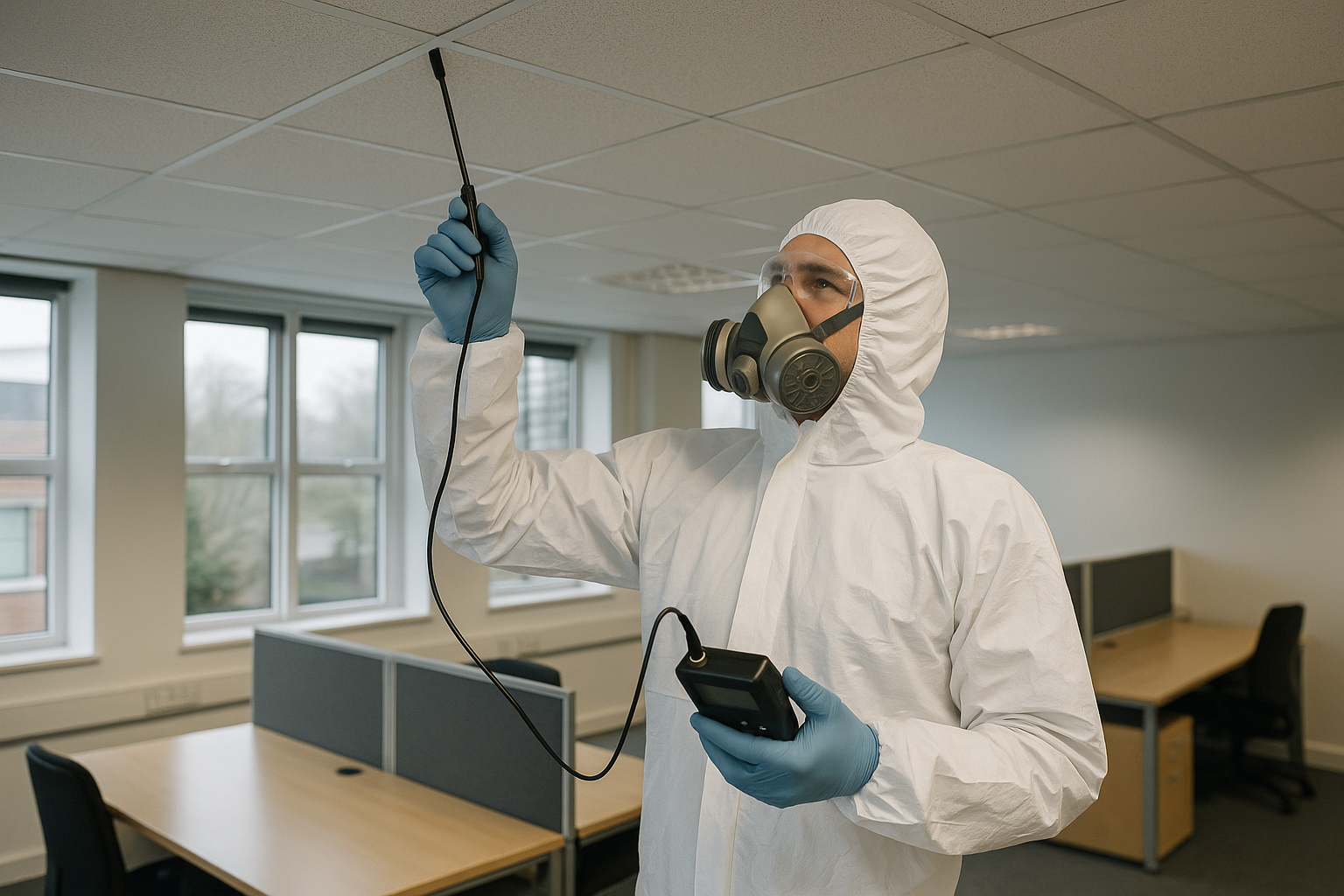
The surveyor will inspect the relevant areas, identify suspected asbestos-containing materials and assess their accessibility and condition. Where needed, samples are taken carefully and sent for analysis by a UKAS-accredited laboratory.
Depending on the survey type, the inspection may be:
- Non-intrusive to lightly intrusive for occupied management purposes
- Intrusive in specific areas for refurbishment works
- Fully intrusive throughout the structure for demolition planning
If access is restricted, that should be recorded clearly. Locked rooms, heavy furniture, fitted units and sealed voids can all affect what can reasonably be inspected — and any limitations should appear in the final report.
After the survey
You should receive a report that explains what was found, where it was found, what samples confirmed and what action is recommended. A useful residential asbestos survey report will be clear enough for property owners, contractors and managers to act on without confusion.
A good report will typically include:
- Descriptions and locations of suspected or confirmed asbestos-containing materials
- Sample results from laboratory analysis
- Material assessments where appropriate
- Photographs and plans or location references
- Recommendations for management, reinspection or removal
- Any limitations, exclusions or access issues recorded clearly
What Happens If Asbestos Is Found?
Finding asbestos does not automatically mean panic, evacuation or full removal. In many homes, asbestos-containing materials can remain safely in place if they are in good condition and unlikely to be disturbed. The right response depends on the material, its condition and the planned activity.
Typical next steps may include:
- Leave and manage — if the material is in good condition and will not be disturbed, leaving it in place is often the correct decision.
- Label and record — document the material so anyone carrying out future work knows it is there.
- Monitor condition — review it periodically and update records accordingly.
- Encapsulate or repair — if minor damage can be controlled safely without full removal.
- Restrict access — where the material is vulnerable or in deteriorating condition.
- Arrange removal — if the material will be disturbed by planned works or cannot be managed safely in situ.
If removal is needed, it should be planned properly. Professional asbestos removal ensures that materials identified in the survey are dealt with safely and in compliance with the Control of Asbestos Regulations, using appropriately licensed contractors where required.
The key point is this: a residential asbestos survey gives you the evidence to choose the right option. It prevents overreaction, but it also prevents unsafe assumptions.
Advice for Homeowners Arranging a Survey
Homeowners most often encounter asbestos when they start improving an older property. A ceiling replacement, new bathroom, rewiring job or garage upgrade can uncover materials nobody knew were there. Practical steps for owner-occupiers include:
- Do not drill, sand, scrape or remove suspect materials yourself
- Tell contractors the property may contain asbestos if it was built or refurbished in the relevant period
- Book a residential asbestos survey before any invasive works begin
- Keep the report available for any future trades visiting the property
- Do not rely on appearance alone — many asbestos products look identical to non-asbestos materials
If you are buying a property and planning immediate refurbishment, arrange the survey as early as possible. That gives you time to budget properly and avoid surprise costs after completion.
Advice for Landlords and Property Managers
For landlords, housing providers and managing agents, asbestos is both a building issue and a management issue. You need to know what is present, keep suitable records and ensure contractors are not exposed during maintenance visits.
A residential asbestos survey is particularly useful where you are responsible for:
- Communal areas in blocks of flats
- Tenanted houses built with older materials
- Routine repairs across a portfolio
- Voids and planned upgrades between tenancies
- Outbuildings, garages and service areas
Actionable steps for property managers include keeping asbestos information in a central, accessible record and sharing relevant findings with contractors before work starts. Review older reports if the condition of materials may have changed. Where known materials need ongoing monitoring, arrange a re-inspection survey to update condition assessments and confirm whether the management approach remains appropriate.
This is where many projects go wrong. A contractor arrives for what looks like a simple repair, only to find suspect board, textured coating or floor tile adhesive in the work area. Good records prevent that situation entirely.
How to Choose the Right Survey Provider
Not all surveys are equal. A poor-quality report can leave asbestos undiscovered, badly described or recorded in a way that is not useful to contractors. That creates risk, cost and delay — often at the worst possible moment in a project.
When choosing a company to carry out a residential asbestos survey, look for:
- Surveyors trained to recognised industry standards
- Inspection, sampling and laboratory analysis carried out to HSG264 methodology
- UKAS-accredited laboratory analysis for all samples
- Reports that are clear, structured and usable by contractors — not just filed away
- Transparent scope-setting before the visit begins
- A track record across residential property types, not just commercial or industrial work
A good provider will ask the right questions before the survey, not after. If a company offers a fixed residential asbestos survey price without asking anything about the property, the scope or the planned works, that is worth querying before you proceed.
Residential Asbestos Surveys Across the UK
Supernova Asbestos Surveys carries out residential asbestos surveys across England, Scotland and Wales. Whether you need a survey for a single property or across a managed portfolio, our surveyors are experienced across all residential property types.
If you need an asbestos survey in London, we cover all London boroughs and the surrounding home counties. For properties in the North West, our team provides asbestos surveys in Manchester and across the wider region. In the Midlands, we offer asbestos surveys in Birmingham and throughout the surrounding area.
With over 50,000 surveys completed nationwide, we have the experience to scope the right survey for your property and deliver a report that is genuinely useful — not just a document that sits in a drawer.
Frequently Asked Questions
Do I legally need a residential asbestos survey as a homeowner?
If you own and occupy your own home, there is no legal requirement under the Control of Asbestos Regulations to commission a survey. However, if you are employing contractors to carry out work that could disturb the building fabric, you have a duty of care to protect them. Arranging a residential asbestos survey before work begins is the most practical way to meet that responsibility and avoid putting tradespeople at risk.
How long does a residential asbestos survey take?
The duration depends on the size of the property, the type of survey required and the level of access available. A management survey of a standard three-bedroom house typically takes two to three hours on site. A more intrusive refurbishment or demolition survey covering the full structure will take longer. Your surveyor should give you a realistic estimate once the scope has been agreed.
Can asbestos be left in place rather than removed?
Yes — in many cases, leaving asbestos-containing materials in place is the correct decision. If the material is in good condition, well-sealed and unlikely to be disturbed, managing it in situ is often safer than removal. The residential asbestos survey report will recommend the appropriate course of action based on the material type, its condition and the planned use of the property.
What is the difference between a management survey and a refurbishment survey for a home?
A management survey is designed for properties in normal use. It covers accessible areas and identifies materials that could be disturbed during routine maintenance. A refurbishment survey is more intrusive and is required before any work that will disturb the building fabric — such as a kitchen refit, loft conversion or rewiring. If work is planned, a management survey alone is not sufficient.
How soon will I receive my survey report?
This varies between providers, but at Supernova Asbestos Surveys we aim to turn around residential asbestos survey reports promptly so that your project is not delayed. Laboratory results for samples are typically available within a few working days of the site visit. Ask your provider about turnaround times before booking, particularly if you have a project start date to work towards.
Ready to arrange a residential asbestos survey? Supernova Asbestos Surveys has completed over 50,000 surveys nationwide and works with homeowners, landlords, managing agents and developers across the UK. Call us on 020 4586 0680 or visit asbestos-surveys.org.uk to get a quote or discuss the right survey type for your property.