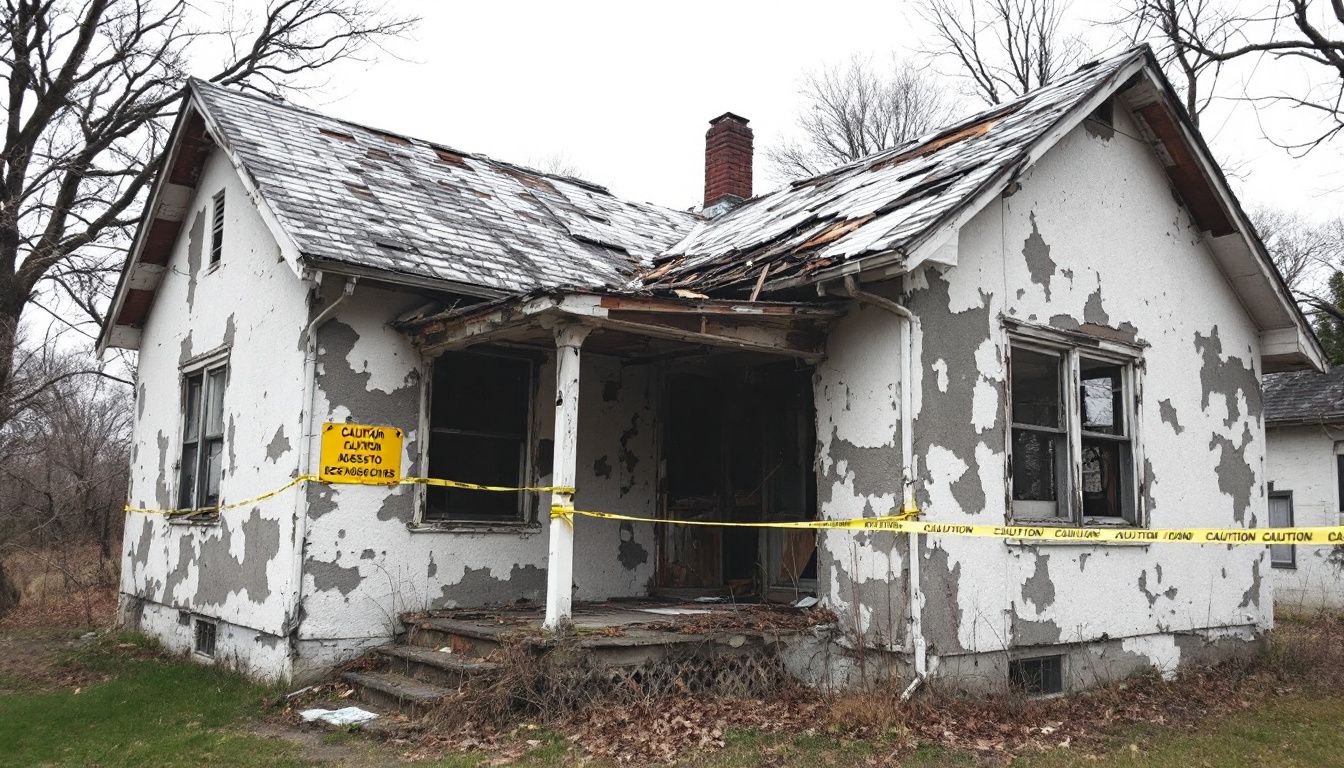
How Much Does Asbestos Reduce House Price? What Every Buyer and Seller Needs to Know
Asbestos doesn’t just pose a health risk — it can hit your property’s value hard. If you’re buying or selling a pre-2000 home, understanding how much does asbestos reduce house price is one of the most commercially significant questions you’ll face. The answer isn’t always straightforward, but the financial stakes are very real.
Whether you’re a homeowner preparing to sell, a buyer doing your due diligence, or a property investor assessing risk, this post covers everything you need to know about asbestos and its impact on property value, transactions, and your legal obligations.
How Much Does Asbestos Reduce House Price?
The short answer: significantly. Properties where asbestos has been identified — but not managed or removed — can see their market value reduced by anywhere from 5% to 25%, and in severe cases even more.
The exact figure depends on several factors including the type of asbestos present, its location, condition, and the extent of contamination.
Buyers are increasingly savvy about asbestos. When a survey uncovers asbestos-containing materials (ACMs), most buyers will factor the estimated removal or management cost directly into their offer. If removal quotes come in at £5,000–£15,000 or more, expect that figure — or close to it — to be knocked off the asking price during negotiations.
In some cases, particularly where asbestos is widespread or in a friable (easily crumbled) state, buyers walk away entirely. This can leave sellers stuck with a property that’s harder to shift and requires more costly intervention before it becomes attractive to the market again.
Key Factors That Affect the Price Impact
- Type of asbestos: Chrysotile (white asbestos) is less hazardous than crocidolite (blue) or amosite (brown), and buyers and surveyors treat them differently.
- Condition: Intact, well-bonded asbestos in a stable state is less alarming than friable or damaged material that poses an immediate risk.
- Location: Asbestos in roof tiles or floor tiles is less disruptive to remove than material in wall cavities, ceiling coatings, or pipe insulation throughout the property.
- Extent: A single asbestos cement soffit is very different from textured coatings (Artex) across every ceiling in the house.
- Documentation: Properties with a clear asbestos management plan and up-to-date survey reports fare better in negotiations than those with no records at all.
Where Asbestos Is Commonly Found in UK Properties
Any building constructed or refurbished before the year 2000 could contain asbestos. The UK didn’t fully ban all forms of asbestos until 1999, meaning millions of residential and commercial properties still contain it today.
Common locations include:
- Textured coatings such as Artex on ceilings and walls
- Roof tiles and corrugated cement sheets
- Floor tiles and the adhesive beneath them
- Pipe lagging and boiler insulation
- Soffits, fascias, and guttering
- Partition walls and ceiling tiles
- Insulating board around fireplaces and heating systems
You cannot identify asbestos by looking at it. The only reliable method is a professional survey followed by laboratory analysis of samples.
If you’re dealing with a property built before 2000 and you haven’t had it surveyed, you’re working blind — and that uncertainty alone can deter buyers and lenders.
Legal Obligations When Selling a Property With Asbestos
Sellers in the UK have a legal and ethical duty to disclose known material facts about a property. Asbestos is unquestionably a material fact.
Failing to disclose known asbestos risks can expose sellers to claims of misrepresentation, potential legal action, and the unwinding of a completed sale.
The rules don’t require you to remove asbestos before selling — but they do require honesty. If you’ve had a survey carried out and it identified ACMs, that information must be shared with prospective buyers. Hiding it isn’t just dishonest; it’s legally dangerous.
What Sellers Should Provide
- Copies of any existing asbestos survey reports
- Details of any previous asbestos removal or encapsulation work, including contractor names and dates
- An asbestos register or management plan if one exists
- Written confirmation that buyers have received and understood this information
Good documentation doesn’t just protect you legally — it actually helps the sale. A buyer who can see a professional survey report and a clear management plan is far more likely to proceed with confidence than one left guessing about what’s lurking behind the walls.
Buyer Due Diligence
Buyers should never rely solely on seller disclosures. Commission your own independent survey, particularly for any pre-2000 property.
A management survey will identify the location, type, and condition of any ACMs and give you the information you need to negotiate properly — or walk away if the risks are too significant.
Your solicitor should also be asking the right questions during conveyancing. If asbestos hasn’t been raised and the property predates 2000, push for answers before exchange.
How Asbestos Affects Mortgages and Insurance
The impact of asbestos on a property transaction goes well beyond the negotiated price. Lenders and insurers take asbestos very seriously, and their requirements can stall or even kill a deal.
Mortgage Lenders
Many mortgage lenders require an asbestos survey before approving a loan on an older property, particularly if the surveyor has flagged concerns. If asbestos is found in a high-risk condition, some lenders will refuse to lend until it has been professionally managed or removed.
This can create a significant bottleneck. The buyer may want to proceed, but without finance, the deal stalls. Sellers who have already invested in a survey and management plan are in a far stronger position — they can demonstrate to the lender that the risk has been assessed and is under control.
Home Insurance
Insurers assess asbestos risk when setting premiums and coverage terms. Properties with known, unmanaged asbestos may face higher premiums, exclusions on certain types of damage, or outright refusal of cover.
Some insurers will only offer cover once an asbestos management plan is in place. If you’re buying a property and you can’t get adequate insurance because of asbestos, that’s a serious red flag — make sure you understand the insurance implications before you exchange contracts.
Health Risks: Why Buyers Take Asbestos So Seriously
Understanding the health risks helps explain why asbestos has such a powerful effect on buyer behaviour — and therefore on price.
Asbestos fibres, when disturbed, become airborne and can be inhaled deep into the lungs. Once there, they don’t leave. The diseases caused by asbestos exposure include:
- Mesothelioma: An aggressive and incurable cancer of the lining of the lungs, typically caused by asbestos exposure.
- Asbestosis: Scarring of the lung tissue that causes progressive breathlessness.
- Lung cancer: Risk is significantly elevated in those exposed to asbestos, particularly smokers.
- Pleural thickening: Thickening of the lung lining that restricts breathing.
What makes asbestos particularly alarming is the latency period. Symptoms may not appear until 20 to 40 years after exposure. Someone who breathed in fibres during a home renovation in the 1990s might not receive a diagnosis until decades later.
Stable, undisturbed asbestos in good condition does not typically pose an immediate risk. The danger arises when materials are drilled, cut, sanded, or otherwise disturbed — which is exactly what happens during home renovations. This is why buyers planning significant work on a property are especially cautious about asbestos.
Managing Asbestos to Protect Your Property’s Value
Asbestos doesn’t have to be a deal-breaker. With the right approach, you can manage the risk, satisfy lenders and insurers, and protect — or even recover — your property’s value.
Get a Professional Survey First
Before you do anything else, commission a professional asbestos survey. This is the foundation of any asbestos management strategy. Without knowing what you have, where it is, and what condition it’s in, you can’t make informed decisions about remediation, pricing, or disclosure.
For residential properties being sold, a management survey is the appropriate starting point. If significant refurbishment is planned — by you before sale, or by the buyer after purchase — a demolition survey will also be needed before any intrusive work begins.
Encapsulation vs. Removal
Not all asbestos needs to be removed. In many cases, encapsulation — sealing the material to prevent fibre release — is a safe, cost-effective, and legally acceptable approach. This is particularly relevant for materials like Artex coatings in good condition.
However, where asbestos is damaged, friable, or in a location where it’s likely to be disturbed, asbestos removal by a licensed contractor is the right course of action. Removal eliminates the risk entirely and can significantly improve a property’s marketability and value.
Only licensed contractors can remove the most hazardous types of asbestos. Attempting DIY removal is illegal for licensable work and extremely dangerous. Always use a contractor licensed by the Health and Safety Executive (HSE).
Maintain an Asbestos Register
Whether you’re managing a commercial property or a residential one you intend to sell, keeping an up-to-date asbestos register is a practical and commercially smart move. It shows buyers, lenders, and insurers that you’ve taken the issue seriously and managed it responsibly.
Under the Control of Asbestos Regulations, duty holders for non-domestic premises are legally required to manage asbestos — which includes maintaining records. For residential properties, while the legal duty is less prescriptive, having clear documentation puts you in a much stronger negotiating position.
Asbestos and Property Negotiations: Practical Advice
Whether you’re on the buying or selling side of a transaction involving asbestos, here’s how to approach negotiations sensibly.
If You’re Selling
- Commission a survey before listing — don’t wait for a buyer to find problems you don’t know about
- Get removal or management quotes in advance so you can counter-negotiate with real figures
- Consider having low-risk ACMs encapsulated or removed before listing to improve marketability
- Be transparent in your listing and with your agent — buyers who feel misled pull out
- Price the property to reflect the known asbestos situation rather than hoping buyers won’t notice
If You’re Buying
- Always commission an independent survey on any pre-2000 property
- Get multiple removal quotes before making a revised offer — don’t guess at costs
- Use the survey report as a negotiating tool, not just a health and safety document
- Check with your mortgage lender early about their asbestos policy — don’t leave it until after surveys
- Factor in not just removal costs but the disruption and time involved
Does Asbestos Always Reduce Property Value?
Not necessarily — but it nearly always affects the transaction in some way. The key variable is how the asbestos has been handled.
A property with a current, professionally produced survey report, a documented management plan, and ACMs in stable, low-risk condition can still sell at close to full market value. Buyers and lenders respond well to evidence that the issue has been identified and is under control.
Conversely, a property where asbestos has been ignored, undisclosed, or poorly managed can suffer significant value reduction — not just because of the asbestos itself, but because of the uncertainty and distrust it creates.
The difference between a 5% reduction and a 25% reduction often comes down to documentation and professional management, not the asbestos itself.
Asbestos Surveys Across the UK
Wherever your property is located, getting the right survey in place is the single most effective step you can take to protect its value. Supernova Asbestos Surveys operates nationwide, with dedicated local teams ready to mobilise quickly.
If you’re in the capital, our asbestos survey London service covers all boroughs with fast turnaround times. In the North West, our asbestos survey Manchester team handles everything from terraced houses to commercial portfolios. And in the Midlands, our asbestos survey Birmingham team is on hand to support buyers, sellers, and landlords alike.
With over 50,000 surveys completed across the UK, we have the depth of experience to give you accurate, actionable results — fast.
Work With Supernova Asbestos Surveys
Asbestos uncertainty costs money. A professional survey from Supernova Asbestos Surveys gives you the facts you need to negotiate with confidence, satisfy your lender, and protect your position — whether you’re buying, selling, or managing a property.
We provide fully accredited management surveys, refurbishment and demolition surveys, and licensed removal services across the whole of the UK. Our reports are clear, detailed, and produced to HSE and HSG264 standards — exactly what lenders, solicitors, and insurers need to see.
Call us on 020 4586 0680 or visit asbestos-surveys.org.uk to book your survey or request a quote. Don’t let asbestos uncertainty derail your property transaction.
Frequently Asked Questions
How much does asbestos reduce house price in the UK?
Asbestos can reduce a house price by anywhere from 5% to 25%, depending on the type, condition, location, and extent of the asbestos-containing materials. Properties with documented management plans and professional survey reports typically see smaller reductions than those with unmanaged or undisclosed asbestos.
Do I have to declare asbestos when selling a house?
Yes. Sellers in the UK are legally and ethically required to disclose known material facts about a property, and asbestos is a material fact. Failing to disclose known asbestos risks can result in claims of misrepresentation and potential legal action, even after a sale has completed.
Can I sell a house with asbestos in it?
Yes, you can sell a property that contains asbestos. You are not legally required to remove it before selling, but you must disclose it. Having a current survey report and a management plan in place will significantly improve your position with buyers, lenders, and insurers.
Will a mortgage lender refuse to lend on a property with asbestos?
Some mortgage lenders will decline to lend — or impose conditions — if asbestos is found in a high-risk or damaged condition. Lenders are more likely to proceed where the asbestos has been professionally surveyed, documented, and is under a management plan. Check your lender’s specific requirements early in the process.
Is asbestos in a house dangerous if left alone?
Asbestos that is intact, undisturbed, and in good condition does not typically pose an immediate health risk. The danger arises when asbestos-containing materials are damaged, drilled, cut, or disturbed — releasing fibres into the air. This is why renovation work on pre-2000 properties always requires an asbestos survey before any intrusive work begins.