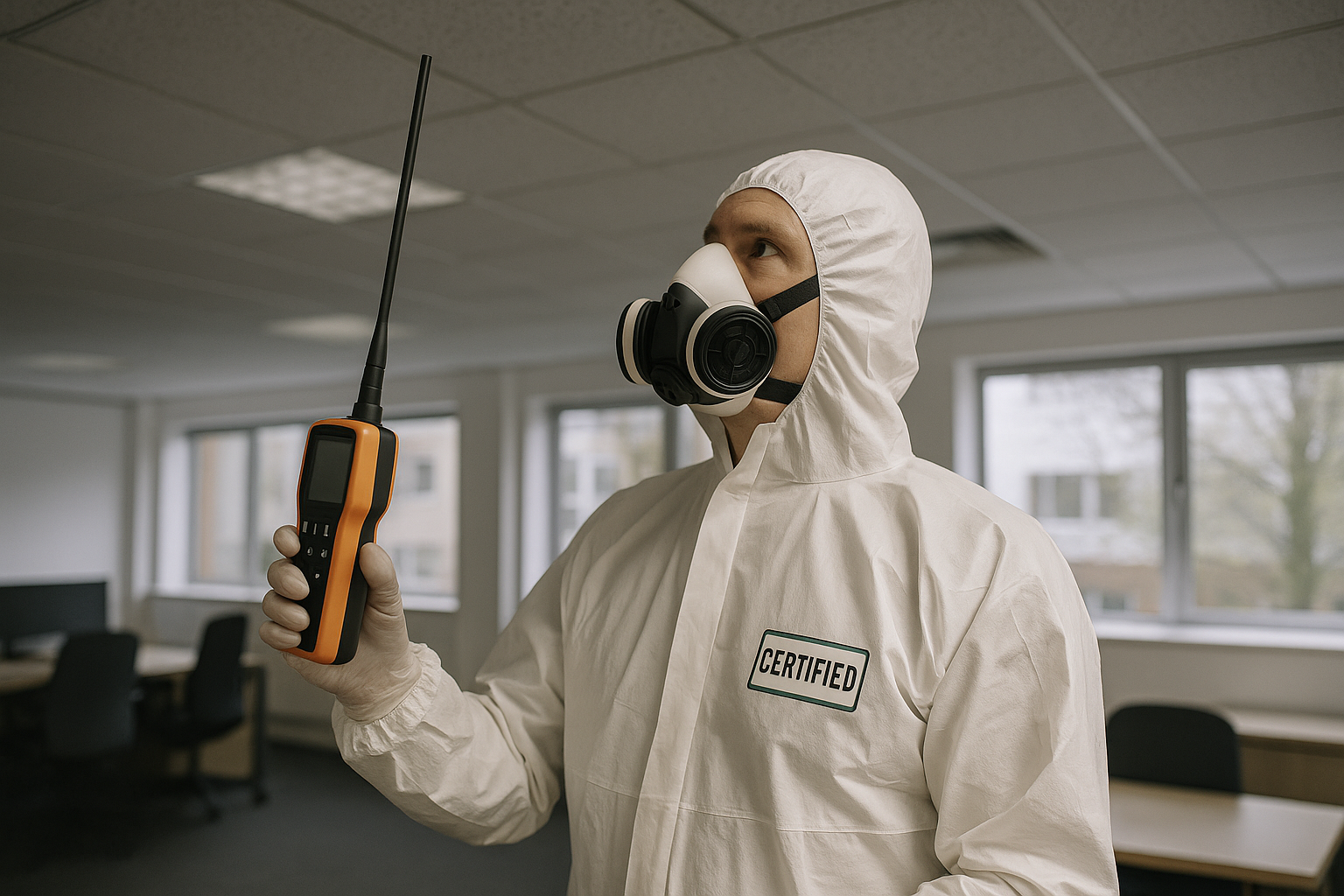
Asbestos clearance is the point where reassurance has to be backed by evidence. If asbestos has been disturbed, removed or uncovered in a home, block of flats or shared residential area, you need to know the space is genuinely safe to use again, not just tidy on the surface.
That matters for homeowners, landlords, managing agents and property managers alike. You cannot see airborne asbestos fibres, and you should never rely on a quick clean-up or a contractor saying the job is finished. Proper asbestos clearance is a defined process, and where higher-risk work is involved it must be completed correctly before people re-enter the area.
Across the UK, older properties still contain asbestos in a wide range of materials. Some can remain safely in place if they are in good condition and unlikely to be disturbed. Others need urgent professional action, especially when refurbishment, damage or deterioration has created a risk of fibre release.
If you are responsible for a property where families live, the priority is straightforward: identify suspect materials, prevent disturbance, arrange the right survey, and make sure any asbestos clearance is carried out to the required standard.
Why asbestos clearance matters in residential properties
Asbestos was widely used in UK construction because it was strong, heat resistant and affordable. It can still be found in houses, flats, garages, communal areas, plant rooms and outbuildings, particularly in properties built or refurbished before asbestos-containing materials were fully banned.
The risk begins when asbestos-containing materials are disturbed. Drilling, sanding, cutting, breaking, stripping out or poor-quality removal can release fibres into the air. Once that happens, asbestos clearance becomes a critical part of making the area fit for normal use again.
Good asbestos clearance helps confirm that:
- the work area has been cleaned thoroughly
- visible debris and dust have been removed
- air testing has been completed where required
- the area is suitable to be handed back for reoccupation
For property managers, this is not just about peace of mind. It is part of sensible risk control and, where applicable, legal compliance under the Control of Asbestos Regulations and supporting HSE guidance.
Where asbestos is commonly found in homes and flats
If you want to protect occupants, start by knowing where asbestos may be hiding. It often appears in both obvious and unexpected places.
Common asbestos-containing materials in domestic and residential buildings include:
- textured coatings on ceilings and walls
- vinyl floor tiles and bitumen adhesive
- asbestos cement garage roofs, soffits and rainwater goods
- insulating board in partition walls, ceiling panels and service boxing
- pipe lagging and boiler insulation
- cement flues and water tanks
- roofing sheets and cladding in sheds and garages
- fire doors, risers and service cupboards in blocks of flats
Not all asbestos materials present the same level of risk. Asbestos cement is generally lower risk if it is in sound condition and left undisturbed. Insulating board, lagging and loose fill insulation are much more hazardous and need prompt professional assessment.
How to recognise possible asbestos without creating more risk
You cannot identify asbestos just by looking at it. Age, location and appearance may make a material suspicious, but only sampling and analysis can confirm whether it contains asbestos.
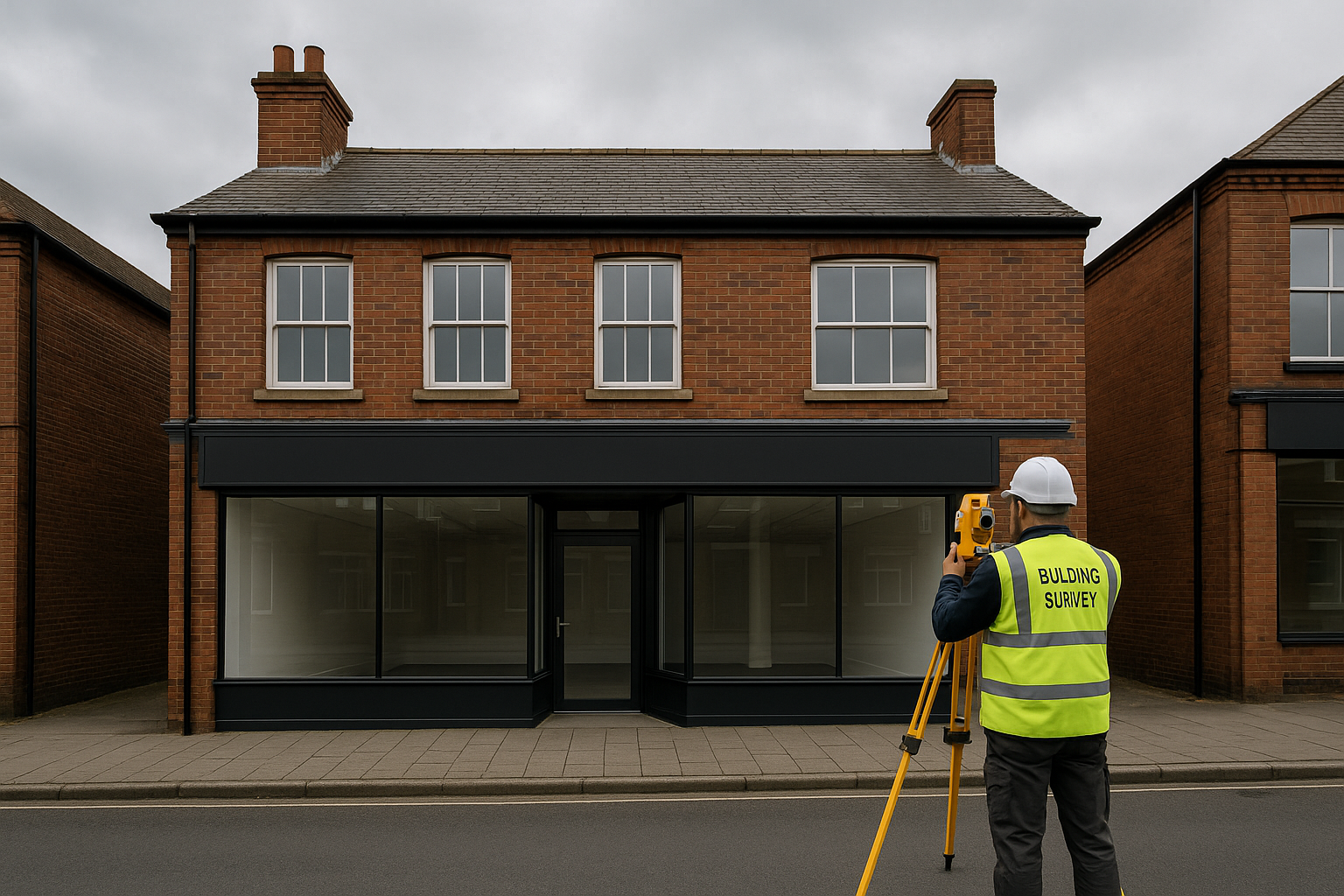
Be cautious if you notice:
- old textured coatings during decorating
- board panels around boilers, fuse boxes or airing cupboards
- corrugated cement sheets on garages or sheds
- damaged insulation around pipework
- older floor tiles with black adhesive beneath
- boxing or panels exposed during rewiring or plumbing work
If you are unsure, do not drill, scrape, snap, sand or remove the material. Even minor disturbance can release fibres and make later asbestos clearance more difficult and more expensive.
Warning signs that need immediate action
Some situations call for a fast, controlled response. If suspect materials are damaged or debris has spread, keep people away and get professional advice straight away.
Act quickly if you see:
- crumbled board or insulation near pipework
- broken ceiling panels or service boxing
- dust and debris after work in an older property
- damaged garage roof sheets
- suspect materials exposed during renovation
Do not sweep up, vacuum or bag debris yourself. Household vacuums are not suitable for asbestos contamination, and dry brushing can spread fibres further.
What to do if you suspect asbestos in your property
The first steps make a real difference. A calm response reduces the chance of exposure and gives surveyors or contractors a better starting point.
- Stop work immediately. Tell builders, decorators or maintenance staff to stop.
- Restrict access. Keep residents, visitors, children and pets away from the area.
- Do not disturb the material. Avoid touching, moving, cleaning or breaking it.
- Close doors if possible. This can help limit the spread of dust.
- Arrange professional advice. Contact a competent asbestos surveyor or contractor for the next step.
If the building is occupied and the suspect material is in a shared or high-traffic area, act even faster. Corridors, stairwells, risers and service cupboards in residential blocks can affect multiple occupants and contractors.
Where no survey has been carried out and work is planned, do not wait for a problem to develop. The safest route is to book a survey before refurbishment or intrusive maintenance begins.
Choosing the right asbestos survey before any work starts
Before removal or asbestos clearance can happen, you need to know what is present, where it is, what condition it is in and whether planned work will disturb it. That is where asbestos surveying comes in.
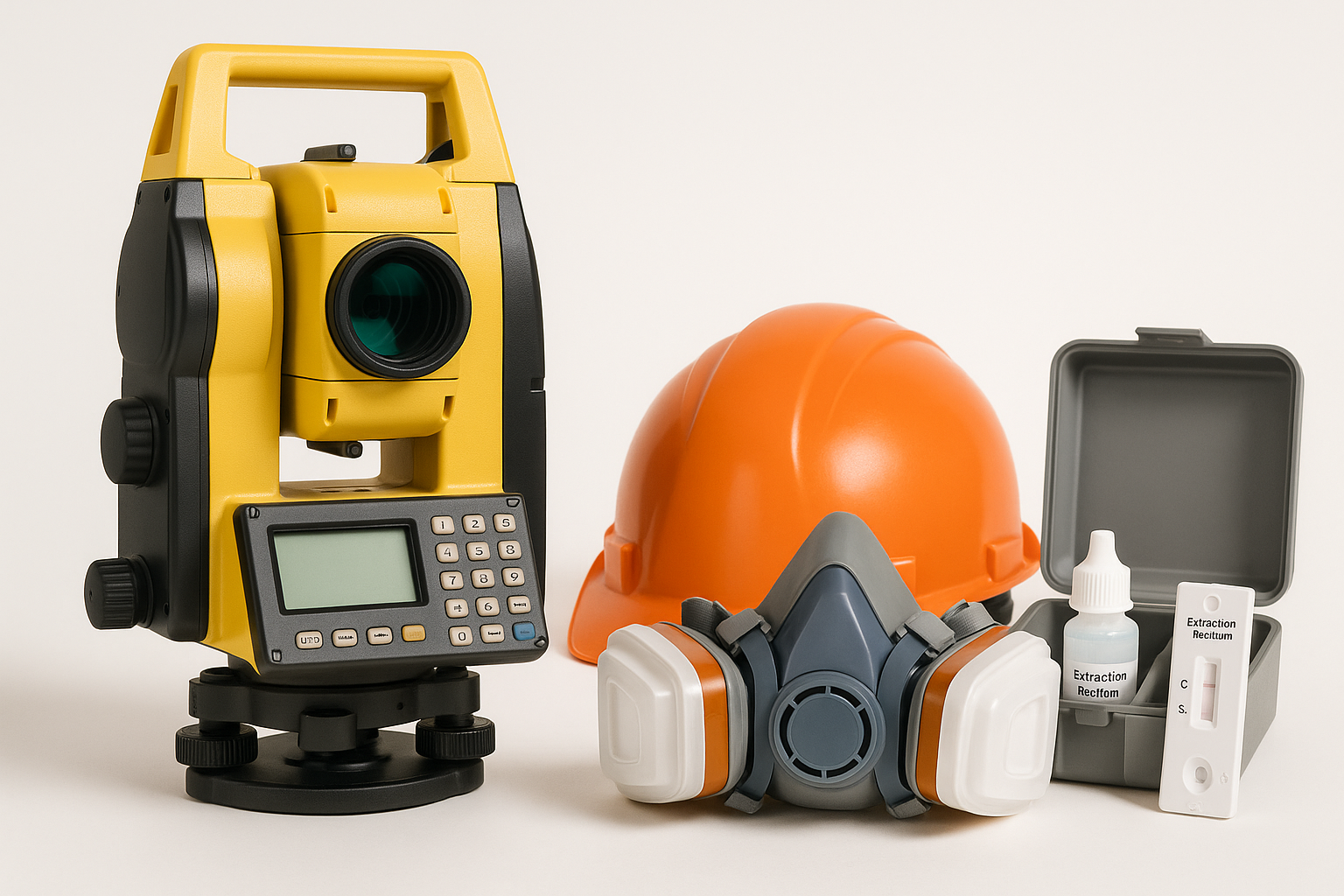
Management survey
A management survey is used to locate, as far as reasonably practicable, the presence and condition of asbestos-containing materials that could be disturbed during normal occupation, routine maintenance or minor works.
This is often the right starting point for occupied residential buildings, rented properties and communal areas. It helps dutyholders and managers understand what needs to be monitored, labelled, recorded or controlled.
Refurbishment survey
If more intrusive work is planned, a refurbishment survey is usually required. This is necessary before works such as kitchen replacements, rewiring, heating upgrades, wall alterations, ceiling replacement or major bathroom refits.
It is designed to identify asbestos that could be disturbed during the planned works. Starting refurbishment without the right survey is one of the most common ways asbestos incidents happen.
Demolition survey
Before a structure is pulled down, a demolition survey is needed to identify asbestos-containing materials throughout the building, including hidden areas that may be affected by demolition.
This survey is intrusive by nature because the goal is to find materials that could become hazardous during the demolition process. It should be completed before demolition work begins, not during it.
Survey standards and reporting
Survey work should be carried out in line with HSG264. That guidance sets out expectations for planning, inspection, sampling, assessment and reporting.
A proper survey report should clearly explain:
- the location of identified or presumed asbestos
- the type of material
- its condition
- the likelihood of disturbance
- recommended actions, such as management, encapsulation or removal
If you need local support, Supernova can help with an asbestos survey London service, as well as regional coverage through asbestos survey Manchester and asbestos survey Birmingham.
What asbestos clearance actually means
People often use the phrase asbestos clearance to describe the whole process of making an area safe after asbestos work. In practice, it usually refers to the formal checks carried out after licensed asbestos removal work before the area is handed back for normal use.
Under the Control of Asbestos Regulations, certain higher-risk asbestos work must be carried out by a licensed contractor. After that work, formal asbestos clearance by an independent analyst is normally required before reoccupation.
This matters because removal alone is not the end of the process. If cleaning is poor, debris remains or contamination has spread, the area may still be unsafe.
The four stages of asbestos clearance
Where four-stage asbestos clearance is required, it generally includes:
- Preliminary check of the work area. This confirms the removal work appears complete and the enclosure, equipment and documentation are ready for clearance.
- Thorough visual inspection. The analyst checks inside the enclosure for visible asbestos debris or dust.
- Air monitoring. Air testing is carried out to confirm fibre levels meet the clearance indicator.
- Final assessment after enclosure removal. The surrounding area is checked to confirm it is also clean and suitable for reoccupation.
If all stages are passed, a certificate of reoccupation may be issued. That certificate is one of the clearest signs that asbestos clearance has been completed properly following licensed work.
When asbestos clearance may still matter outside licensed work
Not every asbestos job is licensed, but that does not mean post-work checks are unnecessary. Depending on the material, the extent of work and whether contamination is suspected, additional cleaning, visual inspection or reassurance air testing may still be appropriate.
If you are unsure, ask the contractor and analyst what level of asbestos clearance is recommended for the work carried out. Do not assume a lower-risk material means no follow-up checks are needed.
Why asbestos clearance should never be rushed
There is often pressure to get a room, flat or communal area back into use quickly. That pressure can lead to poor decisions, especially during void works, insurance repairs or planned refurbishment.
Rushing asbestos clearance creates obvious problems:
- debris may be missed during cleaning
- dust can remain in hard-to-reach areas
- air testing may be delayed or misunderstood
- occupants may re-enter before the area is genuinely fit for use
Always ask practical questions before handover:
- Who carried out the removal work?
- Did the work require a licensed contractor?
- Will an independent analyst complete asbestos clearance?
- What paperwork will be provided at the end?
- Has a certificate of reoccupation been issued where required?
Good asbestos clearance is based on evidence, not assumptions. If someone cannot show you what checks were completed, treat that as a warning sign.
Removal, encapsulation or management: which is the right option?
Not every asbestos-containing material needs to be removed. In many cases, leaving it in place and managing it is safer than disturbing it unnecessarily.
The right option depends on the material, its condition, where it is located and whether future work will affect it.
When asbestos can often be managed in place
Management may be suitable where the material:
- is in good condition
- is sealed, enclosed or otherwise protected
- is unlikely to be damaged or disturbed
- can be inspected and monitored over time
This is often the case with some asbestos cement products and certain textured coatings. Even then, records should be kept and anyone carrying out future work should be informed.
When removal is usually the better option
Removal is more likely to be the right choice where the material:
- is damaged or deteriorating
- will be disturbed by refurbishment or maintenance
- is a higher-risk product such as insulating board or lagging
- is located where occupants or contractors can easily affect it
If removal is needed, use a competent contractor with the right training, controls and waste procedures. Supernova can help arrange professional asbestos removal where materials need to be taken out safely and followed by appropriate asbestos clearance.
What about encapsulation?
Encapsulation means sealing asbestos-containing materials to reduce the chance of fibre release. It can be a sensible option where the material is stable and unlikely to be disturbed, but it is not a shortcut.
The asbestos remains in the building, so it still needs to be recorded, labelled where appropriate and managed properly. Before choosing encapsulation, ask:
- Is the material sound enough to encapsulate?
- Will future maintenance disturb it?
- How will it be monitored?
- Who needs to know it is there?
Practical steps to keep your family, tenants or residents safe
If your aim is to reduce asbestos risk in a residential setting, a few practical habits make a real difference. Most problems arise when people start work without checking what is in the building.
Use this checklist:
- Know the age and history of the property. Older buildings are more likely to contain asbestos.
- Check records before maintenance. Review previous surveys, registers and contractor notes.
- Do not let trades start blindly. Electricians, plumbers, kitchen fitters and decorators can all disturb asbestos.
- Use the correct survey. Management, refurbishment and demolition surveys each have a different purpose.
- Act quickly if damage occurs. Restrict access and seek professional advice.
- Insist on proper paperwork. Survey reports, removal records and clearance documents should be retained.
- Communicate with occupants. If communal areas are affected, tell residents what is happening and what precautions are in place.
For landlords and managing agents, this approach helps avoid disruption as well as risk. For homeowners, it prevents avoidable exposure during DIY or contractor-led upgrades.
Common mistakes that lead to asbestos incidents
Many asbestos problems are avoidable. They usually start with assumptions rather than deliberate negligence.
Common mistakes include:
- starting refurbishment without a suitable survey
- assuming textured coating or cement products are harmless
- allowing untrained contractors to disturb suspect materials
- treating visible cleanliness as proof that the area is safe
- failing to separate residents from a contaminated area
- not checking whether formal asbestos clearance is required
- misplacing paperwork after work is finished
If you manage multiple properties, standardise your process. Require survey checks before intrusive work, keep records centrally, and make sure contractors know they must stop if they uncover suspect materials.
What paperwork should you expect after asbestos work?
Paperwork matters because it shows what was found, what was done and whether the area was made safe properly. If documents are missing, your audit trail is weak and your reassurance is limited.
Depending on the work, you may need to retain:
- the asbestos survey report
- sample analysis results
- risk assessments and method statements
- waste consignment documentation
- air monitoring results where applicable
- the certificate of reoccupation following four-stage asbestos clearance
Keep these records somewhere accessible. They are useful not only for compliance and future maintenance, but also when properties are sold, let, refurbished or insured.
How Supernova helps with asbestos clearance and surveys
Asbestos issues rarely stay simple for long. What begins as a damaged panel or a planned kitchen refit can quickly turn into a question of surveying, removal, access control, analyst involvement and reoccupation.
Supernova helps property owners, landlords, agents and managers take the right steps in the right order. That includes identifying suspect materials, arranging suitable surveys, supporting safe removal and making sure asbestos clearance is handled properly where required.
If you need expert help, contact Supernova Asbestos Surveys for practical advice and fast nationwide support. Call 020 4586 0680, visit asbestos-surveys.org.uk, or get started online to arrange a survey or discuss the right next step for your property.
Frequently Asked Questions
What is asbestos clearance?
Asbestos clearance is the process of checking that an area is safe to reoccupy after asbestos work, particularly after licensed removal. It typically involves visual inspection and, where required, air monitoring by an independent analyst.
Do all asbestos jobs need formal asbestos clearance?
No. Formal four-stage asbestos clearance is generally associated with licensed asbestos removal work. However, even where work is non-licensed, post-work inspection, cleaning checks or reassurance air testing may still be sensible depending on the material and the risk of contamination.
Can I tell if a material contains asbestos just by looking at it?
No. You cannot confirm asbestos by sight alone. A material may look suspicious because of its age, location or appearance, but only professional sampling and analysis can confirm whether asbestos is present.
Which survey do I need before building work starts?
That depends on the work. A management survey is used for normal occupation and routine maintenance, while a refurbishment survey is needed before intrusive refurbishment. A demolition survey is required before a building or part of it is demolished.
What should I do if asbestos is damaged in a home or communal area?
Stop work immediately, keep people away, avoid cleaning or disturbing the material, and contact a competent asbestos professional. If contamination is possible, proper assessment and, where necessary, asbestos clearance should be arranged before the area is used again.