Found Asbestos Mid-Renovation? Here’s Exactly What to Do
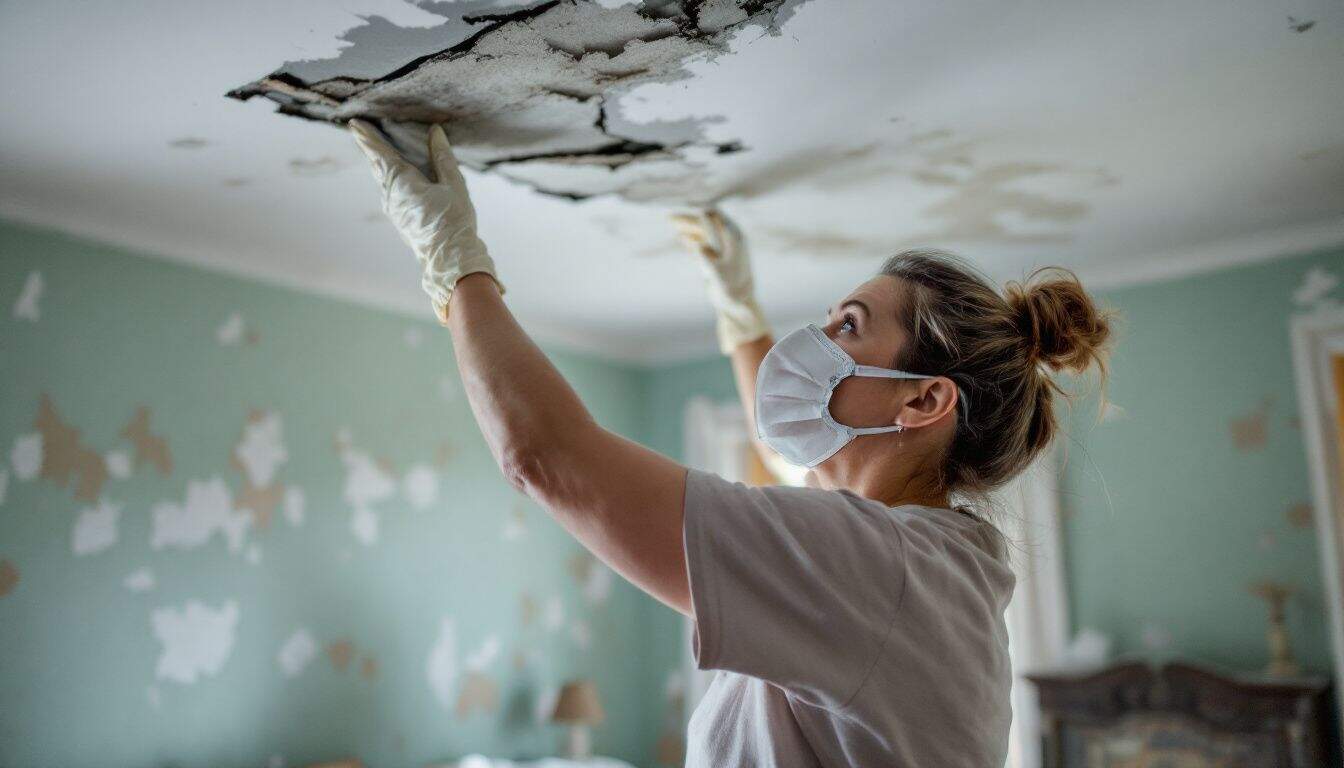
You’re halfway through knocking down a wall and something doesn’t look right. The material is unfamiliar, and a nagging doubt sets in. If you’ve just uncovered suspected asbestos, the single most important thing you can do is stop work immediately.
Carrying on is the worst decision you can make. Disturbing asbestos-containing materials releases microscopic fibres into the air, and once they’re airborne, the risk to everyone on site escalates fast. Whether you’re a homeowner tackling a loft conversion, a landlord overseeing a refurbishment, or a property manager running a portfolio, the response is the same: stop, isolate, and get the material properly assessed.
This is not a situation where guesswork or hoping for the best is acceptable.
Why Asbestos Turns Up During Renovation Work
Asbestos was used extensively in UK construction because it was cheap, durable, fire-resistant and an excellent insulator. Builders incorporated it into dozens of different products over several decades, which is why it still turns up in so many older properties today.
Any building constructed or significantly refurbished before the UK’s full ban on asbestos use is potentially at risk. The material may be visible, or it may be hidden behind plasterboard, under floor coverings, or inside service ducts that only become accessible once work starts.
Where Asbestos Is Commonly Found in Homes and Buildings
- Textured coatings such as Artex on ceilings and walls
- Vinyl floor tiles and the bitumen adhesive beneath them
- Asbestos cement sheets on garage roofs, sheds and outbuildings
- Pipe lagging and thermal insulation around boilers and pipework
- Asbestos insulating board in partitions, ceiling tiles and airing cupboards
- Bath panels, toilet cisterns and window reveals
- Soffits, fascias and rainwater goods
- Old service risers, boxing and fire protection materials
You cannot confirm asbestos by sight alone. Even experienced tradespeople have been caught out by materials that looked perfectly ordinary. The only reliable confirmation comes from laboratory analysis.
What to Do Immediately if You Find Asbestos
Quick, calm action in the first few minutes can prevent a contained problem from becoming a serious contamination incident. Here’s what to do as soon as you suspect asbestos has been uncovered.
- Stop all work immediately. No drilling, cutting, sanding, scraping or breaking of the suspect material.
- Keep everyone away. Restrict access to the area so nobody accidentally disturbs the material further.
- Do not attempt to clean it up. Sweeping, vacuuming or brushing debris will spread fibres, not contain them.
- Leave contaminated tools where they are. Moving them can carry fibres into other parts of the property.
- Shut doors to the affected area. This limits the movement of any airborne fibres to adjoining rooms.
- Arrange professional inspection and sampling. Only testing can confirm whether asbestos is present and what type it is.
If dust has already been created before you realised what you were dealing with, avoid re-entering the area unless absolutely necessary. Standard domestic vacuum cleaners are completely unsuitable for asbestos debris — they can make things significantly worse by recirculating fine fibres into the air.
What Not to Do
- Do not bag up debris without professional advice
- Do not break off a sample yourself to send away
- Do not let trades continue working in adjacent rooms
- Do not assume cement-based products are safe simply because they look solid
- Do not use a domestic vacuum cleaner anywhere near the affected area
How Asbestos Is Properly Identified
One of the most common mistakes during renovation is assuming a material is safe because it appears undamaged or looks like an ordinary building product. That assumption has caused serious harm to many people over the years.
Asbestos can only be confirmed through proper inspection and laboratory analysis — there is no reliable visual test. A competent asbestos surveyor will assess the suspect material, evaluate its condition, consider its location and judge the likelihood of disturbance. Where confirmation is needed, samples are taken in a controlled manner and sent to a UKAS-accredited laboratory for analysis.
The results will tell you what type of asbestos is present, if any, and inform the next steps. Professional asbestos testing is the safest and most reliable way to get confirmation before any further work takes place.
Survey or Targeted Sampling: Which Do You Need?
The right approach depends on where you are in the project. If you’ve found a single suspect material mid-renovation, targeted sampling may be sufficient to confirm what it is.
If the property is older, more complex or has a lot of planned intrusive work ahead, a wider refurbishment survey is usually the better option. Under the Control of Asbestos Regulations, a refurbishment and demolition survey is required before any intrusive work begins in premises where asbestos may be present.
Survey methodology should follow HSG264, the HSE’s guidance on asbestos surveys. This isn’t a box-ticking exercise — it’s a practical tool that tells you what’s present, where it is, what condition it’s in, and what needs to happen next.
If your project involves planned demolition rather than refurbishment, a demolition survey will be required before any structural work or site clearance can begin. This is a legal requirement, not a recommendation.
Why Getting a Professional Asbestos Survey Matters
Renovation work regularly exposes hidden voids, old service routes and finishes that haven’t seen daylight in decades. Without a proper survey, contractors can unknowingly disturb asbestos and spread contamination far beyond the original work area — turning a manageable situation into an expensive, disruptive remediation job.
A professional survey gives you the information you need to plan work safely, brief contractors properly and avoid the all-too-common scenario where a builder hits asbestos halfway through a strip-out and the site goes idle while emergency testing and clean-up are arranged.
What a Survey Helps You Achieve
- Locate asbestos-containing materials before they’re disturbed
- Assess the condition and risk level of each material
- Decide whether management, encapsulation or removal is the right approach
- Protect tradespeople, occupants and neighbours from exposure
- Support compliance with HSE guidance and the Control of Asbestos Regulations
- Reduce the likelihood of costly project delays and emergency remedial work
If your project is in the capital, arranging an asbestos survey London before refurbishment begins can save significant disruption and cost later. For property owners and developers in the North West, booking an asbestos survey Manchester appointment helps identify risks before contractors start stripping out finishes or opening up service areas. And if you’re planning works in the Midlands, an asbestos survey Birmingham inspection is a sensible first step for older homes, offices and mixed-use buildings alike.
Can You Remove Asbestos Yourself?
In most circumstances, DIY asbestos removal is a bad idea — and in many cases, it’s illegal. Even where certain lower-risk materials don’t legally require a licensed contractor, that doesn’t mean removal is appropriate for an untrained person during an active renovation.
The key issue isn’t just the type of asbestos material. It’s the condition of that material, the method of removal, the likelihood of fibre release, the controls needed and the strict legal requirements around packaging, transport and disposal of asbestos waste.
When Licensed Contractors Are Required
Higher-risk materials — including pipe lagging, loose-fill insulation and asbestos insulating board — almost always require a licensed contractor. Even lower-risk products such as asbestos cement can become highly dangerous if they’re broken, power-tooled or removed carelessly.
The condition of the material matters just as much as the type. Professional asbestos removal ensures the work is properly assessed, controlled and completed in line with legal requirements — including correct waste disposal, which is an area where DIY attempts frequently fall foul of the law.
When Professional Removal Is the Right Call
- The material is damaged, friable or already releasing dust
- Debris is already present in the work area
- The work is taking place inside an occupied property
- The asbestos is in insulation, lagging or insulating board
- You need waste handled, packaged and disposed of correctly
- You need documented confirmation the area has been cleared safely
Legal Duties and Disposal Rules You Need to Know
Asbestos isn’t just a health issue — it’s a legal compliance issue. The Control of Asbestos Regulations set out the framework for managing asbestos risk in the UK, and HSE guidance explains how asbestos must be surveyed, handled, controlled and disposed of.
For domestic homeowners, legal duties often fall more heavily on the contractors carrying out the work. For landlords, managing agents, employers and anyone responsible for common parts of buildings or non-domestic premises, the responsibilities are broader and more direct.
Key Legal Points in Practice
- Do not begin intrusive refurbishment without checking for asbestos where it may be present
- Use competent, accredited surveyors and analysts
- Ensure all contractors have the relevant asbestos information before work starts
- Use licensed contractors where the type of work legally requires it
- Dispose of asbestos waste only through authorised routes — it cannot go in a general skip
- Keep records where the duty to manage asbestos applies
Asbestos waste must be packaged correctly, clearly labelled, transported by a registered carrier and taken to a licensed disposal site. Getting this wrong doesn’t just create an enforcement risk — it can expose other workers and members of the public to serious harm.
If you need laboratory confirmation or support across different property types, the options available for asbestos testing cover a range of situations where suspect materials are identified during or before renovation work.
How to Keep People Safe After Possible Asbestos Exposure
If asbestos has been disturbed before anyone realised what they were dealing with, the priority is preventing any further exposure. That means controlling access, avoiding additional dust generation and getting advice from competent professionals without delay.
Not every brief, incidental exposure will lead to illness. However, asbestos is taken seriously precisely because inhaled fibres can lodge permanently in lung tissue, and health effects may not become apparent for many years after exposure. Prevention is always the right strategy.
Practical Steps After Potential Exposure
- Move everyone away from the affected area immediately
- Do not shake out dusty clothing indoors — this redistributes fibres
- Wash exposed skin gently with water if needed
- Bag any disposable PPE that was used in a contaminated area
- Record what happened, where it occurred and who may have been present
- Inform all contractors and anyone else who may have entered the space
If someone believes they have had significant occupational exposure, they should seek appropriate medical advice. Health concerns should be handled through proper clinical guidance, not guesswork or reassurance from non-medical sources.
Why PPE Alone Is Never Enough
A disposable dust mask from a DIY shop offers no meaningful protection against asbestos fibres. Suitable respiratory protective equipment for asbestos work is specific, fitted and rated accordingly — and even proper RPE is only one layer of control.
The best protection is avoiding disturbance in the first place. After that, it’s isolating the area, using the correct removal method and ensuring waste is handled properly. If a contractor arrives ready to cut into suspect materials without a survey, a method statement or proper controls in place — stop the job. That is the moment to ask questions, not after the dust has settled.
Planning Ahead: Asbestos Surveys Before Renovation Work Begins
The most effective way to deal with asbestos during a renovation is to identify it before work starts — not during a strip-out when materials are already being disturbed. A pre-refurbishment survey is the standard approach for any intrusive work in a building that may contain asbestos.
This isn’t about slowing down your project. It’s about giving your contractors the information they need to work safely, price the job accurately and avoid the scenario where work stops unexpectedly because something unexpected has been uncovered.
A properly scoped survey, carried out by a competent surveyor following HSG264 methodology, will identify the location, type and condition of any asbestos-containing materials in the areas to be worked on. That information then feeds directly into your contractor briefings, method statements and risk assessments.
What Happens if You Skip the Survey?
Projects that proceed without an asbestos survey in older buildings regularly encounter problems. Contractors hit unexpected materials, work stops, emergency sampling is arranged, and costs escalate. In some cases, contamination has spread through a building before anyone realised what was present.
Beyond the practical disruption, there are regulatory consequences. The Control of Asbestos Regulations require that a refurbishment and demolition survey is carried out before intrusive work begins in premises where asbestos may be present. Failing to do so is not a minor oversight — it’s a breach of legal duty.
The cost of a professional survey is modest compared to the cost of emergency remediation, project delays, contractor downtime and potential enforcement action. Getting it done before work starts is simply the sensible approach.
Frequently Asked Questions
How do I know if a material contains asbestos?
You cannot tell by looking at it. Many asbestos-containing materials appear identical to non-asbestos alternatives. The only way to confirm whether asbestos is present is through laboratory analysis of a sample taken by a competent professional. Never attempt to take a sample yourself — disturbing a suspect material without the correct controls can release fibres.
Is asbestos only found in old buildings?
Asbestos was widely used in UK construction up until the full ban came into effect. Any building constructed or significantly refurbished before that point may contain asbestos-containing materials. Newer buildings are generally considered low risk, but if you’re unsure about the age or history of a property, a professional survey is the only reliable way to find out.
Can I continue renovation work in other parts of the property while asbestos is being assessed?
It depends on the layout of the property and the proximity of the suspect material. In many cases, work can continue in areas that are clearly separated from the affected zone, provided the affected area has been properly isolated. However, you should get professional advice before making that call — a surveyor can assess the situation and advise on what’s safe to proceed with.
What are the legal requirements for asbestos during a home renovation?
For domestic homeowners, the legal duties under the Control of Asbestos Regulations apply primarily to the contractors carrying out the work rather than the homeowner directly. However, landlords, managing agents and anyone responsible for non-domestic premises have broader duties. All parties have a responsibility not to knowingly put workers or occupants at risk, and contractors must have access to asbestos information before starting work in areas where it may be present.
How quickly can an asbestos survey be arranged?
In most cases, a professional survey can be arranged within a few days. If you’ve uncovered a suspect material mid-project and need urgent confirmation, many surveying companies — including Supernova Asbestos Surveys — can prioritise urgent appointments. It’s always better to pause work and get proper confirmation than to carry on and risk serious contamination.
Get Professional Asbestos Advice From Supernova
Supernova Asbestos Surveys has completed over 50,000 surveys across the UK, working with homeowners, landlords, developers and property managers to identify and manage asbestos safely and in line with current regulations.
Whether you’ve uncovered a suspect material mid-renovation, need a pre-refurbishment survey before work starts, or require urgent sampling and laboratory analysis, our team is ready to help. We operate nationwide, with surveyors covering London, Manchester, Birmingham and beyond.
Call us on 020 4586 0680 or visit asbestos-surveys.org.uk to arrange a survey or speak to one of our team about your situation.